
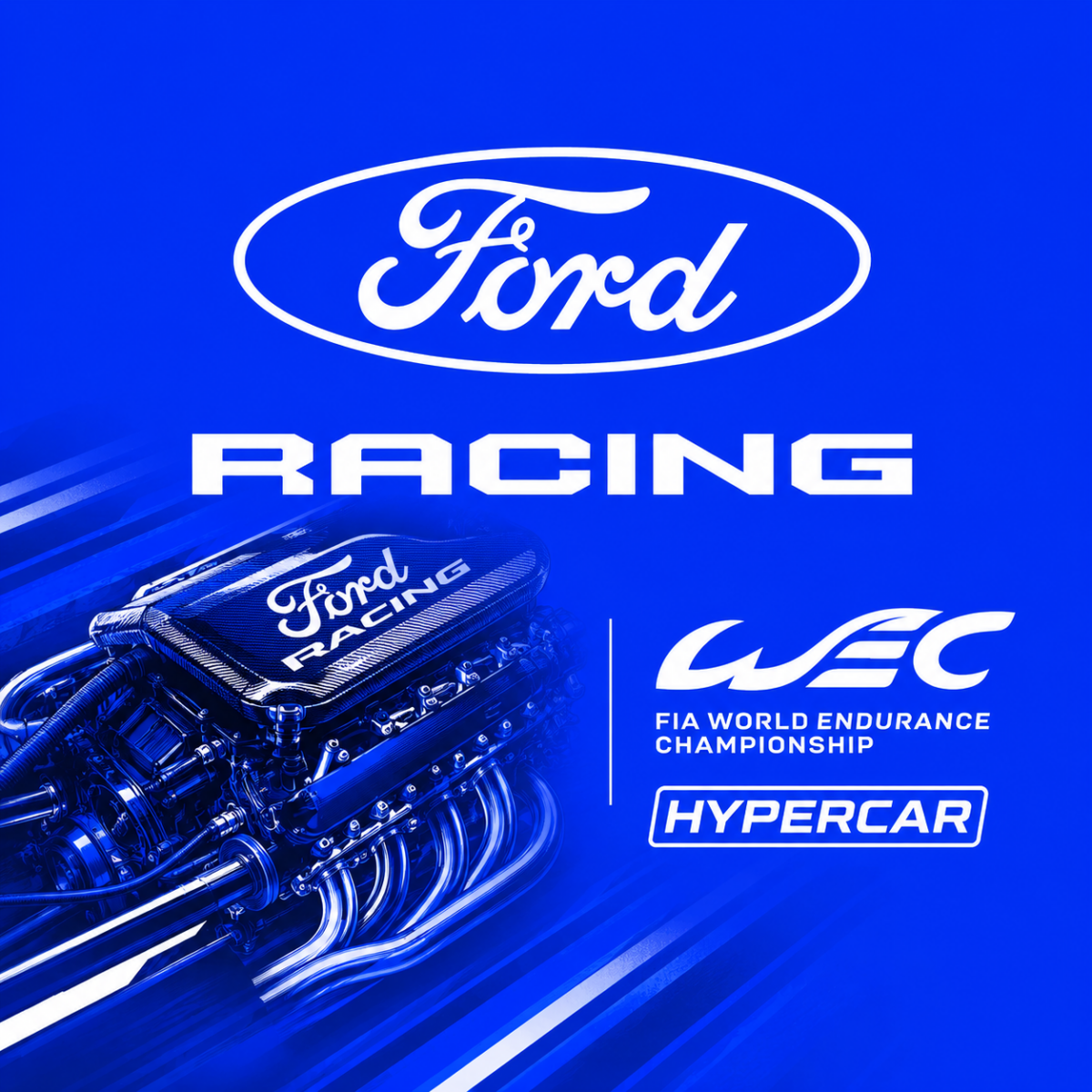
The Ford WEC Hypercar project has reached a significant milestone. For the first time, the newly developed 5.4-liter V8 engine, based on the Coyote unit, was successfully started together with the hybrid system in the vehicle chassis. Following extensive dynamometer tests in Dearborn, USA, the complete powertrain system in the Hypercar, developed in collaboration with ORECA, has now been put into operation for the first time.
The naturally aspirated V8 engine was developed and manufactured entirely by Ford in Michigan. The powertrain is intended not only to serve as the basis for deployment in the FIA World Endurance Championship (WEC) but also to foster technology transfer between motorsport and series production vehicles.
In recent months, the focus of development has been on intensive test bench runs, during which the engine's performance, durability, and reliability have been continuously optimized. In parallel, ORECA has been working on the development of the chassis. With the successful integration of both components, a complete vehicle has now been created, ready for the next stage of development.
The first engine start in the chassis is considered an important validation step for the overall project. According to Ford, it confirms the successful integration of the powertrain and chassis and forms the basis for upcoming test drives.
As early as next month, the Ford WEC Hypercar is set to be tested for the first time on European race tracks. The extensive test program includes various tracks in Europe and focuses on performance, reliability, hybrid system integration, and aerodynamic tuning under conditions that closely replicate the demands of the FIA WEC and the 24 Hours of Le Mans.
The drivers will also play a central role in the next development phase. The feedback from all six drivers – from simulators as well as during test drives in Europe and later in the USA – is intended to be crucial in further developing the vehicle and optimizing it for racing use.
Although the project is still in an early development stage, Ford sees the results from simulations and dynamometer tests so far as a promising foundation. However, the final tuning of the vehicle will only be achieved through drivers' experience on the race track.
With the successful engine startup in the chassis and an imminent test debut, the Ford Hypercar program is now entering its most visible development phase to date. The long-term goal remains a return to the premier class of endurance racing and a fight for overall victory at the 24 Hours of Le Mans.