
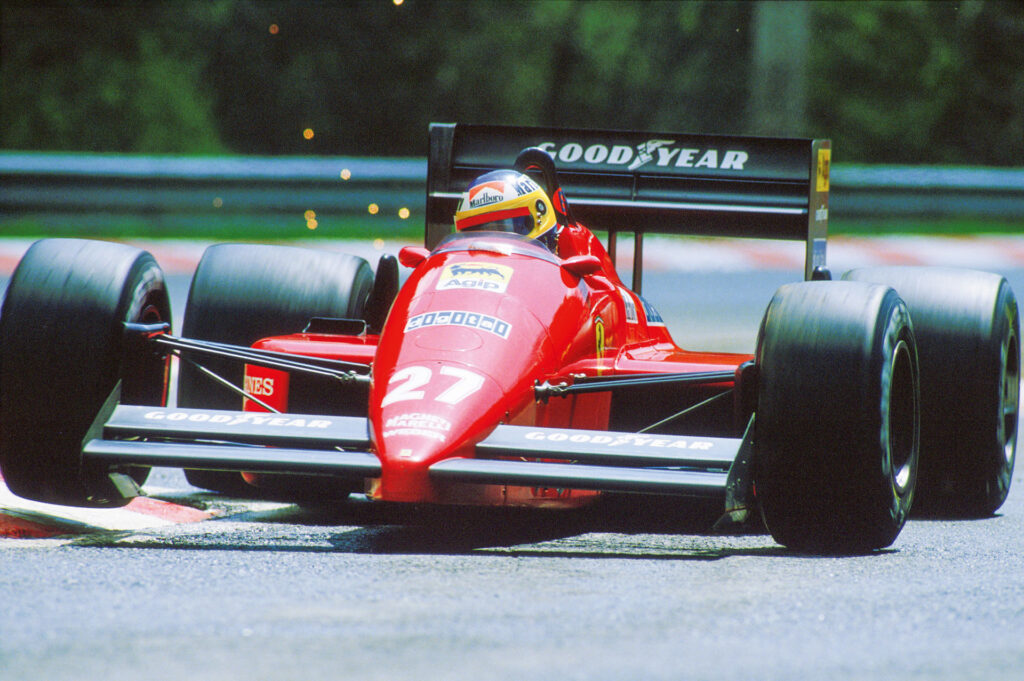
Who still remembers Michele Alboreto?
Michele Alboreto always impressed with his cultivated demeanor, politeness, and friendliness. Many came to know him as a nice person without airs. He lacked posturing and fiery gestures; he was a man who had himself under control. Occasionally, his strolls through the pit lane turned into an outpouring of affection, with groupies idolizing him. A single brawl is documented, which was completely out of character for him, and involved him during the 1984 Canadian Grand Prix in Montreal. There he encountered an Italian reporter „who had spread lies about me.“ It was only after ten years of trial cohabitation that Michele Alboreto married his Nadia Astorri in 1983. He had become the father of two daughters, Noemi and Alice.
As an attentive, focused listener who could also articulate precise statements, he made friends with the engineers. He was a very capable test pilot who maintained a calm, clean, and results-oriented driving style in races. The fact that he achieved his first two Grand Prix victories on a Tyrrell-Ford in American cities between walls may be considered further evidence of his mastery of precision work. For five years, from 1984 to 1988, longer and quite successfully than many other Italians, he drove for Ferrari in Formula 1 without ever having signed a document for it. „I don't have a contract with Ferrari at all,“ he admitted once in 1985. „I have contracts with my sponsors. With the old man, I just have a verbal agreement. I have his word, and he has my word. You don't need a contract with him.“
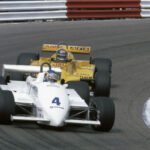
Michele Alboreto had completed a degree in engineering.
Michele Alboreto came from a well-to-do family. The son of a Libyan woman and a textile merchant from Milan, he enjoyed a privileged upbringing and a quality education. He completed a degree in engineering and became an expert in engine technology. With money from home, he began his racing career in 1976 in the junior category Formula Monza and proved himself worthy of the investment from the outset. As family funding was limited, he initially had to extend his apprenticeship in the entry-level formula by one year, but finished his second season in third place in the championship. First, smaller sponsors came along, and the move to the next faster Formula Italia with Fiat-Abarth engines was a natural progression. Here, he won his first race and again finished in the top five in the season standings. In his Formula 3 debut at Magione at the end of the 1978 season, he proved equally skillful, qualifying in fourth place.
In the next two years, he grew into a European Formula 3 giant. In 1979, he became Italian vice-champion in a March-Toyota, before he had the better of Thierry Boutsen, Corrado Fabi, and Mauro Baldi in the 1980 European Championship thriller with the semi-official March-Alfa Romeo – ultimately ending up as European champion in the final race. Meanwhile, after his second place in the Formula 3 Monaco Grand Prix, Formula 1 bosses had also become more curious, while in the Makes World Championship as a Lancia works driver in the Beta Montecarlo Group 5, he was already demonstrating skillful handling of 400 hp.

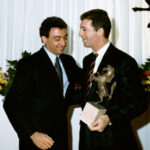
Michele Alboreto went through the Tyrrell „school“: between outbursts and pedagogy
For 1981, he was initially considered a Formula 2 driver for Minardi and for the Sanremo Racing team of the wealthy Alberto Colombo, who himself had made it into Formula 1 as a driver in 1978 with ATS. Alboreto had problems raising money, but was eventually accepted by Minardi anyway. Then he suddenly received the chance of a lifetime, because after the withdrawal of main sponsor Candy (an appliance manufacturer from Brugherio/Lombardy), Ken Tyrrell was also desperately looking for every penny and was forced to rent out his second Formula 1 car from race to race. In the non-championship race in South Africa, local driver Desiré Wilson got the car, in Long Beach, California, Indycar driver Kevin Cogan, and in the two South American Grands Prix, Argentinian Ricardo Zunino was behind the wheel. At the beginning of May, for the San Marino Grand Prix in Imola, an Italian ceramic producer bought the cockpit of the Tyrrell 010-Ford for Michele Alboreto, who drove it until the end of the 1981 season. It had brought him Grand Prix victories, just as Didier Pironi had been shaped by it. Michele Alboreto, who already won with his composure, was guided here with a lot of patience on a long leash – and another training success.
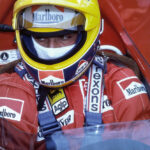

Autobiography signed by Enzo Ferrari
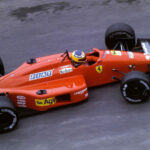
After some mid-table finishes in the 1981 season, he pushed more forcefully into the spotlight in 1982 and won his first Grand Prix on September 25th on the parking lot circuit of the Caesars Palace Hotel in Las Vegas, in the last race of the year. Enzo Ferrari then sent him a signed copy of his autobiography, an initial hint. When the two Ferrari drivers, René Arnoux and Patrick Tambay, lost all their championship chances through excursions into the terrain in the nerve-wracking 1983 Drivers„ World Championship in the penultimate race at Brands Hatch, the tireless Italian press had also achieved its goal. The much-heralded move of Alboreto to the “prancing horse„ for the glory of Italy was perfect. Tambay, the Ferrari driver who finished lower in the final standings, had to go. Eleven years after Arturo Merzario, an Italian once again took the reins at Ferrari and shouldered an immense burden of responsibility. “It's not easy to work for Ferrari,„ and not infrequently, Italians in particular had collapsed under it. Eugenio Castellotti in 1957, Luigi Musso in 1958, and Lorenzo Bandini in 1967, all killed in accidents, pushed themselves to the brink. Giancarlo Baghetti was also fired in 1962 for participating in the “palace revolution," and Lodovico Scarfiotti also left on bad terms in 1967. However, Michele Alboreto also made an optimal start: as the sixth Italian at Ferrari after Ascari (1951), Taruffi (1952), Baghetti (1961), Bandini (1964), and Scarfiotti (1966), he won a Grand Prix as early as May 1984 in Zolder, Belgium, and emphatically justified his nomination once again with a brilliant start-to-finish victory. Finishing the World Championship in fourth place already stamped him as a co-favorite for 1985.
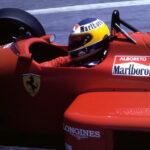
For more than two-thirds of the following season, Alboreto was Alain Prost's number one rival in the McLaren-TAG-Porsche, an absolutely equal match in the duel for the World Championship title. In the first ten races, he accumulated 50 championship points with eight podium finishes, the same as Prost. The Italian won
Under the leadership of the hulking Ken Tyrrell, with a mix of bellowing and pedagogical instruction, many a driving talent has straightened up on the path to maturity. Jacky Ickx had gone to his „school“ and become a two-time Formula 1 vice-world champion. The Frenchmen François Cevert and Patrick Depailler had had to listen to his sermons, and in Canada, driving as a distinctly calm leader, he forced the aggressively attacking Frenchman into a driving error at the Nürburgring – a second win of the season for Alboreto. Then technology failed him. An engine failure, two turbo failures, and a clutch and gearbox failure resulted in five consecutive „zeros“ in the last third of the year, and Champion Prost was „home and dry.“ Alboreto had already stated early on: „It's not easy to work for Ferrari. Ferrari is a very special team, and especially for me as an Italian, the pressure is enormous. The team has won far more Grand Prix than I have. When there are disagreements, I often think: They are probably right and not me.“

How Michele Alboreto fell out of favor at Ferrari
As early as 1981, Ferrari was competitive with turbocharged cars as the second manufacturer after Renault, but the Scuderia soon found itself on the defensive in the second half of the 80s against the corresponding designs from McLaren and Williams. The engines from Maranello could no longer quite keep up in terms of performance against the Honda exhibits, but above all, the Ferraris lacked reliability. In the years 1986 and 1987, Alboreto only scored points four times in each of the 16 World Championship races. Sixty percent of all defects in 1986 were in the engine/turbocharger sector, costing him approximately 16 points that season alone. At the same time, in 1987 and 1988, the Italian gained an uncomfortable competitor within his own team in the Austrian Gerhard Berger, who proved what was still possible with Grand Prix victories even under the prevailing conditions. In this situation and phase, Alboreto then fell out of favor with Ferrari after an undiplomatic interview in an Italian car magazine and was replaced by the Briton Nigel Mansell at the end of the 1988 season.
Lost sight of top team managers
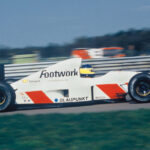
In Formula 1, it was a gradual decline. Michele Alboreto began the 1989 season with his discoverer, Ken Tyrrell, and quickly earned six championship points. Then, Tyrrell secured cigarette brand Camel as a sponsor. A conflict of interest with Marlboro, Alboreto's personal sponsor, led to disagreements and a separation during the season. Alboreto was able to finish the year in the Lola-Lamborghini of Ecurie Larrousse but achieved no significant results. The following three years with the Footwork-Arrows team were a lost period; the cars were never truly competitive, and the intermittent cooperation with Porsche was a tangible failure. Michele Alboreto often struggled simply to qualify for races, and the team principals of renowned racing stables lost sight of him. In the end, he could only secure his presence in Formula 1 with second-tier Italian teams like Scuderia BMS or Minardi. Ayrton Senna's fatal crash
In Imola in 1994, that was enough reason for him to withdraw from other vehicle categories at the end of the season.
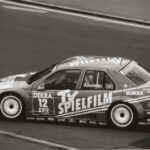
Towards the end of his career, Michele Alboreto raced with Alfa Romeo in the DTM.
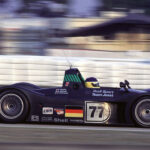
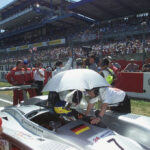
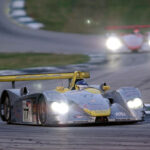
For one year, he switched to the German Touring Car Championship (DTM) behind the wheel of an Alfa Romeo 155 TI V6, but he did not fare particularly well. He was much better suited to very fast racing cars. He shone in the American IMSA series in 1995/96 with the Ferrari 333 SP, before reminding Europe of his skills with an overall victory at the 1997 24 Hours of Le Mans at the wheel of a Joest-Porsche Spyder K8 alongside Stefan Johansson and Tom Kristensen. And so, Audi eventually took notice of him to reinforce their driver lineup for the LMP sports cars. Alboreto „thanked“ the Ingolstadt-based company for signing him with steadily improved race results – fourth at the 24 Hours of Le Mans in 1999, third at the 24 Hours of Le Mans in 2000, as well as across the „big pond,“ in the American Le Mans Series, then victories at the „Petit Le Mans“ at Road Atlanta in 2000 and the 12 Hours of Sebring in 2001. Everything was going well for him again when, on April 25, 2001, accompanied by several Audi engineers, he conducted test drives with the Audi R8 at the Lausitzring. In the late afternoon, around 5:30 PM, he was accelerating the car back up to around 300 km/h on one of the two long straights when the left rear tire burst. The Audi R8 lifted off, flew over the guardrails, and landed upside down – Michele Alboreto was killed instantly. An investigation revealed the cause to be a gradual loss of pressure due to a lost screw that had found its way into the tire.
Get Curbs' #50 with the Michele Alboreto Special delivered right to your door—directly through our Online store

Photos: Wolfgang Wilhelm, Ferrari Archive, Alfa Romeo, Audi, Jochen von Osterroth; Erich Kahnt, Erich Mühlender