
First published on curbs-magazin.com
Originally published on curbs-magazin.com – now part of slickpix.de.
The Sauber BMW M1 Group 5
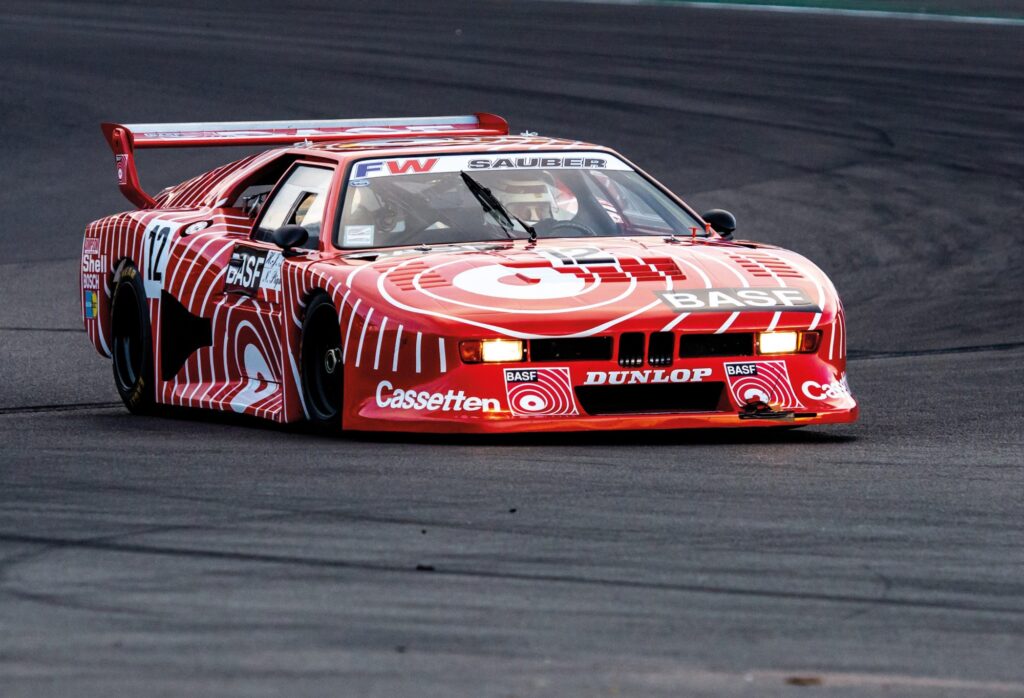
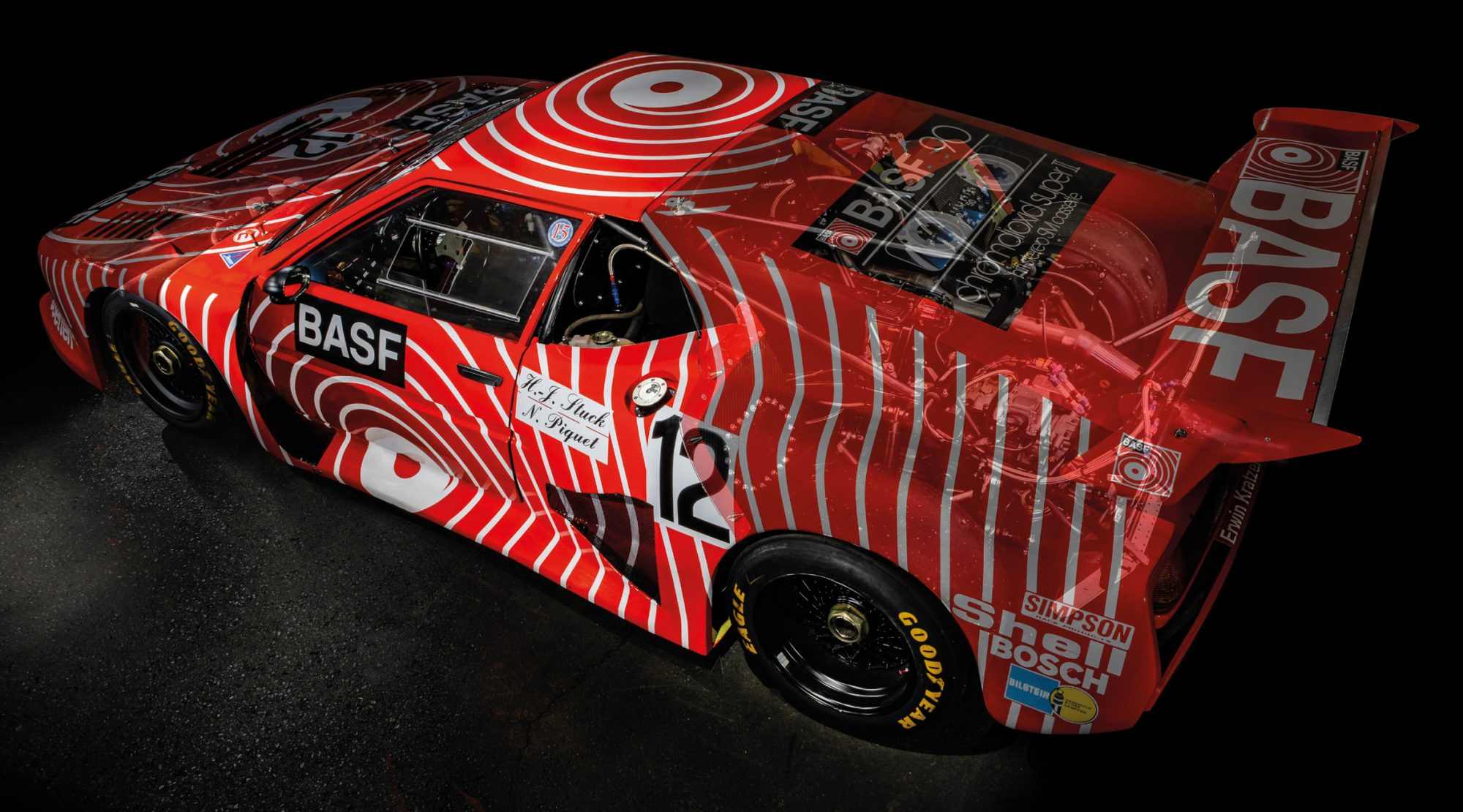
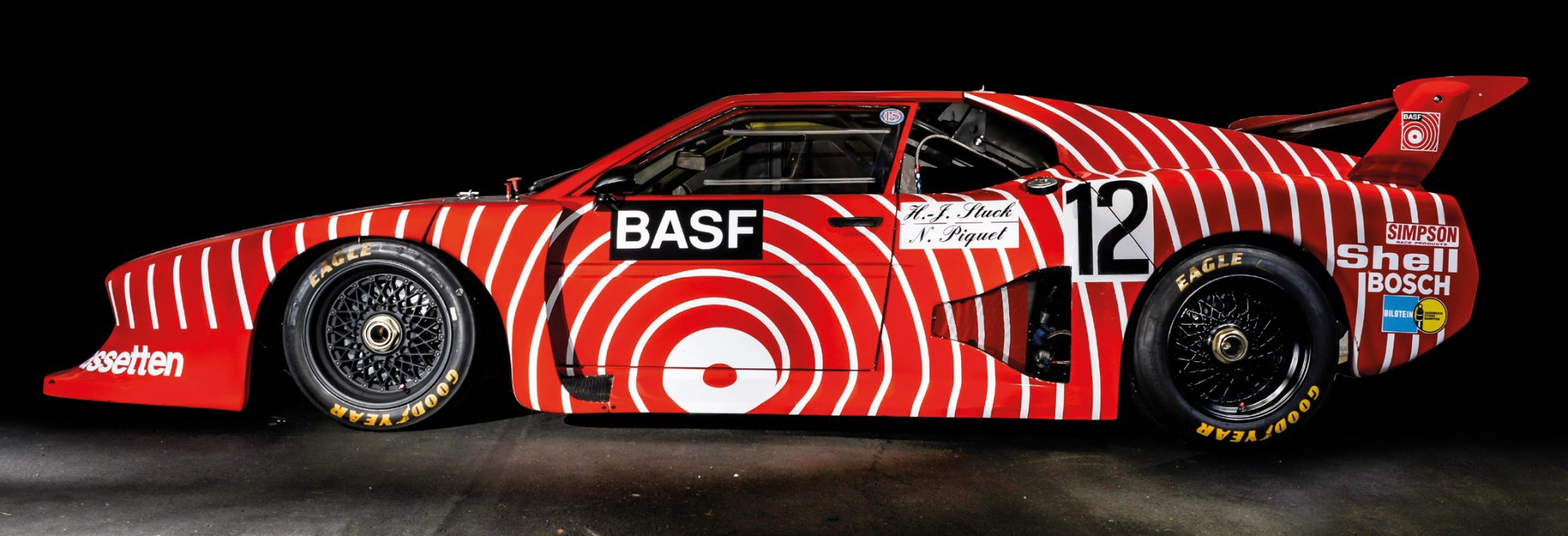
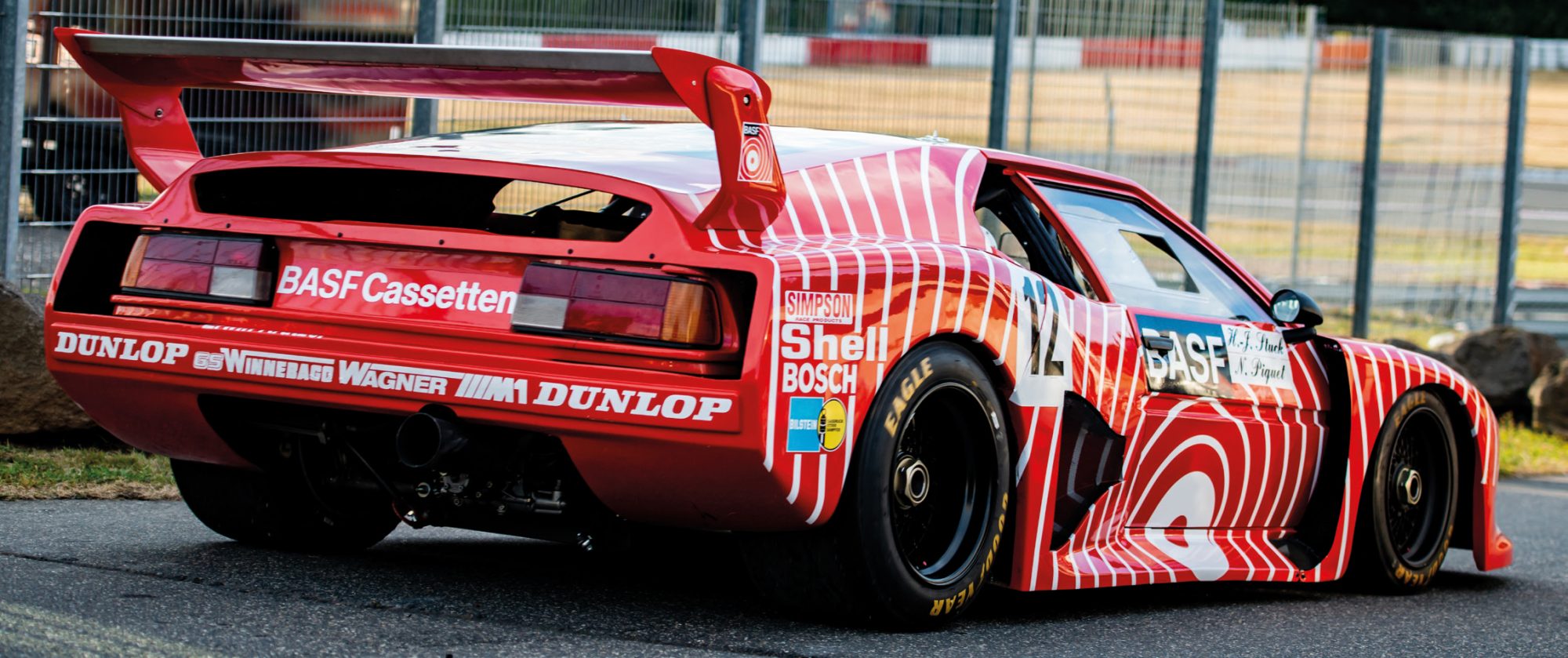
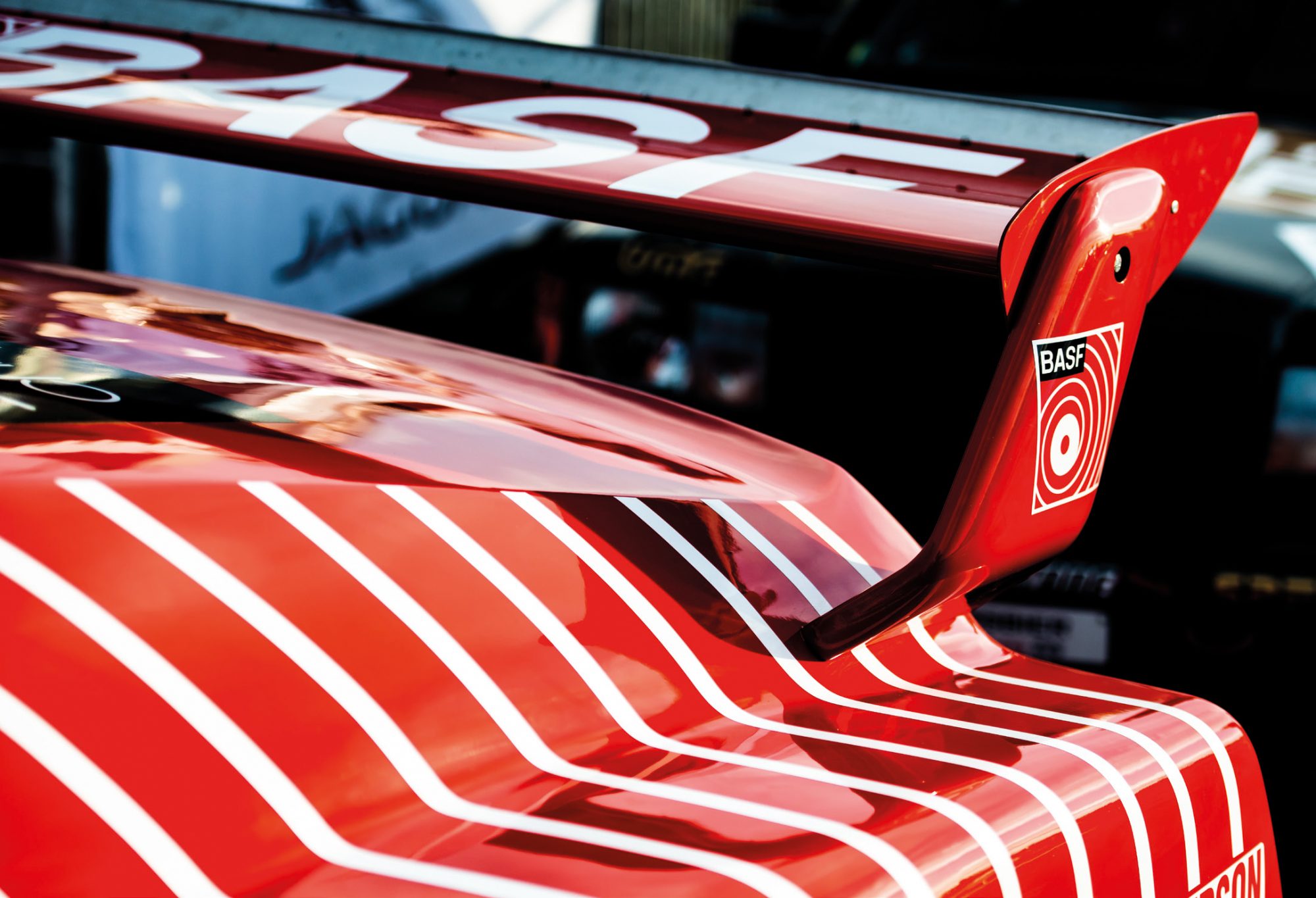
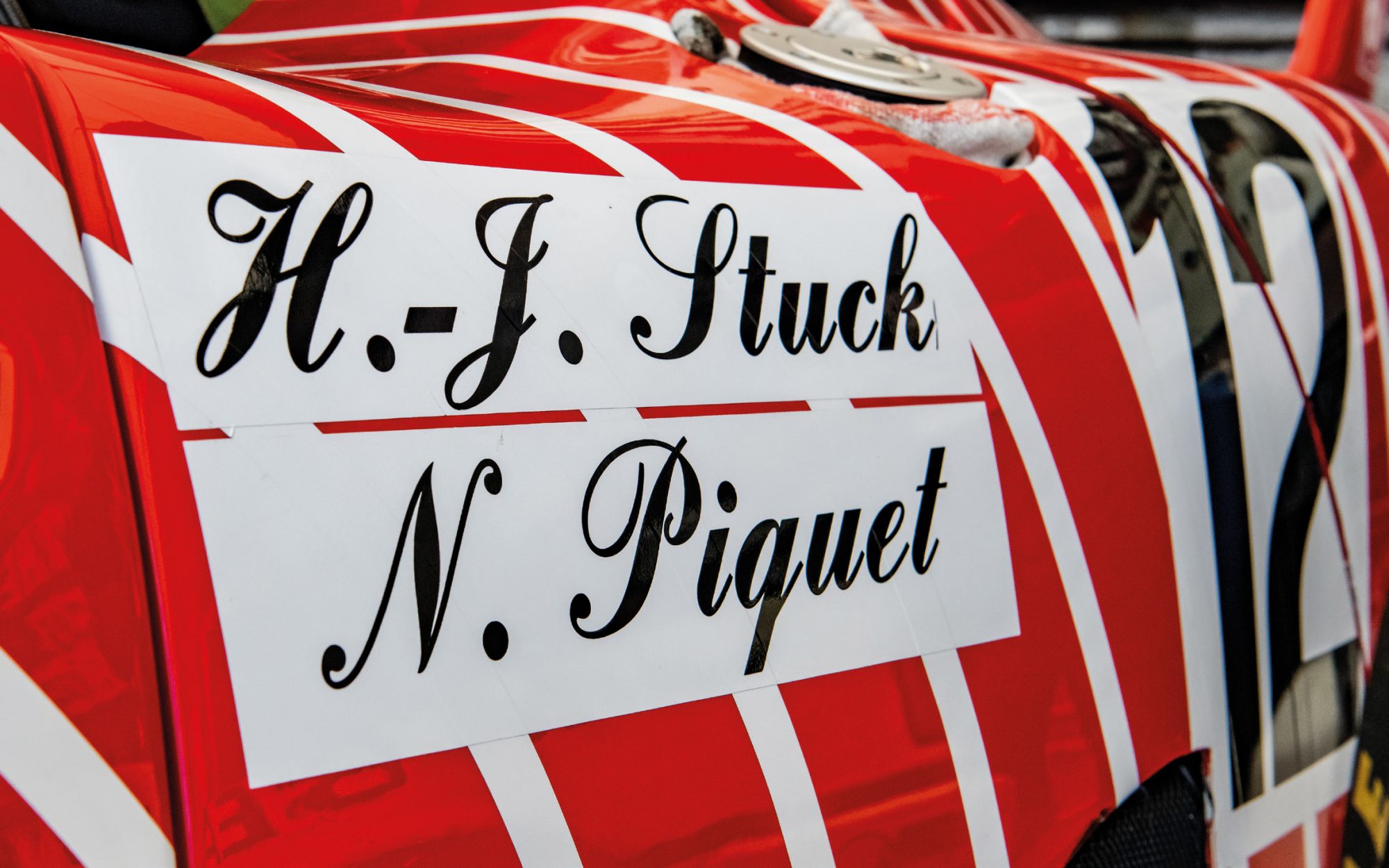
After the homologation of the BMW M1 as a Group 4 race car was finally completed, the Swiss driver Peter Sauber built two examples of this Group 5 version in 1981, which was around 100 kilograms lighter than the Group 4 version. With the Ex-BASF-GS-Team M1 Group 5 shown here, Hans-Joachim Stuck and Nelson Piquet won the 1981 Nürburgring 1000 km race.
The BMW M1 (internal designation: E26), the road version of which was presented to the public at the 64th Paris Motor Show in October 1978, was developed from the outset by BMW Motorsport GmbH, then led by Jochen Neerpasch, with motorsport applications („M“) in mind. The M1, with its 3.5-liter inline six-cylinder engine, was the first mid-engine car from the company to be produced in a larger series for the road. At its premiere, barely 1.14 meters high, it was the fastest production sports car from a German manufacturer with a top speed of 265 km/h. It was initially sold for exactly DM 100,000, though in the early years, firm orders significantly exceeded the number of units being produced. One of the original ideas behind this car was to have a perfectly suitable base for participation in the then-current Makes„ World Championship, which had been announced by the FIA in Paris since 1976 for so-called special production cars (“Silhouette„ formula) under the newly defined Group 5. The base vehicles for the even more powerful Group 5 racing cars had to originate from Groups 1 to 4, the categories for touring cars and grand tourers. Jochen Neerpasch – like the motorsport managers of Ford, Michael Kranefuss, and Porsche, Manfred Jantke, at the time – was one of the leading proponents who, in the first half of the 1970s, had strongly advocated for more “production-based„ regulations for the Makes“ World Championship, moving away from racing cars with Formula 1 or Formula 2 engines.
A distant role model for the BMW M1 was the then futuristic-looking styling study „BMW Turbo“ from 1972 by BMW's chief designer at the time, Paul Bracq, with gullwing doors and four-cylinder engines (factory designation E 25), which, however, never went into series production. In 1976, BMW initially submitted the specifications for the production of the M1 to Lamborghini in Italy, which was supposed to supply bodies – designed by Giorgio Giugaro in a more restrained design than the „BMW Turbo“ and without gullwing doors – as well as floor assemblies. However, after economic problems at Lamborghini, BMW was forced to redirect the production of the mid-engined sports car to a new, more complicated manufacturing chain. Thus, the spaceframe chassis was ultimately built by Marchesi, and the glass-fiber-reinforced plastic body by T.I.R., both based in Modena. Giorgio Giugaro's company ItalDesign in Turin assembled both and took care of the interior. The car then went to Stuttgart, where Baur installed all the BMW mechanics and the transmission supplied by ZF.
A later consequence of the problems with Lamborghini was also the delay in homologation for motorsport. This was because a minimum of 400 units was already required for homologation in Group 4 (Special Grand Tourers). And as long as those weren't available, according to the letter of the FIA regulations, no Group 5 version of the car could compete in the manufacturers' world championship. While the homologation of the Group 4 M1 was dragging on, the Group 5 Porsche 935s, which were introduced punctually in 1976, were already dominating everything in the first few years of the Group 5 Manufacturers' World Championship. The BMW M1, which made its racing debut in its Group 4 version in the hands of works driver Marc Surer in April 1979 at the Eifelrennen Nürburgring in Division I of the German Racing Championship, remained only conditionally usable in FIA competitions for the time being.
In the Group 4 version, the 3.5-liter inline-six engine developed by Paul Rosche achieved a massive 470 PS at 9,000 rpm, compared to 277 PS at 6,000 rpm in the production version. The race car accelerated from 0 to 100 km/h in 4.5 seconds and reached a top speed of over 300 km/h. In addition, it differed from the road car through cooling elements for engine, transmission, and differential oil, aluminum wheel hubs with central locking, adjustable stabilizers, four-piston brake calipers with disc brakes, brake force distribution adjustable during driving, and even more direct rack-and-pinion steering. Wider wheels increased the vehicle width by almost ten centimeters, and the curb weight of 1,020 kilograms was around 280 kilograms less than that of the production version.
To further boost publicity for the Group 4 race car, its sales, and not least of all, things related to homologation, Jochen Neerpasch, in cooperation with Formula 1 managers Bernie Ecclestone and Max Mosley, pulled off a real coup at the start of the 1979 season with the introduction of the so-called Procar racing series exclusively for BMW M1 Group 4 versions as part of the support program for select Formula 1 Grands Prix. In this series, five works cars competed against the majority of private teams, with the five fastest drivers from the respective Formula 1 practice sessions. Some Formula 1 drivers, such as Niki Lauda or Hans-Joachim Stuck, also regularly started in private M1s – a first-class spectacle. In 1979, Niki Lauda won the series ahead of Hans-Joachim Stuck and Clay Regazzoni, and in 1980, Nelson Piquet won ahead of Alan Jones and Hans-Joachim Stuck. After BMW announced in 1980 that it would enter Formula 1 as an engine supplier in the future, funds for M1 further development were cut in Munich, and the Procar series was not continued. In April 1981, the Group 4 version of the BMW M1 was successfully homologated.
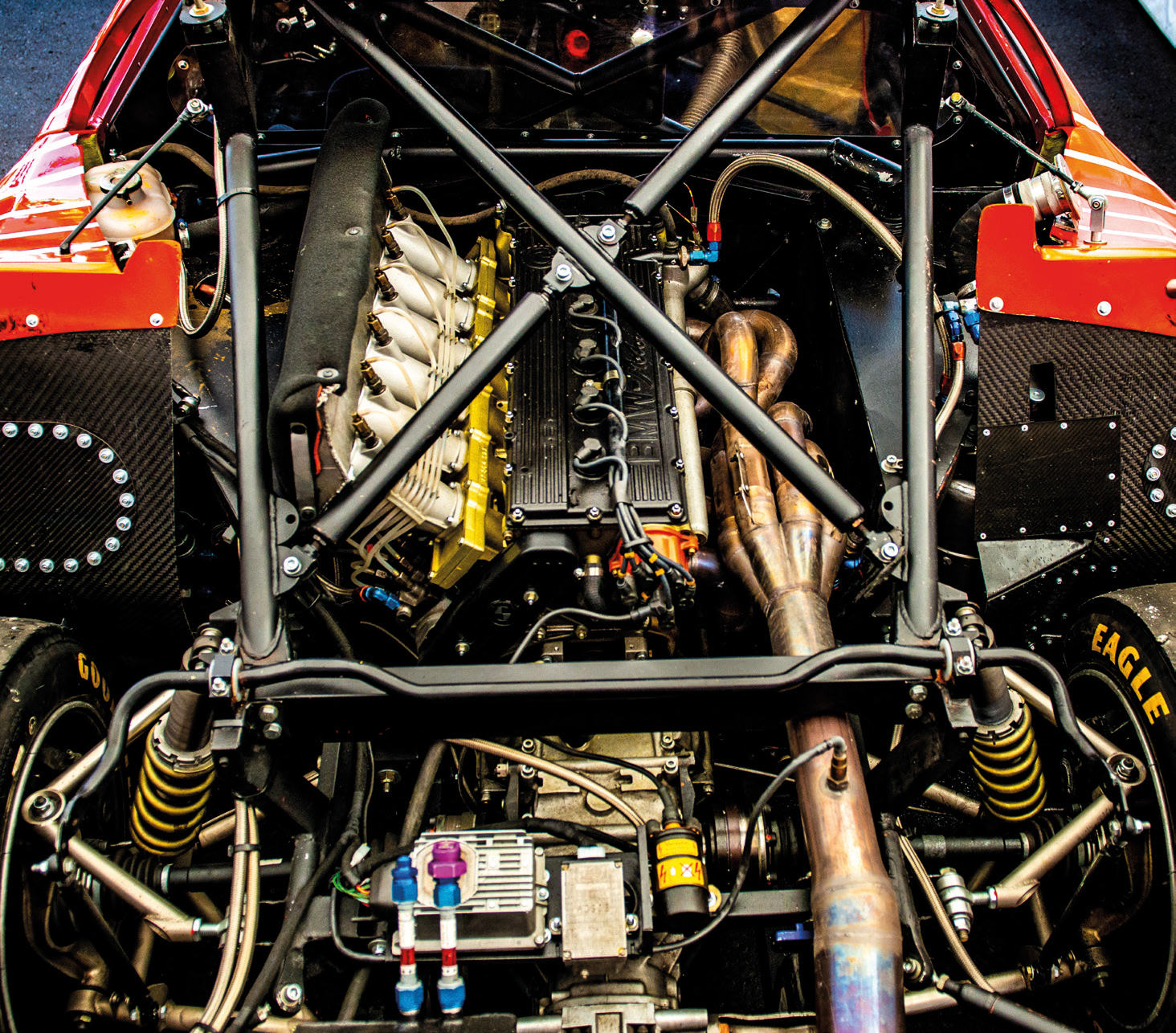
Even while the project was still in its infancy, however, an initial M1 Group 5 version had already been presented in terms of its technical design. Because BMW itself did not want to invest too much in such a project, the Munich-based company awarded the corresponding contract to March’s chief designer, Robin Herd. BMW, however, remained responsible for the engine; the plan was to develop a turbocharged version of the Procar engine producing around 800 PS. March took advantage of the much greater freedom afforded by the Group 5 regulations and built a completely new aluminum monocoque, significantly lighter and stiffer than the previous space-frame chassis. Additional modations included a track width widened by 25 centimeters, substantially enlarged front and rear spoilers, and a longer rear end for improved stability at high speeds. The car made its debut in the 1979 Le Mans qualifying session with the 3.5-liter naturally aspirated engine, but was classified there as a Group 6 race car due to the lack of M1 homologation, even though the engine exceeded the displacement limit by 0.5 liters. Ultimately, however, the car failed to qualify because, at 950 kilograms, it was far too heavy compared to the „real“ Group 6 cars. Consequently, the car suffered retirements at every race—at Brands Hatch and Vallelunga in 1979, as well as during various appearances in the American IMSA series in 1980, by which time it was fielded with two chassis. The turbocharged engine promised by the BMW factory never materialized. However, the brothers Josef and Herbert Schnitzer, owners of the renowned BMW tuning shop in Freilassing, took on the challenge of creating such a Group 5 version with a turbo, built on a Group 4 chassis modified with aluminum and aircraft-grade steelunder a Kevlar body, for competition in the 1981 German Racing Championship; depending on boost pressure during practice sessions, it developed up to a staggering nearly 1,000 PS. Driver Hans-Joachim Stuck used it to win the races at the Norisring and the Salzburgring, finished second at Hockenheim, and third in the 300 km Nürburgring race.
And a third party built genuine Group 5 versions of the BMW M1, aside from a few Group 4 versions from private teams that competed with Group 5 bodies starting in 1981. Swiss Peter Sauber, who by then had already made a good name for himself as the manufacturer of a whole series of Group 6 sports racing cars in Hinwil, Canton Zurich, which were used in the World Sports Car Championship, Interserie, hill climbs, and the Swiss Championship, had already started a collaboration with BMW in this area. Notably, the Sauber C5 had already been launched in the second half of the 1970s with the BMW Formula 2 engine, the M12. Peter Sauber was thinking about expanding the relationship with BMW and conceived the idea of a „more production-based“ Group 5 M1 developed by him, because he also expected an increase in sales in his parallel car dealership, from which the Group 6 sports racing cars seemed too distant to him.
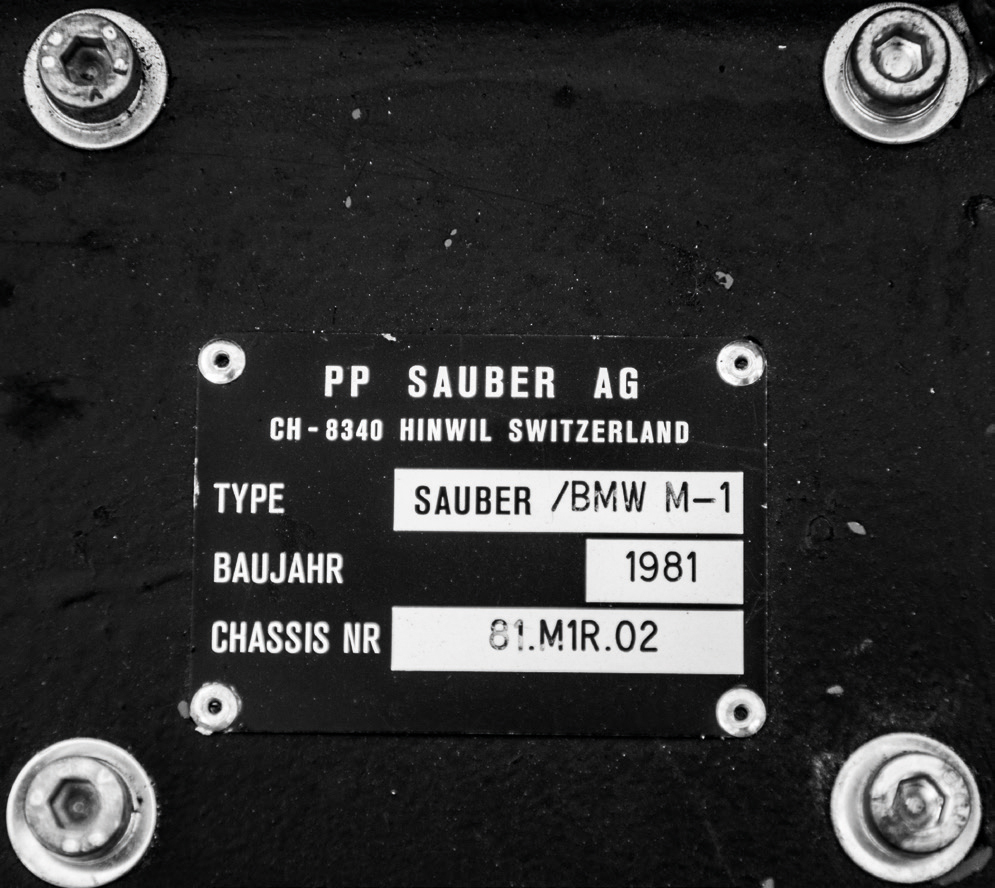
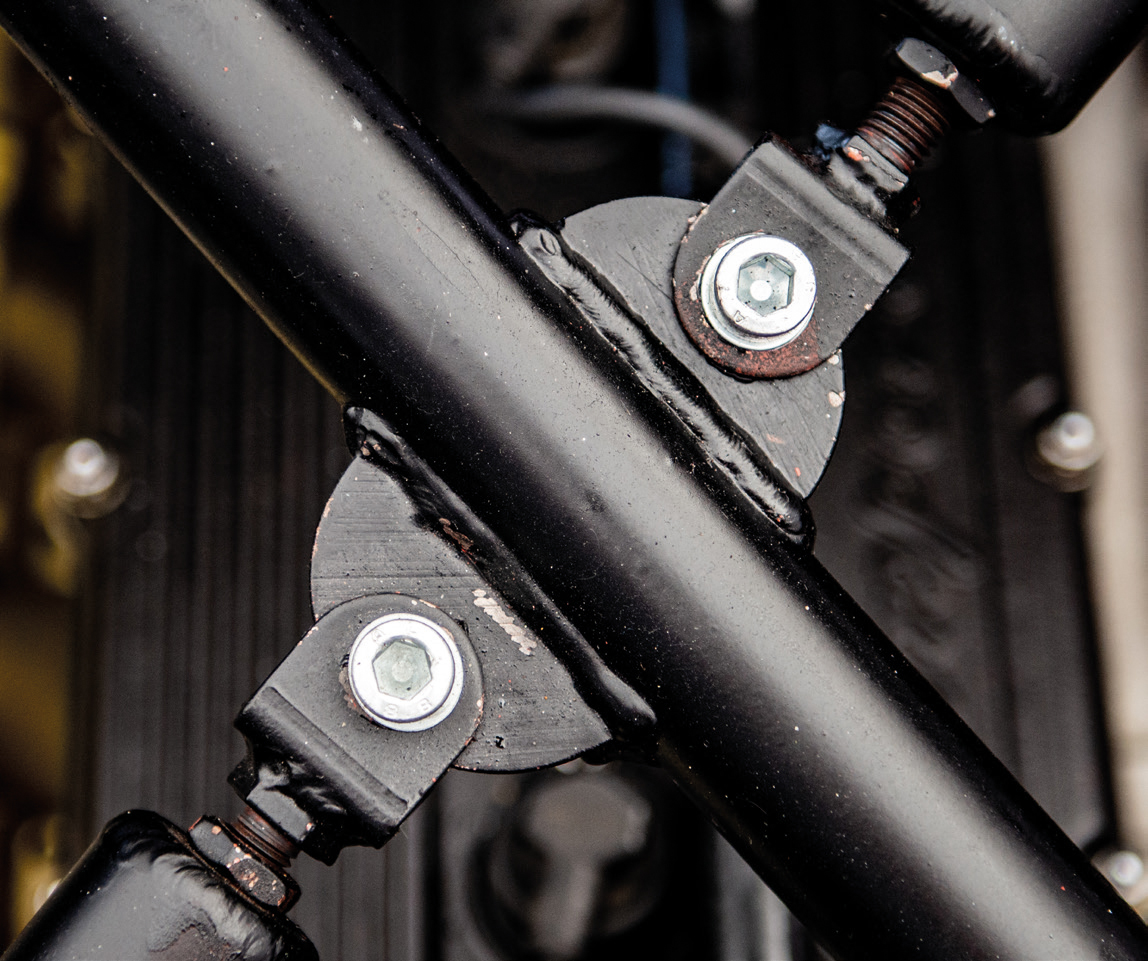
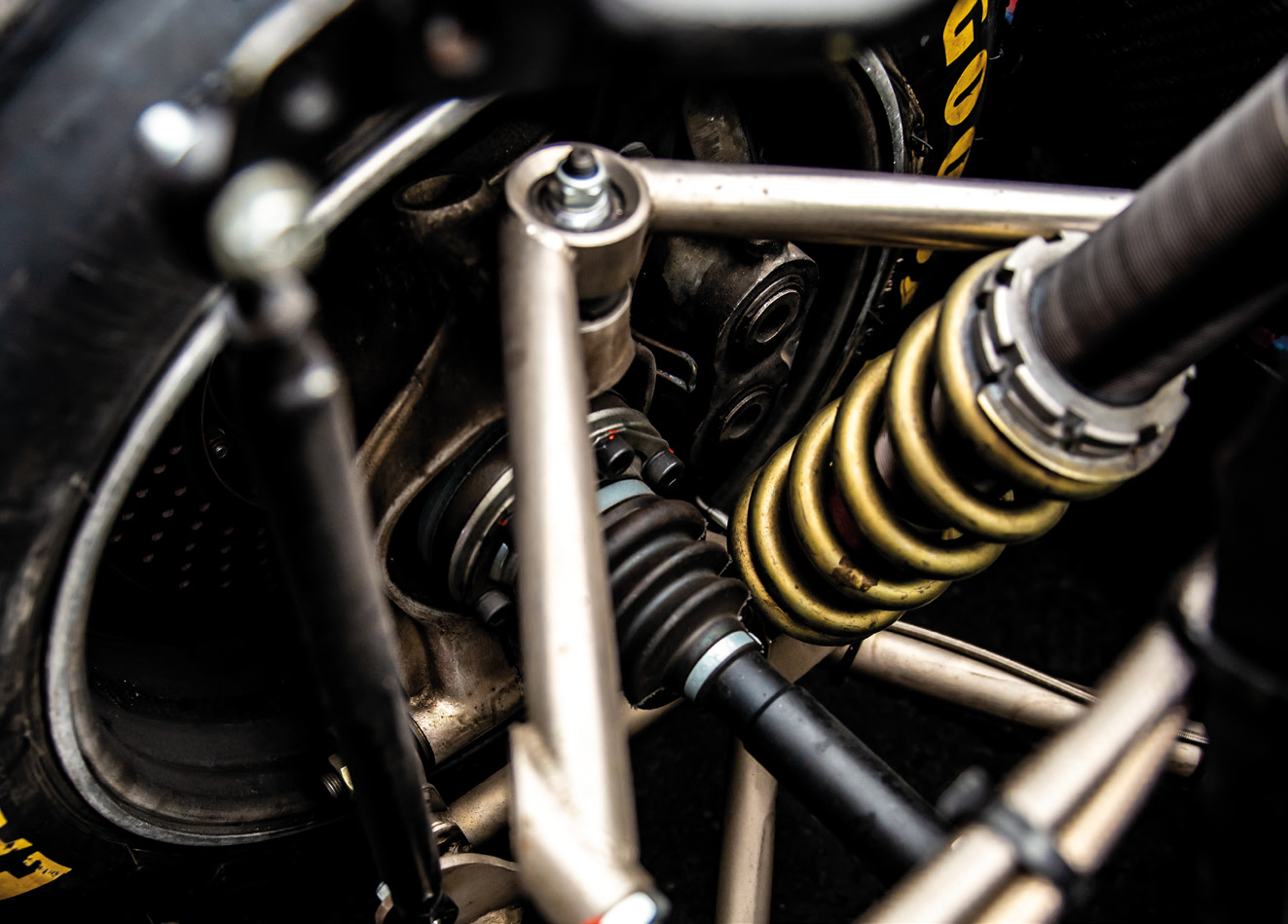
Seemingly out of nowhere and without any role models – though he reportedly received a low six-figure DM grant from BMW – he created two examples with a lightweight tube frame under a carbon fiber body, along with aerodynamic aids that could be individually adapted to different race tracks. His Group 5 versions, powered by the 3.5-liter naturally aspirated inline-six engine, were around 100 kilograms lighter than the Procar version and could, for example, lap the Nürburgring Nordschleife about 10 seconds faster than the Procar version (Stuck/Piquet, 1000 km 1980: 7:46.6 minutes; Stuck/Piquet, 1000 km 1981: 7:37.8). One of these BMW M1 Saubers went to the Freiburg-based BASF GS team, the other was used by Sauber itself.
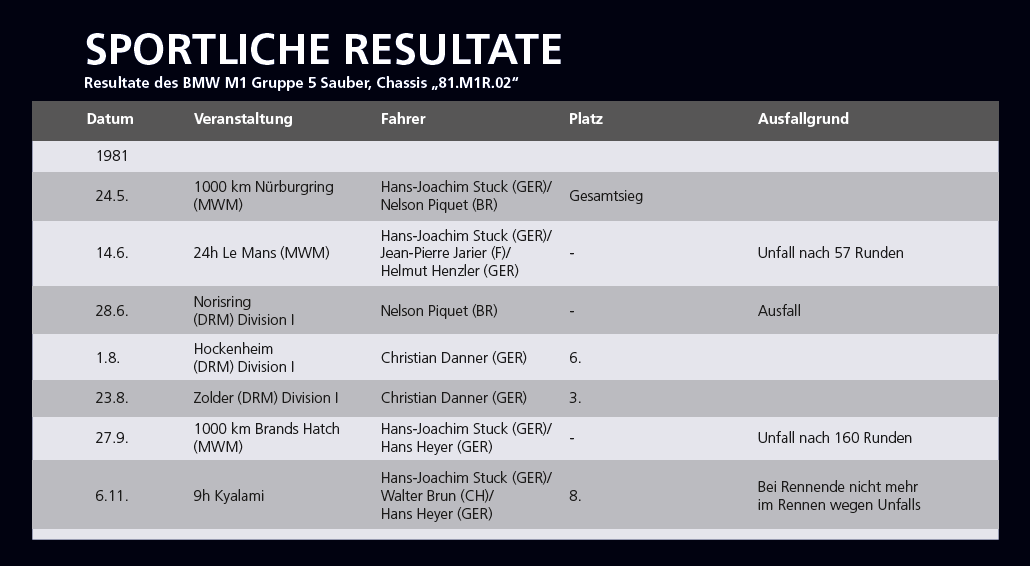
The former is shown on these pages, achieving overall victory at the 1981 World Makes Championship race, the 1000 km Nürburgring in May, which was overshadowed by the fatal accident of Herbert Müller and an early race stoppage. In the hands of Hans Joachim Stuck and Nelson Piquet, the car even finished ahead of the Group 6 Porsche 908/80 Turbo driven by Jochen Mass and Reinhold Joest. This remained the car's greatest success, as it retired after accidents at the 24 Hours of Le Mans, the 1000 km Brands Hatch, and the 9 Hours of Kyalami, which did not count towards the World Makes Championship. In three further races within the German Racing Championship between June and August 1981, Christian Danner, after Nelson Piquet retired, placed the car sixth in Division I at the Norisring, in Hockenheim, and third in Division I in Zolder.
Fritz Wagner from Kolbermoor, as a long-time mechanic and race mechanic, is also „a child of his time.“ After an apprenticeship as an automotive mechanic with Kurt Lotterschmid, he worked as a race mechanic in Formula Vau starting in 1969, then as a race mechanic in the Interserie between 1971 and 1978 on the Lotec LWB 747, Porsche 908, and TOJ SC 306 sports cars. From 1979 to 1981, he held the same position in the Procar series for Team Cassani, for BMW Motorsport at Le Mans, and in the German Racing Championship. Since 1978, alongside his work, he has indulged his hobby as an extremely passionate collector of „everything related to the BMW M1,“ down to the last remnants and screws, at times investing nearly two-thirds of his working days in this hobby. Over time, he acquired original production molds for the M1 series, Procar, and Group 5 vehicles, as well as an original frame straightening bench for the M1. Starting in 1982, he began his first restorations of BMW M1 Procar vehicles and, since 2004, has reactivated various M1 Procar vehicles for historic motorsport. The reconstruction of this BMW M1 Group 5 Sauber, presented here, from the remains of the 1981 Kyalami accident took around two decades.
Technical data of the BMW M1
GS-BMW M1 Group 5 Sauber 1981
Motor
- BMW 6-cylinder inline mid-engine, water-cooled
- Valves per cylinder: 4
- Valve control: 2 overhead camshafts with double roller chain drive
- Bore/Stroke: 94 mm x 84 mm
- Displacement: 3,496 cc
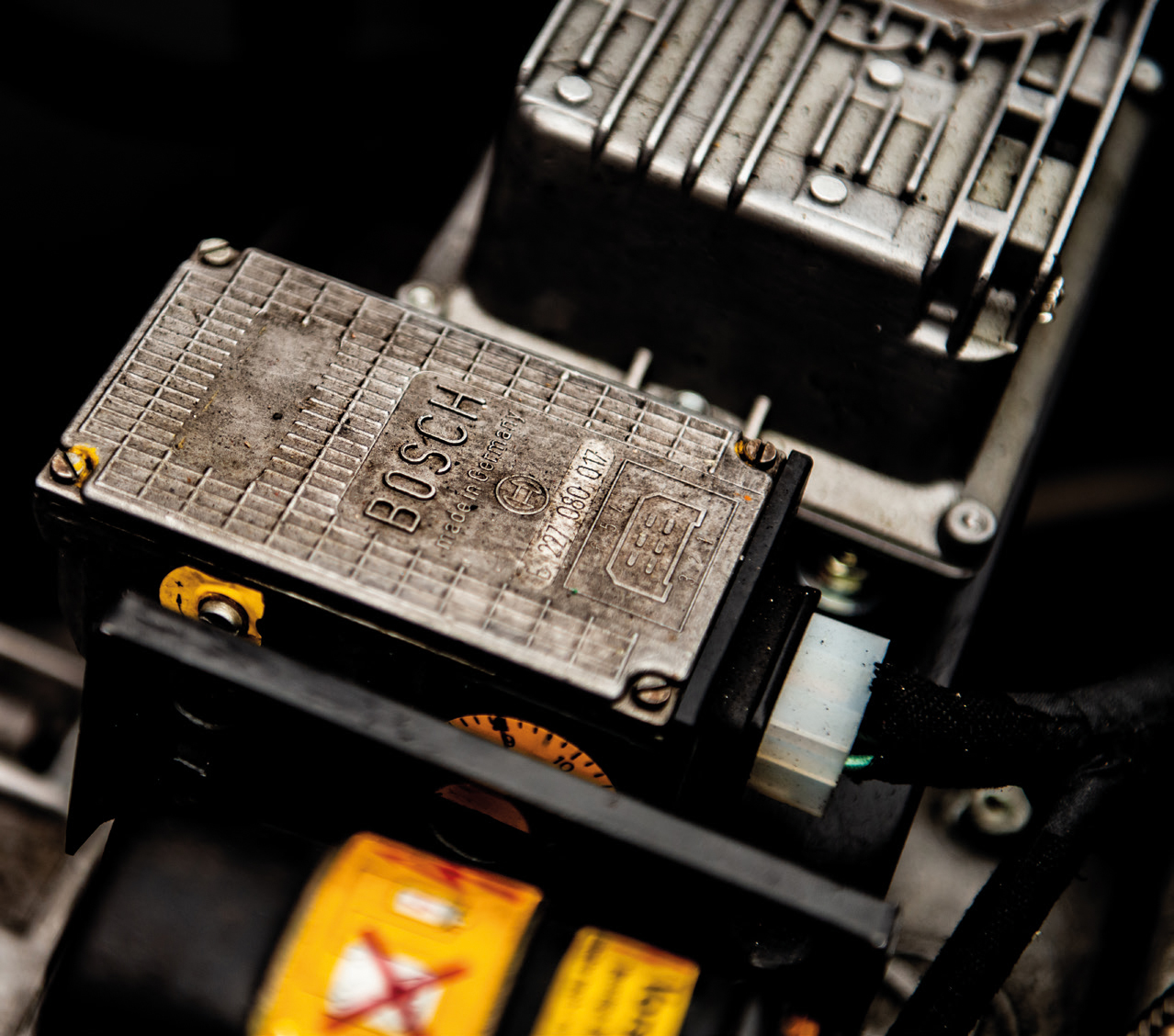
- Fuel preparation: Kugelfischer mechanical injection
- Ignition: HKZ
- Compression Ratio: 11.2:1
- Output: 470 hp at 9,000 rpm
Power transmission
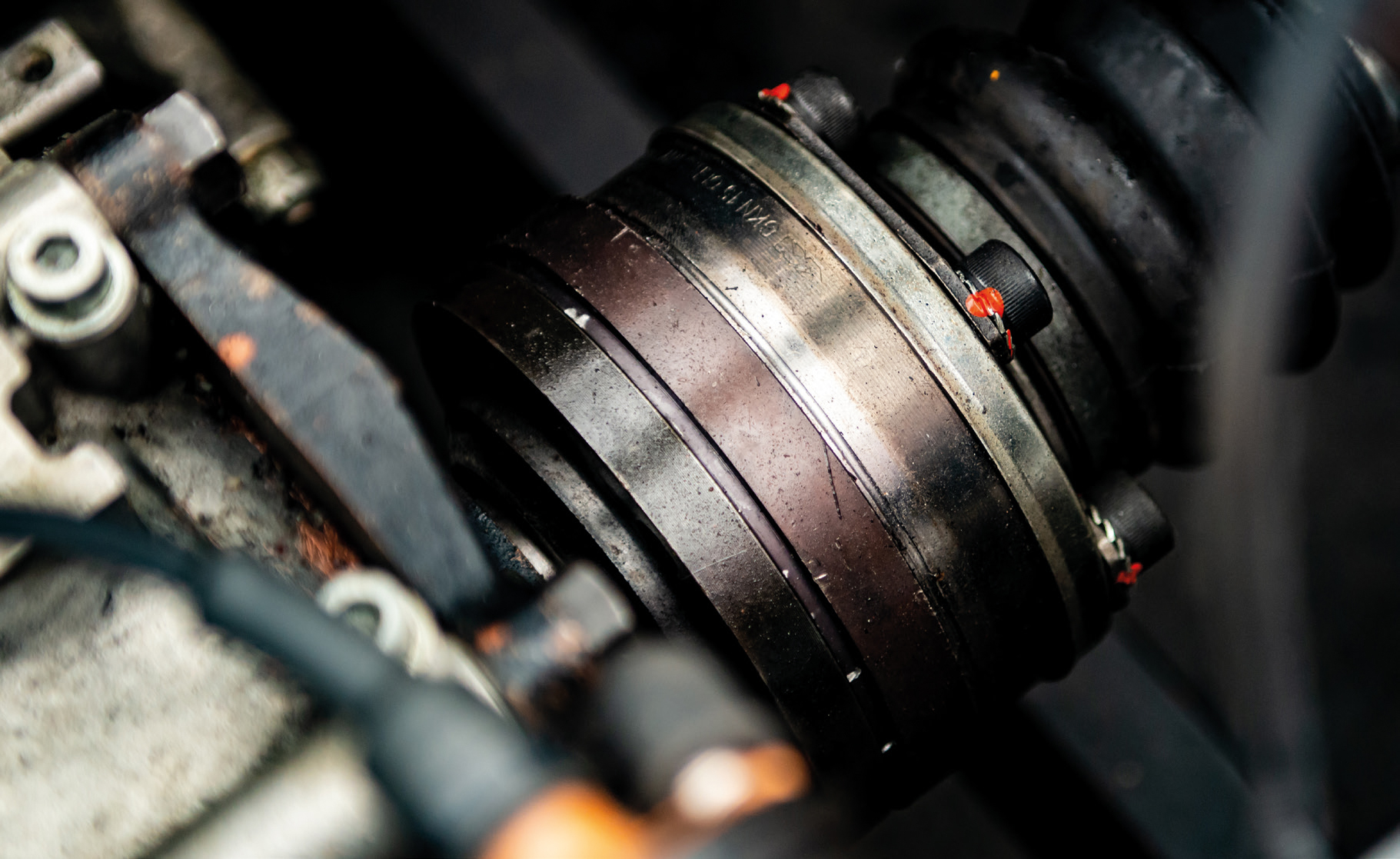
- Transaxle transmission ZF + Hewland
- Rear-wheel drive
Chassis
- Bodywork Aramid (Kevlar)
- Chassis Special trellis frame
- Front suspension: Independent suspension, double wishbone (A-arm) with magnesium wheel carriers
- Rear suspension: independent suspension, double wishbone (trapezoidal lower control arm) with magnesium wheel carriers
- Tire dimensions front/rear: 10/23,5 x 16 + 12,5/25 x 16
- Brakes ATE brake system, 2 pistons, magnesium floating calipers
- Steering ZF rack and pinion steering
Dimensions and Weights
- Length: 4.550 mm
- Width: 2.050 mm
- Wheelbase: 2.560 mm
- Curb weight:965 kg