
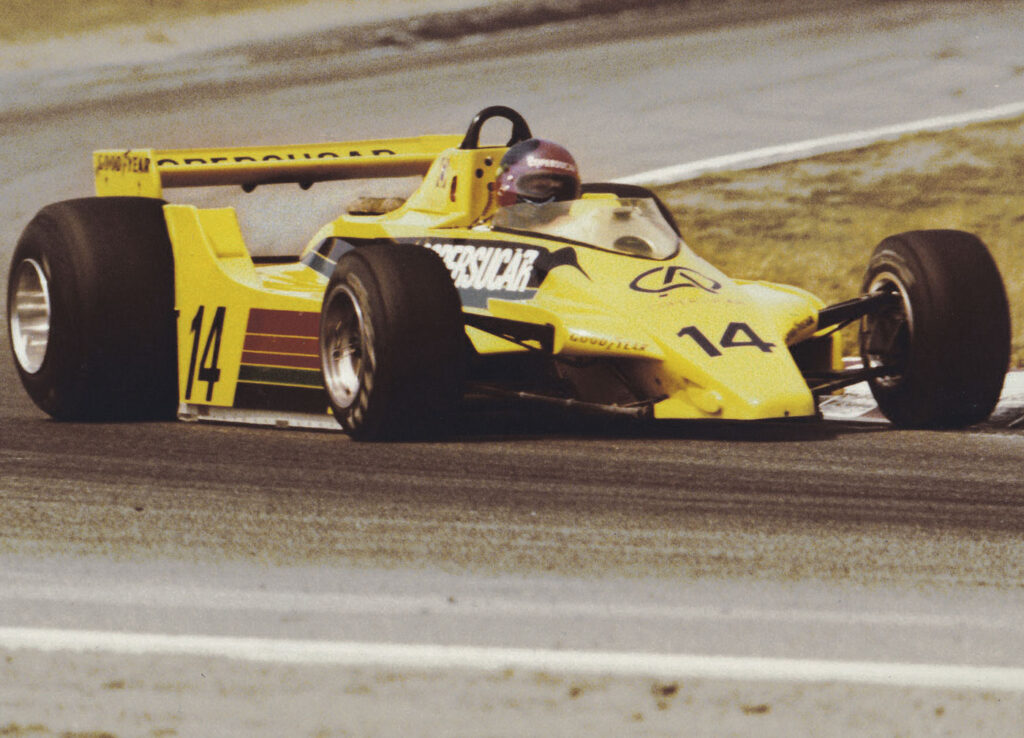
Emerson Fittipaldi: „Racing is what I always want to be“
Today he is married for the third time and is the father of seven children from three marriages. He now speaks five languages fluently, in addition to his native Portuguese: English, French, Italian, and Spanish. „One of his favorite words in English was ‚phantastic‘,“ recalled Swiss motorsport journalist Dieter Stappert once, referring to early and later encounters with Emerson Fittipaldi. „But he had a bit of trouble with the last syllable; it sounded like ‚phantastq,‘ and he never got rid of that quirk.“
Emerson Fittipaldi won directly in his fourth Grand Prix.
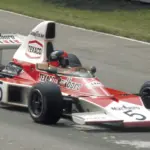
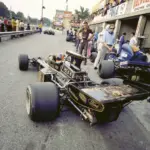
In motorsport, Emerson Fittipaldi was an absolute natural talent and experienced a meteoric rise to Formula 1 within eighteen months of his arrival in Europe in early 1969. In his only Formula 3 season in 1969, he immediately became British champion. And just six months later, at the 1970 British Grand Prix in Brands Hatch, he debuted in an outdated Lotus 49 C and finished in the top ten with eighth place. In his second Grand Prix in Hockenheim in the same car, he already collected three world championship points in fourth place. And his fourth, on October 4, 1970, in the Lotus 72 at Watkins Glen in the USA, he won at the age of 23! Such a feat had virtually no precedent in motorsport history up to that point. Giuseppe Farina won his first Grand Prix right away in Silverstone in 1950, and Juan Manuel Fangio won his second Grand Prix in Monaco in 1950, but this is only strictly statistically speaking, because before 1950 there was no Formula 1 World Championship, even though both had been competing in Formula 1 races since 1948.
For many years, he was also the golden boy of Formula 1 with a certain instinct for making the right decision at the right moment. When he quickly received a Formula 1 offer from Frank Williams for the 1970 season as the number two driver alongside Piers Courage for de Tomaso, he hesitated for a long time. Then, Courage tragically died in the 1970 Dutch Grand Prix at Zandvoort for unexplained reasons. Fittipaldi continued to hesitate and consulted Jochen Rindt, who advised him to go to Lotus. As tragic as Rindt's fatal crash in Monza in 1970 was, and as deeply shaken as the entire team was, Emerson Fittipaldi became the number one driver there.
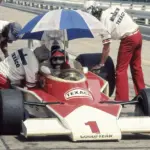
When his Lotus contract finally expired at the end of 1971, after a somewhat sobering season, he renewed it and became the brilliant 1972 World Champion with the team, winning five races that season. The following year, the Lotus 72 was still the most successful car, thanks to a total of seven Grand Prix wins by Emerson Fittipaldi and Ronnie Peterson, but Fittipaldi switched to McLaren at the end of the year, going on to win the team its first ever championship title in 1974, while Ronnie Peterson had his hands full with the now truly aging Lotus 72. An insider compared: „If Chris Amon and Emerson Fittipaldi came to a fork in the road, and it had to be decided whether the best way was left or right, Emerson Fittipaldi would automatically end up with a pot of gold afterward, while Amon would automatically end up with bad luck.“
In nearly 30 years of racing and one traffic accident, Emerson Fittipaldi, given the circumstances, escaped severe falls with considerable shock but suffered injuries that were curable without lasting damage. In September 1997, he and his son Luca even survived a plane crash. „I was flying an ultralight sports plane near Sao Paulo,“ he reported. „At an altitude of about 90 meters, the engine suddenly died. The plane fell like a stone. I am sure that if we had crashed onto hard ground, we would have been dead. But we fell into a swampy area. So I broke my back, while Luca wasn't harmed a bit – what a miracle!“
Emerson Fittipaldi: And I was bad at soccer
Emerson Fittipaldi and his brother Wilson, who was almost three years older, both born in December as desired Christmas presents from their parents, grew up in a motorsport-rich family environment. Their father, Wilson Sr., was one of Brazil's most renowned motorsport journalists, and also competed in car and motorcycle races in his spare time, while their mother participated in touring car races. Distant ancestors of the Fittipaldis also hailed from Italy and Russia, and their mother was born in Kyiv. The sons owed their first names, uncommon in Brazil, to their father's admiration for the American philosopher and poet Ralph Waldo Emerson and the 28th U.S. President, T. Woodrow Wilson.
„As Brazilians, we boys naturally ran after the ball too,“ Emerson Fittipaldi once recalled of his childhood, „but we soon lost the joy of playing in the dusty streets. Even as a little boy, I always had the ambition to win, to be the best. And I was bad at soccer.“ Instead, he idolized Juan Manuel Fangio and always listened to the radio when his father commented on the Argentinian's exploits in South America.
The parents actually didn't want their sons to become race car drivers. The mother was even downright horrified one day when she heard imitation engine noises coming from the children's room, where the sons had drawn the Interlagos race track, which opened in 1940 near their hometown of Sao Paulo, on the floor with chalk and were pushing toy race cars towards the finish line according to dice rolls – Emerson is said to have won his first race here. Father Wilson also realized what devils he had brought into the world after being gifted two bicycles. When the radio station PAN AMERICANA organized a bicycle race, the winners in their categories were Emerson and Wilson; Emerson was just six years old. More or less in parallel, they distinguished themselves in soapbox derbies; speed and racing remained their drug.
When Emerson turned 15, his father gave him a 50cc motorcycle on the condition that he wouldn't ride larger motorcycles. However, the son immediately won his first race in Interlagos with it and secretly switched to a 175cc machine. Although he soon dropped out of a race with engine failure, his mother found out and gave him a stern lecture at home, as his father had just crashed at a motorcycle race and had to be hospitalized for months. That was the end of Emerson's two-wheeled ambitions. Then, he and his brother built their own go-karts and continued to cause a stir. Since Emerson was too young to drive at first, he initially also worked as a mechanic on Wilson's kart. At 17, however, he won his third kart race in 1964, and at 19, he was the „Go-Kart King of Sao Paulo.„ Even more than that, the Fittipaldis also sold their homemade karts. “We earned our money with that,„ he once explained, “to be able to afford real racing."
„Real racing“ in Brazil initially began for the two of them in Renault vehicles, a Gordini and an Alpine, with which Emerson, in particular, achieved great success in 1966. Then, they built a Formula V together, with which the younger brother became Brazilian champion in 1967, with five wins in seven races. After that, however, no more Formula V races were held in Brazil. The versatile „Fittis“ built their own racing car based on an old 1957 Porsche, remained very fast with it, but were no longer as successful due to defects.
When there was nothing left for them to win in Brazil – the military coup there in 1964 also resulted in fewer and fewer races in the country afterward – Wilson Fittipaldi initially turned his attention to Europe. However, a deal that had already been arranged in Formula 3 in England fell through for financial reasons. But he brought back a leather steering wheel from there, which became the initial spark for further business activities of the busy brothers. They designed such a steering wheel for their father's car and subsequently founded a company that, in addition to go-karts, now also sold steering wheels, tuned VW parts, racing helmets, and racing goggles.
„In late 1968, I realized I had to go to Europe if I wanted to advance in racing,“ said Emerson Fittipaldi. „With just enough money to buy a Merlyn Formula Ford, I set off in March 1969.“ He won his second race at Snetterton, and in total, he achieved no fewer than eight victories in eleven races. Stirling Moss already brought him to the attention of Ford Europe boss Walter Hayes: „This is a child prodigy, he is the best of the current generation.“ Emerson had also caught the eye of racing school owner Jim Russell in due course, who promised to put him into Formula 3 soon and kept his word. And although the carefree Brazilian joined the British Formula 3 Championship late in the season, starting only in the tenth of 18 races at Mallory Park, where he finished fifth after gearbox problems, he still won it with five wins and one second place between August and November. The British were ecstatic.
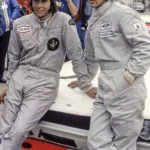
During this time, he also had his first handshake with Lotus boss Colin Chapman, who offered him 20 starts in Formula 2 for the following year and a potential Formula 1 chance. While from the start of the 1970 season he was racking up third and fourth places one after another in Formula 2 in a Type 69-Cosworth FVA sponsored by the American oil company Bardahl and closely managed by Lotus, further underscoring his worthiness for promotion, Colin Chapman became increasingly dissatisfied with his number two driver in Formula 1 alongside Jochen Rindt, the Briton John Miles. So he called Emerson Fittipaldi and asked him to come to Silverstone to test a Formula 1 Lotus. When the latter completed a lap in 1 minute 22.8 seconds in the aging Lotus 49 C, with which Jochen Rindt had won in Monaco in May, Rindt himself was so impressed that he personally held up the timing board with this value for the Brazilian. „It was easier than I thought,“ Fittipaldi commented at the time. „I felt like life was starting all over again for me.“
In Formula 1, Emerson Fittipaldi was no Rindt, no Stewart, no Peterson, and later no Lauda. He was rarely the dominant force in races, the one who stamped his mark, in the sense of pole position, fastest lap, start-to-finish victory, for example. After his championship triumph in 1972, the start of the 1973 season in the Grands Prix of Argentina, Brazil, and then again in Spain was clearly his, in his fourth year for Lotus. But he was a very intelligent driver who incorporated the standings and race progression into his race tactics, and he was always there when others faltered or retired. Thus, between 1972 and 1975, for Lotus and McLaren, he amassed a total of 13 Grand Prix victories and was either world champion or runner-up in those years. In his second season with McLaren, 1975, after his second title win, he seemed to have lost some of his former fire, appearing somewhat more subdued in his performances. At the 1975 French Grand Prix in Le Castellet, for instance, he finished fourth, a „mere“ 37 seconds behind his new teammate Jochen Mass, who in turn finished just 2.3 seconds behind winner Niki Lauda in the Ferrari. Mass also set the fastest lap.
With his decision to race for the Brazilian Formula 1 team Copersucar, founded by his brother Wilson in 1974, starting in 1976, Emerson Fittipaldi also left his winning streak behind. Wilson Fittipaldi himself had made it into Formula 1 as a driver on Brabham cars in 1972/73 and earned three World Championship points with a fifth and a sixth place in 1973. In the 1975 season, however, he was trailing the field with the first Copersucar designs. As a driver, he then retired from Formula 1 and became team principal, with Emerson becoming the star driver alongside other pilots. The financial backer for this ambitious project was Copersucar, a cooperative group of about 75 producers from Brazil's sugar and alcohol industry from the Brazilian state of São Paulo. From the very beginning, the Fittipaldi brothers„ company sailed under Brazil's green and yellow flag; the team and the car were intended to be “purebred„ from the “Fittis'" homeland. The entire undertaking was declared a national cause. Critics accused the two-time world champion of selling his sporting ambitions to the financially strong sponsor. What was true: Copersucar always paid quite handsomely; in 1979, for example, around 6.5 million marks went to the team, but not solely to Emerson Fittipaldi, as was often rumored.
The main flaw in the entire concept remained the same for years. In an effort to make the Copersucar-Fittipaldi project a success purely Brazilian, there were always makeshift solutions, especially in personnel. For example, Wilson Fittipaldi's former Formula 3 mechanic, Richard Divila, was promoted to chief designer of the Formula 1 car. It took quite a while before more or less officially allowing renowned technicians to work on the Brazilian car. For example, former Ferrari engineer Giacomo Caliri was active in the team as a consultant for a long time. In 1978, when the team was already registering under the name Fittipaldi Automotive, Emerson Fittipaldi achieved the best result in the team's history with the F5, finishing second in the Brazilian Grand Prix. For the following year, however, English designer Ralph Bellamy had developed an absolutely undrivable car with the Type F6.
The Fittipaldis parted ways with him and rehired Caliri, who had been working at ATS in the meantime. He only took over the Bellamy monocoque and built a completely new car around this chassis. However, in the second half of 1979, the new Copersucar board decided to stop investing money in Formula 1 in the future. Caliri still built a car for 1980, and at the end of that year, Emerson Fittipaldi retired as a driver to take over team management. „I was too heavily involved in solving all the team's problems,“ he explained his decision at the time, „and I was also neglecting my marriage and private life.“ The cars that bore his name continued to race in Formula 1 until the end of 1982, until the team went bankrupt. At 36 years old, Emerson Fittipaldi had reached the lowest point of his career.
Emerson Fittipaldi Champion Once More and Retirement from Retirement
But he was too much of a racer not to seek and accept a new challenge as a driver once again. „Racing is in my blood, it's what I am and always want to be,“ he once characterized himself. So he entered the North American CART Championship for Indy Cars in 1984, initially alternating between two teams for acclimatization, before deciding on Patrick Racing. In the next five years, he consistently achieved top placements in the annual final standings with this team, in 1989 he achieved five season victories, finished in the top five in every race he completed, and became CART Champion at the age of 43. Meanwhile, he also triumphed for the first time as the winner of the legendary Indianapolis 500. Starting in 1990, Roger Penske signed him, for whom he won the Indianapolis 500 once again in 1993. In total, Fittipaldi achieved 22 victories and over 14 million US dollars in prize money in this racing series between 1984 and 1996, and also set a new record: at least one victory per season in eleven consecutive racing years.
At the 1996 Marlboro 500 in Michigan, he was involved in a serious accident shortly after the start, hitting the wall at around 370 km/h. He broke a vertebra and a shoulder, and his bruised lung partially collapsed. After recovering from this and the injuries sustained in the 1997 plane crash, he announced his retirement from motorsport. However, he also retracted this announcement a few times. In 2003, he reappeared as team principal of his own racing team in the Champ Car series. In 2005, he finished second in the first race of the GP Masters series for former Formula 1 drivers, just behind Nigel Mansell. In 2008, he competed with his brother Wilson behind the wheel of a Porsche 997 GT3 in the Brazilian GT3 Championship, and in 2014, he participated in the WEC finale, the 6 Hours of Sao Paulo, in a Ferrari 458 Italia for the AF Corse team.
Never miss an exciting article about historic motorsport again! Get your Curbs subscription. ALL images conveniently home – directly via our Online store