First published on curbs-magazin.com
Originally published on curbs-magazin.com – now part of slickpix.de.
Jacky Ickx, the all-around talent
Jacky Ickx, the greatest all-around racing driver ever, can boast a unique record. European champion on two wheels as a youngster with a Zündapp, F2 European Champion in 1967, extremely successful as a touring car ace, 37 victories in World Championship endurance races. In addition, two wins at Sebring, in 1969 with Jackie Oliver in a Ford GT40. Then in 1972 in a Ferrari 312 PB with Mario Andretti. In Formula 1, he competed for ten different single-seater manufacturers between 1966 and 1979. He was vice-world champion twice, in 1969 in a Brabham and in 1970 in a Ferrari. In 1979, he concluded his circuit racing career, albeit only temporarily, with the CanAm series title. In 1983, he won the Paris-Dakar adventure in a Mercedes 280 GLE and, in 1985, took three more manufacturer's world championship victories in a Porsche 962C. Jacky recently celebrated his 76th birthday.
nothing more from the Nürburgring
The apple doesn't fall far from the tree with Jacky Ickx.
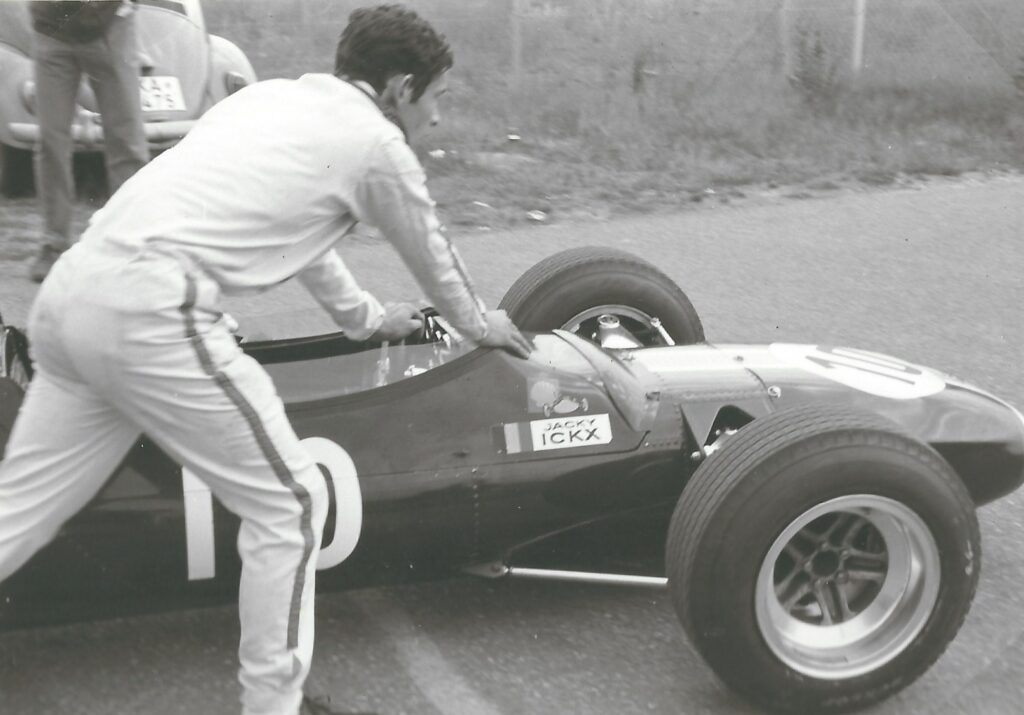
Who would have thought that „the apple falls so close to the tree“ that it would have to make way? In any case, the youngest offspring of Belgian Motocross champion and internationally renowned motorsport journalist Jacques Ickx is causing a stir and will go down in motorsport history as the world's best all-round driver. Jacques-Bernard Ickx, born on January 1, 1945, in Brussels, was soon nicknamed Jacky. Since his older brother Pascal was already competing in motorcycle trials and made a good impression on an Abarth in the Tour de France Automobile, he also wanted a vehicle, in addition to his schoolwork, which he didn't enjoy at all. Dad Ickx was fully understanding, even though his son found racing just as boring as school, where the teachers' hair would stand on end when they had to teach Ickx Junior.
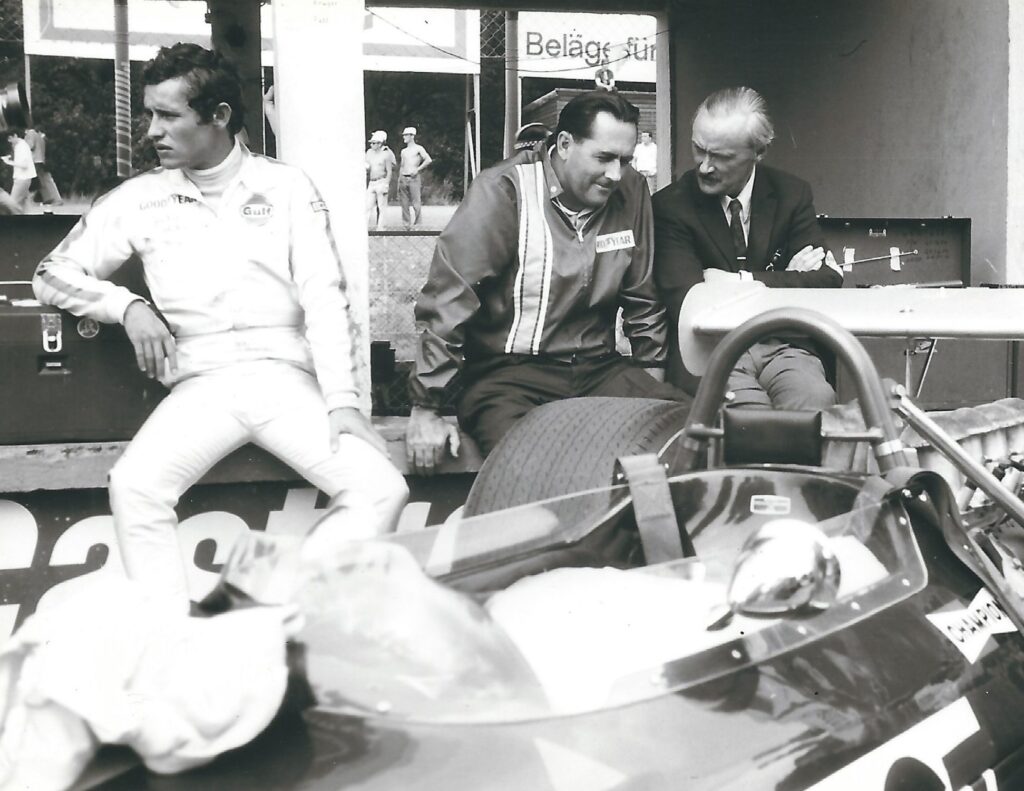

Ickx from the inferno of his Ferrari
With the condition that he improve his grades, Jacky was bought a 50cc Zündapp. In this class, there were naturally competitions, which the young Belgian suddenly found so appealing that with eight wins in 13 races, he immediately became European champion. However, he was still far too young to be a Zündapp works rider in motorcycle Grands Prix. Jacky switched to four wheels. In his first hill climb race with a BMW 700, he overturned so spectacularly (a lot of work for his guardian angel) right in front of the local TV cameras that he didn't just generate public attention.
Impressed by this leap and following several excellent results, Ford Belgium offered him a Lotus-Cortina for 1964, with which he performed true feats of skill. Wheel-to-wheel duels with Jim Clark—also in a Lotus-Cortina—and Jochen Rindt in an Alfa GTA remain unforgettable. The impetuous young man gained Nürburgring experience with a Mustang in the 84-hour Marathon de la Route, which he won in 1966 with the Cortina. A home victory in Spa in the 24 Hours of Spa together with Hubert Hahne in a BMW! Ken Tyrrell—who had noticed Jacky at a race in Budapest—wanted to give him the opportunity for a monoposto test drive, but instead, he drove a tank cross-country, having been drafted into military service.
Outmaneuvered a rival F2 Matra GP
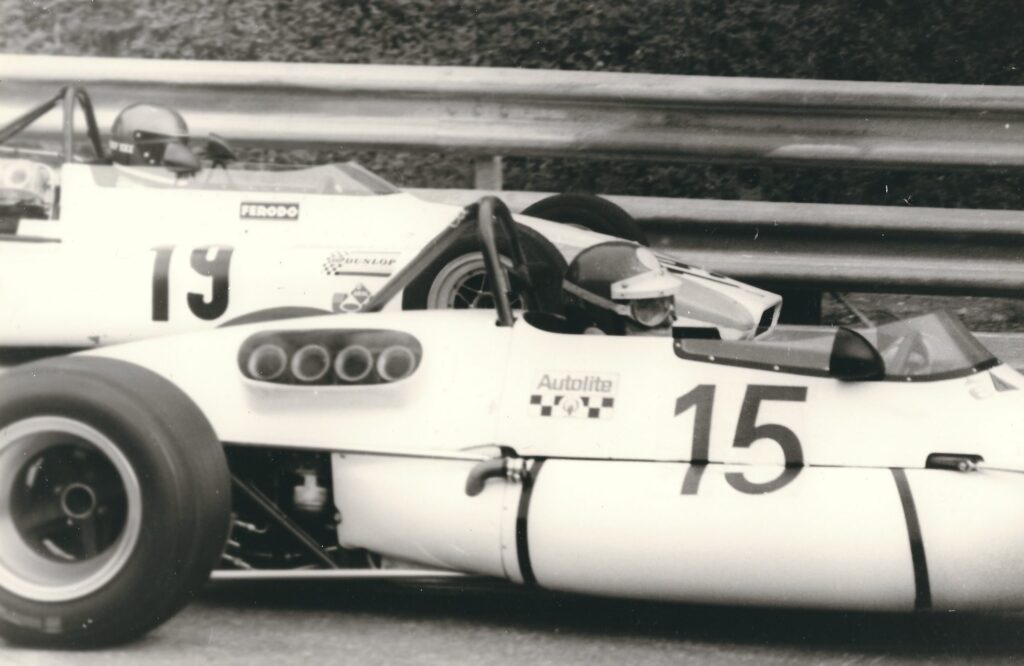
The delayed Tyrrell test drive resulted in a 3-year contract and the opportunity to sensationally make a name for himself at the 1966 German Grand Prix with an inferior Matra Formula 2 car (which started together with Formula 1 but was scored separately). So that the actual F1 field would not get lost on the Nordschleife, Herbert Wilhelm Schmitz from the AvD had fielded just under a dozen Formula 2 cars. Among them were Kurt Ahrens (Brabham), Hubert Hahne (Matra), and Gerhard Mitter (Lotus).
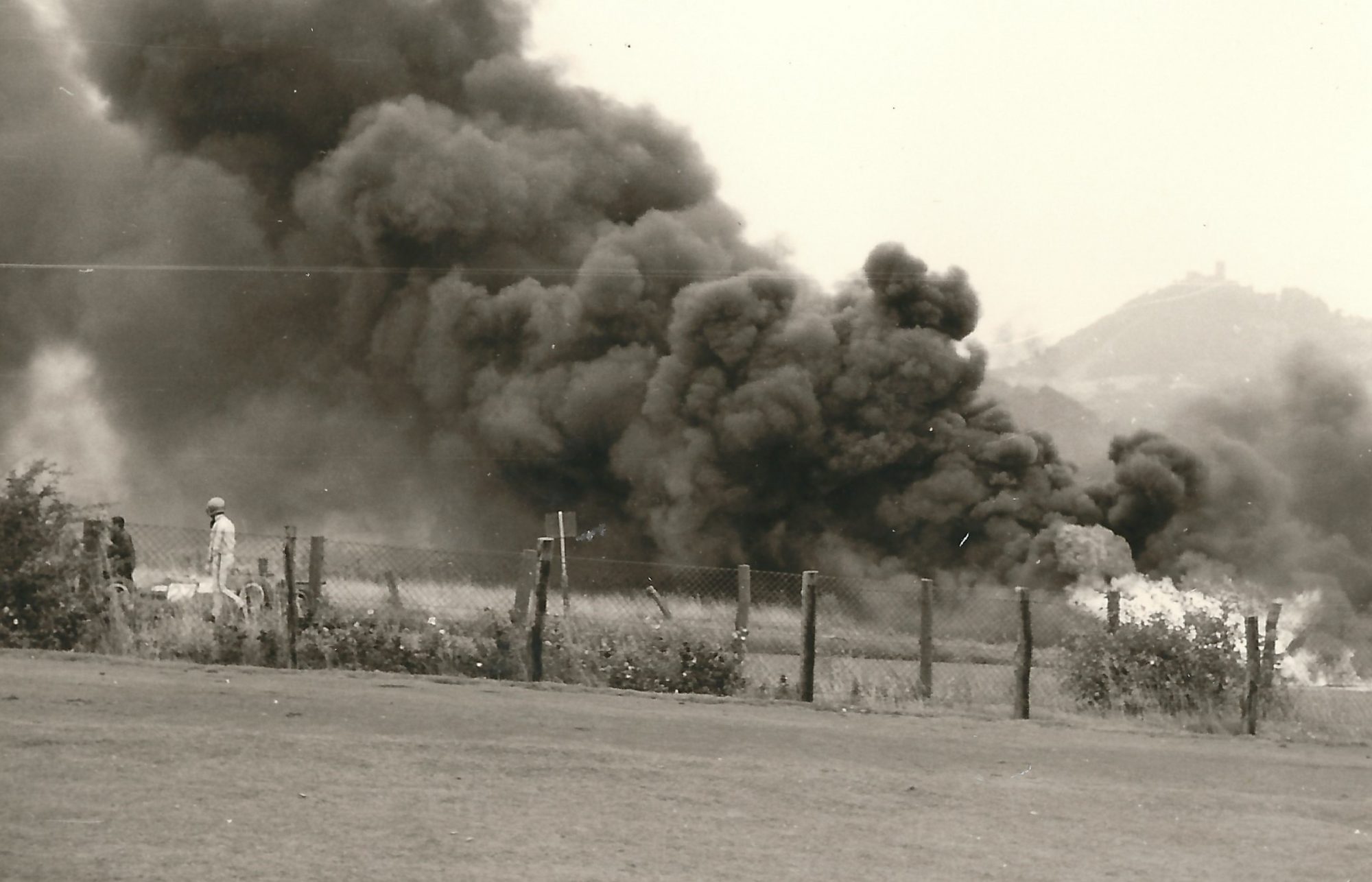
The fastest of these gentlemen is, of course, Jacky Ickx, and he finds himself in the starting lineup sandwiched between Denny Hulme (Brabham-Repco) and Peter Arundell (Lotus-BRM). Unfortunately, John Taylor's Brabham-BRM crashed into the back of Jacky's Matra on the starting lap while ascending to the Quiddelbacher Höhe and caught fire. Right before the eyes of the writer of these lines! The Belgian got back into his only slightly damaged Matra after Taylor was rescued and retired at the pits. Taylor later succumbed to his burn injuries in Koblenz.
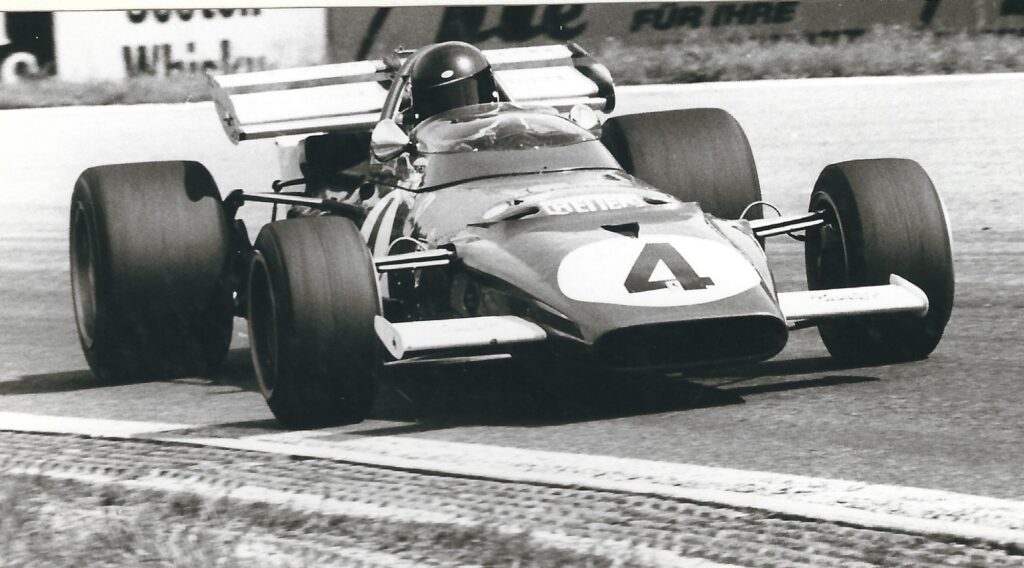

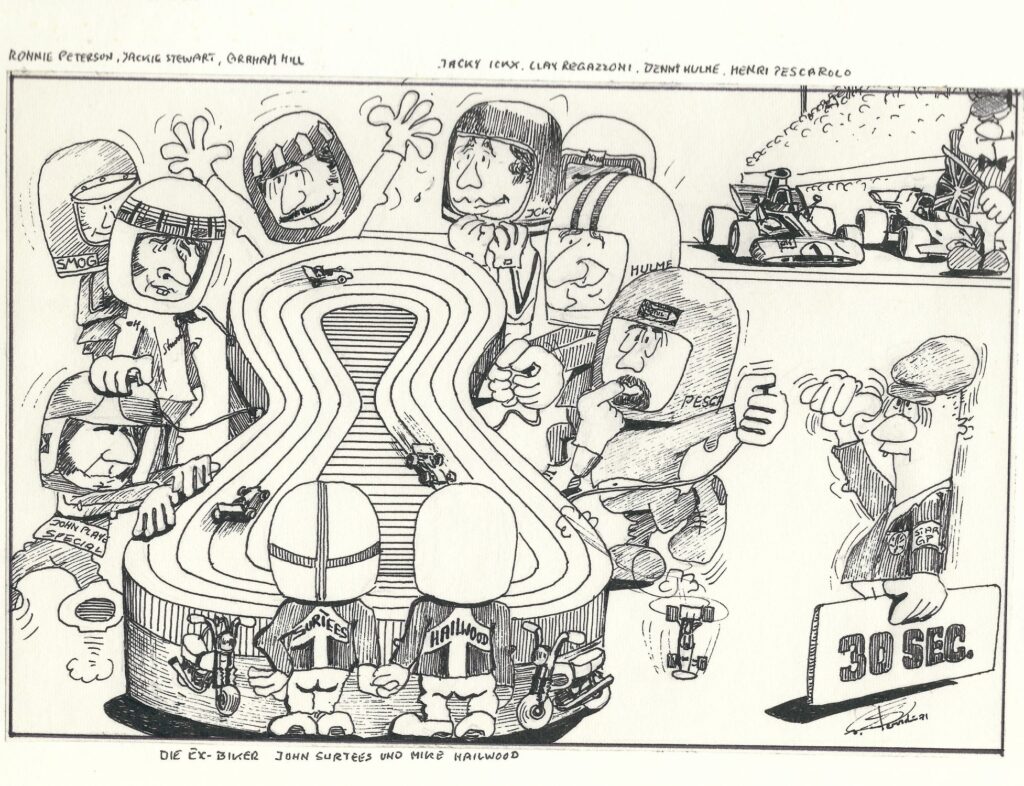
The following year, Ickx downright duped the Formula 1 guild. With his Matra, now equipped with a Cosworth engine that also led him to win the F2 European Championship, Ickx lapped the Nürburgring Nordschleife in third place during practice, behind Jim Clark and Denny Hulme and ahead of names like Gurney, McLaren, Surtees, Brabham, Amon, Rindt & Co. Jim Clark, “my great role model“ (Ickx), said: „If he continues like this, we'll have to get up very early.“ His first World Championship point also came in 1967 in Monza, as a substitute for the injured Pedro Rodriguez in a Cooper-Maserati.
World Vice-Champion 1969 with Brabham
In 1968, in his first full F1 year, the Belgian shone with a Ferrari, winning in Rouen ahead of Surtees and Stewart and finishing fourth in the drivers„ World Championship behind Graham Hill, Jackie Stewart, and Denny Hulme. “Make sure you can sign him up," the journalist and Brabham insider Alan Brinton had advised the three-time world champion from Australia when he visited him in his cottage near Sevenoaks – as he often did. And the deal was made.
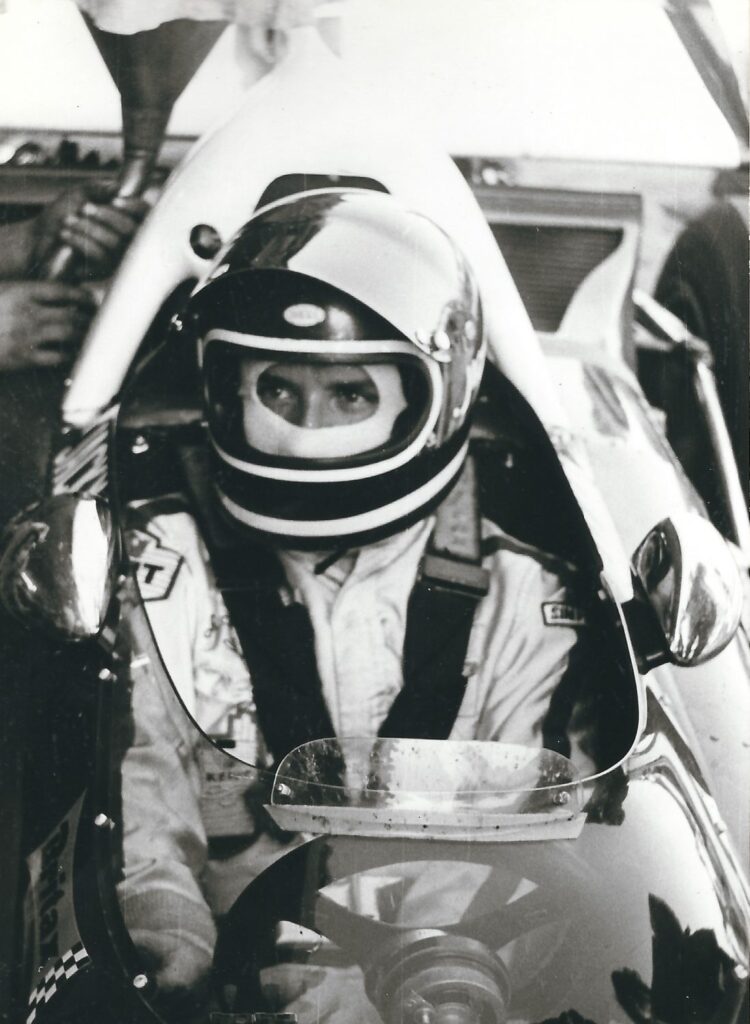
Ickx wins two Grand Prix races and becomes Vice-World Champion in 1969 behind Jackie Stewart. Stewart, of course, had to concede defeat to the Belgian at the Nürburgring. Brinton to Brabham before the race: „Jack, I had a hunch, just like Ickx dominated Stewart and Rindt in practice with 7:42.1, he'll smoke them in the race too.“ Jacky Ickx, sitting right next to him, turns away. He doesn't think much of praise in advance. In front of an enormous crowd – there were said to be 380,000 – Stewart initially dominates because Ickx completely botched the start and had fallen back to sixth place. However, after only four laps, he appears in the slipstream of Stewart's Matra-Ford MS80.
A top-class duel unfolds with several lead changes. With a new lap record, the young Belgian defeats the Scotsman, and Brinton says to the author of these lines, „As much as I regret Mitter's fatal accident in training, with Ickx, racing has found one of its greatest conquerors.“
Four more Ferrari years with five wins end in frustration
Back at the Scuderia, Jacky Ickx has to recognize that Jochen Rindt in the Lotus 72 is the new benchmark of the 1970 season. After the seventh race in Brands Hatch, Jochen Rindt leads comfortably ahead of Jack Brabham, Jackie Stewart, and Denny Hulme. Ickx, plagued by retirements at times, only has four points. Brinton: „He would have been better off staying with Brabham.“ He revised this opinion, however, when Ickx took pole position in Hockenheim ahead of Rindt and only lost to the championship leader by one second in the race.
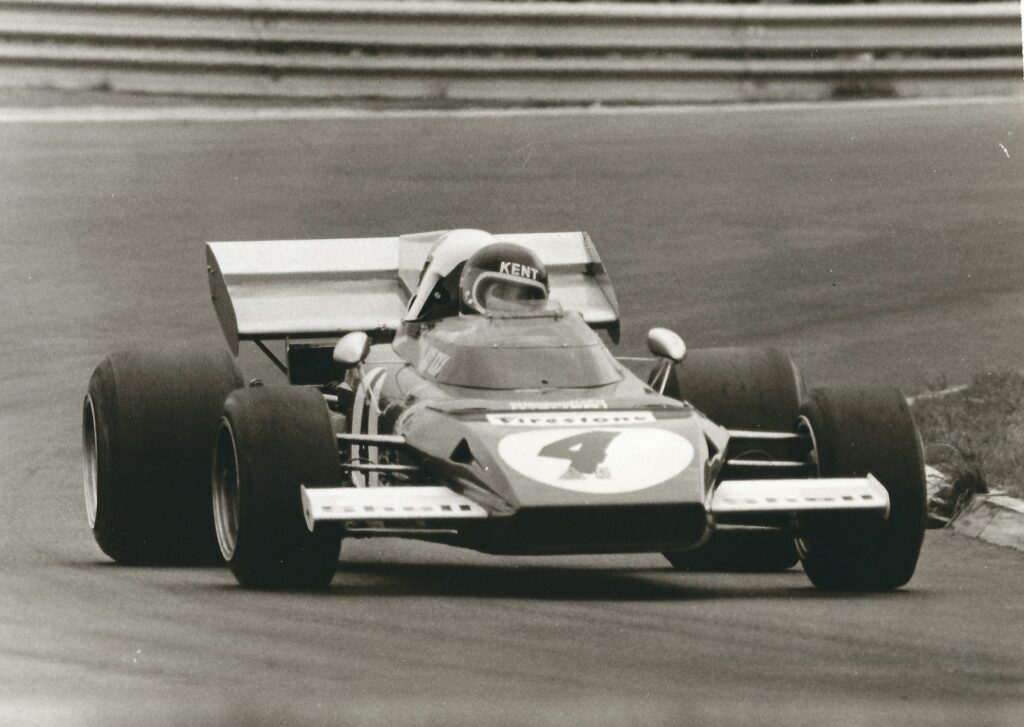
With Jacky Ickx and Clay Regazzoni's double victory in Zeltweg, it's clear there's more to come. After Jochen's death in Monza, Ferrari benefits from Lotus, while Emerson Fittipaldi can present an almost adequate successor, but he only has three championship points to his name until the US GP. The subsequent double victory by Ickx/Regazzoni previously at the Canadian GP had created clear standings. Behind the posthumous world champion Jochen Rindt, Ickx would become vice-champion, as he also wins the finale in Mexico – again ahead of Regazzoni.
This way, Ferrari closes the gap to Lotus in the Constructors' Championship to just four points. In 1971, Ickx could only climb onto the winner's podium of a World Championship race in Zandvoort – there was no stopping Jackie Stewart's Tyrrell. Small, albeit sad, consolation: Jacky Ickx wins the Jochen Rindt Memorial race in Hockenheim ahead of Ronnie Peterson and John Surtees, and accepts congratulations from Nina Rindt. As fourth in the World Championship in 1971 and '72 – here he won again at the Nürburgring – Ickx's final year at Ferrari turns out to be disastrous.
The Scuderia only scores 12 points and temporarily withdraws due to lack of success. Ickx naturally achieves his best result of the season, a single podium finish, at the Nürburgring – as a guest driver in a Yardley-McLaren-Ford M23, which he had qualified in the second row! Even after leaving the paddock in Zandvoort, Yardley stickers were affixed to his Ferrari Daytona „company car,“ which insiders initially took for a cosmetic gag. The Commendatore's public reprimands sounded somewhat embarrassing to industry insiders: „Ickx lacks driving commitment.“ Sorry, Ferrari lacks a competitive car in 1973, because even „on their doorstep,“ in Monza, the 312B3 doesn't make it into the top three rows. Even with the ISO-Marlboro-Ford, which was positioned pretty far back, Ickx can still do something with it and drives it to seventh place in the US GP – Arturo Merzario in the Ferrari only finishes sixteenth.
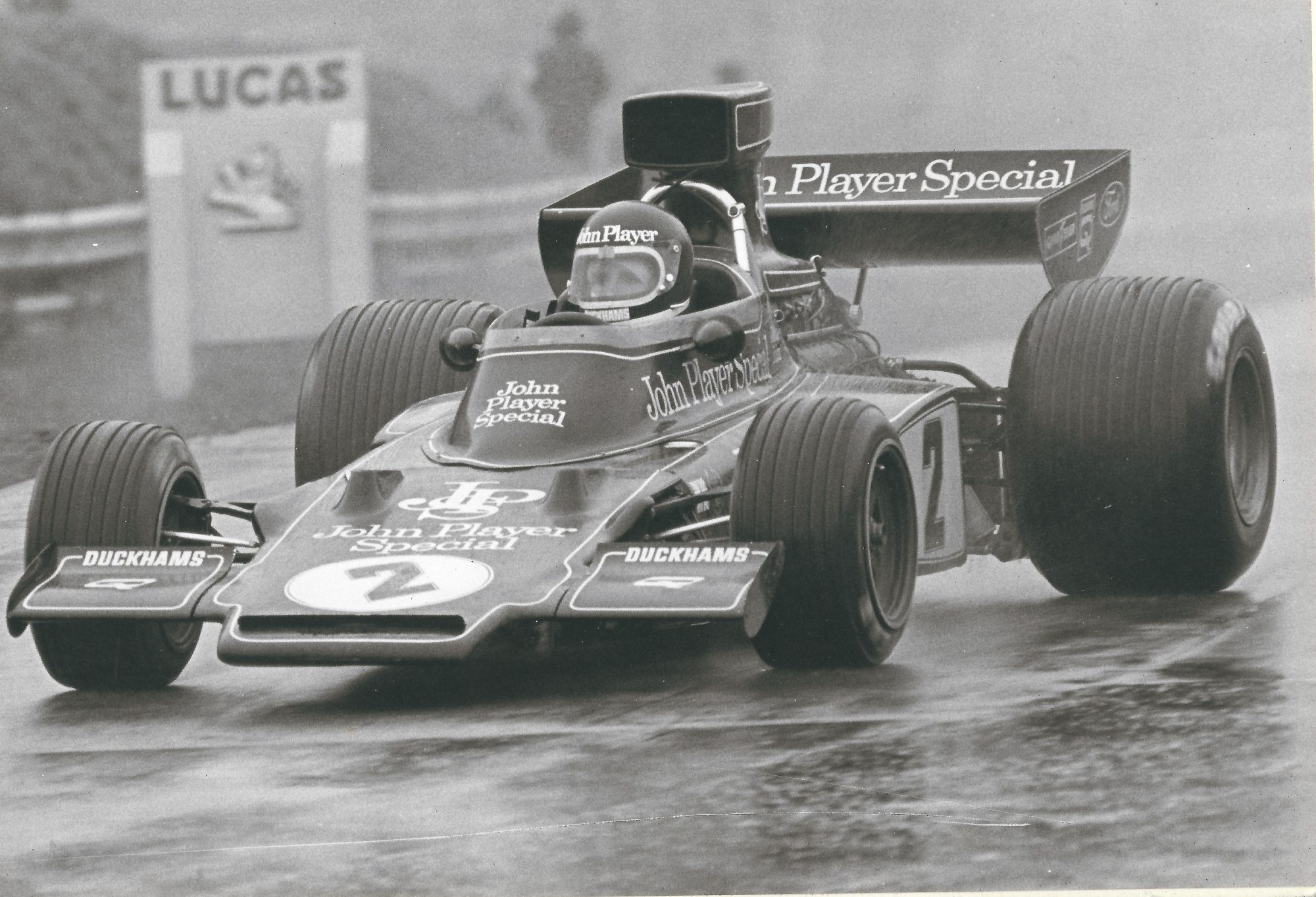
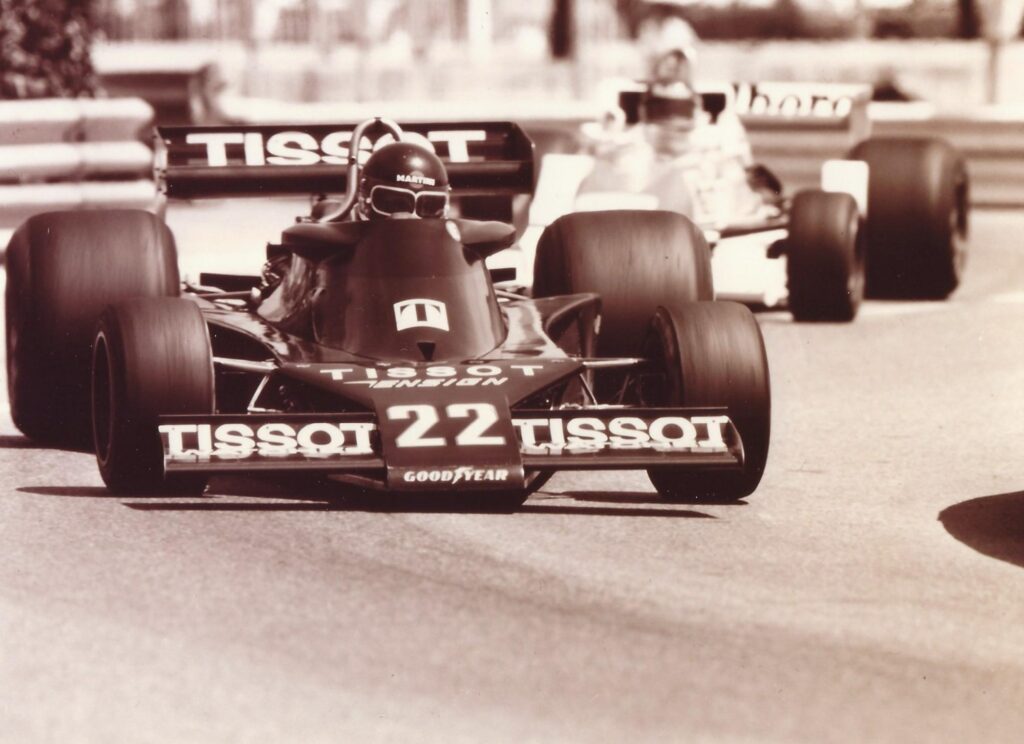
1974 and '75 saw Jacky Ickx have rather poor luck at Lotus: second in 1975 at the Spanish GP and third the previous year in Brazil and at Brands Hatch, where he at least put in a strong performance at the 1974 Race of Champions, winning the rain-soaked race ahead of Niki Lauda (Ferrari 312B3) and Emerson Fittipaldi (McLaren-Ford M23). Occasional starts for Williams and Ensign between 1976 and '78 remained without championship points and in 1979, eight unlucky Ligier entries yielded a meager three championship points.
Mixed Formula 1 record but CanAm victory
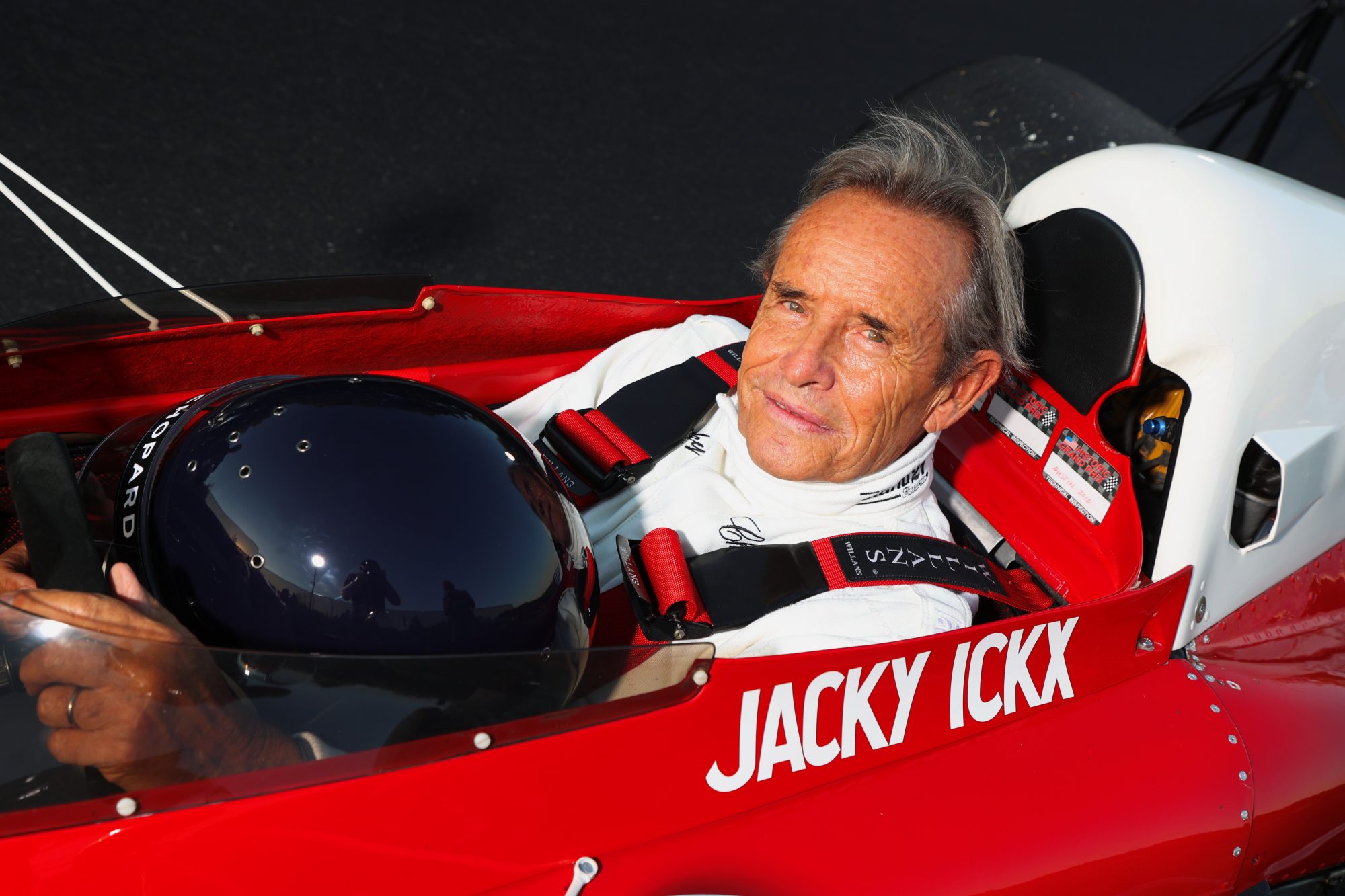
Jacky, Vice-World Champion in 1969 and 1970, recorded eight wins, 13 pole positions, 3045 kilometers led, and earned 181 championship points in his Grand Prix career over 114 starts (a winner only got nine points back then).
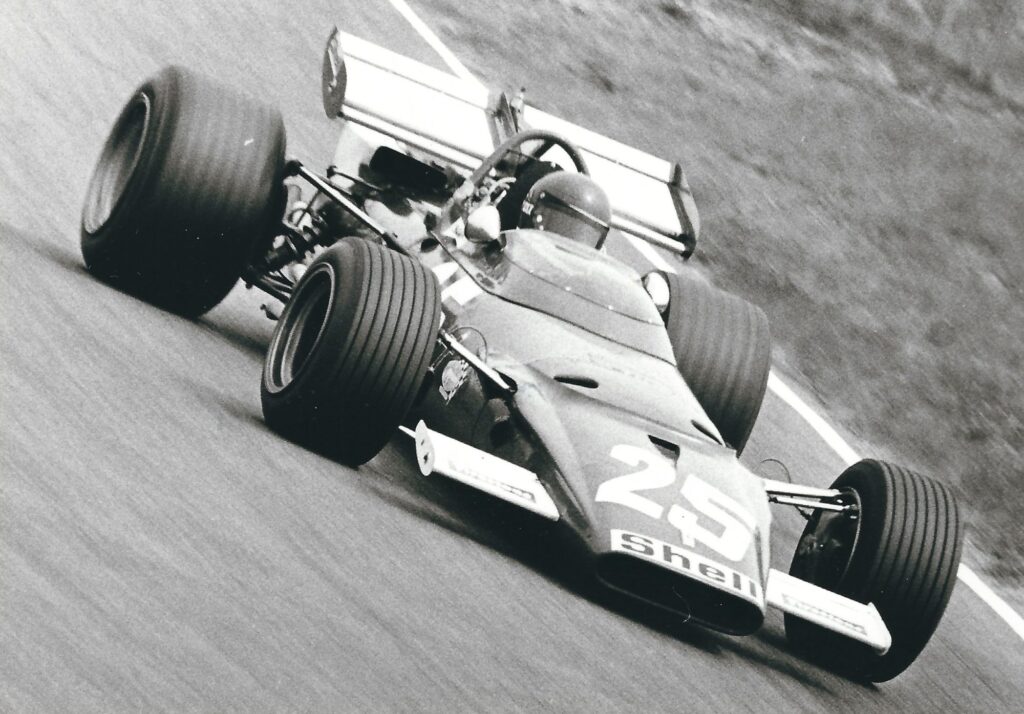
„My guardian angel only had to work overtime once,“ Ickx recapitulates, „when my Ferrari caught fire in Jarama in 1970.“ Torpedoed by Jackie Oliver's BRM P153, the Belgian's 312B slammed into the guardrails with full force, threatening to explode. Freed from his car by a marshal, the burning Ickx rolled beside the track to smother the flames. He escaped with minor burns and in shock. No guardian angel was needed to assist him in the 1979 Can-Am series. Following Patrick Tambay in 1977 and Alan Jones in 1978, Jacky took the championship title for Carl Haas and Jim Hall's team and declared in Riverside that he was done with circuit racing. This intention didn't last long, as Porsche and Le Mans beckoned.
Successful with Ford, Gulf-Mirage, and Porsche at Le Mans
1966: While Porsche race director Fritz Huschke von Hanstein's prominent upper jaw's row of teeth widens more and more under his mustache out of sheer joy over fourth place overall and winning the index classification with a Carrera 6 driven by Jo Siffert and Colin Davis, Jacky Ickx pulls a long face.
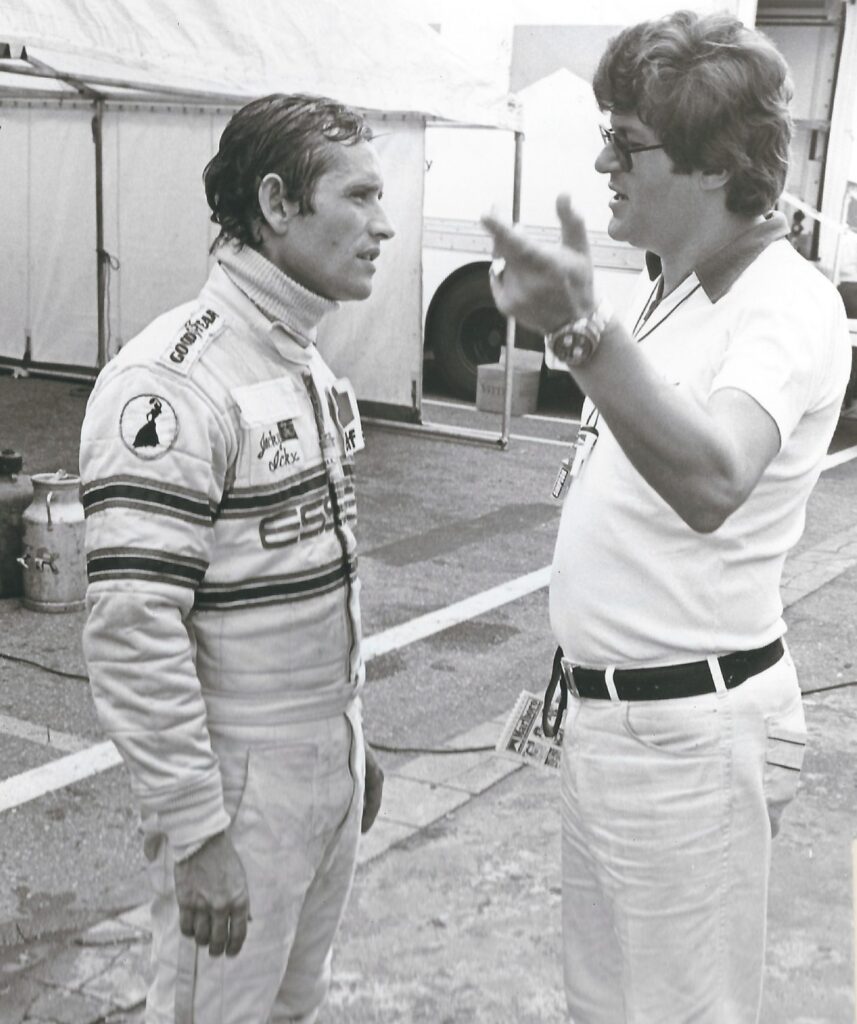
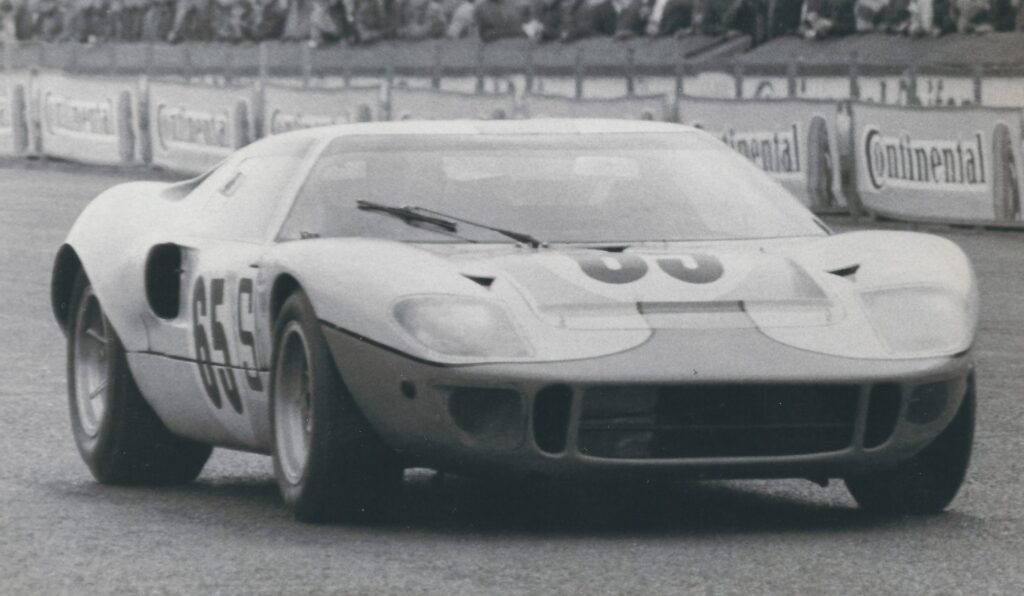
His first appearance at Le Mans, together with Jochen Neerpasch in a Ford GT40, ended in the eleventh hour with engine failure. Three Ford Mk IIs finished ahead of no fewer than four Porsche Carrera 6s, that was the race result. Ickx was also out in 1967, along with Brian Muir in John Wyer's Mirage M1. In 1969, a great revelation came with a GT40 from this team: a razor-thin victory ahead of Hans Herrmann in a Porsche 908. Team boss Wyer: „Unbelievable, our old GT40 already had over 30,000 kilometers on the clock!“ Neither the factory Ferrari 512S, which Ickx co-piloted with the Swiss Peter Schetty in 1970, nor the 312PB with him and Brian Redman in 1973 saw the checkered flag.
The „pilgrimage“ (Porsche PR boss Manfred Jantke's own words) to Le Mans in 1975 almost ended with a surprise from Reinhold Jöst's veteran 908/3, had his co-driver Mario Casoni not been abruptly cut off by another 908 in the early morning hours. The repair stop took an eternity, allowing the Gulf-Ford GR8 of Jacky Ickx and Derek Bell to win with a comfortable lead, despite differential failure, rear end vibrations, dropping oil pressure, and severe braking problems.
Bell is beside himself with joy, Ickx is calm personified, but can't suppress a wide, mischievous grin. Things heat up the following year: the sun beats down on the asphalt, a good 400 of the more than 200,000 spectators suffer heatstroke, and Jacky Ickx in the leading Porsche 936 needs a lot of ointment for his throttle foot. His first Le Mans victory in a works Porsche 936 – together with the blue-blooded Dutchman Gijs van Lennep – ahead of the Mirage of Lafosse/Migault/Bell and a Cadenet-Lola-Ford, underpins his claim as the team's top driver.
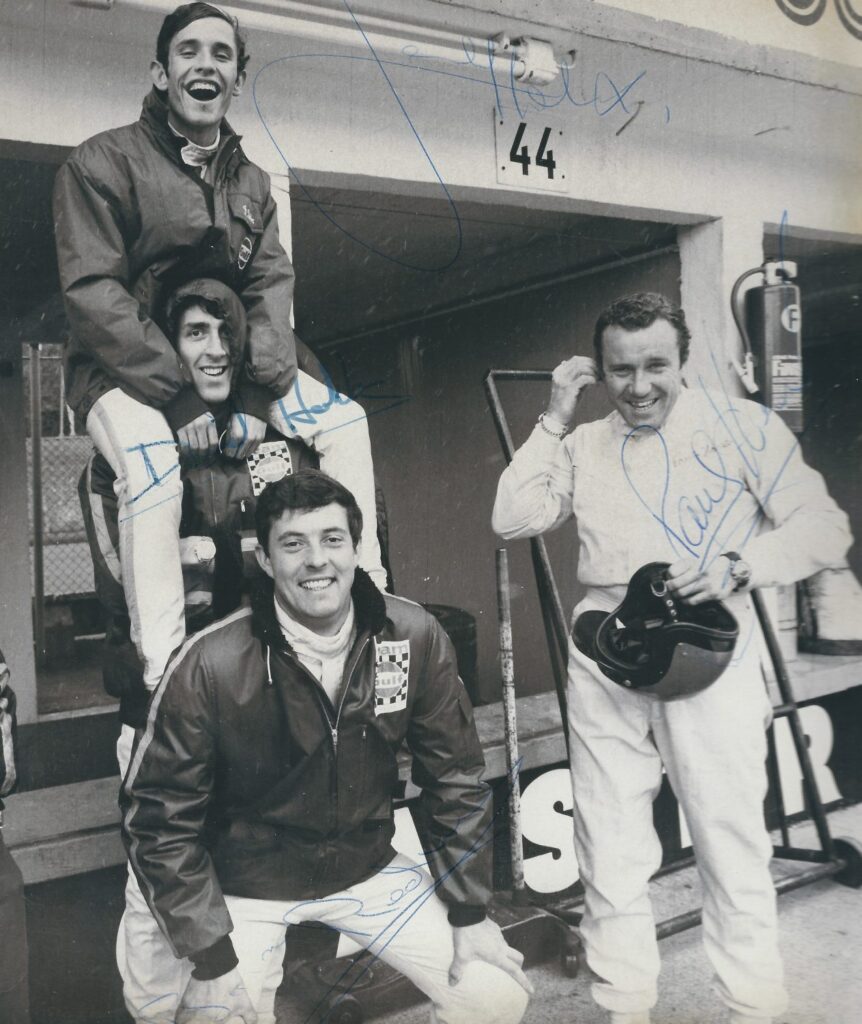
Ickx-any Porsche action at Le Mans
Jacky Ickx the alpha animal
1977: As an „Alfa-animal“ at Porsche, Ickx not only drives the 936 with Pescarolo, but is also scheduled to reinforce Jürgen Barth and Hurley Haywood's 936. How lucky for the Belgian, as only this car is still running on Sunday. Retired: the three leading Renaults as well as two of the three factory Porsches.
Thus, Ickx's fourth Le Mans victory hung by a thread. In 1978, he had to switch again because Jochen Mass had crashed his Group 6 „flounder“ into the guardrail. Again with Jürgen Barth – plus Reinhold Jöst and Bob Wollek – this time they only managed a second place overall. „We'd rather forget 1979,“ said Ickx, as the 936, sponsored by Essex, was disqualified due to outside assistance. A Porsche mechanic "coincidentally" dropped a spare timing belt that Jacky needed to continue driving, right next to the 936 stranded on the Hunaudières straight.
Jacky Ickx - The Record Hunter
A new lap record is set for Ickx, but he is so sour about it that he declares in a small circle: “I don't think I should compete here anymore.“ Months later: „We can always try again.“ And so, in 1980, he gets into the private 936, designated as the 908/80, from Reinhold Jöst. Finishing second, behind and ahead of a Rondeau, Ickx summarizes: “That was“Now, really,„ you might think! And the following year, Jacky Ickx said: “With the Jules works Porsche, I can win." He spokeand leaves no chance for the two subsequent Rondeau 379 Cs. He easily takes 14 and 19 laps from them respectively. Jacky celebrates his fifth overall Le Mans victory – as he did in 1975 – together with Derek Bell. When asked if he would retire with this victory in the bag: „I don't have to think about that yet, do I?“
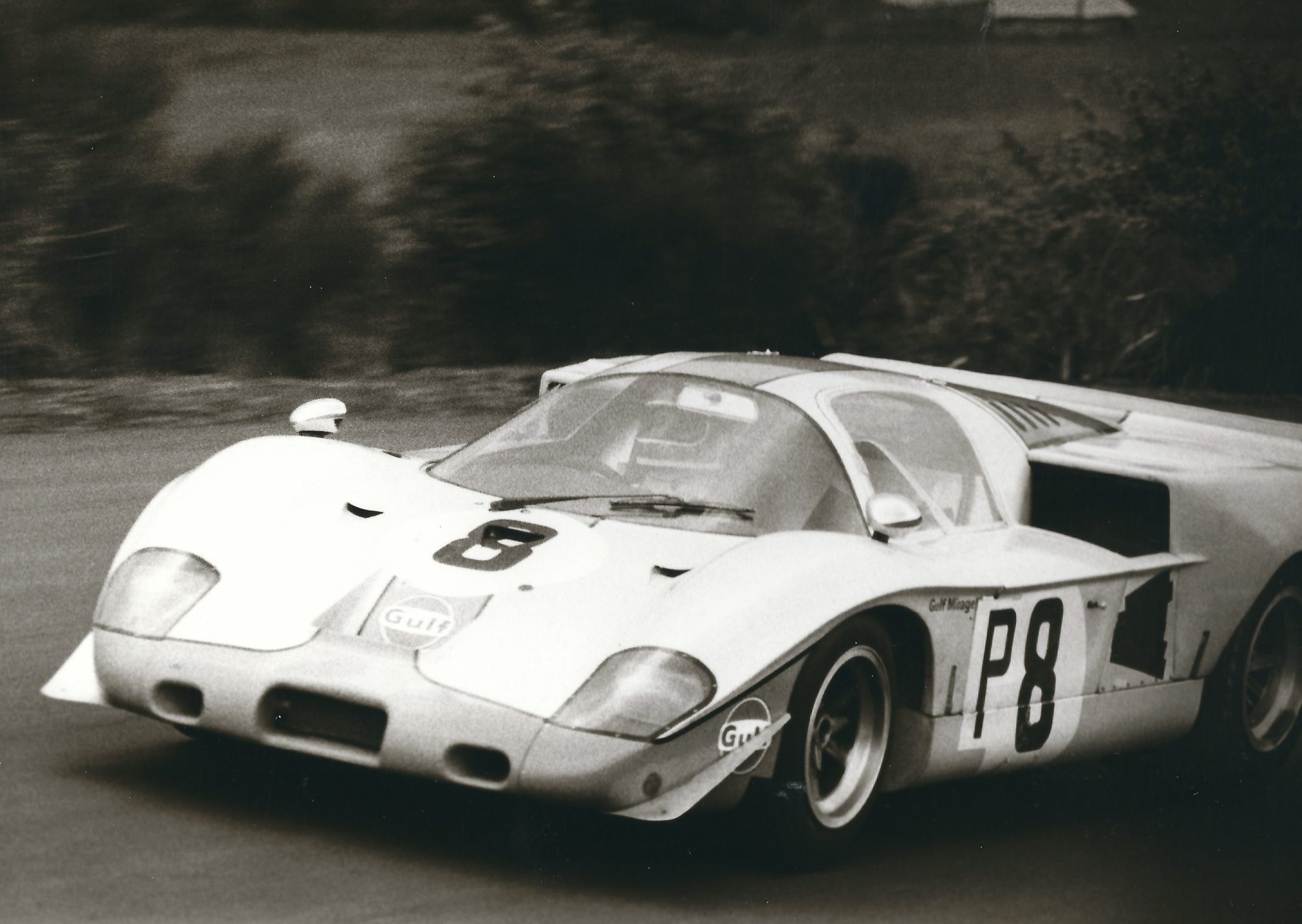
Ickx in Gulf-Mirage Prototype
1000km Nürburgring
Jacky Ickx had more success than compatriot Merckx.
With his countryman and peer Edouard Louis Joseph Baron Merckx, known as Eddy, he is now, so to speak, on equal footing, as Eddy won the Tour de France and the Giro d'Italia five times each. Continue? Why not, because with the 956 for 1982, entirely in the Rothmans look, he not only has a super race car at his disposal, but he is once again assigned his favorite partner Derek Bell.
For this ideal constellation, there's no need to ask the guardian angel, who shows no signs of fatigue anyway. Fivefold success at Le Mans in June 1982: at the front, the three Group C 956s of Ickx/Bell, Mass/Schuppan, and Haywood/Holbert/Barth, followed by two 935s, victorious in the IMSA GTX category. Bringing home starting numbers 1, 2, and 3 in that order had never happened before at Le Mans. And the fact that the seasoned Jacky Ickx used significantly less fuel than his teammates at identical lap times speaks to his outstanding skill. Porsche project manager Norbert Singer sings a hymn of praise.
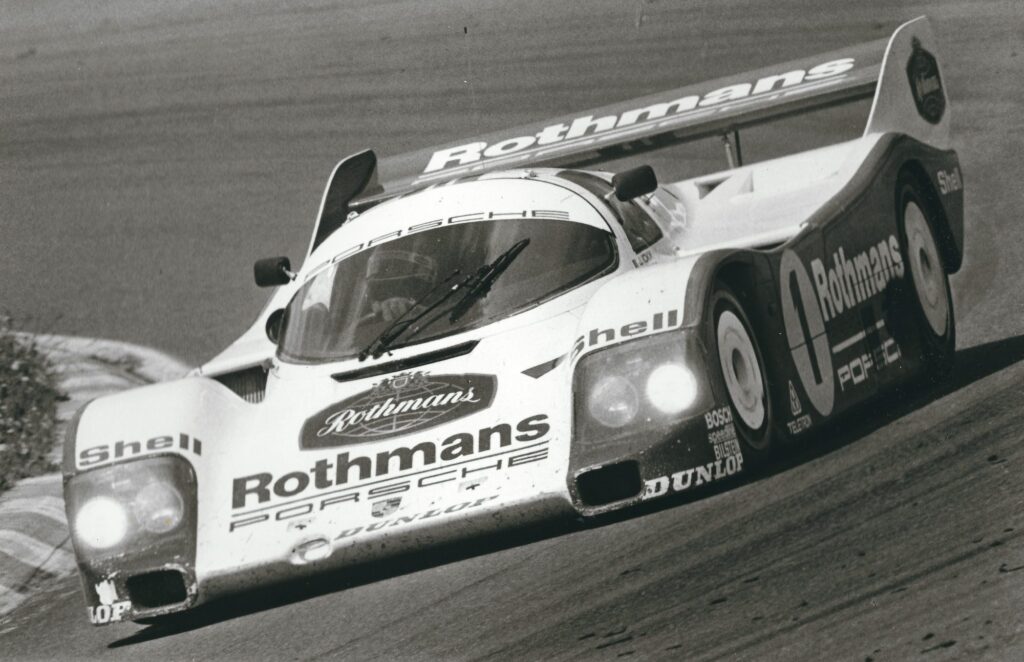
In 1983, the dream team of Ickx/Bell had to narrowly cede victory to the trio of Holbert/Haywood/Schuppan. Behind them came the Andrettis, sharing a cockpit with Philippe Alliot. Winning can be addictive: Jacky Ickx once again answered the call of duty for Porsche in 1985. His partner in the Rothmans 962 was Jochen Mass. They qualified in second place, as „Strietzel“ Stuck had scorched a lap record of 3:14.80 onto the asphalt, two seconds faster than the old record held by Ickx. Is it a bad omen that Derek Bell is driving in Stuck's car? Both works cars are plagued by various problems: At the finish line, Stuck is seven laps behind the Jöst-Porsche 956 of Klaus Ludwig, Paolo Barilla, and „John Winter,“ while Ickx is a full 26 laps behind.
Fatal collision
Spa-Francorchamps, Eau Rouge, September 1, 1985: After a collision between Stefan Bellof's 956 and Jacky Ickx's works 962 C, horror reigns. Germany's Formula hope and endurance world champion Bellof is killed instantly – Ickx escapes with minor sprains. For the first time, his guardian angel raises his hand as a warning. A completely dejected Ickx: “I am infinitely sad. Who would guess that Stefan would try to overtake on the left outside in this corner?“
Jacky Ickx's guardian angel had its hands full
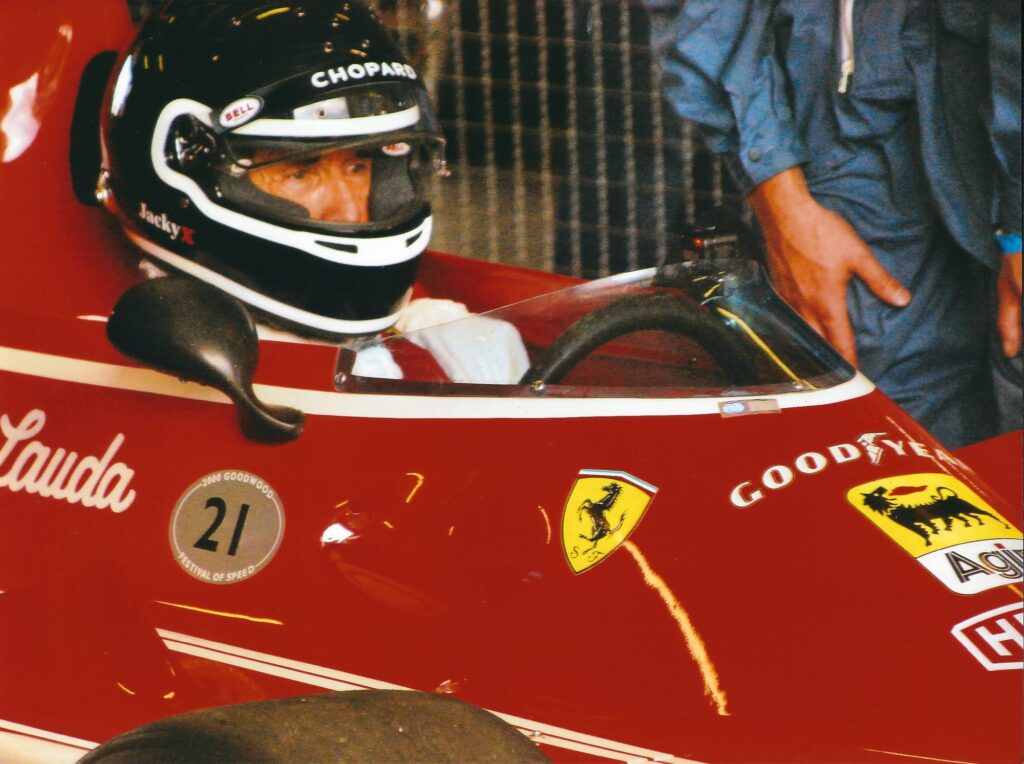
Ickx, however, strains his guardian angel for quite some time, especially at off-road events like the Paris-Dakar Rally. He had won this in 1983 with Claude Brasseur in a Mercedes 280 GE after several attempts with Citroen and Porsche. „At 50, he should just stop,“ was the hint from above. „My guardian angel didn't want to anymore,“ says Ickx. Enough reason to hang up his helmet. Of course, historic events are an exception. For instance, Jacky had fun at the 2020 Oldtimer Grand Prix, completing laps on the Nürburgring GP circuit in Niki Lauda's Ferrari 312 B3. So, he remains involved in motorsport in many ways, which is no problem for his wife Khadja – a singer. Others sing "The Song of Death"!