
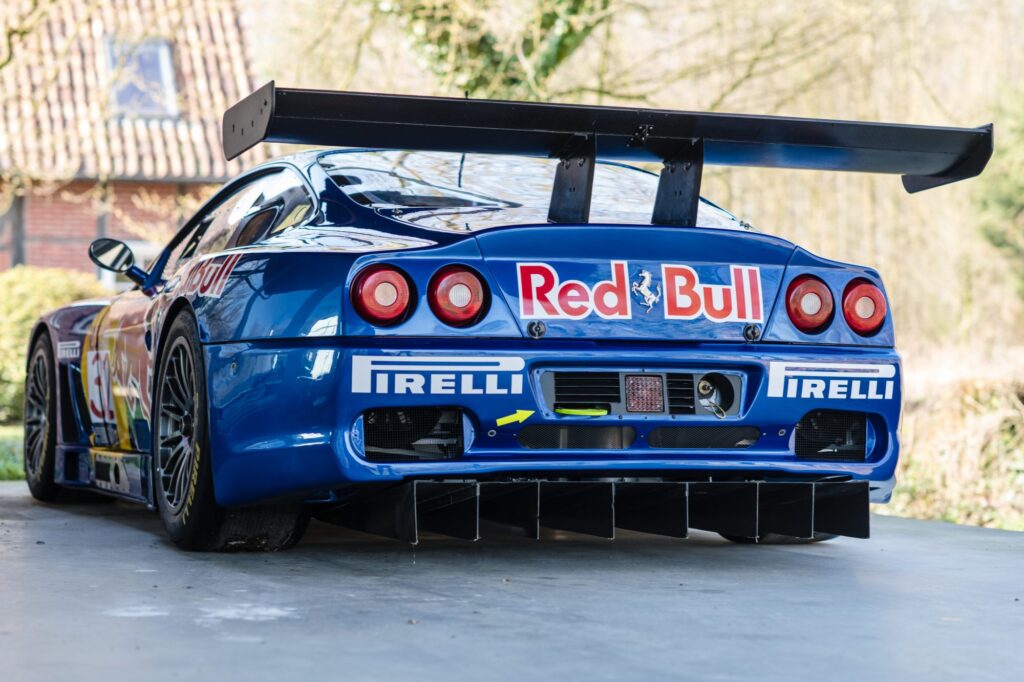
Ferrari 550 GT1, built in 2000, chassis number #115811

Since the 1950s, GT vehicles have been a feast for the eyes in motorsport. Their racing successes simultaneously ensured the popularity of these models on the streets. Well into the late 1970s, not only factory teams achieved great success, but privateers were also successful with Grand Touring cars.
One manufacturer had a particular fascination for motorsport drivers and fans: Ferrari! In motorsport, however, prototypes took center stage for several years. GT racing took a backseat. In the 1990s, Jürgen Barth, Patrick Peter, and Stéphane Ratel wanted to change this and launched the „BPR series.“ Cars like the McLaren F1, Ferrari F40 GT1, and Porsche GT2 in the smaller class contributed to the series' success. The Ferrari F40s quickly disappeared from the scene again, and in 1997, the FIA took over the series format. The FIA GT Championship was created later.
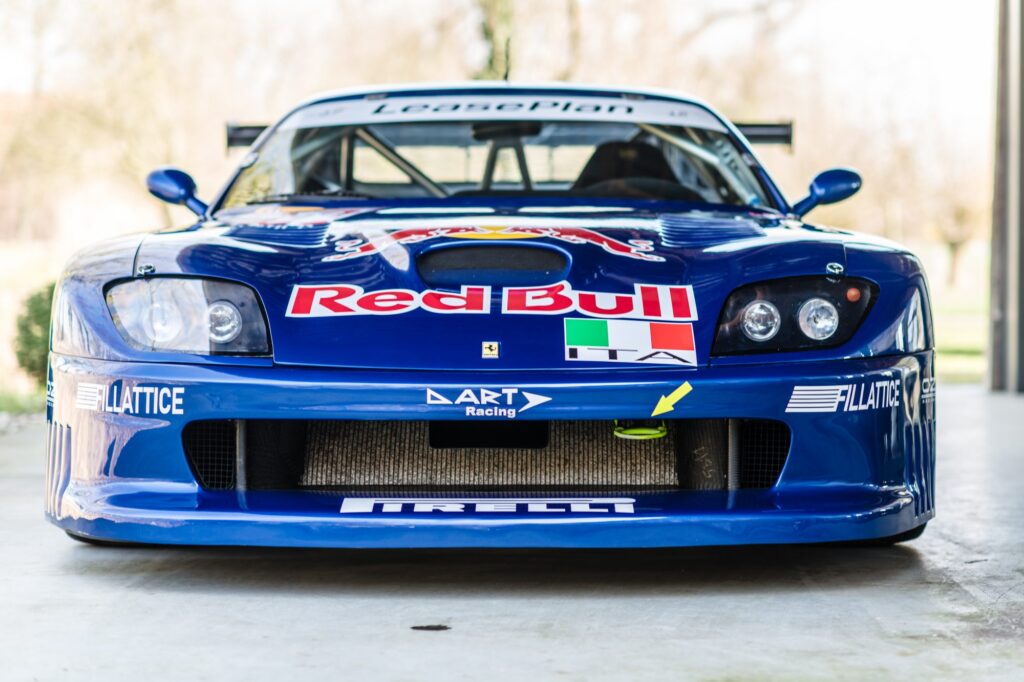
However, a crowd-puller was missing: Ferrari! Stéphane Ratel persuaded his compatriot Jean Todt to build a Ferrari 550 according to GT regulations, after Ferrari had scrapped their in-house development of the F50. From the end of 1999, the 550 was built at Italtecnica. Initially, the 550 proved not to be particularly durable, with the engines causing quite a bit of trouble. Prodrive in England also developed the GT1 version of the 550 parallel to Italtecnica. In 2001, the 550s raced for the first time. The Ferrari 550s were seen in action worldwide. They were successful in the American Le Mans Series (ALMS) as well as in European series and races. Class victories in Le Mans (2003) and also in the 24 Hours of Spa. In Spa, they even won the overall classification in 2004, which were the top successes for the Ferrari 550 model.
The regulations allowed for considerable freedom and made the otherwise difficult-to-handle car a contender for victory. The body parts were made of carbon fiber, bringing the Ferrari to the regulation limit of 1100 kilograms. The enormous rear wing generated as much downforce as the modified front surface with flaps at the front. The large V12 engine provided just under 600 hp but also contributed significant weight to the front of the car. Installing the engine further back and lower made the car more drivable, as did fitting several components to the rear. Oil coolers and the alternator found space in the rear, as did the oil tank, ensuring better weight distribution. The Ferrari could be shifted using an Xtrac gearbox with six gears. An ignition cut-off allowed the driver to change gears under full load. Its nearly 600 hp also ensured its competitiveness.

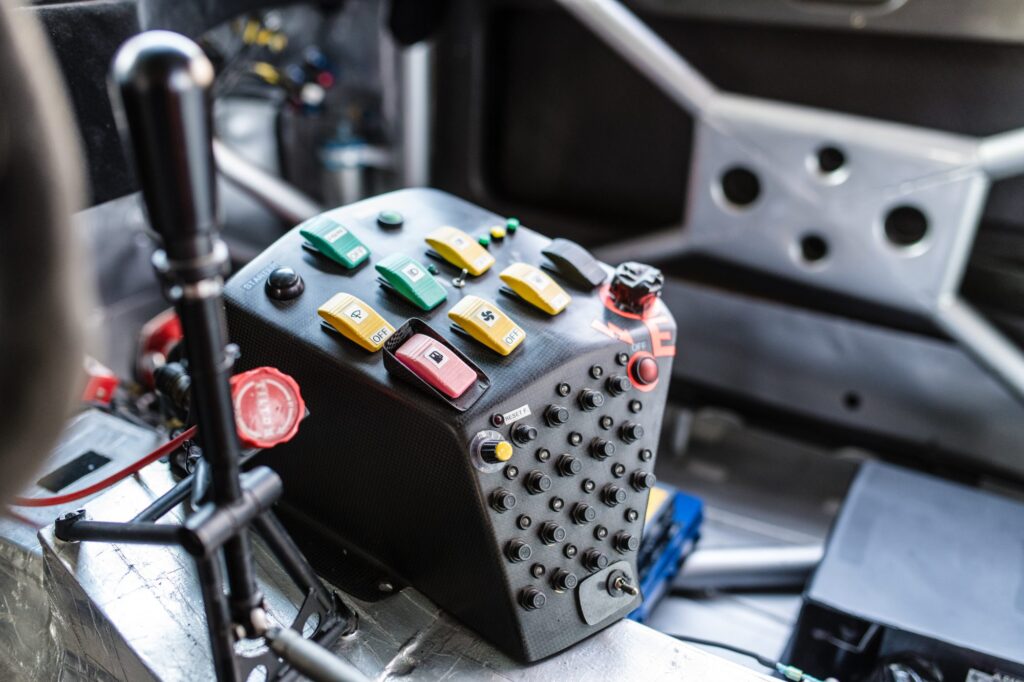


In the mid-2000s, most Ferrari 550 GT1s disappeared into garages or warehouses. Since then, they have been languishing in obscurity, far from any racetrack. The 550 with chassis number #115811 also served as a development car and test vehicle for the Ferrari 575 GTS back then. It is only through this that it has now found its way back to the racetracks.
But one thing at a time: Italtecnica produced two vehicles that were used by Gabriele Rafanelli from 2001 onwards. That same Rafanelli who was previously responsible for many BMW entries and is better known by the name „Bigazzi“.
#115811 was owned by Andrea Garbagnati, who had the initially underperforming Ferrari „tuned up“ at Rafanelli in San Gimignano. Emanuele Naspetti and Domenico „Mimmo“ Schiattarella were signed as drivers for #115811. In its first outing, Naspetti placed the Ferrari eighth on the starting grid of the FIA GT Championship. „Mimmo“ Schiattarella drove the first „race stint,“ marking the first time in his career that he had driven a car with a roof.
The best result of the season for #115811 was a fourth-place finish at Magny-Cours. A victory was out of reach, as luck was not always on their side. At Zolder, the team started from pole position and led the race until a collision forced them to retire. The Ferrari also led the Spa 24-Hour Race until it was forced to retire due to a broken driveshaft. Among others, Eric van der Poele also drove it there. Rafanelli ended his stints with the Ferrari at the end of the season, and the car was returned to Garbagnati. For the 2002 season, the car was further developed by „JAS Engineering.“ It was subsequently fielded by „DART Racing“ in Red Bull colors with Dieter Quester and Luca Riccitelli.
However, in three race appearances, it never saw the checkered flag. For 2003, #115811 was handed over to the French „JMB Racing Team“ and competed in the first four races of the FIA GT Championship. It was driven by David Terrien, Boris Derichebourg, and Christian Pescatori. Toward the end of the season, owner Andrea Garbagnati drove the car himself. He teamed up with Andrea Bertolini in the Italian GT Championship and won both races at the „A1 Ring“ in Austria. In 2004, „JMB Racing“ once again entered #115811 in the Italian GT Championship. The driver pairings changed over the course of the season. #115811 won the season opener with Mauricio Mediani and Lorenzo Case.

After two races, Domenico Guagliardo took over the wheel from Mediani and won the race with Case in Magione. And for the final two races, a certain Toto Wolff—now Mercedes„ sporting director—took Guagliardo’s place. On the last race weekend in Vallelunga, Italy, he won with Case. And then came the moment that eventually arrives for almost every race car. The end of its racing career and a spot in some garage, warehouse, or, at best, a museum. But now, #115811 has returned to the spotlight of the world’s racetracks. There are now opportunities for these relatively young models in the “Peter Auto„ series or the “Masters Series.” There, they delight spectators in particular with their infernal V12 roar.
The Ferrari 550 has come to resemble its predecessors from the 1950s and 1960s. As is well known, this model can change hands among collectors for sums in the tens of millions. For example, a Ferrari 550 GT recently sold at an online auction for a whopping 4.3 million. That is precisely what makes #115811 so special. Let’s just hope that, given its value, its future doesn’t end up back in a private collection. A treat for the ears like this belongs on the racetrack, for as long as possible!
__________________________________________________
Technical Data
Ferrari 550 GT1
Motor
Ferrari 12-cylinder, 65° aluminum block
Valves per cylinder: 4, DOHC
Displacement: 5983 cc
Performance: 600 hp
Torque: 600 Nm
Power transmission
6-Speed Sequential/RWD
Chassis
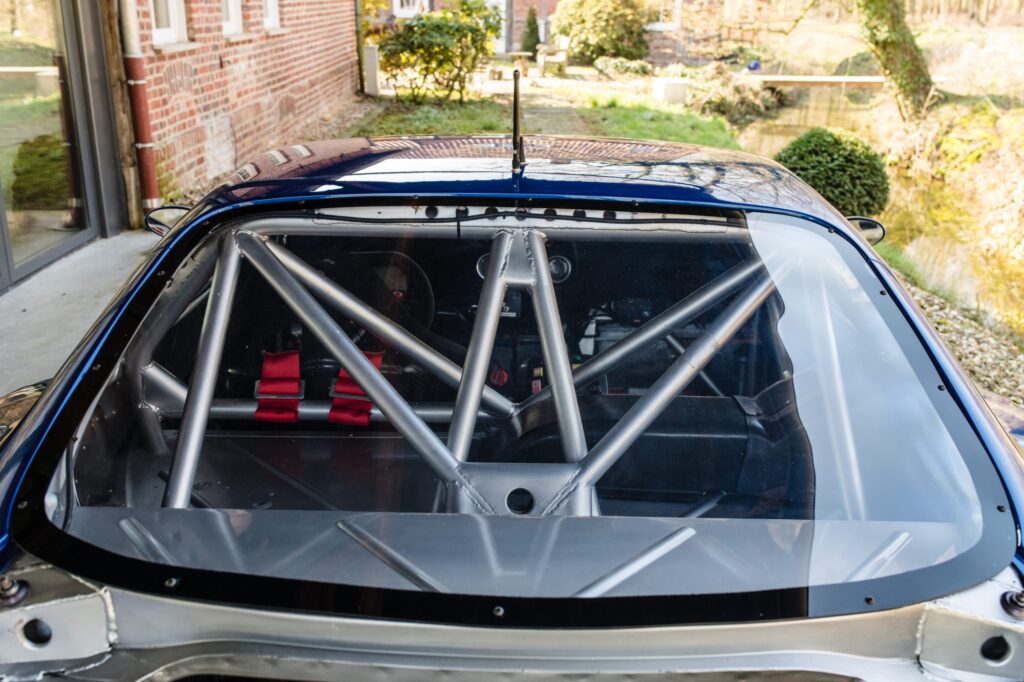
Chassis: Body with steel cage safety cell
Suspension: Double wishbone, pushrod stabilizer, Koni dampers
Steering: Rack and pinion / Power assisted
Brakes: Brembo carbon-ceramic disc brakes, front and rear internally ventilated
Tire dimensions: Front tires 325/660 – 18 Rear tires 325/705 – 18
Dimensions | Weights
Length 4578 mm, Width 19856 mm, Height 1092 mm
Wheelbase: 2500mm
Weight (according to regulations): 1100 kg
Curb weight: 907 kg