The Last David
In July 2020, Gerhard Berger spoke for the first time about a possible winding down of the DTM, meaning the actual end of this traditional racing series. Even though the signs were certainly hard to ignore, a new motorsport season in 2021 without the abbreviation „DTM“ is difficult to imagine. Undoubtedly, the DTM has earned an unshakeable place in the history of German and European motorsport. Legendary races up to the mid-1990s will always be remembered – clear signs of a success story that will remain connected with many highs, but also with lows. Looking specifically at the diversity of the earlier DTM, loved by many fans, it also reveals cardinal errors, three of which are to be mentioned here:
- The transformation into a purely manufacturer-based series and the associated gradual exclusion of independent teams and privateers.
- The technical escalation in the mid-1990s in the DTM and German Touring Car Masters.
- Self-perception as a series for premium manufacturers.
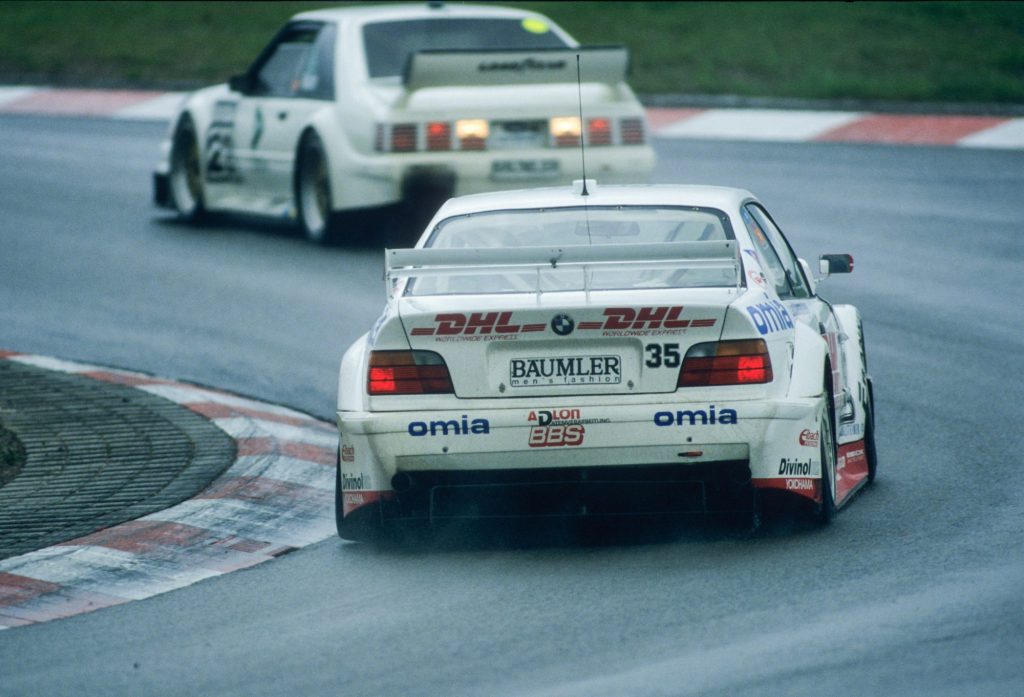
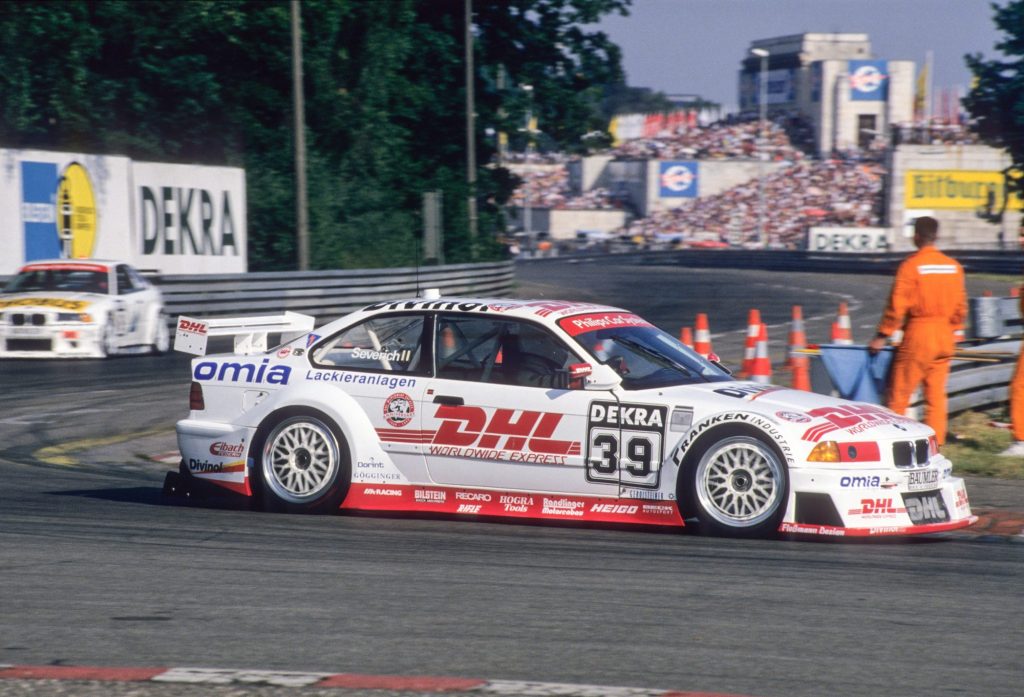
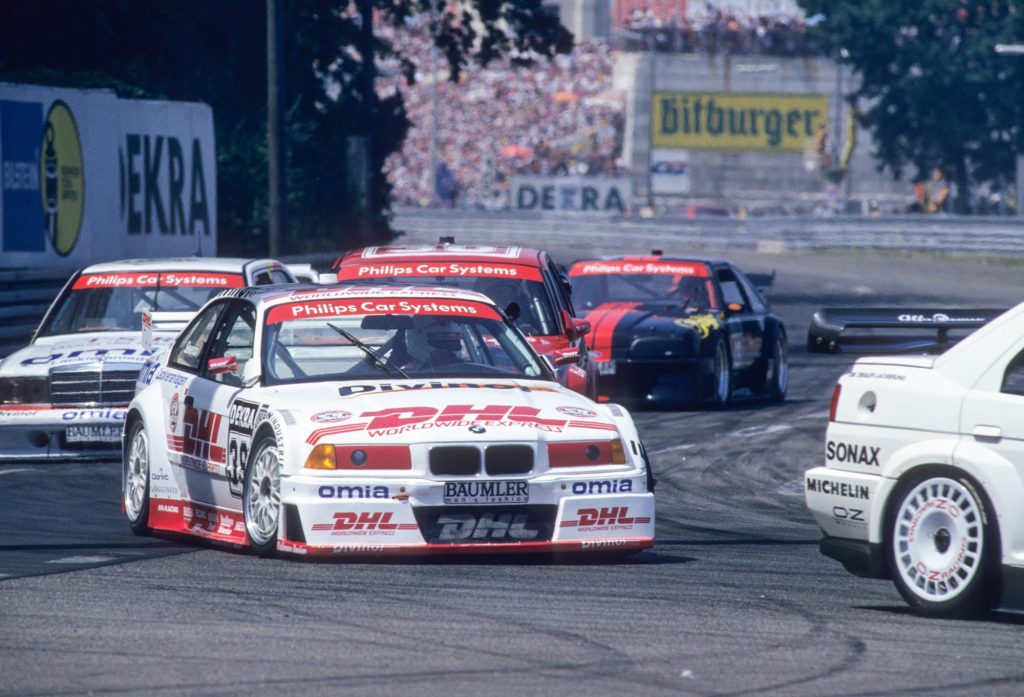
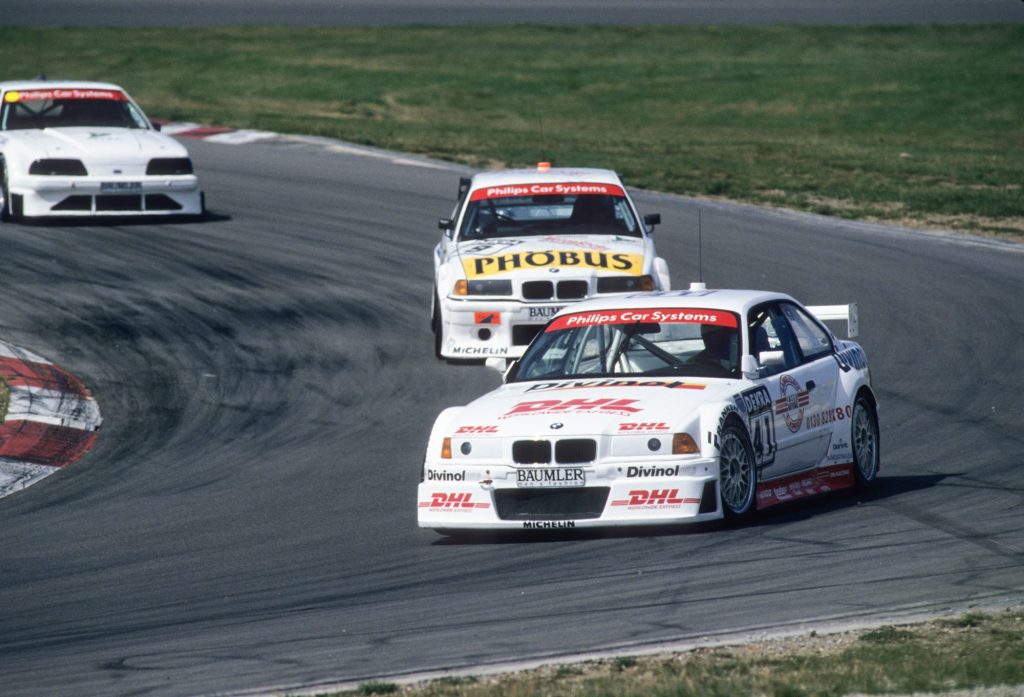
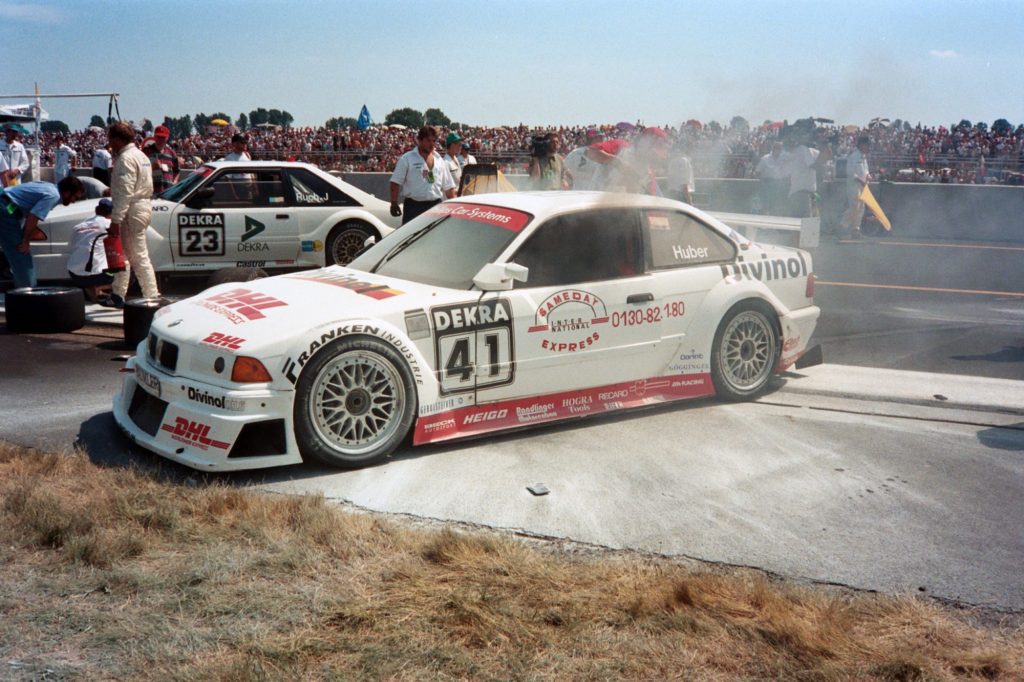
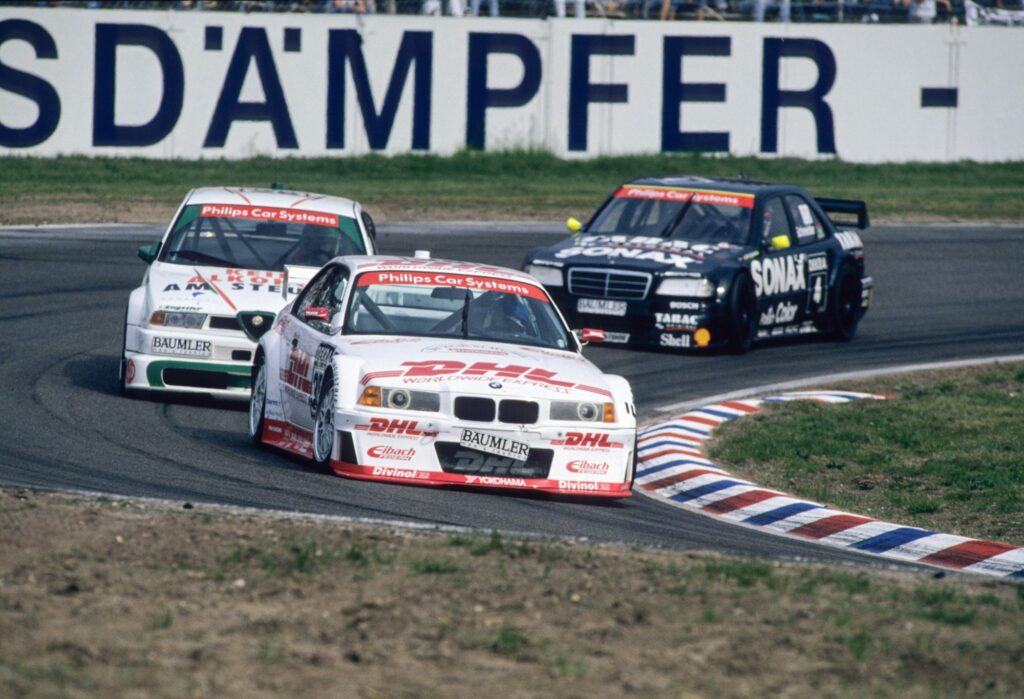
All three are closely intertwined. Where the DTM would be if these decisions had not been made or had been made differently will always remain a subject of heated debate. After all, some teams and drivers had not been deterred by the great challenges of that time until the end of the 1994 season: Armin Bernhard in the Mercedes-Benz 190 Evo II, Karsten Molitor in the BMW M3 E30, the Mustang drivers Gerd and Jürgen Ruch, as well as Jürgen Feucht, Luggi Linder with his BMW E36 from 1993 and, last but not least, Udo Wagenhäuser. His white WS-DHL BMW E36, which he presented to the public at the Hockenheimring in 1994, is the last DTM vehicle developed in-house.
Udo Wagenhäuser – no stranger
The initiator of the project surrounding the BMW E36 was Udo Wagenhäuser. His technical support was behind more cars than one might suspect, especially in Formula racing series from the mid-70s into the 80s. Accordingly, his wealth of experience and network in motorsport were considerable when BMW Motorsport Director Wolfgang Peter Flohr finally encouraged him to switch to touring car racing. A close connection to BMW Motorsport had existed since the early 1980s when Udo Wagenhäuser managed a Formula 2 project there. Thomas von Löwis, Rüdiger Schmitt, and Prince Leopold of Bavaria piloted the first M3s entered and technically supported by Wagenhäuser. When Günther Murmann made a grand appearance in the DTM with Diebels as a private team from 1990 onwards, it was effectively Udo Wagenhäuser who built and supported the cars. After the main sponsor Diebels moved to Zakspeed, Wagenhäuser then supported Kurt König's M3s there in the DTM, while simultaneously managing entries in Formula Opel and Formula 3 with the sponsor DHL, who was establishing themselves in motorsport for the first time in those years. When asked by DHL where they could become more present in motorsport, Udo Wagenhäuser had only one answer: In the DTM.
Then I'll do it myself.
During the 1992 season, a Class 1 vehicle was developed at BMW, and Udo Wagenhäuser was initially promised that he could use a new Class 1 M3 E36 in the 1993 season. This new Class 1 BMW was to be powered by a straight-six engine based on the M50B25. However, because it was not as compact as the engines from other manufacturers, there were concerns that this could be a disadvantage due to an unfavorable weight distribution. The request to move the engine further back was promptly rejected because they did not want to start with exceptions before the introduction of the new Class 1 regulations. BMW then withdrew from the DTM in protest. This left Udo Wagenhäuser in 1993 with a willing sponsor but no car. The consequence of this is well-known: „Then I'll do it myself.“
Tolerated espionage
The two white WS-DHL BMW E36s from the 1994 season bore a strong resemblance in their chassis construction to the top-secret BMW Motorsport Class 1 prototype. This aspect is attributed to Wagenhäuser's good relationship with BMW: „Initially, I negotiated with BMW for a long time. What can I buy from you? What can we get? Then at one point, they said: You'll get a bare shell, then again: No, you won't get it. At least I was allowed to sketch it. A few friends at BMW turned a blind eye and said: We don't know you're there, just don't get caught. So I spent two days in the workshop and secretly sketched it.‘ Together with Friedhelm Bergmann, who was actually already working on the Calibra at Opel in 1993, Udo Wagenhäuser started his project and developed the WS-DHL BMW E36.
Small team – elaborate construction
The body and roll cages were built by HEIGO in Würzburg. Even at this stage, the first complex modifications had to be mastered, such as rerouting the exhaust system into the interior. The entire rear axle construction was completely new and resembled the setup of a Formula 1 car. In the production vehicle and also in its predecessor, the M3, the shock absorbers had been arranged vertically. Now they were positioned transversely in the rear compartment, which required extensive modifications to the body. „Unfortunately, the construction of the three bodies took a very long time. We were also just a small team of 10 to 12 men. I always jumped in the car in the afternoons, raced from Munich to Würzburg in two and a half hours, and then worked until two in the morning,‘ recalls Udo Wagenhäuser of those crazy times.
At Randlinger Motorenbau in Freiburg, the S14 inline four-cylinder engine was tuned to Class 1 specifications. The engine's regular electronics had to be replaced with TAG electronics from McLaren. This made it possible, for example, to control each injector individually. The option to work with traction control was also utilized. However, this entailed immense costs because these programs only ran on UNIX computers, which had to be acquired first. The sequential gearbox came from Hewland and was identical to that of the Class 1 prototype. The clutch and shock absorbers were from Sachs. The fact that they could always work with 20 to 25 kg of ballast placement weight demonstrates how much attention was paid to weight during construction.
Too many steps – too many problems
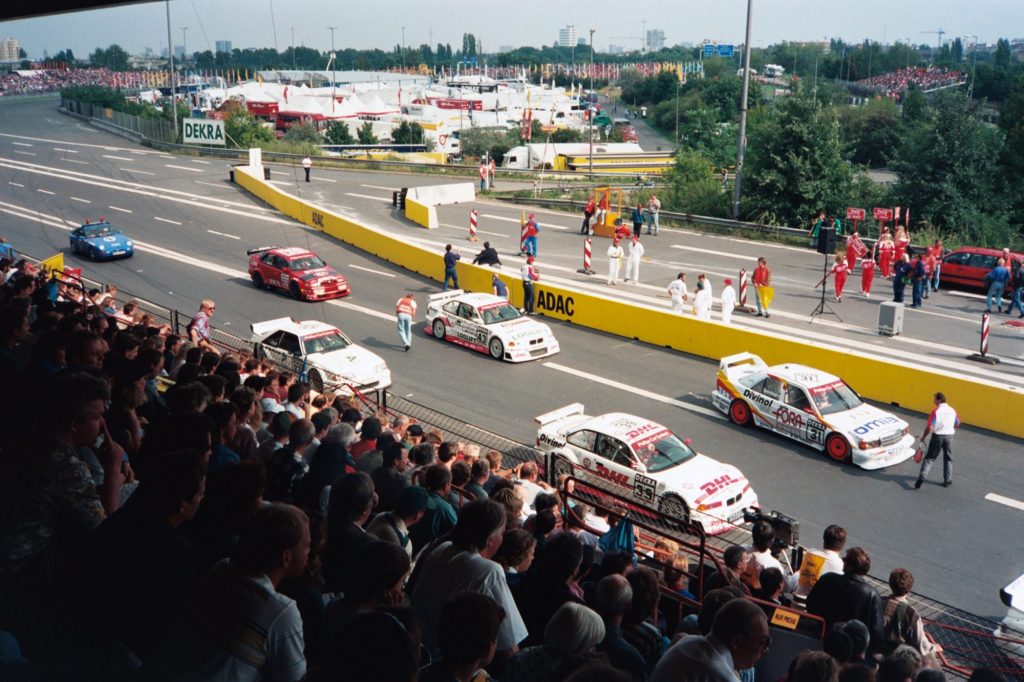
The operation suffered from significant delays from the beginning. The assembly of the car bodies took longer than expected, and coordination with the TAG engineers was hesitant. Late deliveries of parts or production defects accumulated by the start of the season. At the presentation of the DTM vehicles in Hockenheim, the new WS-DHL BMW E36 could only be exhibited. Test drives, which had been planned for early March, also had to be canceled. In the end, the goal was reduced to at least having the cars ready for the start of the season and not immediately falling behind the competition. The practice session in Zolder was more of a rollout. Rüdiger Schmitt was 10 percent slower than the best time with his fastest lap and should not have been allowed to start. However, race director Wolfgang Wilcke made an exception at the start of the season, as four competitors were in a similar situation. Only afterward could extensive test drives be carried out in Most, Czech Republic, where they were able to improve by 2.5 seconds. Nevertheless, the WS-DHL BMW drivers often started from the last row of the grid.
As the season progressed, one breakdown followed another. Technical problems and bad luck ran like a common thread through the ambitious project. Engine failures, electronic issues, gearbox problems, and lack of oil pressure kept happening one after another. At the Nürburgring, during free practice, a detached driveshaft pierced the underbody and struck Georg Severich's leg so hard that the Aachen native over-revved the engine in reflex. In Hockenheim, Rüdiger Schmitt's „Bäumler“ series sponsor shield detached and got stuck in front of the radiator's air intake. As a result, the oil temperature shot up to 160° C – engine failure. In Diepholz, gasoline fumes entered the cockpit, forcing Georg Severich to go to the hospital due to poisoning. In the middle of the season, the engine manufacturer was finally changed: From the „DTM on Tour“ race in Donington, England, the WS-DHL BMWs started with engines from tuner Schill, as the Randlinger engine with TAG electronics had never really got going. The balance of the 1994 season was correspondingly rather sobering: In total, only six WS-DHL BMWs even saw the checkered flag.
Udo Wagenhäuser sees it realistically today. „We took too many steps at once back then. When you enter Class 1 as a private team, you have to take risks. With a year of testing and development, many things wouldn't have happened. There are so many little stories. For example, during one test, our driver wanted to go, but the car wouldn't move forward. What happened? The bonds of the carbon fiber driveshaft to the flanges, which were turned from titanium, had detached due to the standing heat from the exhaust. Luckily, we still had sample driveshafts made of metal with us and could continue the tests. In a clandestine operation, we then repaired the driveshafts by drilling 5mm holes diagonally into the flanges. We sewed and glued the driveshaft and flange together with carbon fiber cords. After that, the driveshaft never failed us again until the end of the season. These were learning processes that repeatedly set us back and should actually happen before a season.“
Driver carousel
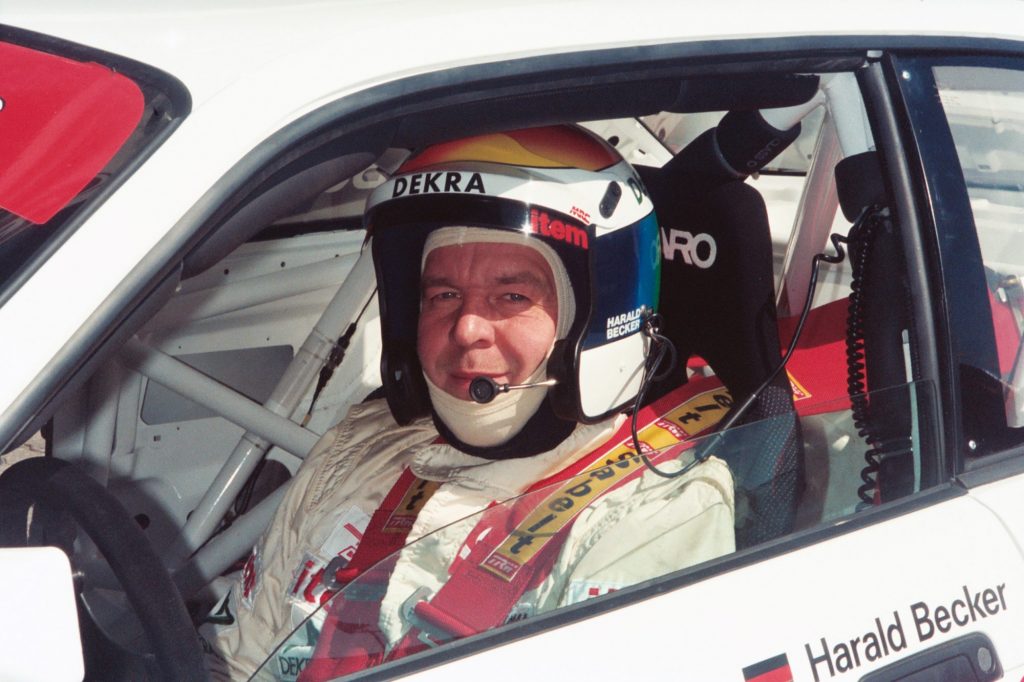
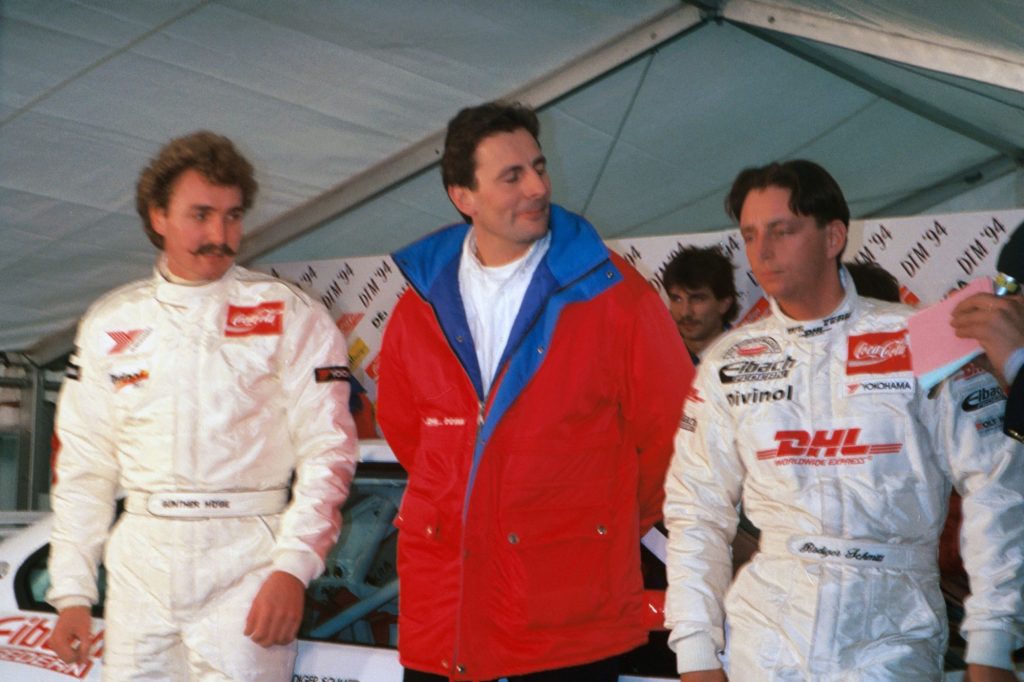
Due to numerous technical problems, the driver merry-go-round started very early. The fact that privateer Günther Höge had been presented as a new driver alongside Rüdiger Schmitt at the team presentation in Hockenheim, but backed out before the season opener because his sponsor Medico 2000 had withdrawn, was still manageable. Experienced privateer Harald Becker filled the gap well.
Rüdiger Schmitt initially took the ongoing problems with humor when speaking to the press: „Something so stupid. In the first race, the throttle cable snapped on the warm-up lap. The second one went quite well, I just had to pit once because the shift lever came loose. But I'm quite satisfied. We're slowly getting within reach of last year's Class 1 190E. And at least I finished. Besides, my Coca-Cola girl gave me her phone number, so the weekend was definitely worth it for me...“. However, after the Eifel Race on May 8th, he threw in the towel due to ongoing problems.
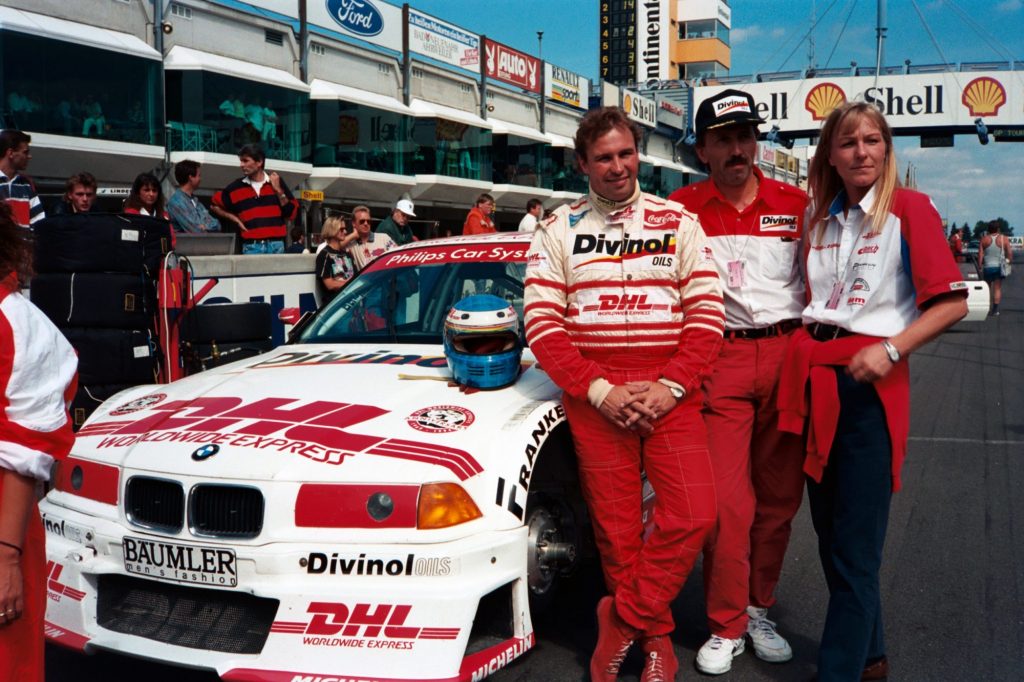
Georg Severich managed to convince his sponsors Divinol and Omnia and replaced Rüdiger Schmitt. Severich was the first driver to unlock more potential from the WS-DHL BMW and even finished 12th in Top Qualifying B at the Norisring. However, this temporary high was already over, as Harald Becker, who had stepped in, also threw in the towel afterwards. Amateurs came and went one after another until the end of the season. At the Norisring, Diepholz, and the German Touring Car Grand Prix at the Nürburgring, Fritz Huber took the wheel, Steffen Göpel drove at the Avus, Rüdiger Seyffarth raced in Singen, and Fritz Huber was back for the finale.
Due to the many drivers, the statements about the BMW's handling are still very varied today. Some say the car was very easy to drive, while others claim it was nervous and almost undrivable at the limit. One describes the car as very stiff, while others recall it bending too much on its longitudinal axis. Udo Wagenhäuser explains in retrospect: „Due to the constant driver changes, we had too many opinions about the car and hardly got into any detailed work. That's why I also asked Christian Danner to drive the car in between. I knew him well from my time at Murmann and from tire tests for Michelin. After that, things moved forward a bit faster. I don't want to offend any driver, but a professional like that simply has a much greater wealth of experience.“
David vs. Goliath
Although it was already apparent during the season that as a small team they wouldn't stand a chance against the major manufacturers, Udo Wagenhäuser is relaxed about it today. When asked what conclusion he would draw, he spontaneously said: „I would do it again. We learned a lot in the process.“
1988, Kurt Thiim's victory at the Eifelrennen marked the last time a driver won in a privately entered BMW M3 E30. The last „David vs. Goliath“ victory. The WS-DHL BMW 325i E36 is the last vehicle not developed by a manufacturer and brings the era of privateers to an end in the DTM. By the end of the 1995 season at the latest, privateers were no longer welcome. It was seen as a pure manufacturer series. In retrospect, this was a turning point in DTM history. For the uncertain future of the DTM, one can only hope that the Davids will be able to win again someday.
Author: Christian Reinsch
Photos: dtm-history.de / Farid Wagner