
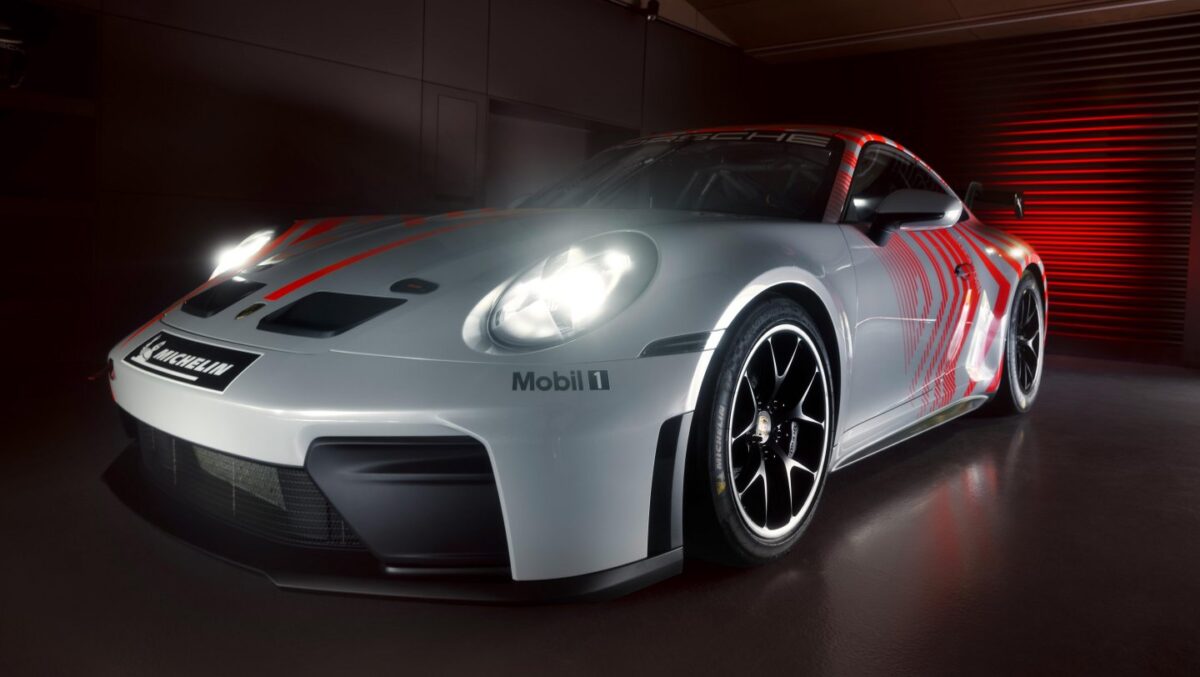
Porsche is expanding its customer sport program and introducing an entry-level model based on the current Porsche 911 GT3 with the new 911 Challenge. The new racing car combines extensive production components with specially developed motorsport technology and comprehensive safety equipment. Starting with the 2027 season, the 911 Challenge is scheduled to be deployed globally in numerous one-make cup series.
With the new model, Porsche's entire GT racing car lineup will be based on the legendary 911 in the future. The 911 Challenge complements the offering below the established racing cars and is aimed equally at motorsport newcomers and experienced drivers looking for a comparatively cost-effective competition vehicle.
Unlike the 911 Cup presented in 2025, the Challenge adopts numerous components directly from the road-legal 911 GT3. These include near-production aerodynamics, the seven-speed PDK transmission, and the steering wheel from the 911 GT3 RS with extended motorsports-specific functions. Air conditioning is also part of the equipment.
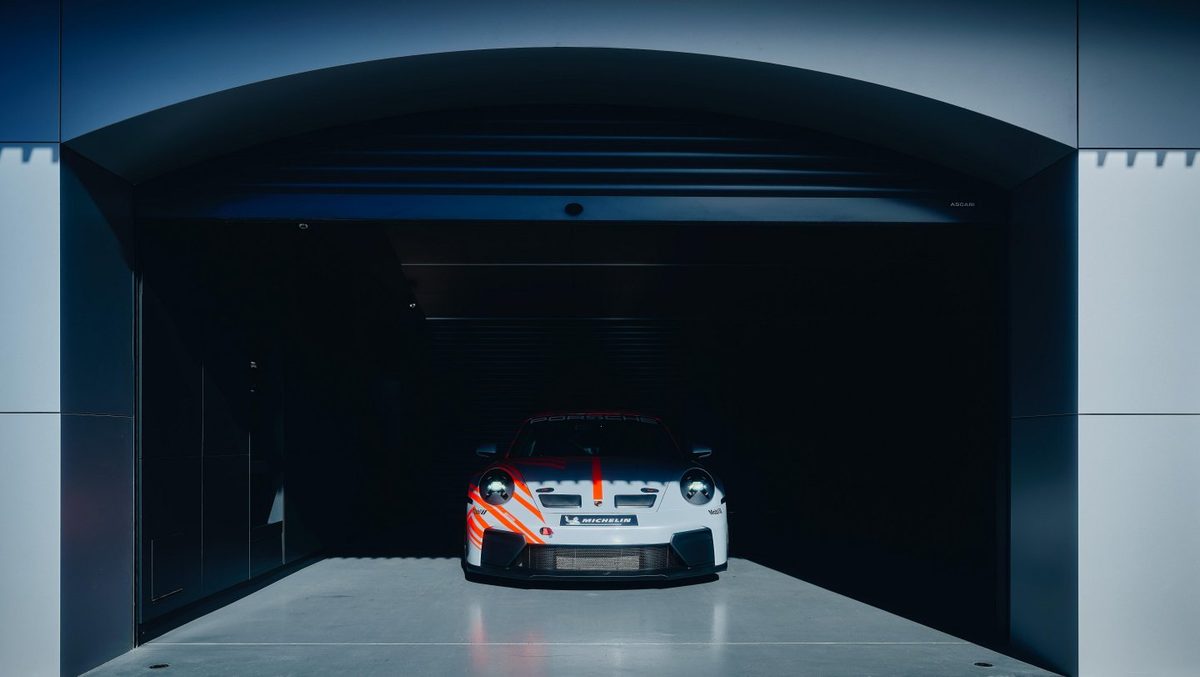
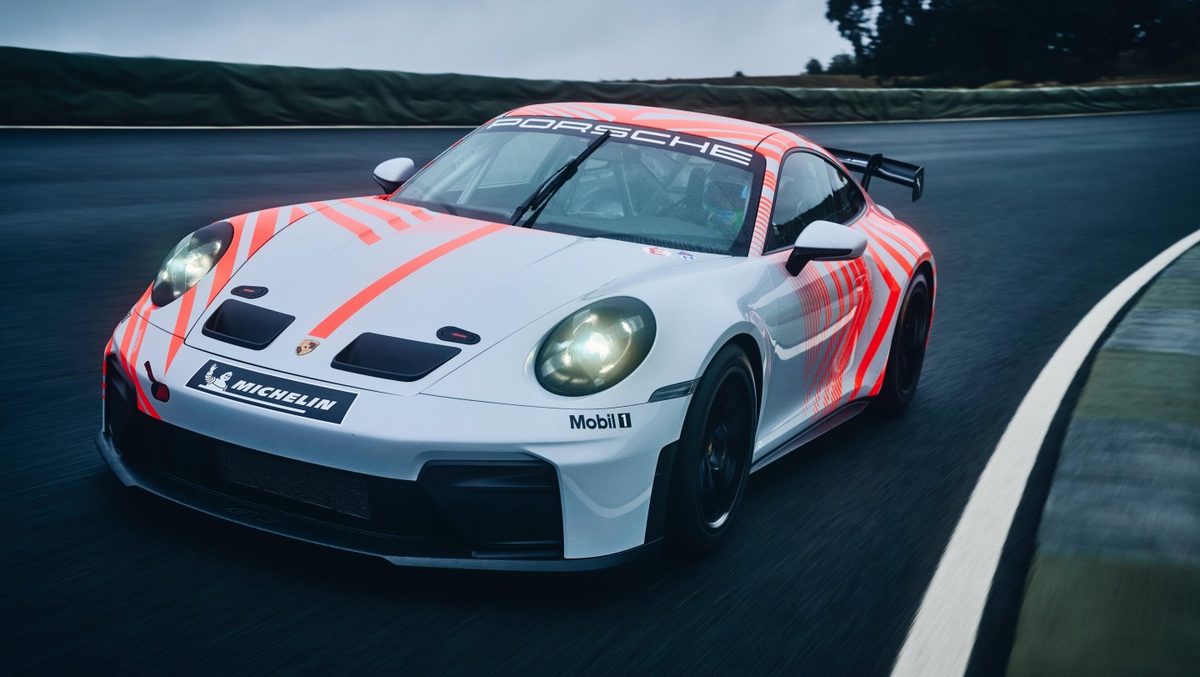
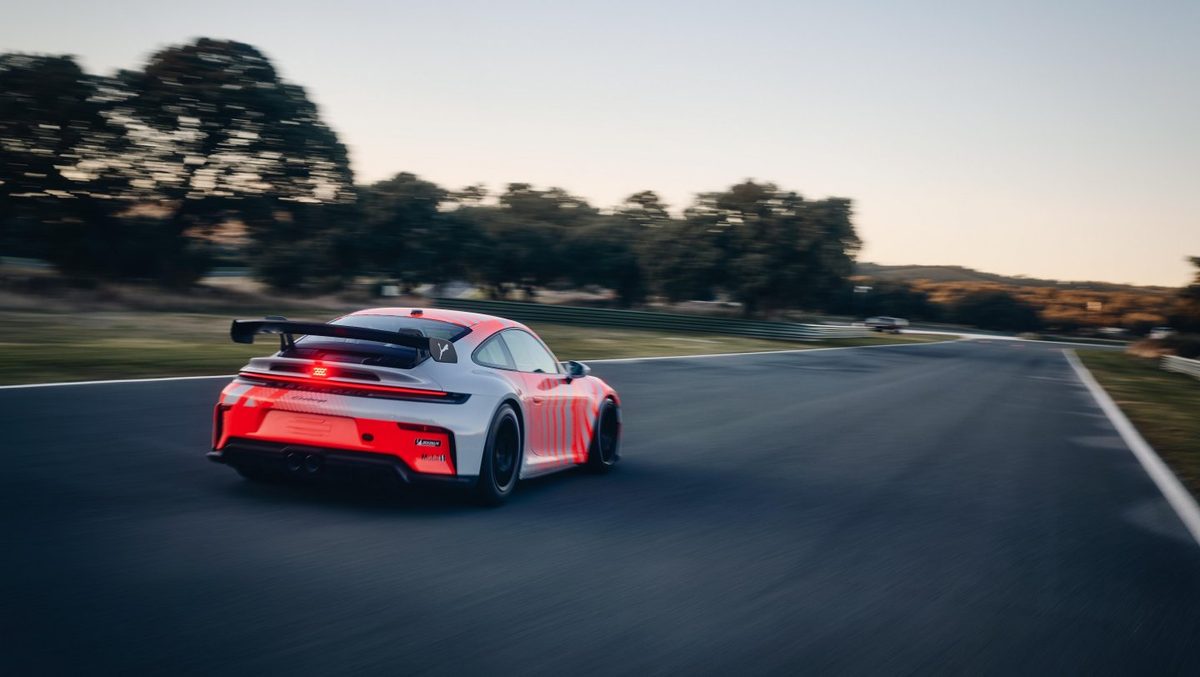
Extensive adjustable driving dynamics systems are also intended to facilitate the entry into racing. ABS, traction control, and the ESC electronic stability program can be adjusted, as can Porsche Torque Vectoring Plus. Furthermore, Porsche has specifically designed operating and spare parts costs for economical use in customer racing.
Thomas Laudenbach, Head of Porsche Motorsport, sees the new Challenge as an expansion of the tradition-rich GT3 family. The 911 Challenge is intended to further bridge the gap between road-legal GT3 models and motorsport while simultaneously introducing new customer groups to racing.
4.0-liter boxer engine with 515 hp
The centerpiece of the 911 Challenge is a 4.0-liter six-cylinder boxer engine largely adopted from the production GT3. The high-revving engine delivers 379 kW, or 515 hp, at 8,500 revolutions per minute and revs up to a maximum of 9,000 revolutions. A modified rear silencer with a catalytic converter is used, but the racing car dispenses with a particulate filter.
Power is transmitted by the familiar seven-speed dual-clutch transmission. Drivers can choose between automatic gear changes and manual operation via the shift paddles on the steering wheel.
Numerous components from racing are used in the chassis. The shock absorbers feature a motorsports-specific tuning, while the anti-roll bar is three-way adjustable. The 911 Challenge rolls on treadless racing slicks mounted on 18-inch wheels with a standard five-lug bolt pattern. In doing so, the concept is modeled, among other things, on the recently introduced 911 GT4 R.
The braking system also largely corresponds to the technology of the GT4 R. Steel brake discs with a diameter of 380 millimeters each are used on the front and rear axles.
Extensive safety equipment for racing use
The 911 Challenge adopts its dimensions and essential body components from the current 911 GT3. For use on the racetrack, the equipment includes a three-post pneumatic jacking system, an FIA-certified rain light, and quick-release fasteners for the front lid. The rear wing can be mechanically adjusted to four different angles of attack.
The interior of the vehicle differs significantly more from the road-legal GT3. Insulation materials, carpets, and trim are completely omitted. Instead, the 911 Challenge features a welded-in roll cage that additionally stiffens the body and protects the driver.
Additional safety equipment includes a 110-liter FT3 fuel cell, an adjustable racing bucket seat with a six-point harness, and a fire suppression system. The 911 Challenge is designed exclusively as a competition vehicle and is not street legal.
New customer support hierarchy entirely on a 911 basis
With the 911 Challenge, Porsche is replacing the original Cayman GT4 Clubsport and its successor, the 718 Cayman GT4 RS Clubsport, in the entry-level customer sports segment. The new model is intended primarily for use in brand cup series such as the Porsche Challenges and Porsche Trophies.
Above this, Porsche is positioning the new 911 GT4 R as the successor to the 718 Cayman GT4 RS Clubsport for international GT4 racing. The 911 Cup remains the vehicle used for the Porsche Mobil 1 Supercup, national Carrera Cups, and other Porsche racing series. In addition, the model is also established in endurance racing and in multi-brand GT races.
At the forefront of the customer racing program remains the 911 GT3 R, which is deployed by customer teams worldwide in GT3 racing under FIA regulations. The top model can already boast numerous international successes, including class wins at Le Mans, titles in the FIA World Endurance Championship, as well as DTM driver and manufacturer titles. At the end of June this year, an overall victory at the 24 Hours of Spa-Francorchamps was also added.
With the new 911 Challenge, Porsche is expanding its customer sport program with another race car based on the current 911, while simultaneously completing the brand's GT race car family entirely on a 911 basis.