First published on curbs-magazin.com
Originally published on curbs-magazin.com – now part of slickpix.de.
The History of the March 832-4 F2
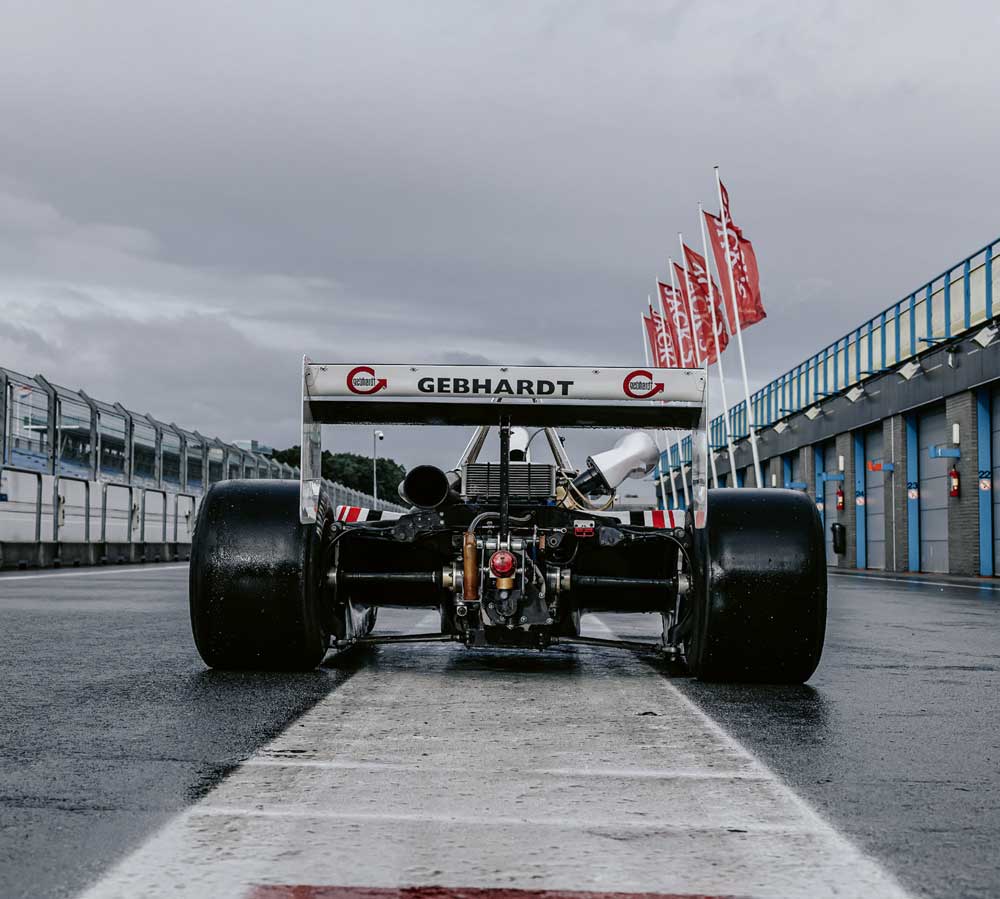
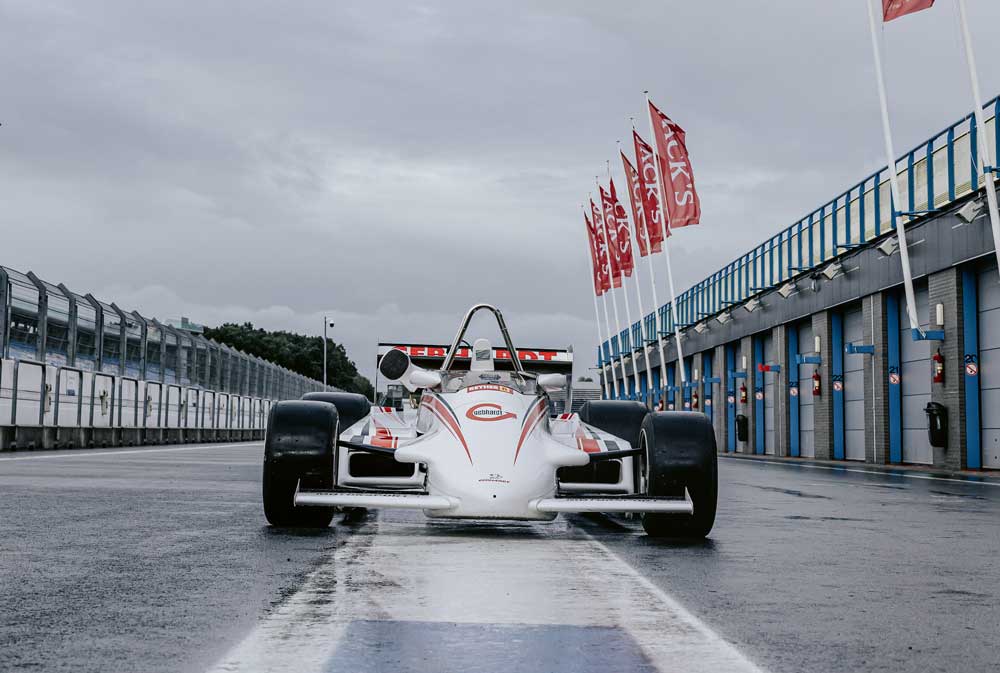
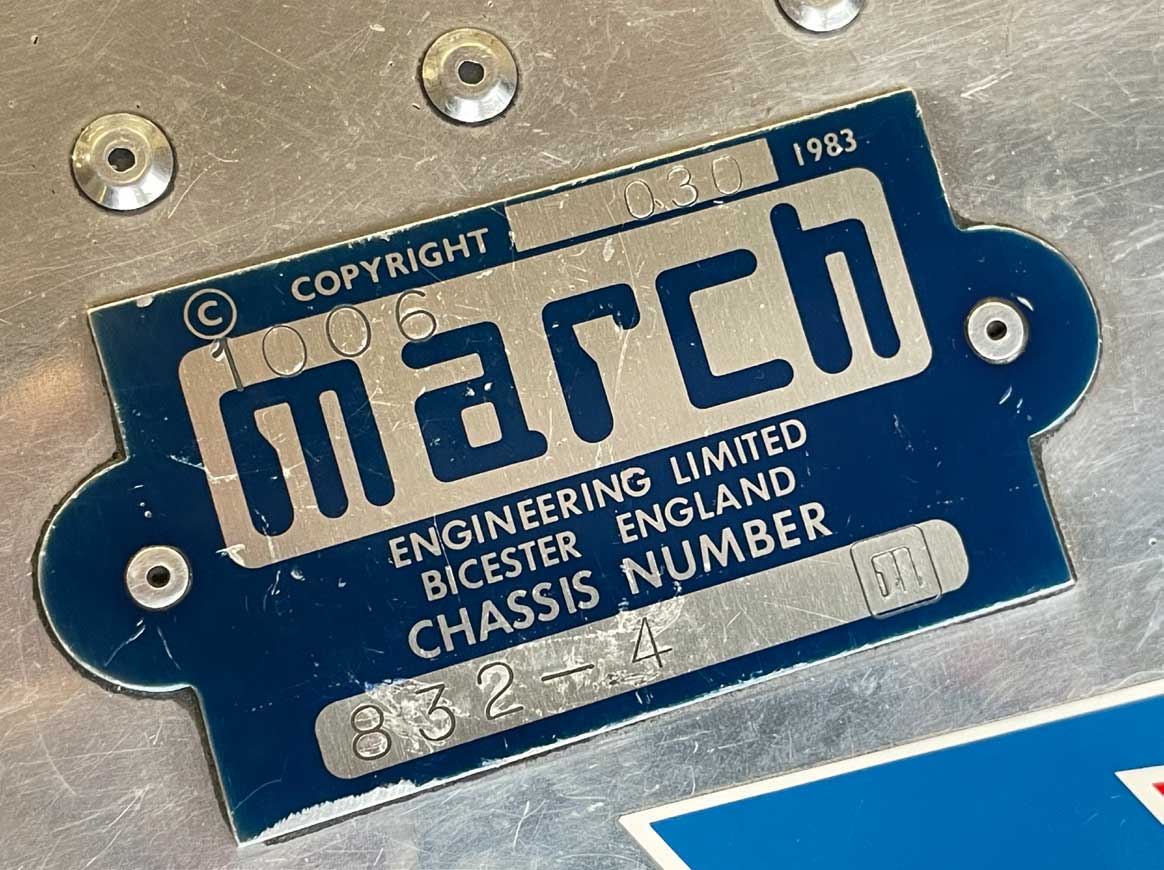
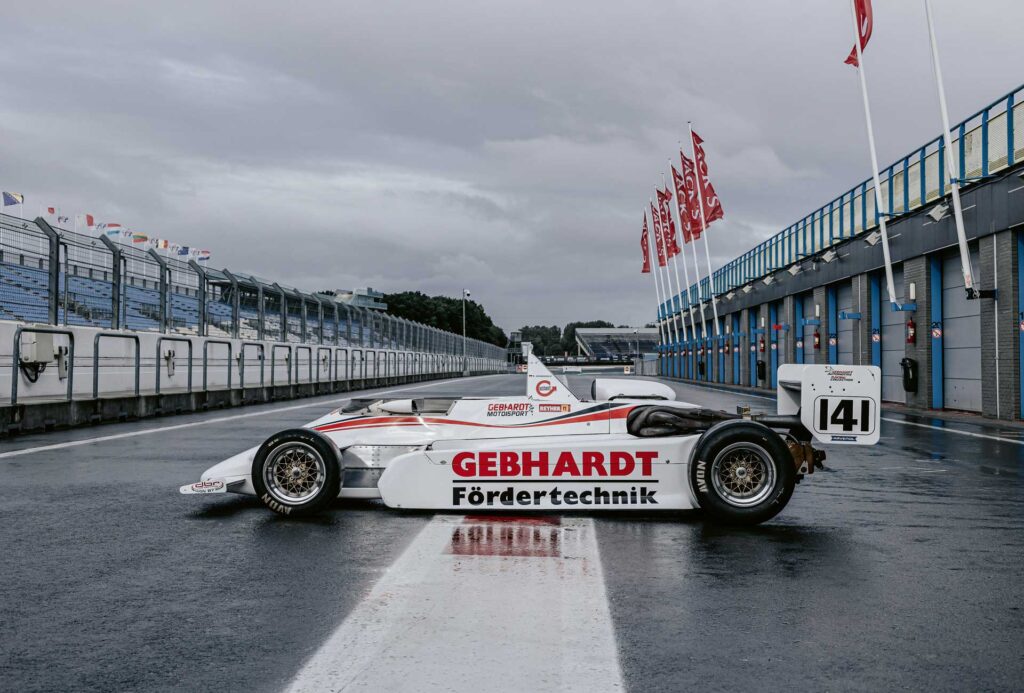
For the 1983 season, March developed the 832; 83 stands for the 1983 model year. The car was developed by designer Ralph Bellamy, who came to Europe from Australia in the 1960s to join McLaren. As a designer, he worked for Brabham and Lotus, among others, and designed for Emerson Fittipaldi the Fittipaldi F6. Via Ensign, where he designed the Ensign N180 with Nigel Bennett, he joined March in 1981. In Assen, I was able to drive the Formula 2 March 832 with chassis number 832-4, which raced in the 1983 European Formula 2 Championship under Beppe Gabbiani for the Onyx team. Incidentally, that is the one thousand and sixth car built by March! For years, March was a sought-after customer car with which even privateer teams could be successful. March was represented in Formula 2 until 1982, but ceased its activities as a factory team at the end of 1982. For 1983, the Onyx team was considered a factory-supported team. Researching the March 832-4 proved somewhat difficult, or rather confusing. According to Beppe Gabbiani, chassis number 4 was driven by him. A former March employee also informed us that chassis 4 was used by Onyx under Beppe Gabbiani in 1983. In the 1983 European Formula 2 Championship, Beppe Gabbiani caused a sensation in the early races by winning not only the season opener at Silverstone, but also rounds two, four, and five.
Guard change by Ralt-Honda
In the third race, Jonathan Palmer showed with a victory in Hockenheim in the works Ralt-Honda that it would not be a solo run for Gabbiani in terms of the championship. Quite the contrary. After Beppe Gabbiani's victory in Vallelunga, he wasn't even seen on the podium anymore, and the championship train pulled away for March and Gabbiani. In Pau, Jo Gardner won, and in Jarama, Mike Thackwell showed with the Ralt-Honda who the championship was going to be about. After that, all races were won by Thackwell's teammate Jonathan Palmer in the factory Honda, who thus won the European Formula Two Championship decisively with six season wins. Beppe Gabbiani finished third in the championship in the Onyx-March. For the 1984 season, chassis 832-4 was converted for use in the Can-Am series, like so many other Formula Two cars, as Formula Two was on the decline and was replaced by Formula 3000 starting in 1985. Many former Formula Two cars received a bodywork update consisting of long sidepods and wheel covers so they could be used in the Can-Am series in Europe and the USA in the small divisions up to 2 liters. From the middle of the 1984 season, 832-4 was raced in the American Can-Am series by Kim Campbell and had a good debut as a sports car with a third-place finish in its first outing at Trois-Rivières. In 2019, the March ended up with Fritz Gebhardt, who restored 832-4. Prior to that, the March would have needed its own «Miles and More» card. Following its appearances in the 1983 European Formula Two Championship and the Can-Am in the USA in 1984, Fritz Gebhardt first acquired the car in the late 1980s because an American could not pay for a Group C car he had bought from Gebhardt, and Fritz Gebhardt took 832-4 «in trade» along with a BMW M1 and sold it in Germany. Here, the car ran, among other things, as a Can-Am in the Interseries.
Return to Gebhardt with the March 832-4
In 2019, Fritz Gebhardt bought the March a second time, because a rear axle assembly—which at the time came from a March 812—was being sought for Gebhardt's first Group C2 car from 1982, the so-called «Ufo.» Gebhardt bought the 832-4 essentially as a spare parts donor. But thank goodness, the condition of the March was deemed too good to be cannibalized, and it was decided to restore the car. Thus, the Formula 2 car was preserved and is used from then on at historic events by Gebhardt Motorsport.
The March 832-4 set a time of 6:28.03 on the Nordschleife
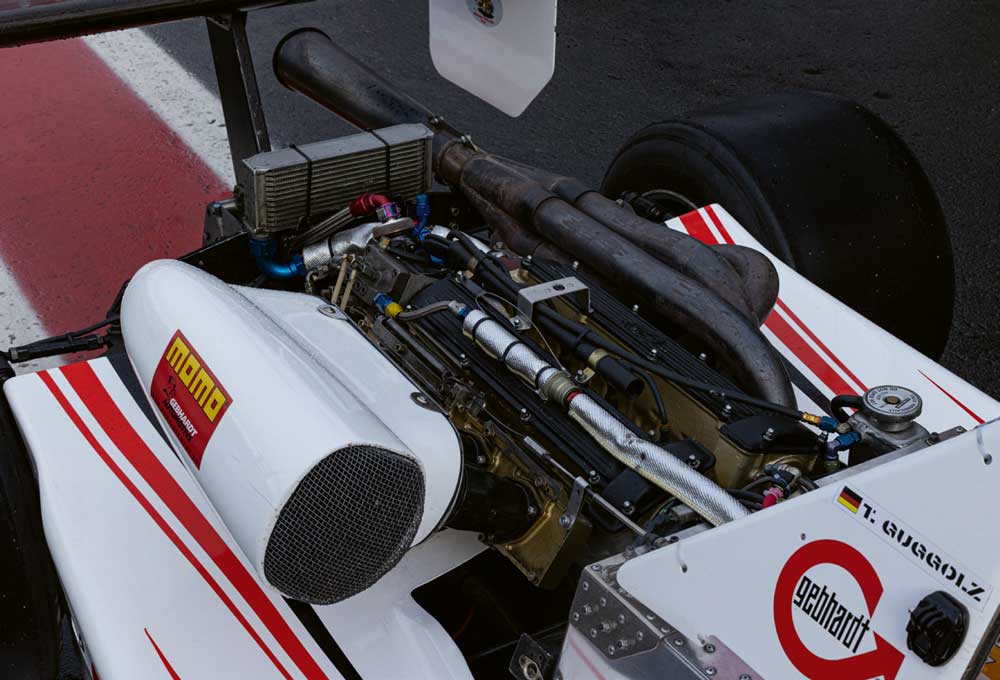
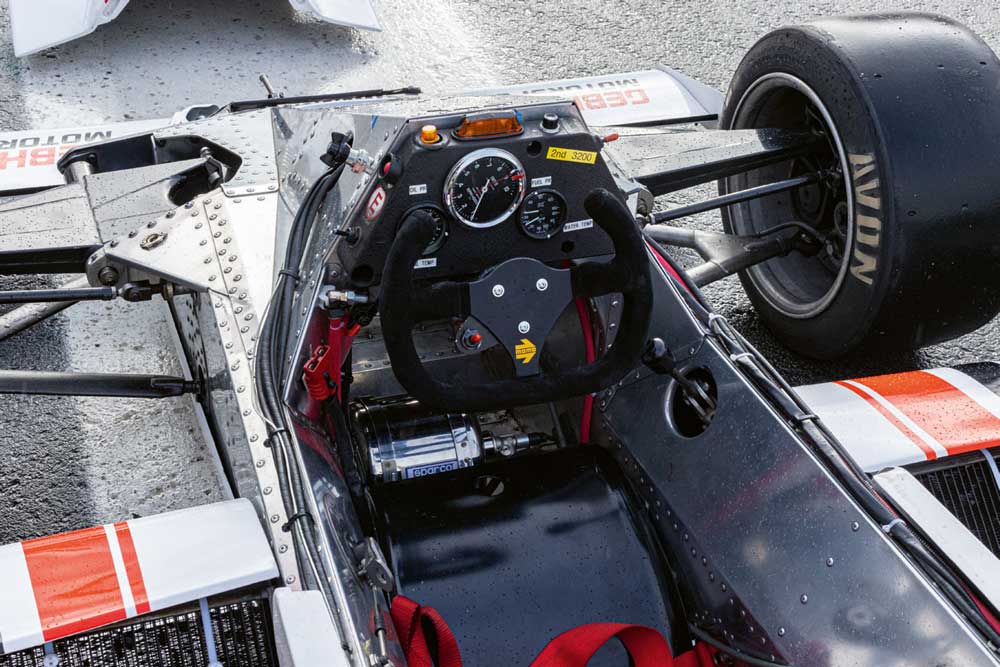
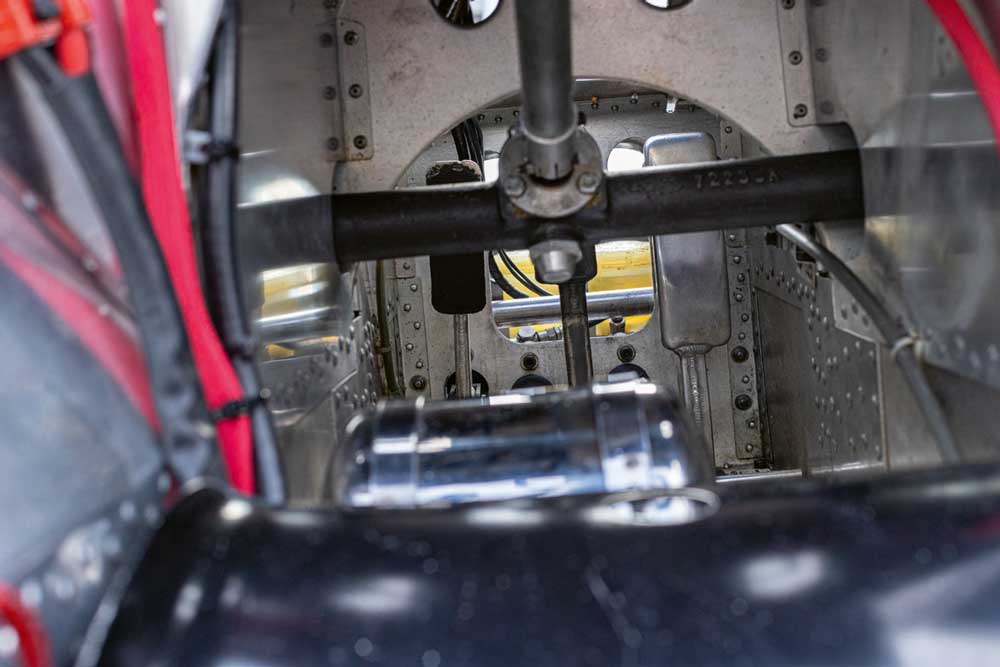
The March 832 features an aluminum monocoque, typical of the early 1980s. And the monocoque was precisely what is said to have been the weak point of the March 832, which is why it was only successful at the beginning of the season and could later no longer keep up with the competition. At March, they relied on a quick and simple construction method to accelerate chassis production, which resulted in the chassis lacking sufficient torsional rigidity. The March was powered by the BMW M12/7B «Rosche,» which was still used as a factory engine by Onyx. All other BMW engines were only used via tuners such as Mader and Randlinger and no longer through the BMW factory itself, as in previous years. The four-valve BMW engine produced a hefty 320 hp from a 2-liter displacement at 9,800 rpm, and it was the benchmark in Formula 2 for years until Honda dominated in 1983. Just like in Formula 1, the skirts were banned before the 1983 season, and the cars had to have a constant ground clearance of four centimeters, because Formula 2, with its ground-effect cars, had also become too fast. Christian Danner's record lap in 1983 with a March 832 on the Nürburgring Nordschleife of 6:28.03 showed how fast Formula 2 still was even after the ban on side skirts and the resulting lower ground effect. At the time, that was the fastest lap ever driven at the Nürburgring—faster than Formula 1 during its last appearance at the Ring in 1976.