

Since 1923, the legendary 24 Hours of Le Mans race was held for the 90th time in 2020. In 1969, after the introduction of seat belts, there was a protest against the famous Le Mans start with drivers sprinting Jacky Ickx, as he demonstratively strolled toward his, later victorious, GT40. Since 1970, it has been a flying start in the dance around the clock, with a new record set in 2010 with a distance covered of 5,410.713.
“J`ai une idée”, the journalist and secretary of the Automobile CLub de l`Ouest Georges Durand confided to Charles Faroux, editor of the trade magazine „La Vie Automobile“. He suggested that an endurance test for production cars could be organized from 1923. A series of 30 cars was defined at the time. Together with Emile Coquille from the tire and complete wheel manufacturer Rudge-Whitworth, the gentlemen defined the key data for a road race south of Le Mans. The integrated country roads were combined to form a lap of 17.3 kilometers. Low-displacement cars up to 1100 cc were allowed to start as two-seaters. The cars with a higher displacement had to have four seats and carry 60 kilos of ballast instead of passengers. Initially, the drivers had to carry out the refueling and all necessary repairs themselves using on-board tools. After some back and forth, it was agreed that the race would last 24 hours without a break at night. A minimum distance of 1600 kilometers was set for the 6.5-liter class, and a minimum distance of 920 kilometers was specified for the small two-seaters in five displacement categories. Durand promised to take care of the regulations and compliance with them, Faroux took over the media publicity, and Coquille provided the financial incentive with a Rudge-Whitworth Cup, endowed with 100,000 francs in prize money. The first „Grand Prix Endurance 24 heures Coupe Rudge-Whitworth“ was launched on May 26, 1923. The blue Chenard & Walcker, driven by the car manufacturer's development engineer André Ernest Paul Lagache and René Léonard, as well as the sister car of Raoul Bachmann and Christian Dauvergne, turned out to be the winners after nightfall. The headlights of the only non-French contender, a Bentley as strong as a bear, were smashed by falling rocks, which also caused a leak in the fuel tank. This favorite was out of the race. Lagache won with a four-lap lead over the second Chenard & Walker, but the Cup merits went to the 1.1 liter Salmson of the pairing Desvaux/Casse because they had exceeded the minimum distance by 83 percent. The 2209.536 kilo-meters of the overall winner certainly set a new benchmark. John Duff and Frank Clement, who won with their Bentley 3 Litre Sport 1924 and covered 2077.340 kilometers, exceeded their category by 54 percent. John Francis Duff, a Canadian born in China, had actually only come to Europe to serve the United Kingdom as an officer. Barely recovered from his serious wounds in the Battle of Flanders, he began racing. As a Bentley dealer, he received factory support and, with Clement, the company's test driver as co-driver. Duff ended up with one horsepower under his butt - in a riding accident in 1958. Lagache retired - as he did the following year - with various defects. In 1925 and 1926 - the legendary starting sprint for drivers had been introduced in the meantime - the Société de Lorraine-Dietrich held its own with its Type B3-6. André Rossignol won twice for this car manufacturer from Lunéville in Lorraine, first together with Gérard de Courcelles, then with Robert Bloch.
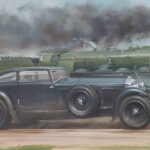
The Bentley Boys Conquer Le Mans
In 1897, two-year-old Woolf Barnato had inherited the millions of his father Barney, who had been lost on a sea voyage from South Africa to England. With his Kimberley diamond mines in South Africa, he had made a fortune together with Cecil Rhodes (the namesake of Rhodesia). Woolf, a decorated officer in the First World War, soon became the majority owner and chairman of Bentley, as Bentley could only exist with his millions. He and a few other gentlemen from the best family - such as Sir Henry Ralph Stanley „Tim“ Birkin 3rd Baronet - set out to cause a sensation with Walter O. Bentley's heavy „green thunder cars“. In 1925, Woolf set a new world record in Montlhéry with an average speed of 152 km/h over 24 hours. An exclusive circle around „Babe“, as Woolf was known, who occasionally made bets in his club in London's St. James Street! Just think of his legendary 200-pound bet that he would arrive in London earlier in a Bentley Speed Six from Cannes than the legendary French train „Train Bleu“ in Calais. „Babe“ won by four minutes. In 1927, his friends Dudley Benjafield and Sam-my Davis dictated the 24-hour race in the Bentley 3 Litre Super Sport. In 1928, he got behind the wheel of a 4.5-liter Bentley himself and won together with Bernard Rubin. He repeated his victory in the Bentley Speed Six in 1929 together with his friend Tim and in 1930 with Glen Kidston. This made Woolf Barnato the first triple winner of the 24 Hours of Le Mans.
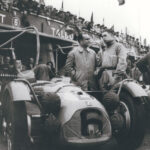

Le Mans: Four Alfa Romeo 8C 2300 LMs
In 1931, they took to the starting line with deep blue blood: Francis Richard Henry Penn Curzon 5th Earl Howe CBE, son of Lady Georgina Elizabeth Spencer Churchill and grandson of the 7th Duke of Marlborough, and the aforementioned Sir Tim Birkin. They achieved a new record victory with their Alfa Romeo 8C 2300 LM: 3017.654 kilo-meters. Incidentally, Howe was elected the first president of the British Racing Drivers Club in 1929, and his daughter later married Piers Courage. Raymond Sommer won in 1932 with Luigi Chinetti on the shortened 13.5-kilometre track and in 1933 with Tazio Nuvolari in the Alfa. Chinetti also used this car in 1934 and won together with Philippe Étancelin. In 1935, the Lagonda M45R Rapide of Britons Johnny Hindmarsh and Luis Fontés took victory. The race was suspended in 1936 due to a general strike in France, after which domestic makes were back in vogue. Jean-Pierre Wimille/Robert Benoist won with a Bugatti Type 57CS in 1937 and Eugène Chaboud/Pierre Veyron in 1939 under Wimille's bid. Before the Second World War, Veyron (today the namesake of a Bugatti) and Chaboud - victorious in 1938 in a Delahaye 135 CS - had set a new record of 3287.938 kilometers. The lights went out in Europe, and the 24-hour racing noise concert on the Sarthe fell silent until 1949.
Le Mans victory almost single-handedly through driving
In 1949, the English gentleman driver Peter Mitchell-Thomson, 2nd Baron Selsdon brought his Ferrari 166 MM Barchetta to the start with the experienced driver Luigi Chinetti as pilot for 23 hours. The lord only got behind the wheel for 60 minutes - whenever Luigi had to. After all, Selsdon had finished fourth together with William 1rst Baron Waleran in a Lagonda V12 in 1939. Chinetti secured his third Le Mans victory and Ferrari's first. As a Le Mans winner, laughing third: His Lordship! Louis Rosier, the 1950 Le Mans winner, also spent 23 hours at the wheel and was represented by his son Jean-Louis for the remaining 60 minutes. Louis, formerly a motorcycle racer on a Harley, had won a class victory at the Monte Carlo Rally in 1949 together with his son - in a Renault 4CV. In 1950, Rosier made his debut at the British Grand Prix in a Talbot-Lago T26C and finished fifth - what a promotion! Before the start in Le Mans with the Talbot-Lago T26GS - nothing other than his Formula 1 car equipped with four headlights - Rosier looked Juan Manuel Fangio and kept his fingers crossed for him. With success, because Rosier had set a new record of 3,465.120 kilometers. The first of a total of seven Jaguar successes at the Sarthe was claimed by Britons Peter Walker and Peter Whitehead in an XK 120C in 1951. The two Peters improved on Rosier's record, but were beaten the following year. A great moment for the Mercedes-Benz 300 SL driven by Hermann Lang and Fritz Riess on June 15, 1952: Lang, winner of the 1939 Belgian GP, and the 1950 German sports car champion Riess beat the Jaguar record by 122.607 kilometers. Tony Rolt and Duncan Hamilton achieved the Jagu-ar revenge in 1953, with their C-Type covering an impressive 4088.064 kilometers. In a Porsche 550 Coupé, Richard von Frankenberg and the racing-experienced Belgian motor journalist Paul Frère took a class victory in this race. The Scude-ria Ferrari won in 1954 with the portly Argentinian José Froilán González and the Frenchman Maurice Trintignant, runner-up in the Belgian GP and fourth in the World Championship that year.
The Le Mans disaster with 85 deaths in 1955
Mercedes had signed Frenchman Pierre Levegh as a replacement driver for Hans Herrmann, who had been injured in practice for the Monaco GP in 1955. Another tireless driver who had once, in 1952, driven 23 hours in a row before an engine failure dashed all hopes of victory! The leading Mike Hawhorn lapped Lance Macklin's Austin Healey on the left and then braked abruptly to the right for a pit stop. Macklin swerved to the left just as Levegh's Mercedes 300 SR was approaching at around 240 km/h. The Frenchman was able to warn his teammate Juan Manuel Fangio, who was about to take over the race lead from Hawthorn, with a hand signal. Fangio later: „He saved my life with that.“ The left rear flank of the Healey hit the right fender of the SLR and sent it over the small picket fence behind which the spectators were crowding. As the Mercedes rolled over, Levegh was thrown out and the engine ripped out of the car and hit the packed grandstand like a bomb. As the magnesium tank had burst, the scene was ablaze. The attempts to extinguish the fire - with water, of course, completely wrong - took hours. In order to avoid causing mass panic, the race continued. The action on the track was intended to distract attention. The dead, Levegh and 84 spectators, were covered with cloths and almost 120 injured people were treated as best they could. Mercedes withdrew its team at night out of respect for the victims and left the winning drive to Jaguar with Mike Hawthorn and Ivor Bueb. Entered by the Ecurie Ecosse, the Jaguar D-Types were also successful in 1956 and 57 with Ron Flockhart.

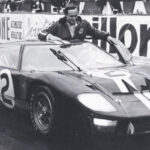
Seven Ferrari victories in eight races
The Belgian Olivier Gendebien entered the annals of the 24-hour classic as the first four-time dominator of Le Mans with victories in 1958, 60, 61 and 62. Three times his co-driver: the 1961 Formula 1 World Champion Phil Hill. In 1960, he shared the honors with his compatriot Paul Frère. However, the Aston Martin DBR1 burst into Ferrari's nascent dominance in 1959. After Stirling Moss had worn out the competition until his retirement, the way was clear for his teammates. Carroll Shelby and Roy Salvadori as well as Maurice Trintignant and Paul Frère celebrated a one-two Jaguar victory. Ferrari SEFAC won in 1963 with Lorenzo Bandini and Lodovico Scarfiotti in a 250P and the following year with Jean Guichet and Dr. Nino Vaccarella in a 275P. In 1965, Ford launched a general attack on Ferrari with a contingent of eleven cars - six GT40s and five Cobras - with a force of equal size. The 24 hours took an incredible toll: only the Ford-Cobra 4.7 GT from Sears/Thompson and two of seven Porsches crossed the finish line. But with Herbert Linge and Peter Nöcker in fourth place overall, the team from Stuttgart celebrated a magnificent class victory. Five Ferraris came through, but the victory did not go to the Scuderia itself, but to the North American Racing Team. Masten Gregory had brought Jochen Rindt on board his 250 LM, and the Mainz-born Austrian proved that he could not only be fast in a monoposto, but also had qualities on the long distance. Jochen's only stress: „We were leading, so Masten wanted to enjoy the last hour in this position. You stand in the pits and can do nothing but hope. That's really annoying.“ With Dumay/Gosselin, a French Ferrari team came second, 75 kilometers behind. The Belgian Ferrari of Mairesse/„Beurlys“ finished several laps behind.
Shelby-American lets Ford triumph
Canossa walk for Ferrari race director Eugenio Dragoni: on Sunday morning, June 19, 1966, the Ferrari insider had to confess to the Comendattore that after all the Dinos, the last of the P3 works cars had also retired. The Ford GT40 Mk II from Shelby-American celebrated a magnificent one-two-three victory with McLaren/Amon, Miles/Hulme and Buck-num/Hutcherson. Behind them, four Porsche Carrera 6s excelled in the overall classification and in class. Best Ferrari and class winner: the 275 GTB/C from Maranel-lo Concessionaires with Piers Courage and Roy Pike. In 1967, the Ferrari 330 P4 of Scarfiotti/Parkes and Mairesse/„Beurlys“ managed to squeeze in between the victorious Ford Mk IV of Dan Gurney and A. J. Foyt and the fourth-placed Mk IV of Bruce McLaren and Mark Donohue, which was plagued by clutch problems. Behind them were two Porsche 910s and two Carrera 6s. In the presence of motor empire rulers Henry Ford II and Giovan-ni Agnelli, the armed forces - 13 Fords against ten Ferraris - clashed. Plus the generals: Carroll Shelby and Franco Lini. And Porsche was also represented with ten cars. Ford's initial dominance was, of course, marred at four o'clock in the morning when Mario Andretti's Mk IV in the „S“ of Tertre Rouge crashed into a wall and his teammates Jo Schlesser and Roger McCluskey, who followed, were unable to avoid it. In 1968 and 69, the GT40 Mk. I from John Wyer Automotive Engineering with Pedro Rodriguez and Lucien Bianchi triumphed, as did Jacky Ickx and Jackie Oliver the following year.
First overall Porsche victory at Le Mans in 1970
In training, they were only in 16th place: Hans Herrmann and Richard „Dick“ Atwood in the 4.5-liter 917 from Porsche Salzburg, while their 917 colleagues Elford/Ahrens and Siffert/Redman battled for the top spots with the Ferrari 512S of Vaccarella/Giunti and Re-gazzoni/Merzario. But after the leading Wyer-Gulf-Porsche of Jo Siffert retired Brian Redman During the night, they were suddenly in front and won ahead of Gérard Larrousse and Willi Kauhsen in a Martini 917. Rudi Lins and Dr. Helmut Marko in a Porsche 908/2 came third and won the performance index. In the fuel consumption index, Porsche came out on top. The Ferrari 512S had to be content with fourth and fifth place, while the remaining nine 512S were eliminated. The appearance of the No. 23 Porsche of Reinhold Jöst and Willi Kauhsen was the „eye-catcher“ of le Mans in 1971, but the „wild sow“ of the Martini team, fifth until the tenth hour, was slaughtered at night. The team's sister car, the No. 22 with Dr. Hel-mut Marko and the Dutch Junker Gijs van Lennep, won with a distance of 5335.313 kilometers ahead of „Dick“ Atwood and Herbert Müller in a Wyer-917 and the 512M of the North American Racing Team with Sam Posey/Tony Adamowicz. Once again, many Ferrari 512Ms were wiped out - this time as many as 13. The only consolation: the Ferrari 365 GTB - and this one also under US entry - of Chinetti/Grossmann won the fuel consumption index.
Matras Siege-ABC in Le Mans
Overshadowed by the death of the Swede Joakim Bonnier - second fastest on the Mulsanne straight behind Reinhold Jöst in the 908 Langheck - there was a double victory for the Matra-Simca MS670(A) with Henri Pescarolo and Graham Hill as well as Francois Cevert and Howden Ganley. During an unsuccessful overtaking maneuver, the Lola T280 of the Swedish gentleman and GPDA president crashed into the Ferrari Daytona GT of Swiss driver Florian Vetsch and flew over the crash barriers into the forest where it shaved off more than a dozen trees. Henri Pescarolo won again in 1973 with the B version of the Matra MS670, now together with Gérard Larrousse. The Ferrari 312PB pairing of Artu-ro Merzario and Carlos Pace had to settle for second place. The index classification went to the Porsche Carrera RSR trio of Kremer/Keller/Schickentanz and the BMW 3.3 CSL of Dieter Quester and Toine Heze-mans took the lead in the touring car category. The Matra MS670C of Equipe Gitanes caused a lot of blue haze in 1974. Under the eyes of René Thomas, In-dianapolis winner in 1914, Pescarolo/Larrousse took victory once again. This time ahead of the Martini-RSR of Gijs van Lennep and „Stumpen-Herbie“ Herbert Müller and the Matra of Jabouille /Migault. Franco Lini, now a journalist at the Sarthe, and Carroll Shelby, a visitor, were having a good laugh about who had done the best job with homologated cars when the writer of these lines introduced them to Thomas. And the Indy rice also had an amusing contribution: „When Monsieur Goux was able to water his victorious Peugeot during the Indy race in 1913 and drink another bottle of champagne on the podium, I had actually hoped to be able to sip this fine drink when I won in 1914. Too bad, alcohol had been banned here since Goux!“
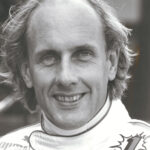
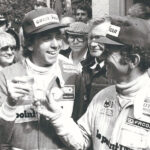

Jacky Ickx's Le Mans winning streak
In 1975 and with Gijs van Lennep in 1976 and Jürgen Barth in 1977 in the Martini-Porsche 936, Jacky Ickx celebrated three consecutive victories. In 1978, together with Bob Wollek and Jürgen Barth again, the Belgian in the Jöst team's 936 was beaten by the superior Renault Alpine A442 of the French driver trio Pirioni/Jaussaud/Jabouille. In 1979, Hollywood star Paul Newman competed together with Rolf Stommelen in Dick Barbour's Porsche 935. Newman's hype made his fellow competitors literally fade away. Barbour had banned him from all interviews so that Newman could prepare for his Le Mans debut in peace. Uwe Mahla from „rallye racing“, of course, had the editorial assignment: Newman interview, no matter what! The then 33-year-old lawyer explained: „I handed Rolf Stommelen, whom I knew well, a piece of paper with five questions and told him that his interview with the celebrity in the team would be duly published.“ Rolf, who enjoyed his presence in the media, reported extensively and provided Mahla with many useful quotes from the famous LeMans participant with him as the designated questioner. The fact that this team, despite a stuck wheel bolt
The fact that he came second in the overall standings in the 22nd hour added to the sto-ry. In addition to the movie star, members of the pop group „Pink Floyd“ also finished the race: Drummer Nick Mason, Lola-Ford T297, in 18th place and manager Steve O`Rourke, Ferrari 512 BB, in twelfth place. However, the Cologne-based Kremer Porsche team caused a sensation: victory for Klaus Ludwig together with Bill and Don Whittington. Bad luck for the Porsche works team: when Jacky Ickx stopped on the track with a broken V-belt, a mechanic who had rushed to the scene not only gave him good fitting advice, but also discreetly dropped the replacement belt into the grass next to the driver. The Ickx/Redman team was disqualified for the unauthorized repair, which was prescribed with on-board equipment. Manfred Winkelhock took an astonishing sixth place overall in the Popart-BMW M1, which Andy Warhol painted in just 28 minutes and finished second in the IMSA category behind the Barbour-Porsche. In a Rondeau M379 designed and entered by him, Jean Rondeau and Jean Pierre Jaussaud took victory in 1980.
Le Mans Unique: Applicant, Designer, and Driver in One! Jacky Ickx, who had only finished second here behind another Rondeau with Reinhold Jöst, actually wanted to retire from Le Mans. Think again! He won twelve months later in the factory Porsche 936/81 and added a sixth victory in 1982 with the Porsche 956. Derek Bell, who was racing with him, increased his victory tally to three successes.
Seven fat Porsche years at Le Mans
After 1981 and 82, Porsche also won in 1983 with the Rothmans 956, driven by the Australian Vern Schuppan, a good friend of the writer of these lines, and the US boys Hurley Haywood and Al Holbert. The Porsche 956B from New-Man-Joest Racing won in 1984 and 85, with Klaus Ludwig sharing the cockpit with Henri Pescarolo, Paolo Barilla and Louis Krages alias „John Winter“. This was followed by two victories for the Rothmans works Porsche. In both cases with the driver combination of Derek Bell, Hans-Joachim Stuck and Al Holbert. The territory left by Porsche was taken over by Silk-Cut-Jaguar in 1988 and 1990. The winning pairings: Jan Lammers, John Colum Crichton-Stuart 7th Marquess of Bute, called Johnny Dumfries for simplicity's sake, and Andy Wallace as well as John Nielsen, Price Cobb and Martin Brundle. In between, the Sauber-Mercedes team shone with Jochen Mass, Manuel Reuter and the Swede Stanley Dickens. Johnny Herbert, Volker Weidler and Bertrand Gachot celebrated a completely unexpected triumph in the Mazda 787B 19091. The first and, until 2018, only victory of a Japanese brand at the Sarthe - and with a Wankel rotary engine whose 700 hp did not require a turbo. Two successful years for „Peugeot Talbot Sport“ followed in 1991 and 92. The Peugeot 905 Evo 1B was driven by Yannik Dalmas/Derek Warwick/Mark Blundell and Éric Hélary/Christophe Bouchut/Geoff Brabham. The Dauer 962 LM, a road-legal GT1 version based on the Porsche 962C of previous years, entered the 1994 winners„ list under the name “Le Mans Porsche Team„ of Jochen Dauer from Nuremberg. The noble vehicle, presented at the IAA the previous year, won with drivers Yannik Dalmas, Hurley Haywood and Mauro Baldi. It was also Dalmas who drove the McLaren F1 GTR of “Kokusai Kaihatsu Racing" together with Masanori Sakiya and JJ Letho to victory in 1995, because the leading Courage Porsche had lost six laps in the pits due to a crash barrier kiss by Mario Andretti. The McLaren of Derek Bell and his son Justin and Andy Wallace was then in front, but struggled to start and only finished third. Other McLaren with BMW S70 6.1-liter V12 engines followed.
Eckensteher led to two Le Mans victories
Two chassis from Tom Walkinshaw Racing (TWR), based on the Jaguar XJR-14 developed by Ross Brawn, were originally intended for use by Porsche in the IMSA series. However, during initial Daytona tests with Mario Andretti, the times were far behind the Ferrari 333 SP and the Kremer K8 Spyder. The TWR-Porsche WSC-95s sat in a workshop corner of Weissach for a long time until Reinhold Jöst discovered them. Porsche itself was too busy with its GT1 project, so they were grateful for Jöst to take care of a Le Mans entry with the TWR-Porsche. Reinhold, also known as „Mister Le Mans,“ once again lived up to his nickname. The TWR-Porsche WSC-95s won in 1996 with Alexander Wurz, Manuel Reuter, and Davy Jones, and in 1997 with drivers Tom Kristensen, Michele Alboreto, and Stefan Johansson. By then, Porsche AG's GT1 had matured so much that Laurent Aiellio, Allan McNish, and Stéphane Ortelli drove it to victory in 1998. Le Mans veteran Yannick Dalmas, along with Joachim Winkelhock and Pierluigi Martini, then secured victory for BMW Motorsport in 1999 with the LMR, equipped with the proven V12 engine.
Audi Sport Team Joest - another success story
Between 2000 and 2002, there was no way around the Audi R8, driven by Reinhold Jöst, at Le Mans, and the Danish-German-Italian trio of Tom Kristensen, Frank Biela and Emanuele Pirro won three times in a row. Tom achieved his fourth Le Mans victory in a Bentley Speed 8, which was good for the British brand, which belongs to the VW Group. Audi means „listen“ in Latin, and to ensure that the Japanese market also listens to Audi, Tom won together with Nippon's Seiji Ara and Rinaldo Capello in an R8 from Audi Sport Team Japan. Marco Werner reports on the next Au-di successes, two for US teams and one for Jöst - he won them all three. In 2008, the „Audi Sport North America“ team scored once again. Tom Kristensen took his eighth Le Mans victory in an R10 TDI. Now Peu-geot wanted to do it again. Geoff Brabham's brother David drove a Peugeot 908 HDI FAP to victory together with Alexander Wurz and Marc Gené. This was followed in 2010 by the distance record of 5,410.713 kilometers, set with an Audi R15 TDI Plus from Audi Sport North America, driven by Mike Rockenfeller, Romain Dumas and Timo Bernhard. Incidentally, the distance between London and New York as the crow flies is just 170 kilometers longer. The Le Mans classics were once again firmly in the hands of Audi Sport Team Joest between 2011 and 2014. Reinhold Jöst's squad was by far the most successful and celebrated more victories than the Porsche works team up to 2020: three wins each for André Lotterer, Benoit Tréluyer and Marcel Fässler as well as the success of Allan McNish, Loic Duval and Tom Kristensen. This makes Tom Kristensen the „driver king“ of Le Mans.
Hybrid Finale in Le Mans: Porsche and Toyota Each Take Three Wins
Audi R18 etron quattro with the highest top speed versus the reliability of a Porsche 919 Hybrid and the Toyota TS40 as temporary extras: this is how Le Mans 2015 turned out. Audi lost out due to technical problems that required additional stops, while Porsche made up five seconds per refueling stop. After all, refueling was required every 13 laps. We prefer not to mention the Nissan GT-R LM, as their best LMP1 spent a total of eight hours in the pits. After a seventeen-year absence, a works Porsche won again - unexpectedly with the crew of Nico Hülkenberg, Nick Tandy and Earl Bamber in the team's third car. Audi had to pay a hefty fine for swapping an electronic engine control seal. The LMP1 cars from Porsche, Audi and Toyota were actually equally fast at Le Mans in 2016, but in a dramatic duel between Porsche and Toyota - Audi failed due to its technology - only the Porsche of Romain Dumas, Marc Lieb and Neel Jani was still fighting against two Toyo-ta in the end. However, a spin across the gravel bed so badly damaged Kamui Ko-bayashi's car that he was no longer in contention for victory. However, his compatriot Kazuki Nakajima had his sights set on victory when his leading Toyota came to a halt with gearbox damage three minutes before the end. Fortune was also on Porsche's side in 2017: Timo Bernhard won together with the „Aussies“ Bren-don Hartley and Earl Bamber. In 2018, the Land of the Rising Sun was able to smile for the first time: following the LMP1 Porsche withdrawal, Gazoo Toyota Racing dominated with Sébastien Buemi, Kazuki Nakajima and Formula 1 former world champion Fernando Alonso ahead of the Toyota TS050 Hybrid of Mike Conway, Kamui Kobayashi and Argentinian José Maria López. This was exactly how the 2019 race finished, but only because tire damage had thrown the second, faster Toyota back. Just under 17 seconds were missing at the finish. Sébastien Buemi, Kazuki Nakajima and Brendon Hartley celebrated the Toyota hat-trick in 2020, while the sister car with the same crew as the previous year was beaten by the Swiss Rebellion R13 with Bruno Senna, Norman Nato and Gustavo Mendez.
Porsche and Kristensen above all
Conclusion of the 24 Hours of Le Mans history after 90 races: Porsche with 18 wins, followed by Audi (13), Ferrari (8), Jaguar (7), Bentley (6), Alfa Romeo and Ford (4 each), and Peugeot, Matra-Simca, and Toyota (3 each). The most driver accolades went to Tom Kristensen (9 wins), followed by Jacky Ickx (6), Derek Bell, Frank Biela, and Emanuele Pirro (5 each), Olivier Gendebien, Henri Pescarolo, and Yannick Dalmas (4 each), and Woolf Barnato, Jean-Pierre Jaussaud, Al Holbert, Klaus Ludwig, Marco Werner, André Lotterer, Benoît Tréluyer, Sébastien Buemi, and Kazuki Nakajima (3 each).
Never miss an exciting article about historic motorsport again! Get your Curbs subscription. ALL images conveniently home – directly via our Online store