First published on curbs-magazin.com
Originally published on curbs-magazin.com – now part of slickpix.de.
The Porsche 911

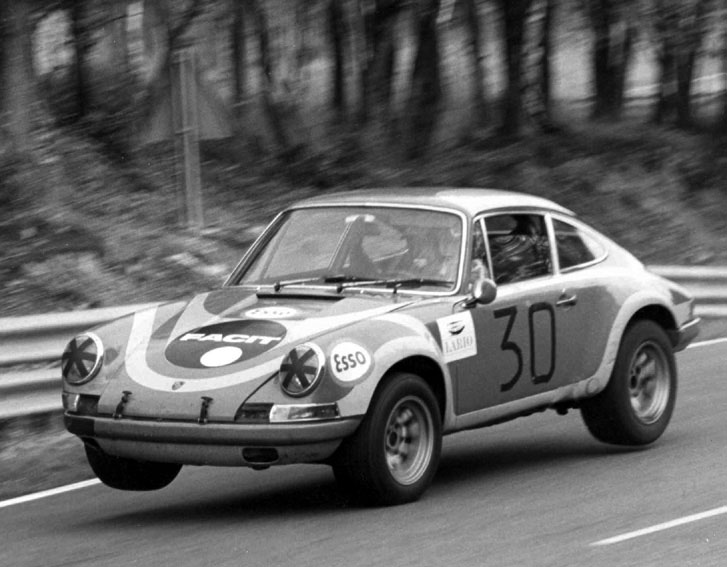
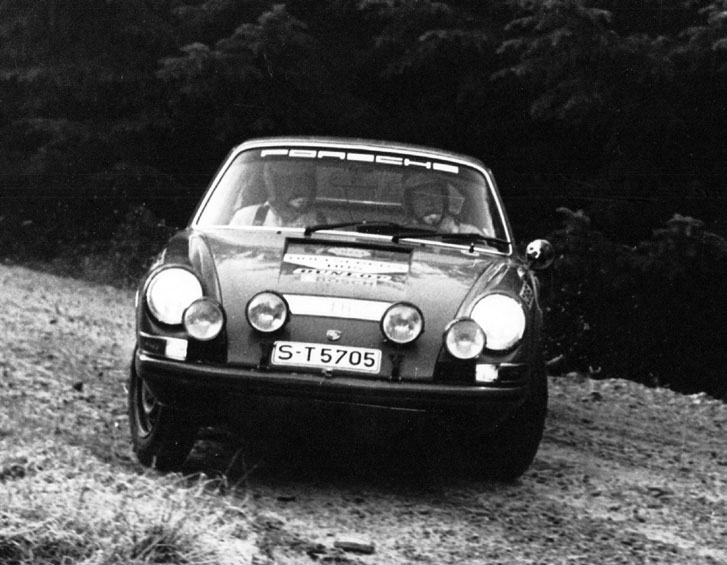
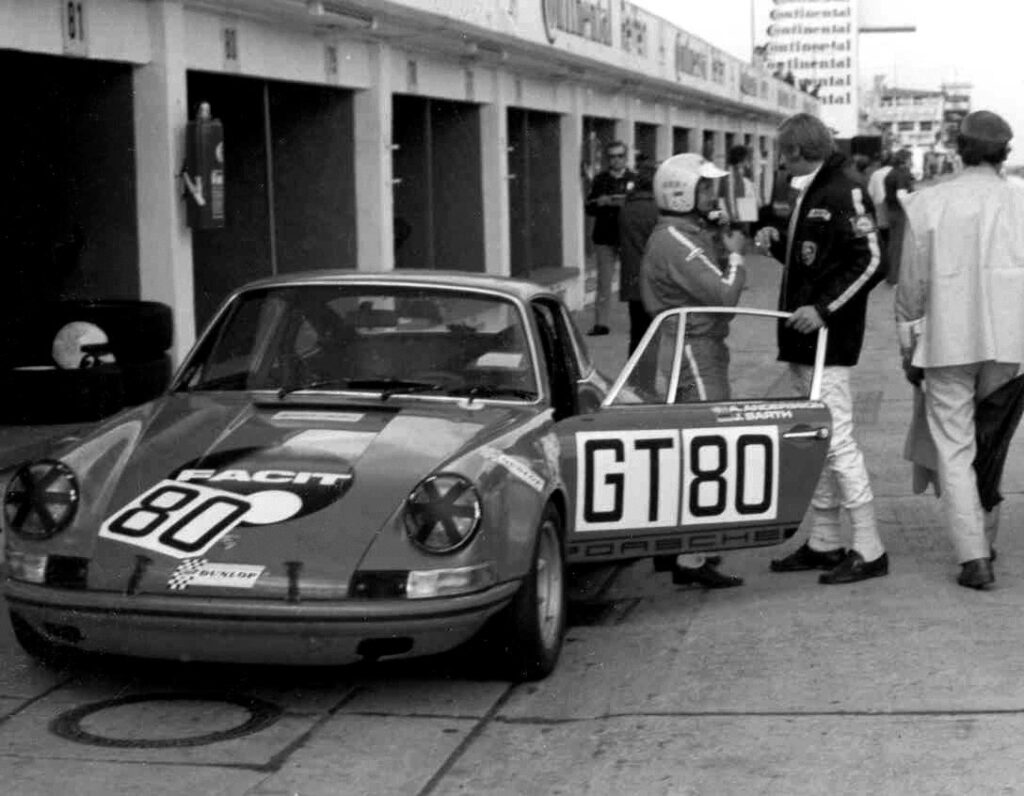
The Porsche 911 took a big leap forward with the new homologation 3025 – the 911 S was now equipped with a 2.2-liter engine producing 180 hp in its series version. This further developed engine, based on the 2.0-liter unit with its mechanical Bosch injection, was truly the optimal choice for sports drivers at the time. It was homologated by the FIA as a Group 3 vehicle with homologation 3025 on April 1, 1970. The 911 S 2.2 was also optimized by the sports department, and there was a 911 ST version that could be purchased directly from Porsche or through Porsche dealers.
What was behind the designation 911 ST?
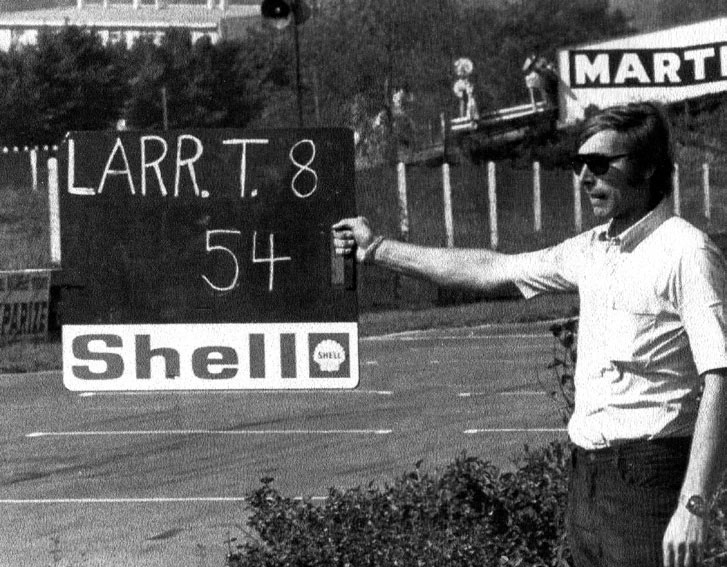
Quite simply, because the 911 T Coupe had a simpler specification than the 911 S and also had less sound deadening, the 911 S technology was simply incorporated into the 911 T Coupe. Additionally, many parts were omitted from the standard production, such as the rear bumperettes or the rubber strips on the front and rear bumpers. And with these modifications, the 911 ST achieved a weight of only 960 kilograms. In 1970 and 1971, there were a total of 16 factory cars of this Porsche 911 ST model, which were mostly used in the Rally World Championship. Porsche won the Rally World Champion title for GT vehicles at the time, with drivers such as Larrousse, Waldegaard, Toivonen, Andersson, and Zasada. The following parts were additionally homologated for use in Group 4 for these versions:
• Various spacer rings
• Various tanks up to 110 liters
• Plastic fender flares
Light metal doors
Front and rear plastic bumpers
• Plexiglass side and rear windows
A double ignition for the engine
Rocker arm without adjusting screw
• A simplified dashboard
• Front and rear stone chip protection and an additional oil pump for the transmission
So now comes the problem: What many historical 911 drivers often don't understand is that with homologation amendment 3/1E from November 1971, many of these lightweight components were eliminated. So here it's important to check the homologation document to see what is still homologated when using homologation 3025.
What makes everything a bit more complicated is this: For the 1970 Tour de France, one of these 16 works cars was specially modified. Because, just like with the Porsche 911 R, prototypes could be entered in the Tour de France. So Gérard Larrousse had to compete against two Matra 650 sports cars in the Tour de France. Therefore, his 911 ST was modified so extremely by us (we had a bet going with Gérard Larrousse that we'd get a bottle of champagne for every kilogram under 800 kilograms) that we managed to get ten bottles. I don't think I need to tell you that he could drive well with a 911 that only weighed 790 kilograms and had an engine bored out to 2,395 cc, delivering a hefty 260 hp.
And here we are again on the topic of what was allowed and what was not allowed in Group 4 back then.