
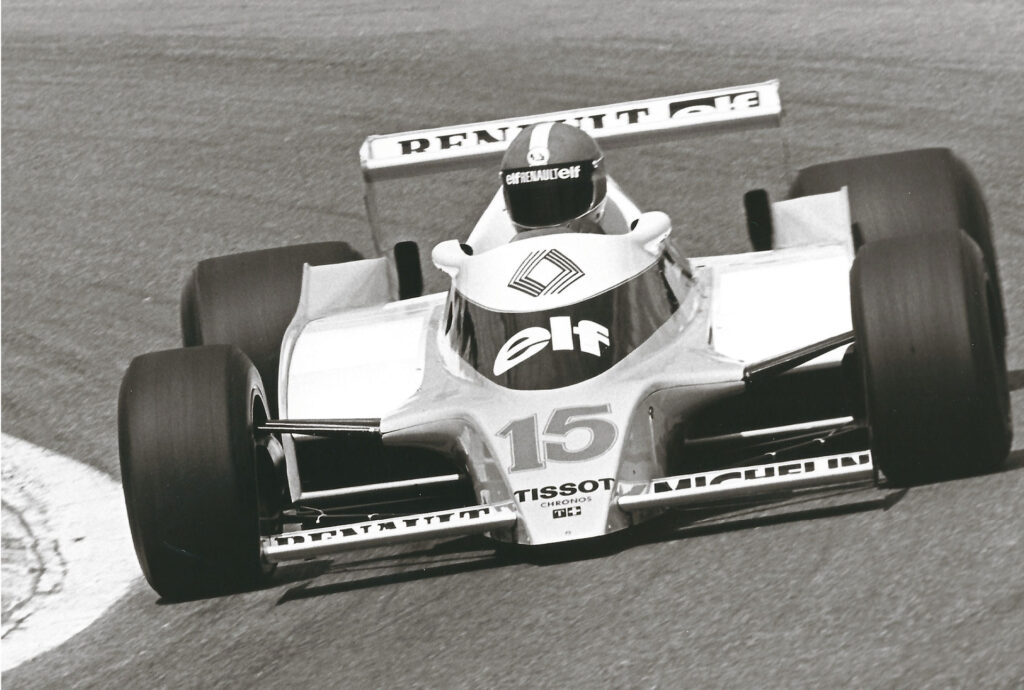
On February 2, 2023, another French Grand Prix driver, Jean-Pierre Jabouille, passed away. 49 starts, 186 laps led – that equals 985.142 kilometers – but only 21 World Championship points: Actually a meager output, yet it included two victories, including the first with a turbo engine.
The beginnings of Jean-Pierre Jabouille
Only 1.5 seconds separated the short-statured Martini-Renault-Mk19 driver René Arnoux from winning the 1976 Formula 2 European Championship over his compatriot Jean-Pierre Jabouille in the Elf-2J-Renault. And this exact difference was what Michel Lecère had to factor in at the finale in Hockenheim to hoist his teammate Jabouille, in the yellow car sponsored by „Fromages Switzerland,“ onto the championship throne. It was a tension-filled race weekend with two heats, the addition of which determined the European Championship points, and during which no less than 19 drivers had missed qualification. Such was the crowd. The spectators, of course, were less interested in who from „Force de France“ with Arnoux and Tambay against Jabouille/Leclère would take the title, but rather whether the crowd favorite „Pretzel Stick would show the „Frenchmen“ who's boss in Hockenheim. „Striztel’s“ attempt to brake Leclère, Arnoux, and Tambay at the entrance to the Motodrom to stay in the slipstream of the leading Jabouille failed completely. Jabouille won ahead of Arnoux, but that wasn't enough to fulfill his title ambitions. Team manager Jean Sage had calculated the following: „Arnoux is still leading with 48 points after this first race. If my Jean-Pierre wins the overall standings here, he'll have 53 points, but that's only enough if Arnoux finishes third in the second race.“ Since Leclère's engine was running better than Jabouille's, Michel was supposed to take the lead and win by seven seconds over Jabouille, but not with any more of a lead, otherwise the overall standings would have gone in his favor. Jabouille then only had to keep Arnoux in third place until the finish. And he succeeded – by the crucial 1.5 seconds. Thus, he won the championship by one point.
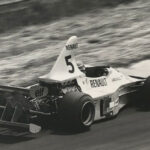
With friend Jacques Laffite as mechanic
The tall, blond man from Paris, with Norman ancestry, an art student and highly ambitious in sports—even in speed skating—took his first steps in motorsports on the hill and then moved on to Formula 3. For financial reasons, he had to solve all technical problems, including engine overhauls, on his own. That’s when his childhood friend Jacques Laffitte offered to help. To save money, they did without hotel comforts, making do with a modest motorhome. They also had things in common on a personal level: Jacques’s longtime girlfriend and later wife, Bernadette, is the sister of Jean-Pierre’s Geneviève. Of course, there was some family friction when Jacques and Bernadette were determined to spend three days relaxing in Biarritz, just as Jean-Pierre had a race scheduled in Nogaro. While Jacques was sunbathing on the beach, his future brother-in-law had to manage on his own. Only the expertise of a real race mechanic could help. With such professional support, „The Tall One“ claimed national championship titles in 1968, 1969, and 1971. Since Laffite had also started racing by then, Jacques was now his own mechanic. No more trips to Biarritz! Only the occasional fishing trip—like Jean-Pierre—could still be squeezed into his schedule. Jean-Pierre Jabouille had meanwhile moved up to the Alpine Renault Formula 3 team, competing internationally. This was also the case in 1972, when he shone in an A364 at the ADAC 300 km race at the Nürburgring, winning the first race in commanding fashion and setting the fastest lap with a time of 8:46.5 minutes. Incidentally, Hannelore Werner finished seventh here, and Jochen Mass came in 21st. The following year, Alpine teammate Michel Leclère had to contend with Jacques Laffite, who was „blazing fast“ in a Martini-Holbay Mk.12. In 1973, Jabouille struck fear into the hearts of the competition in the 2-liter sports car class. During a test day for the „Société Renault Alpine Elf“ 50 years ago at Magny-Cours, he did the same to the author of these lines—as a passenger in the „hot seat“ of the A440 next to him. Michel Leclère also invited us for a wild lap: it ended in a spectacular series of spins.
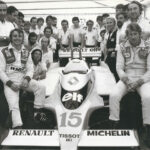
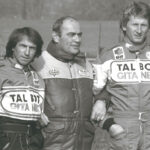
Jean-Pierre Jabouille with a win and podium finishes at Le Mans
On a Matra MS 670B, the two Jean-Pierres (Jabouille and Jaussaud) finished third in the 1973 24 Hours of Le Mans. Jabouille repeated this placement the following year with François Migault. In those years, Jean-Pierre stirred up the 2-liter sports car scene with Renault. Jabouille competed at Le Mans a total of 13 times – and only in 1989 did he not drive a French product. He finished fifth in a Sauber-Mercedes C9 along with Jean-Louis Schlesser and Alain Cudini. The highlight was his victory in 1978 in an Alpine-Renault A442. After his retirement – while leading – he was directed to the sister car that was now in front. In addition to a total of eight retirements, he secured podium places again in 1992 and 1993 with Philippe Alliot and Mauro Baldi in a Peugeot 905. While his brother-in-law Jacques Laffite had already made it into Formula 1 in 1974 (ISO-Ford FW02) – debuting at the German GP – Jean-Pierre's debut came at the 1975 French GP at Circuit Paul Ricard. Thanks to the sponsor „elf,“ he was allowed to pilot the third Tyrrell 007/5 and finished 12th, behind his brother-in-law in the Williams-Ford FW-04. It wasn't until 1977, with Renault's entry into Formula 1, that the now 34-year-old had his first four races in the premier class. The start at Silverstone in the Renault R.S. 01 was a debacle: third-to-last starting row – with, admittedly, ten non-qualifiers, including Clay Regazzoni – and a turbocharger failure on the 17th lap! That season ended without championship points in Watkins Glen.
Jabouille's Passion Play 1978
Let's anticipate the final result of that season: only three meager points for Renault and Jabouille. While the F2 team had dominated the European Championship in 1977 with René Arnoux and Didier Pironi, the Frenchmen's turbocharged V6 engines still suffered from various teething problems. Apparently, the high altitude air of Kyalami suited the Renault turbo well, as Jabouille had landed on the third row of the grid, but on the 38th lap, the engine blew due to a leak in the cooling system. Turbocharger failure in Long Beach and a four-lap deficit in Monte Carlo led to frustration, but then came the triumph over Porsche at Le Mans for Gérard Larrousse and Jean Sage's team, where the trio of Pironi/Jaussaud/Jabouille covered 5044.53 victorious kilometers. Later, Didier Pironi took J.v.O. for a ride in this winning car at Le Castellet, a drive that ended with a spin at nearly 300 km/h at the end of the Mistral straight into the catch fences. Unfortunately, after the 24-hour triumph, Renault announced: „We have solved an extreme technical challenge, and that's why Le Mans is in the past for us.“ They wanted to concentrate entirely on Formula 1 now. Jean-Pierre: „And that's what
“desperate need:„ Broken oil line in Anderstorp and out of the rankings in Zolder with a 14-lap deficit. Jean-Pierre: “The only thing that brings us joy here is our new race transporter." Engine failures in Brands Hatch and Le Castellet. It was particularly frustrating at home in France, as the engine sputtered already in the formation lap. A switch to the perfectly intact reserve car, starting from
The pit lane was empty because Jackie Stewart had previously filmed with this monoposto. Sage: „Dismantling the camera and adjusting the pedals from little Stewart to tall Stewart would have taken a good 30 minutes.“ Engine failure also in Hockenheim and a gearbox defect on the Österreichring! Alongside Niki Lauda in the second row in Monza and a broken valve spring in the race! Jean-Pierre's morale was severely tested, as the turbo engine also died in Zandvoort. Only in Watkins Glen did they get three points. Full of hope and trust in his team, Jean-Pierre later told me on-site for „rallye racing“: „Jochen, after all these breakdowns, we've also learned a lot. Our goal is the first victory for a turbo engine in Formula 1, and you'll experience it soon.“
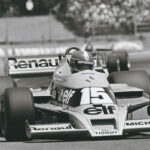
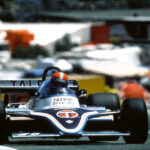
Jean-Pierre Jabouille – The glorious day!
Jean-Pierre Jabouille, extremely adept technically with his race car, was content to just finish the race in Interlagos in 1979 – after another engine failure in Buenos Aires – while his brother-in-law Laffi celebrated another lights-to-flag victory in the Ligier JS11. In Kyalami, he put the R.S. 02 on pole position, but unfortunately, a valve spring broke on lap 48. During practice in Long Beach, a half-shaft sheared off: Jabouille's Renault then played ping-pong with the safety barriers at 270 km/h. Jean-Pierre escaped with bruises. However, since his new teammate René Arnoux also suffered half-shaft failures, Renault withdrew from the race for safety reasons. After three zeros, the French Grand Prix in Dijon followed – the breakthrough! A thunderclap already in qualifying, as Jean-Pierre Jabouille and René Arnoux clearly outpaced Messrs. Villeneuve, Piquet, Scheckter, and Lauda. While Gilles Villeneuve and René Arnoux – usually within a second of each other – engaged in a fierce duel for second place, Jean-Pierre pulled away with ease. Tears of joy in the Renault team: their first turbo victory in Formula 1! While Jabouille was once again „beaten up“ by a broken valve spring in Silverstone, René Arnoux, with failing brakes, managed to cross the finish line in second place behind Clay Regazzoni. Jabouille's pole position in Hockenheim „suffocated“ after a spin into the Baden sand off the track. The only refreshing experience that weekend was the Formula 1 party at the „Dorian Gray“ at Frankfurt Airport. Clutch damage in Zeltweg and Zandvoort, another broken valve spring in Monza, Jean-Pierre: „It's despairing.“ Brake failure in Montreal, water in the electrics during the wet race in Watkins Glen: Jean-Pierre was stuck with his nine points from Dijon.
Jabouille's second and final victory
Although Jean-Pierre Jabouille's victory at the Österreichring in 1980 was an excellent recommendation for a move to Ligier-Talbot, his otherwise dismal point tally – a clean zero – couldn't disguise the fact that Renault no longer wanted to grant him number one status in the team. After all, the six-years-younger René Arnoux had scored 29 points. Jean Sage: „On the Wednesday before Imola, after heated discussions with our management, we managed to push through a contract extension and presented it to Jean-Pierre. However, four days later, he asked for the contract to be terminated.“ The stated goal of team director Gérard Larrousse to aim for the title in 1980 had, of course, come to nothing. At Ligier, henceforth called „Talbot Gitanes,“ Didier Pironi had departed for Ferrari. Jabouille couldn't resist the offer from Gérard Ducarouge, constructor and team boss of the other, more successful French team, for 1981: „They offered me double the amount of Renault's offer, and besides, I was excited to drive with my old friend and brother-in-law Jacques in the same team.“ Then came the Canadian GP with a tragic accident. On the 25th lap, a suspension broke on Jabouille's Renault R. E. 23. The Renault, without braking, hurtled head-on into a wall of tire stacks and guardrails at 160 km/h. Jabouille remained trapped in the wreckage for over 30 minutes with open leg fractures before he could be taken to the hospital for emergency surgery. Jacques Laffite, who had run out of fuel two laps before the finish, immediately rushed to the hospital. Meanwhile, TAG boss Mansour Ojjeh organized Jabouille's repatriation to Paris in his private Boeing 707.
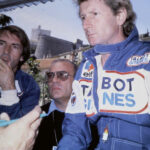
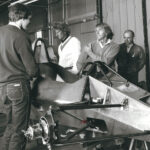
Jean-Pierre Jabouille's tenure with Talbot-Ligier-Matra
On May 3, 1981, a somewhat recovered Jabouille made his comeback at the San Marino GP in Imola: engine failure on lap 46. In Zolder, he had at least qualified ahead of Mario Andretti in the eighth starting row, but suffered a differential failure, while Jacques Laffite beamed about a second place. Behind Keke Rosberg, Jabouille was second among the eleven non-qualifiers in Monaco, while Laffite was able to climb onto the podium. Laffite on pole position and second in Jarama – brother-in-law Jabouille far behind and retired with brake failure, Jean-Pierre then gave up and handed over his cockpit to Patrick Tambay from the home Grand Prix in Dijon. Irony of fate: Here, René Arnoux's Renault was on pole position and Alain Prost, Jabouille's Renault successor, celebrated his first F1 victory. Jabouille made an additional guest appearance as team consultant at Talbot. After various touring car and two Le Mans entries for Peugeot, he took over the sporting management of this French concern, albeit without fortune. While son Victor also started racing, Jean-Pierre treated himself to a few more GT outings with Alain Prost until 2005, as a kind of "old boys' team." In February 2023, Jean-Pierre Jabouille died – after Patrick Tambay and Philippe Streiff, already the third former French Grand Prix driver within a few weeks.
Never miss an exciting article about historic motorsport again! Get your Curbs subscription. ALL images conveniently home – directly via our Online store
Photos: Renault, Talbot, Peugeot Archives, and from Osterroth, Eddi Laumanns, Ferdi Kräling, and Jochen von Osterroth