
First published on curbs-magazin.com
Originally published on curbs-magazin.com – now part of slickpix.de.
Sir Jackie Stewart is 80
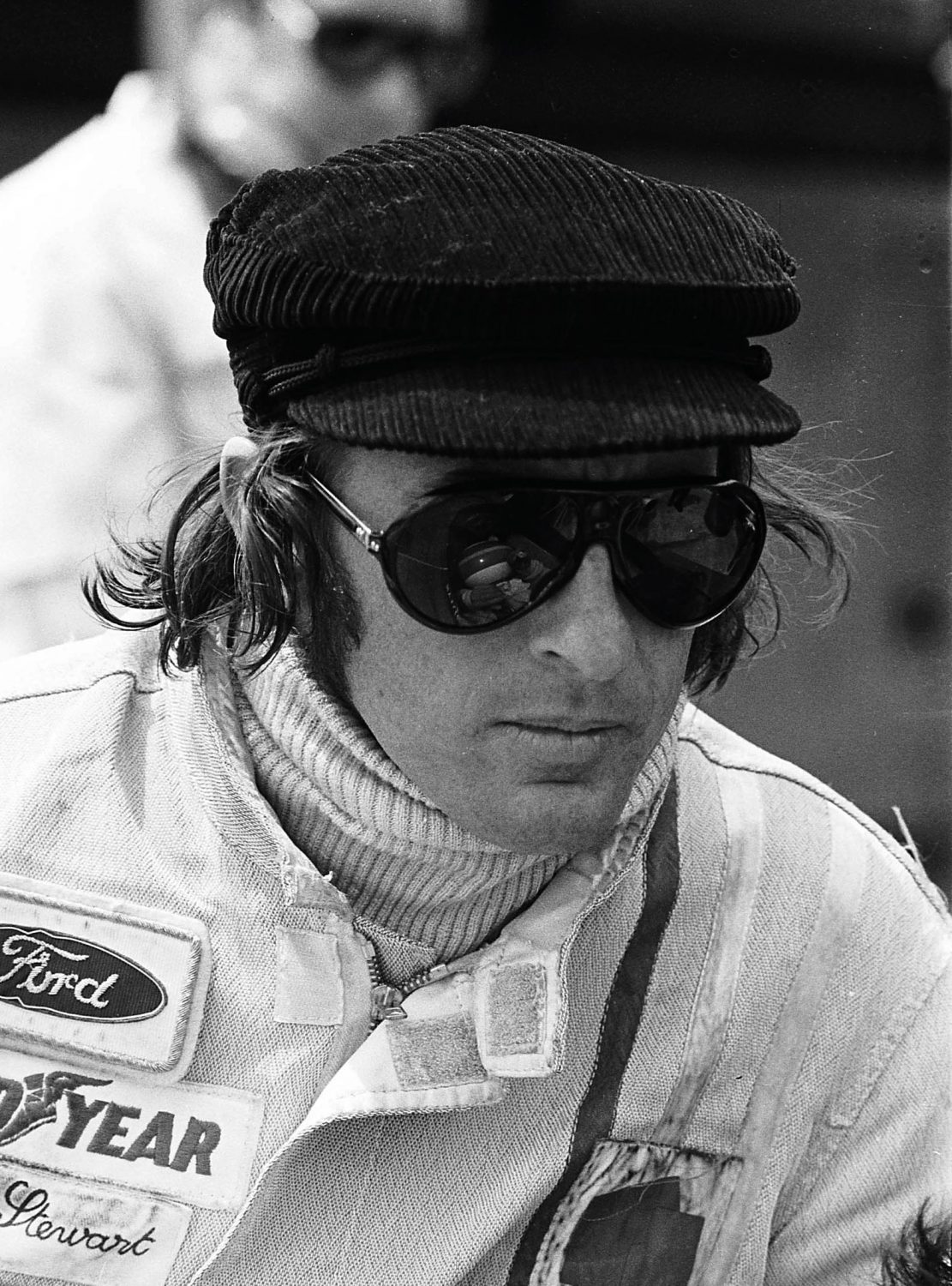
Even at his farewell from active motorsport in October 1973 at the Carlton Tower Hotel in London—he had decided to retire at the beginning of the season—Jackie Stewart found the right tone with his well-known reedy voice: „I'm no longer a racing driver.‘ The invited guests, costumed with imitations of his cap and sunglasses, wavered between melancholy and relief. A true giant of the sport was retiring, a three-time Formula 1 World Champion. He felt it was time to go, having lost so many of his Formula 1 colleagues to racing fatalities—Jim Clark, to whom he was related (one of Stewart's grandmothers was a Clark), Jochen Rindt and Piers Courage, with whom he was closer friends, Lorenzo Bandini, Lodovico Scarfiotti, Mike Spence, Bruce McLaren, Pedro Rodriguez, Jo Siffert, Joakim Bonnier, Roger Williamson... in the end, nearly half a Grand Prix driver generation.
With 27 Grand Prix victories and 31 Formula 1 wins in total, Jackie Stewart had set new records and, at 34 years old, had essentially secured his future. A few days earlier, his beloved teammate Francois Cevert had also died in a crash during practice for the US Grand Prix, after which Jackie Stewart did not start the final race of the season.
„One painstakingly maintains the balance of the ‚psychological‘ alarm system.“
In Jackie Stewart, the growing safety awareness among drivers in the late 1960s also found its first courageous spokesperson. He proved to be an uncompromising negotiator in his disputes with officials and representatives of sports authorities – one of his greatest contributions to the sport as a whole. Initially strengthened in his fighting spirit by Jochen Rindt and Graham Hill, and later also supported by Emerson Fittipaldi, he transformed the Grand Prix Drivers Association (GPDA) into a veritable drivers„ union that increasingly and assertively represented the pilots“ will to survive against organizers and team bosses. In his tireless efforts for higher track safety, he also became the driving force behind the first driver boycotts (Spa 1969, Nürburgring 1970, Zandvoort 1972). „A drive on the Ardennes circuit in Spa is comparable to a tightrope walk in stormy weather,‚ he described in a column in 1970 the hellish trip on the road course rollercoaster at speeds near 250 km/h, ‘you barely manage to maintain the balance of the “psychological„ alarm system – no one drives at the limit continuously in Spa.“ His uncompromising commitment gradually changed the faces of many racetracks through speed-reducing chicanes, double guardrails, and catch fences. At the Nürburgring at the time, where according to Stewart "the only thing that has changed since Caracciola's time is that the trees have gotten thicker," 6.5 million D-Marks were invested in a generous expansion in 1970/71. Jumps were removed, hedges and trees cleared, and four to five-meter-wide run-off areas were carved out of the terrain on both sides of the almost 23-kilometer-long Nordschleife. Stewart was very pleased.
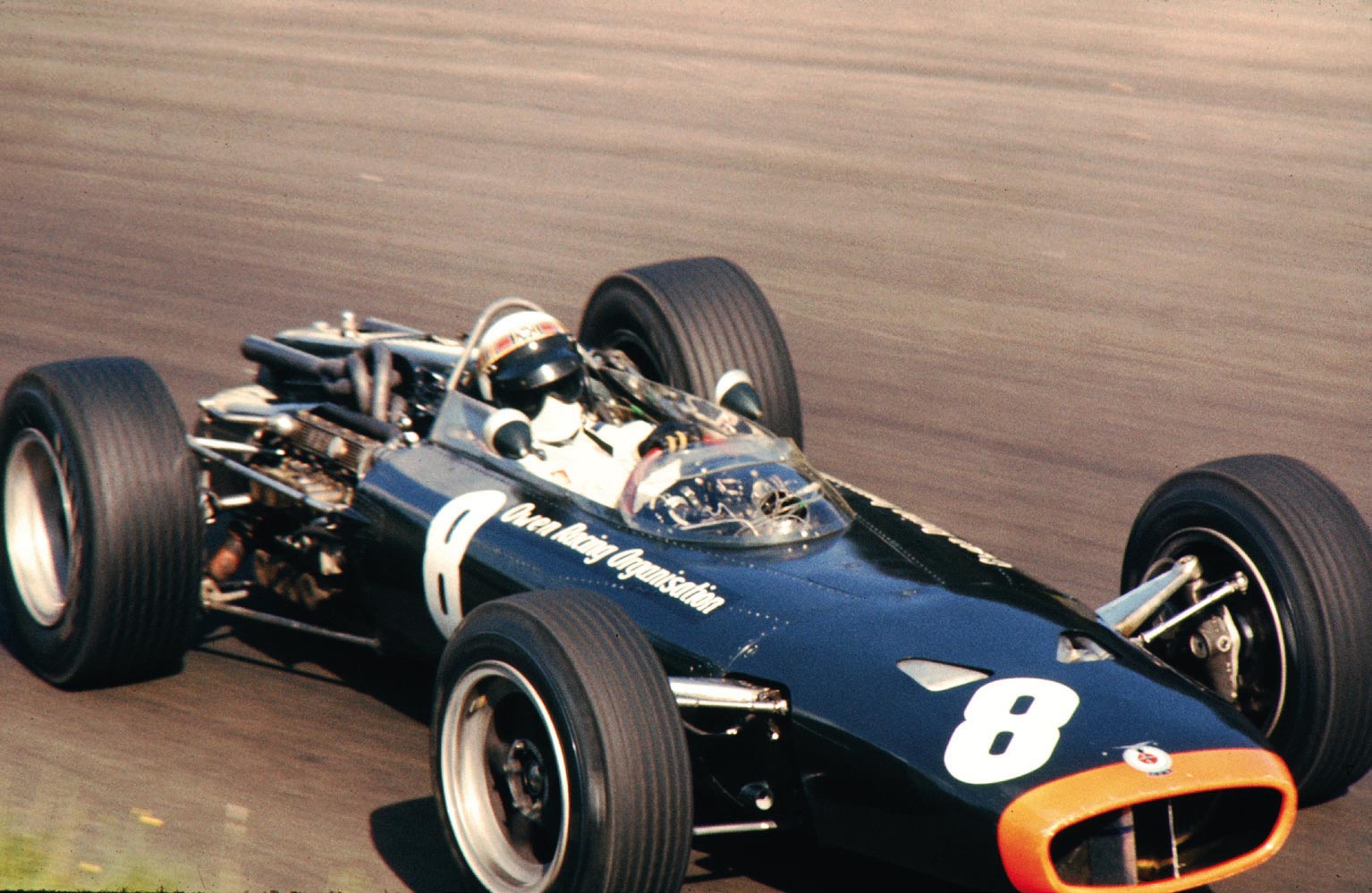
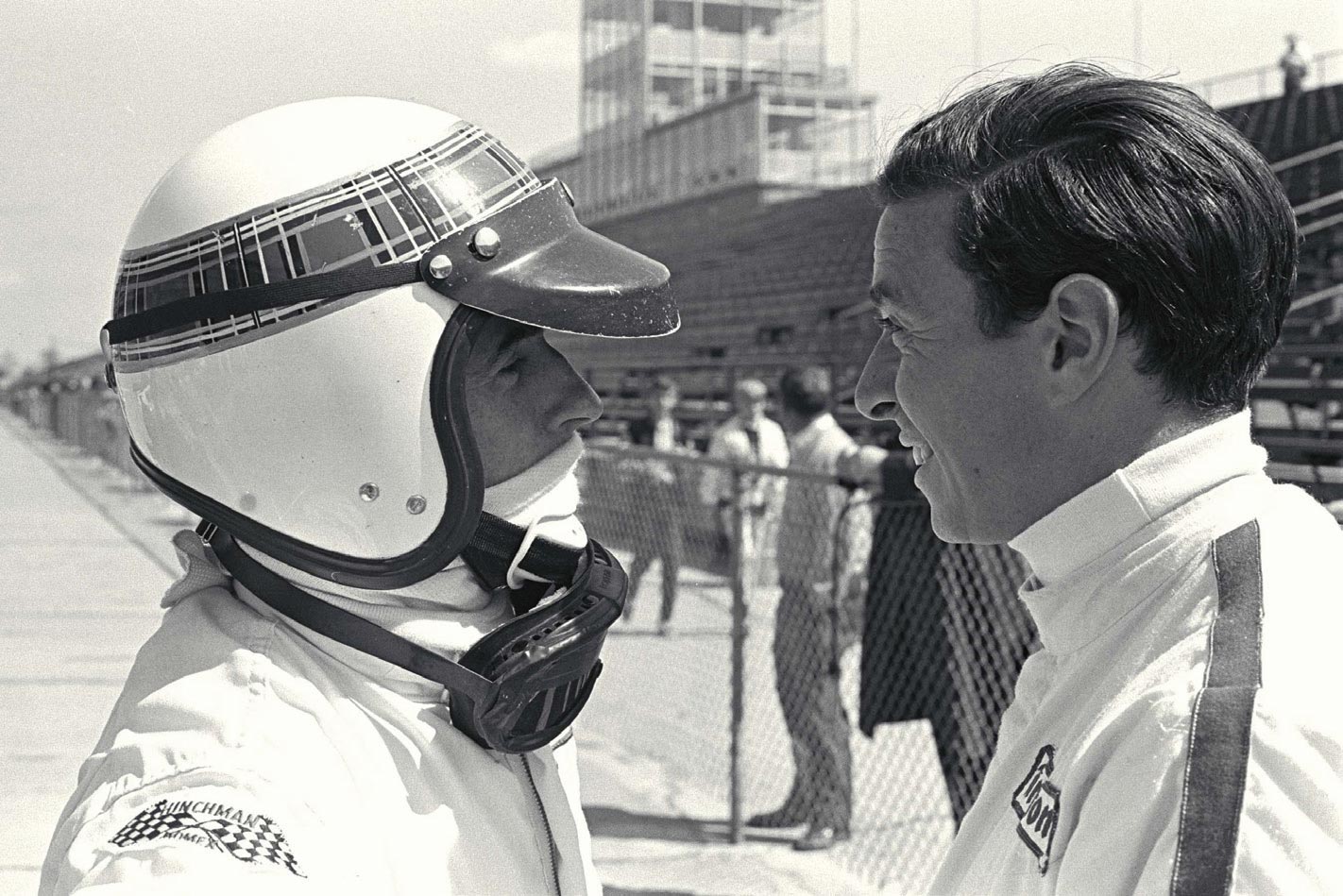
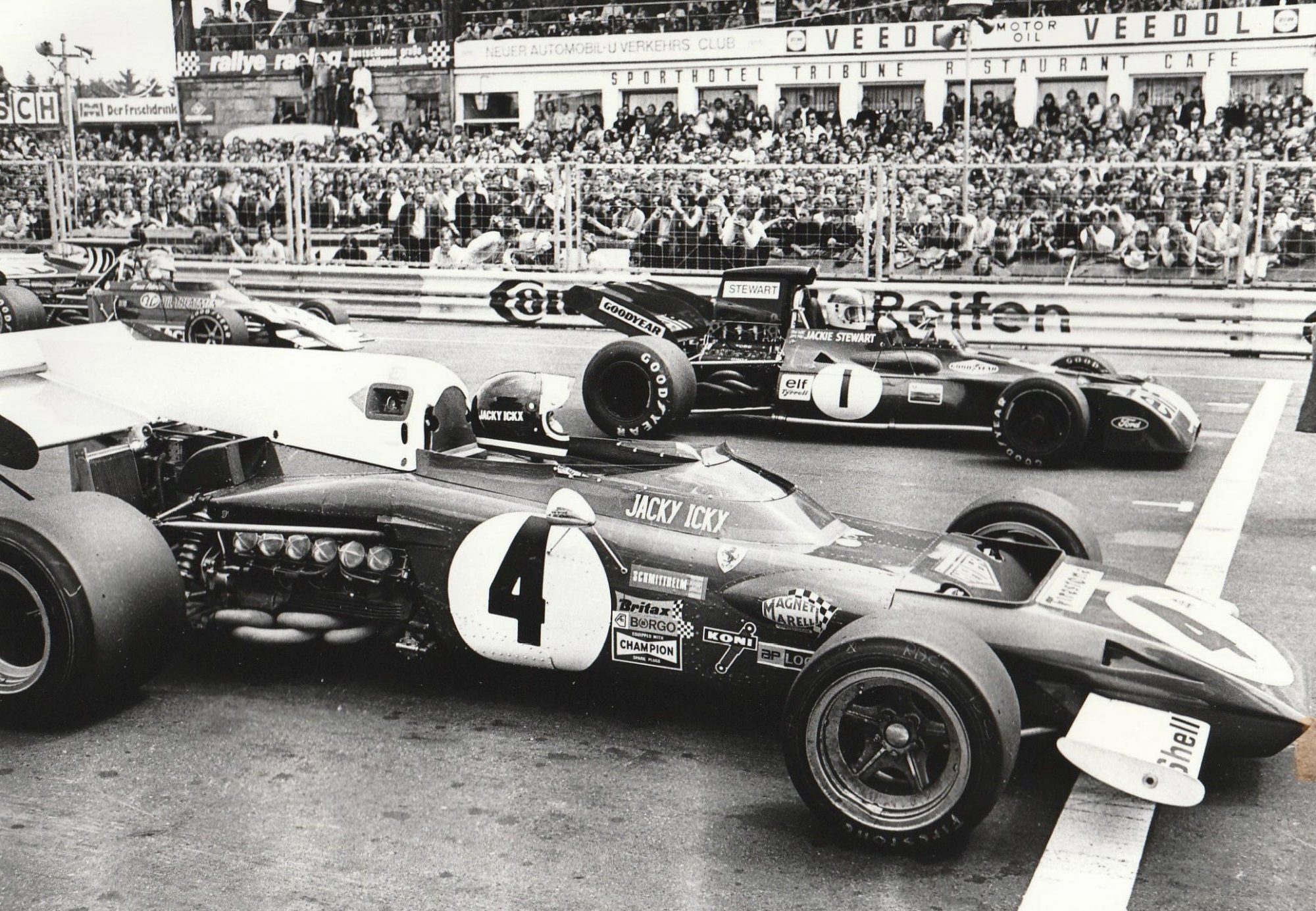
He was often vilified for his inflexible stance on these issues, with not even all the top drivers siding with him. The most prominent opponent was repeatedly the Belgian Jacky Ickx, particularly with regard to his favorite track, the Nürburgring. Stewart, on the other hand, remained single-minded in this regard as well, providing the initial impetus for trends in safety. Already during his only really serious racing accident in Spa in 1966, when his car skidded off the track at high speed in a sudden downpour, he had become acutely aware of the danger. He found himself helplessly trapped in the mangled BRM with a broken collarbone, bathing in leaking fuel, and learned with intense fear „that it is the driver who is inside.“ Thus, he was also the first Formula 1 driver to test an asbestos overall immediately after Lorenzo Bandini's fiery death in Monaco in 1967. Although this prototype still heated his body too much, the Scotsman remained an advocate for flame-retardant clothing and was an early wearer of functional custom-made suits.
With radar eyes
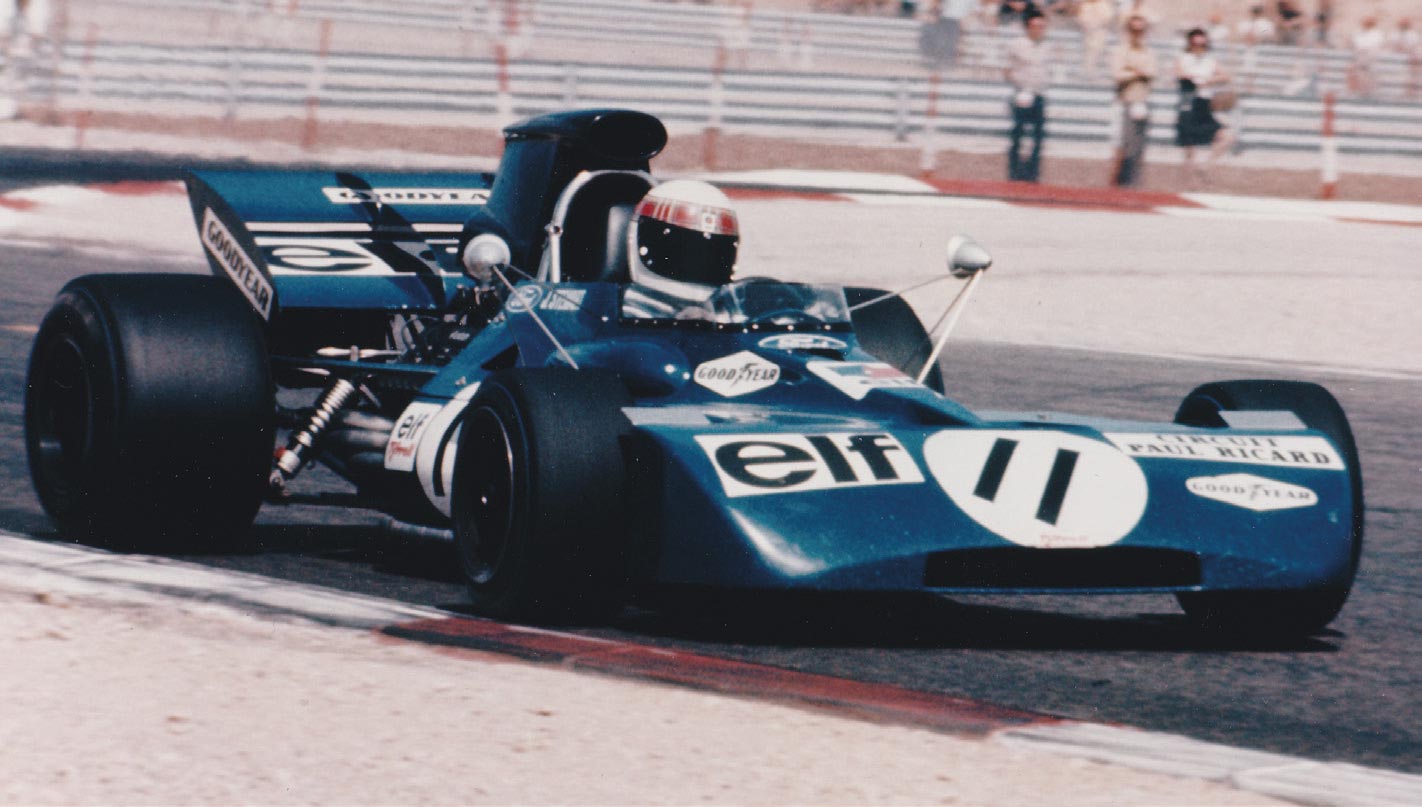
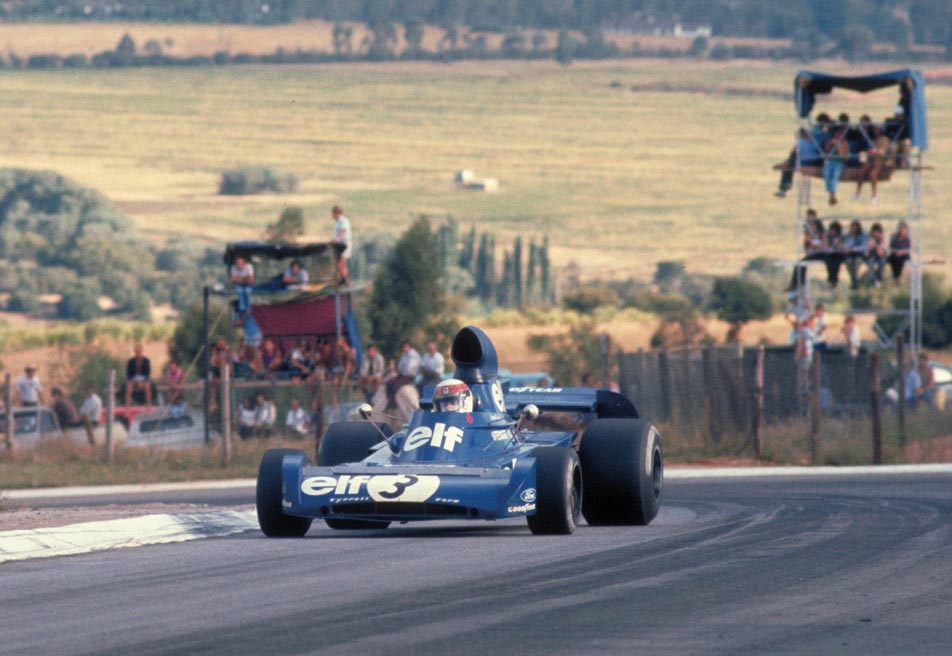
Not least in the eyes of sports politicians, he repeatedly underpinned his competence with brilliant driving performances and, between 1968 and 1973, established an unassailable position as a title contender or reigning world champion. Like Jim Clark, Stewart, from the very beginning of his Formula 1 career, maintained a clean driving style; recklessness was almost never part of his actions. „During a race, I am completely emotionless,“ he once revealed. He, too, repeatedly created driving „monuments“ for himself. In the notorious „Rain and Fog Grand Prix“ at the Nürburgring in 1968, with visibility of less than 100 meters in many places, he navigated as if with radar eyes and won by an astonishing four minutes. Four and a half years later, in Kyalami, he flew into the catch fencing at the end of the straight in the Tyrrell without brakes during practice and could only qualify for the seventh starting row with the backup car. From there, however, he only needed six laps in the race to take the lead and win the South African Grand Prix!
A poetry album repurposed for collecting race car drivers„ autographs John Young Stewart, born on June 11, 1939, was a sickly child with “chicken bones.” Every rib was visible, and he often had fevers without doctors being able to make a definitive diagnosis. At age twelve, he was training in judo and broke his ankle during an exhibition match with his friend in the living room—after the very first move. Shortly thereafter, while playing cricket, the ball struck his kneecap—two weeks in bed. In 1951, he missed 86 days of school due to illness. It wasn’t until his father sent the 14-year-old to see specialists in America with his mother during the summer vacation that his health improved. His school years were also far from smooth sailing; Jackie viewed them, at best, as a necessary evil. He was dyslexic and struggled with learning in general. By the time he left Dumbarton Academica at age 15, he had lost all interest in acquiring theoretical knowledge. Far more interesting was what he could experience and learn at home with his grandfather, father, or his brother Jimmy, who was nine years older. Grandfather Stewart was a gamekeeper and author of books on ornithology; Jackie would sneak out on hunting trips with him. And he had his first exposure to firearms, as his father was an amateur marksman. The fact that his father ran a Jaguar dealership with a workshop in the whiskey town of Dumbarton would prove fateful for Jackie. In 1948, when the speedy Jaguar XK 120 made its debut and Bob Gerard and Reg Parnell were national Formula 1 stars, little Stewart received a poetry album for his ninth birthday, which was immediately repurposed for collecting race car drivers’ autographs. In 1951, his brother Jimmy began a turbulent racing career in Jaguar cars, marked by victories and—mostly through no fault of his own—crashes. Jackie scurried around as a good-luck charm and handled light menial tasks. Jimmy Stewart raced primarily for the Scottish team Ecurie Ecosse and achieved his greatest successes in the Jaguar C-Type. After a serious accident caused by a steering failure during a guest appearance for Aston Martin at Le Mans and a crash into the bushes in a D-Type Jaguar at the 1955 Eifelrennen at the Nürburgring, his father was able to persuade him to retire. His mother needed to be spared…
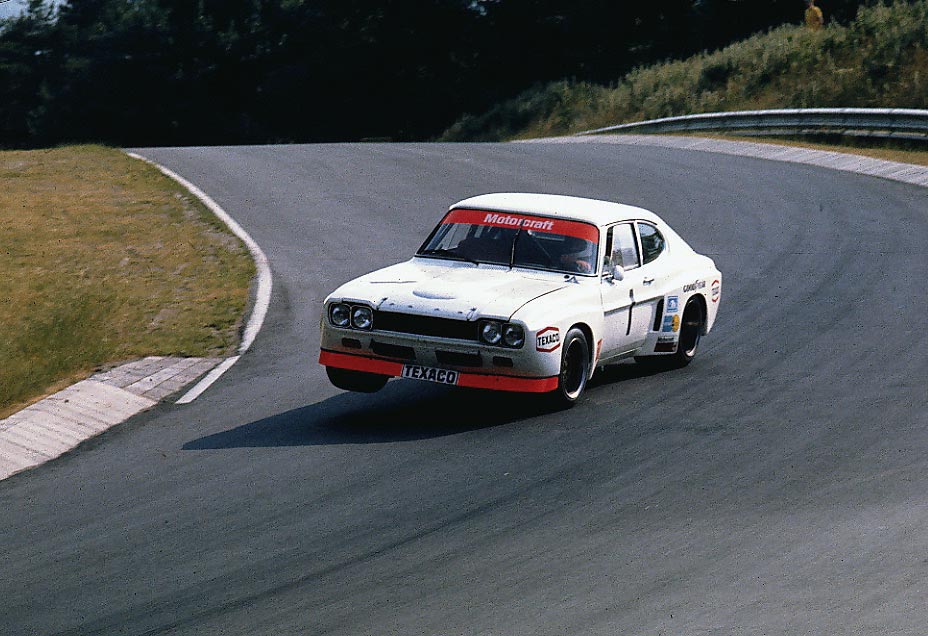
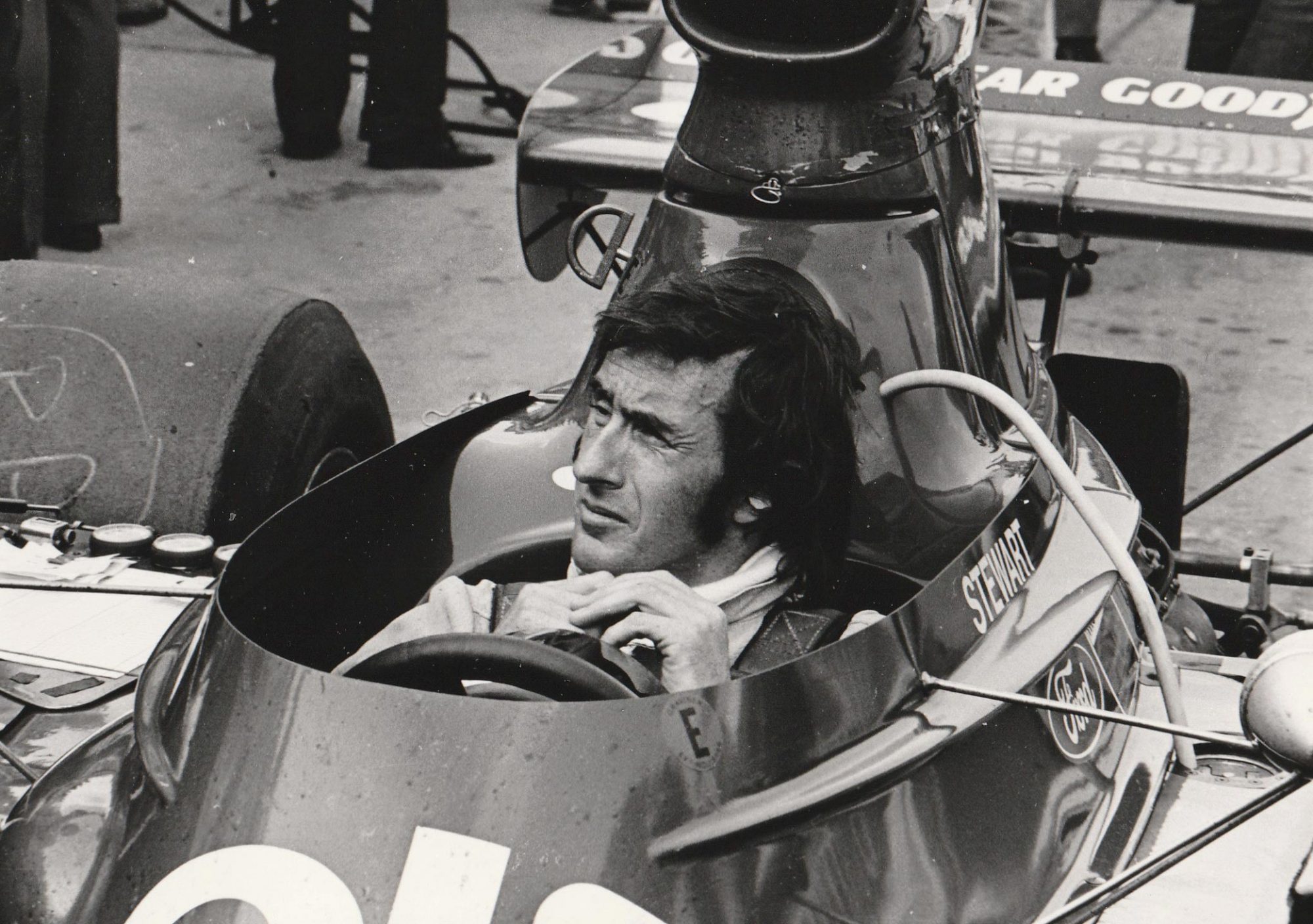
At the same time, Jackie was an apprentice with high practical intelligence, and was soon able to carry out minor repairs. He spontaneously developed a personality, and suddenly it became important to him to graduate from evening school as a mechanical engineer. He satisfied a burgeoning sporting ambition with clay pigeon shooting. Fairly – since he had also supported Jimmy – his father financially supported Jackie's ambitions in the following years. He won everything there was to win with the shotgun between Scotland and Wales. That he was nevertheless only nominated as a reserve for the 1960 Rome Olympics due to age, he never forgot to the National Committee. After winning the European Championship title and an incredible world record in South Wales in 1963 – 498 out of a possible 500 hits – he declined his nomination for Tokyo.
„If you want to go racing, you have to drive a single-seater.“
There were other reasons for this as well, since he had stolen the lovely Helen McGregor from the Dumbarton youth and married her on August 2, 1962. Now, believing he was in the role of provider, he felt he could no longer afford the already costly sport of shooting. In motorsports, his career took shape in 1961 in his father’s garage, where he worked on cars for the wealthy Scotsman Barry Filer, who was active in club racing and managed the Scottish racing team Ecurie Ecosse, which had become famous in the 1950s (including overall victories at Le Mans with Jaguar in 1956 and 1957). He entrusted his Porsche Super 90, an AC Bristol, and a somewhat worn-out Marcos to Jackie’s attentive hands. Jackie became his favorite mechanic at the racetracks, but turned down Filer’s first offer to test the AC, fearing he might wreck the car. It was only after a test drive in the presence of the prominent motorcycle racer Bob McIntyre that he felt more confident. When a driver fromFilers‘ team left, Jackie took over the Marcos. He began secretly sneaking out to the races through the kitchen window under the pseudonym A.N.Other („Another One“). He won three out of four races, then his father was let in on the secret. For 1962, his father had a Jaguar E-Type production car slightly modified, with which Jackie was almost as fast at Oulton Park as the drivers of the Lightweight E-Types. His season record surpassed even that: 14 wins in 23 races. In 1963, Filer also put him behind the wheel of top-tier Ecurie Ecosse race cars such as the Cooper Monaco and Tojeiro-Buick. His protégé dominated more club races than any other Briton and was already receiving 50 percent of the prize money. For a short time, he was also a factory driver in the Ford Cortina Lotus and thus a teammate of Jim Clark when he received a phone call from Ken Tyrrell inviting him to test drive a Formula 3 Cooper at Goodwood. „If you want to race, you have to drive a monoposto,“ Clark encouraged him, „and if you want to drive Formula 3, you have to take a car from Ken Tyrrell.“
„When I saw him go around the ‚Madgwick corner‘ a few times at Goodwood, I immediately ran to the pits and recommended Ken Tyrrell to sign Stewart,“ John Cooper recounted years later. During testing, Cooper Formula 1 driver Bruce McLaren had served as a benchmark. However fast the New Zealander was, the newcomer could match him. Tyrrell promptly wanted to sign Jackie Stewart for five years, waving £10,000, but initially could only pin Jackie to a one-year contract. After winning twelve out of fourteen Formula 3 races in the Cooper-BMC in 1964, a tug-of-war began among the Formula 1 team bosses of BRM, Cooper, and Lotus for the all-rounder, with BRM ultimately winning out. In the last year of the 1.5-liter Formula 1, 1965, Jackie Stewart was immediately among the leaders. In his debut on New Year's Day in South Africa, he immediately secured his first World Championship point, and as early as May, he stood at the top of the podium for the first time as the winner of the „Daily Express Trophy“ in Silverstone (a non-championship race). In a season dominated by Jim Clark with the Lotus, Stewart came closest to his compatriot on technically demanding circuits like Spa and Clermont-Ferrand, before ultimately outperforming prominent teammate Graham Hill with a victory in the Italian Grand Prix in Monza – his eighth World Championship race. The immediate third place in the drivers' World Championship, behind Clark and Hill, promised great things.
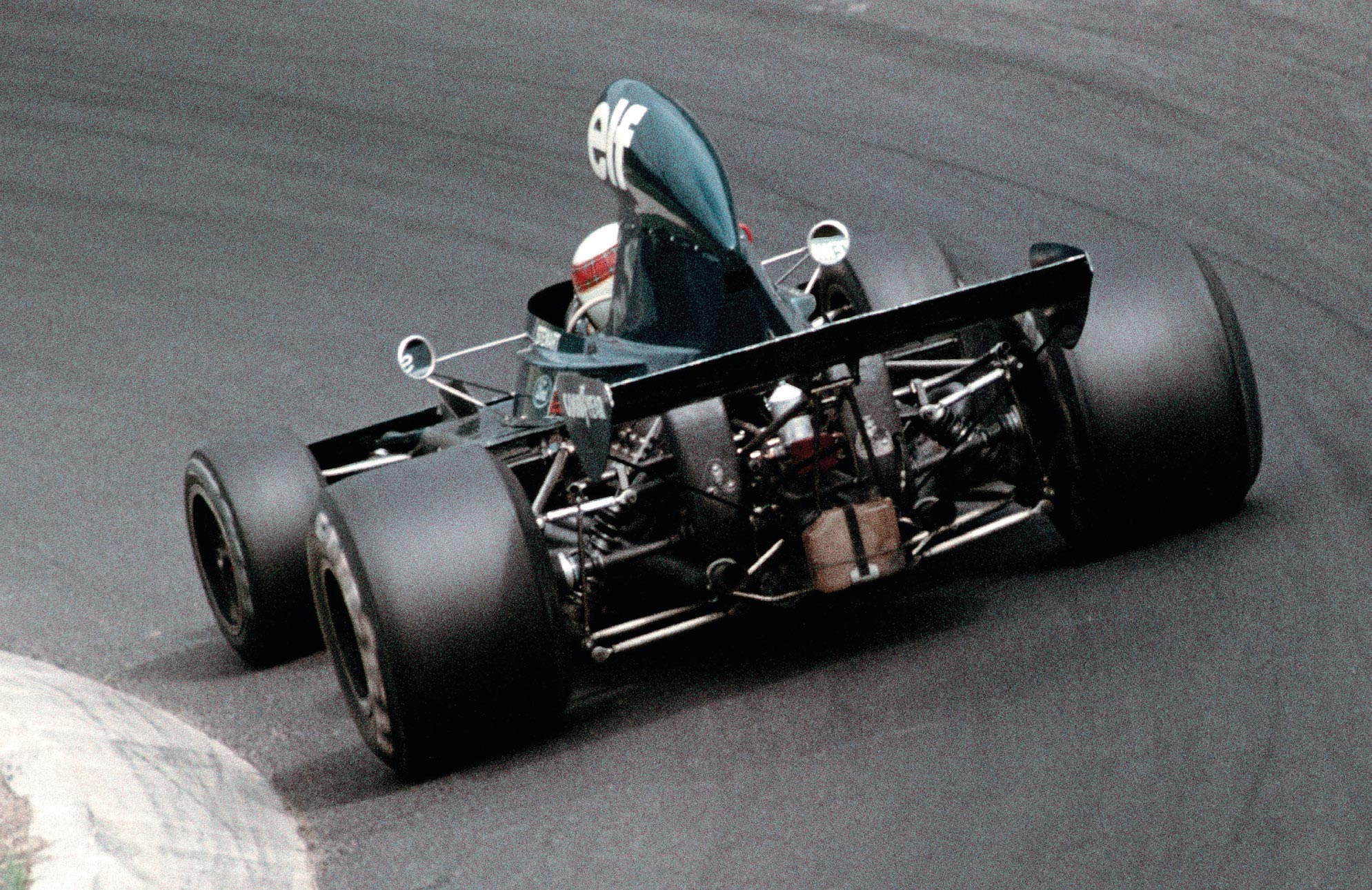
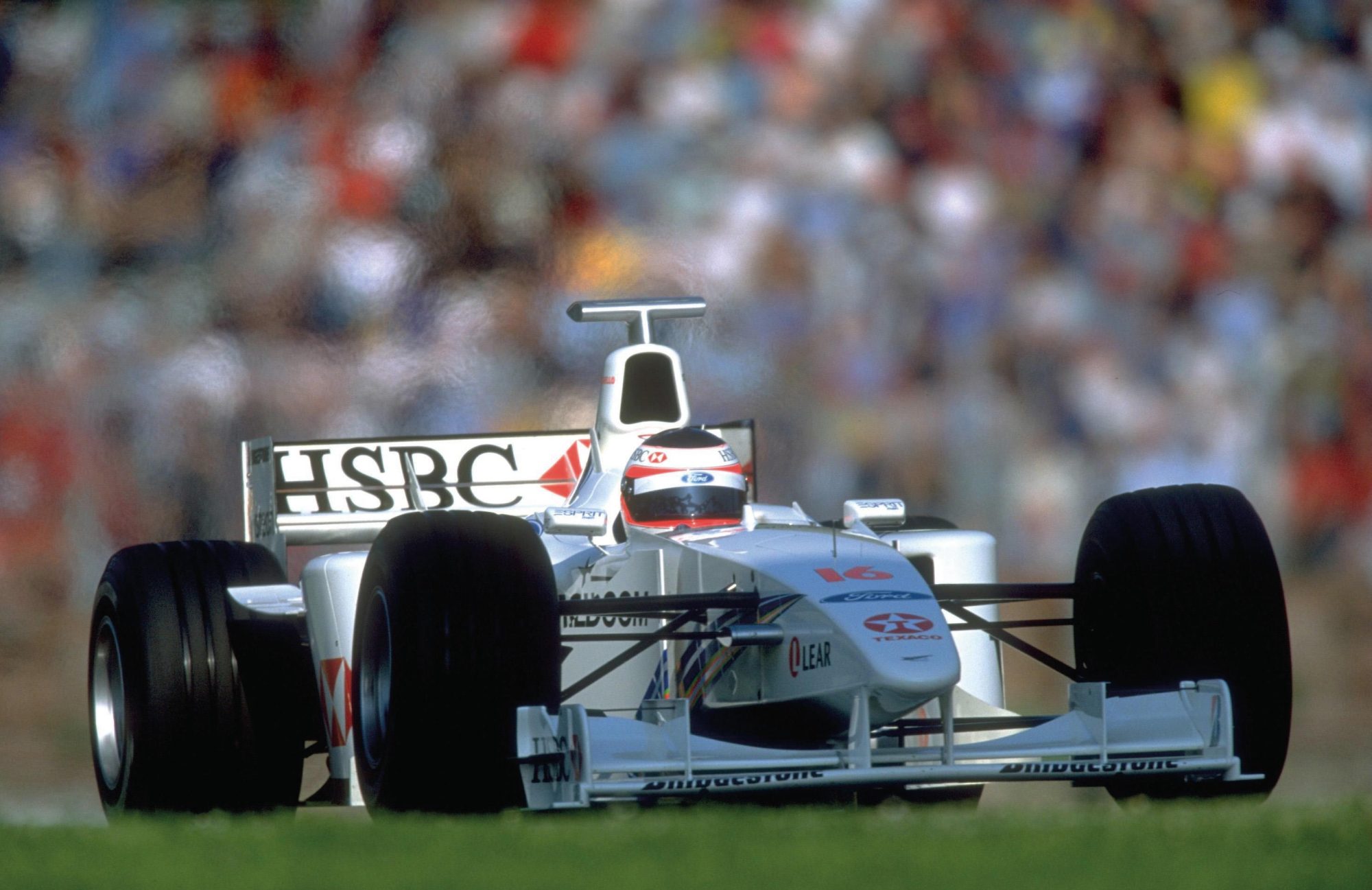
One of the most successful alliances in motorsport history
With the transition to the three-liter Formula, BRM lost competitiveness; the complex H16 cylinder proved to be a step in the wrong direction. Stewart, meanwhile, was repeatedly able to shine in the two-liter interim model P 261, winning the Tasman Series in 1966 on the fifth continent, where many Grand Prix drivers traditionally met in the winter months, and the Monaco Grand Prix. He had ultimately extended his parallel contract with Ken Tyrrell, sealed annually with a handshake. Whenever his Formula 1 commitments allowed him time, he drove the Scottish timber merchant's Formula 2 Matra-Cosworth. The fact that Tyrrell entered Formula 1 in 1968 in cooperation with Matra and Ford – using the three-liter V8 Cosworth, which had been introduced with Lotus and promised two successes – suited him very well to turn his back on BRM.
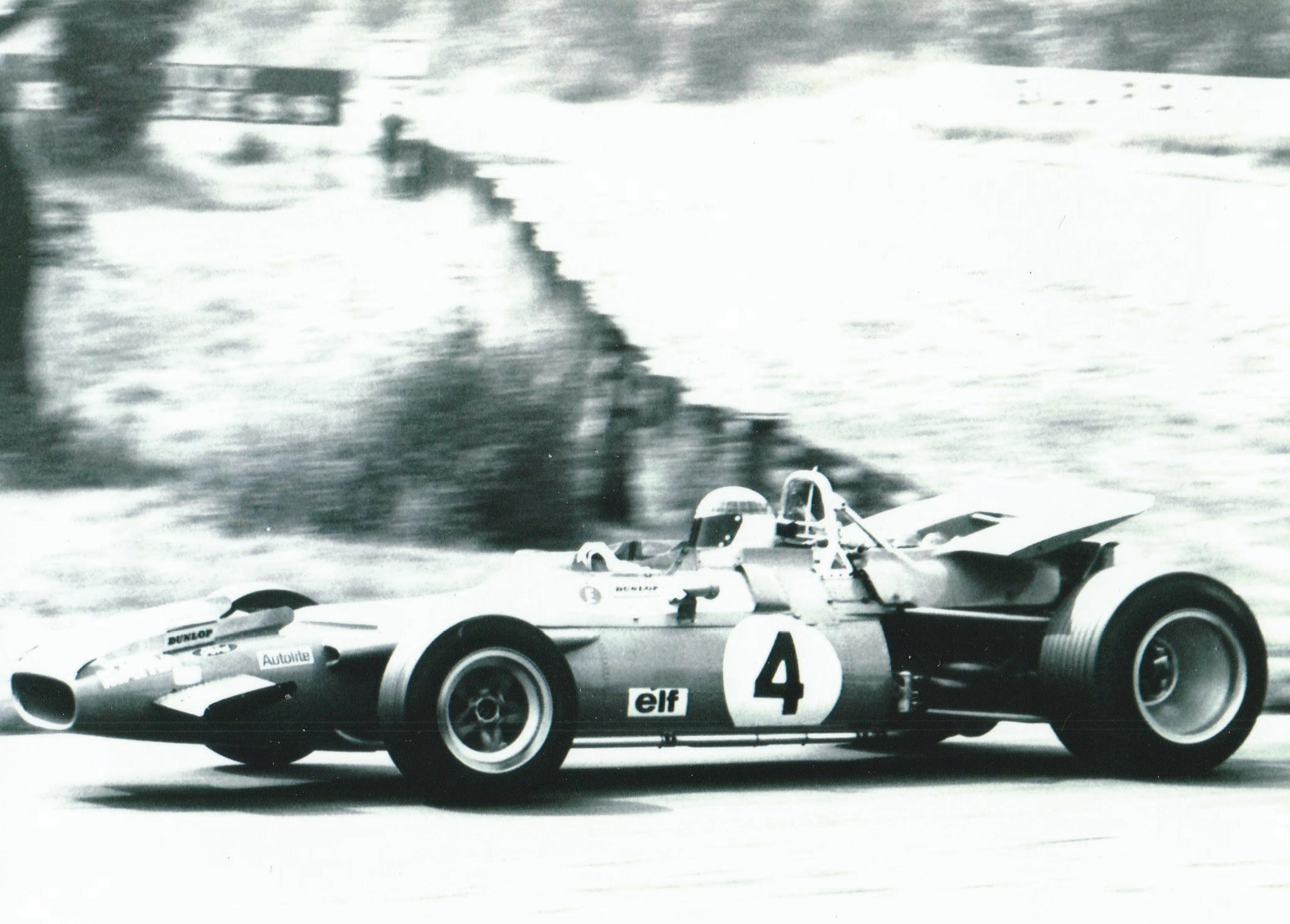
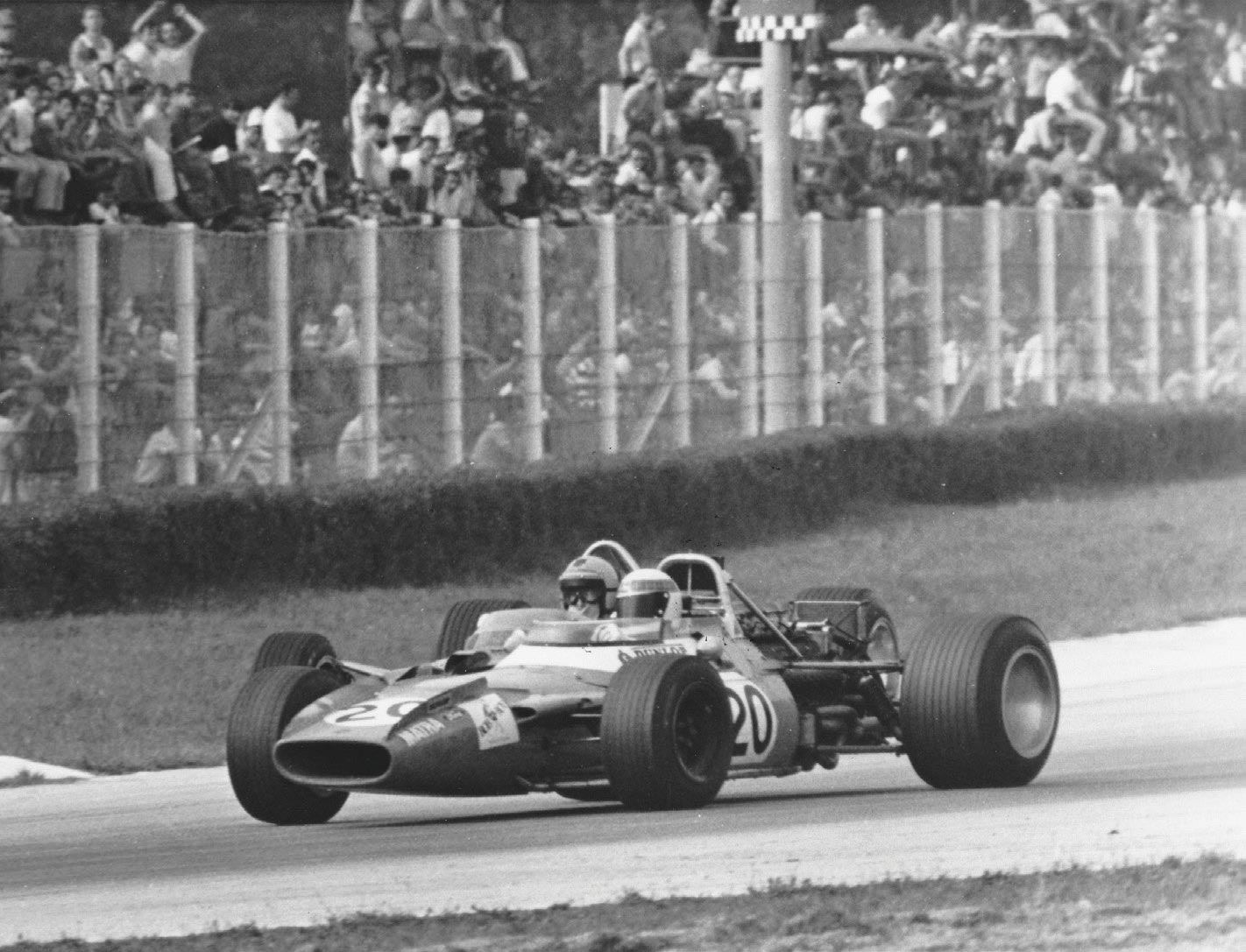
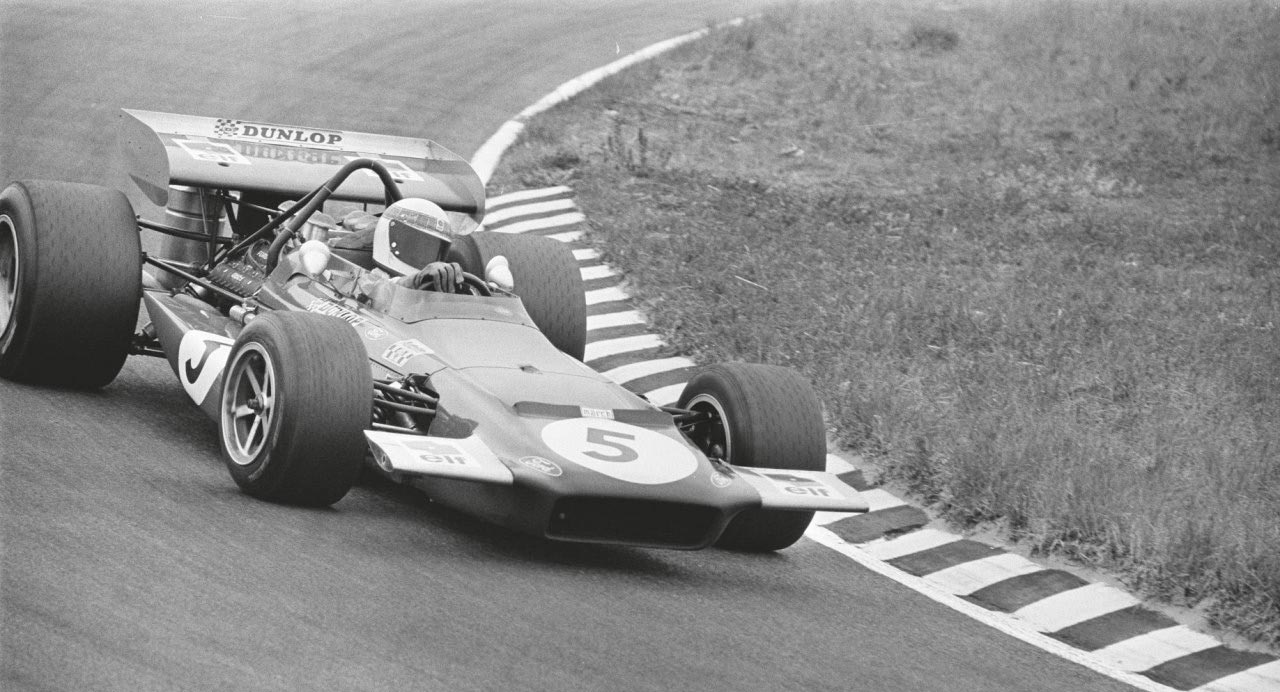
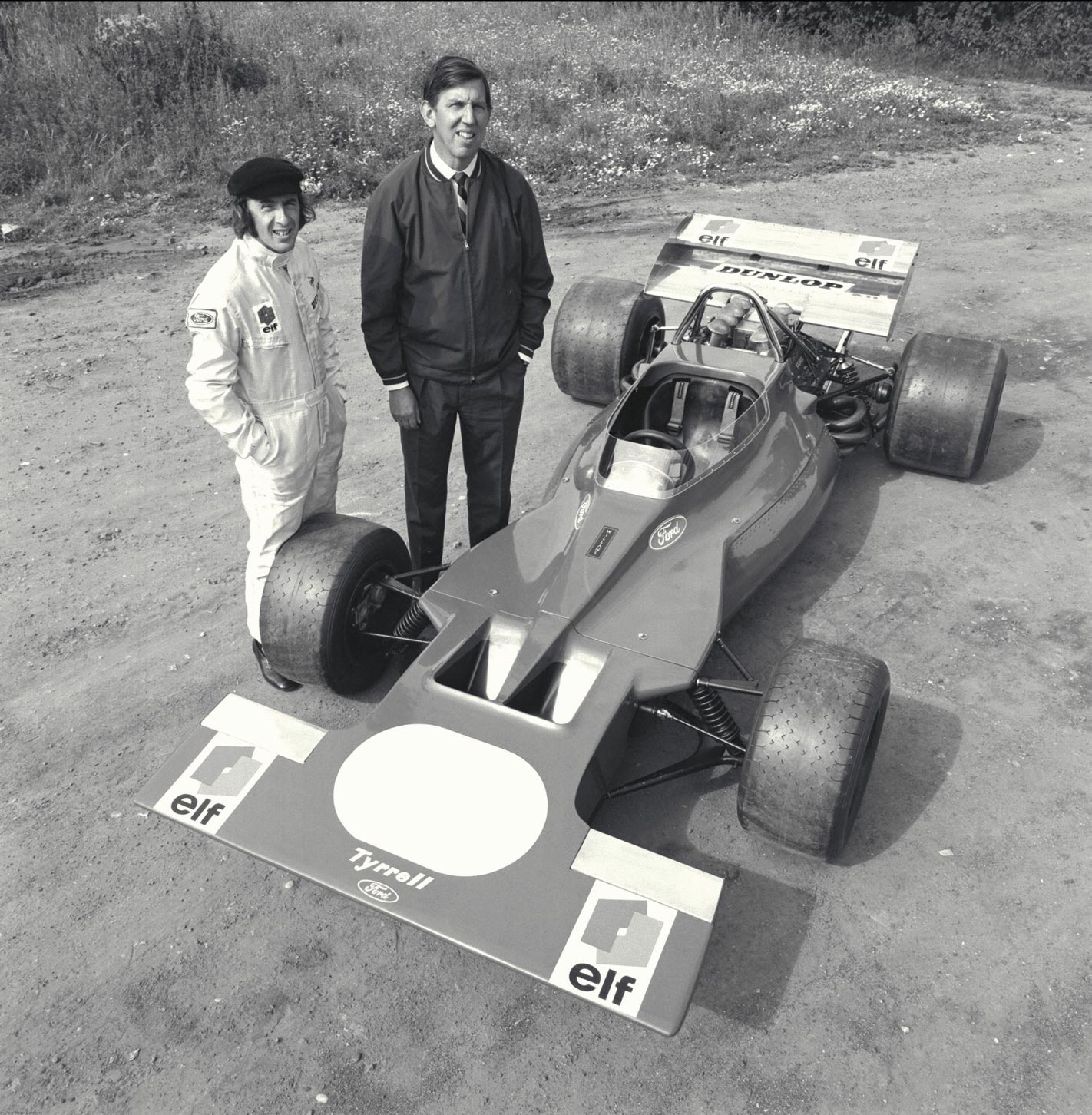
The Scottish alliance Stewart/Tyrrell lasted for six years in Formula 1 until the driver's retirement. It became one of the most successful alliances in motorsport history. Only in 1970, when the team made a mistake with the March 701-Ford, was Jackie Stewart not fundamentally among the title favorites, but he still finished the season in fifth place in the World Championship. In the other five years – 1968 and 1969 on Matra-Ford, 1971 to 1973 on Tyrrell-Ford – he was World Champion or Vice World Champion. With 25 more Grand Prix victories, an average of about four per year, he increased his personal best to a total of 27 triumphs, setting a world record that Alain Prost only surpassed in 1987. He was often a lights-to-flag winner in races, and he also proved himself an excellent driver in bad weather. Between 1964 and 1970, he also achieved eleven victories in Formula 2 racing cars. As an extremely business-minded driver, one of the first to secure lucrative personal sponsorship deals both on and off the racetrack, he could not resist the hard dollars in the American CanAm series either. As early as 1966, he competed here with a Lola T 70, in 1970 he briefly presented the „vacuum cleaner“ Chaparral 2H, and in 1971 he was a strong challenger to the dominant McLaren team for a full season in the L&M-Lola T 260, winning two races. However, the chase back and forth across the Atlantic – „if you don't read on the plane, it's unbearable“ – took its toll: due to a stomach ulcer, he had to withdraw from the Belgian Grand Prix in Nivelles in 1972, and he never returned to CanAm.
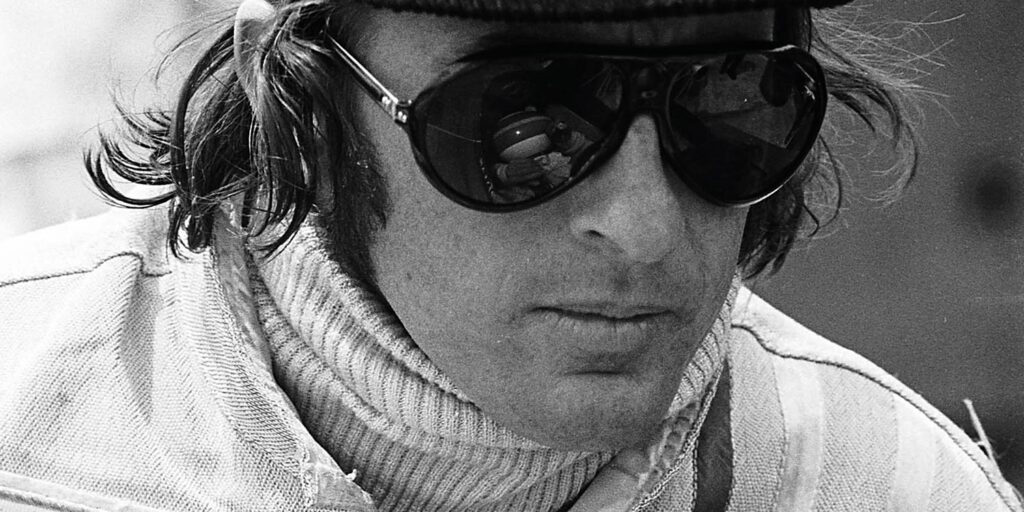
„...but the sunglasses remained.“
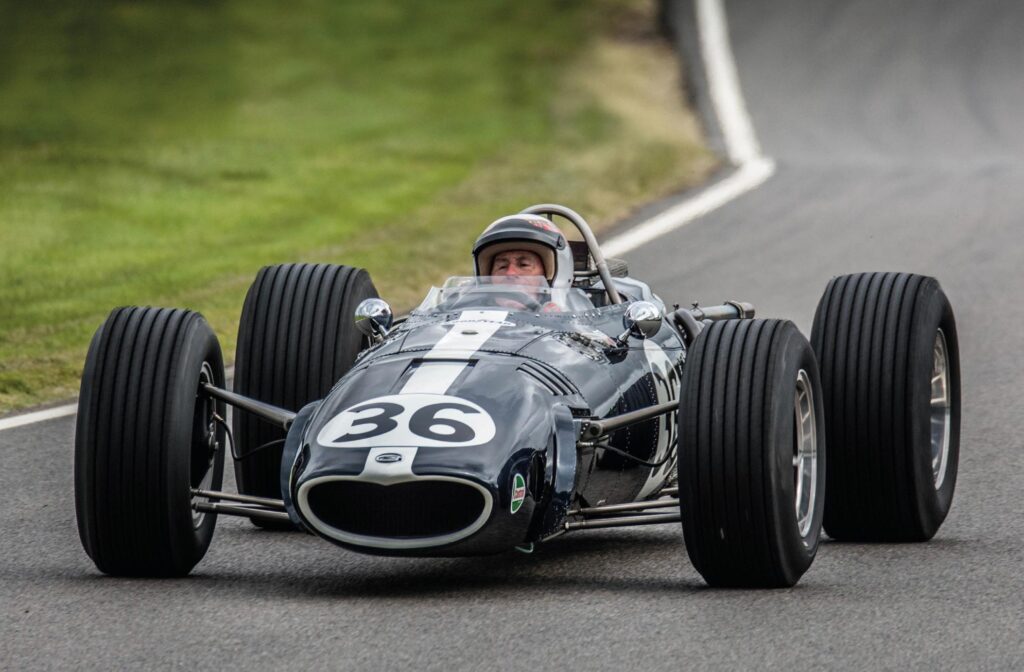
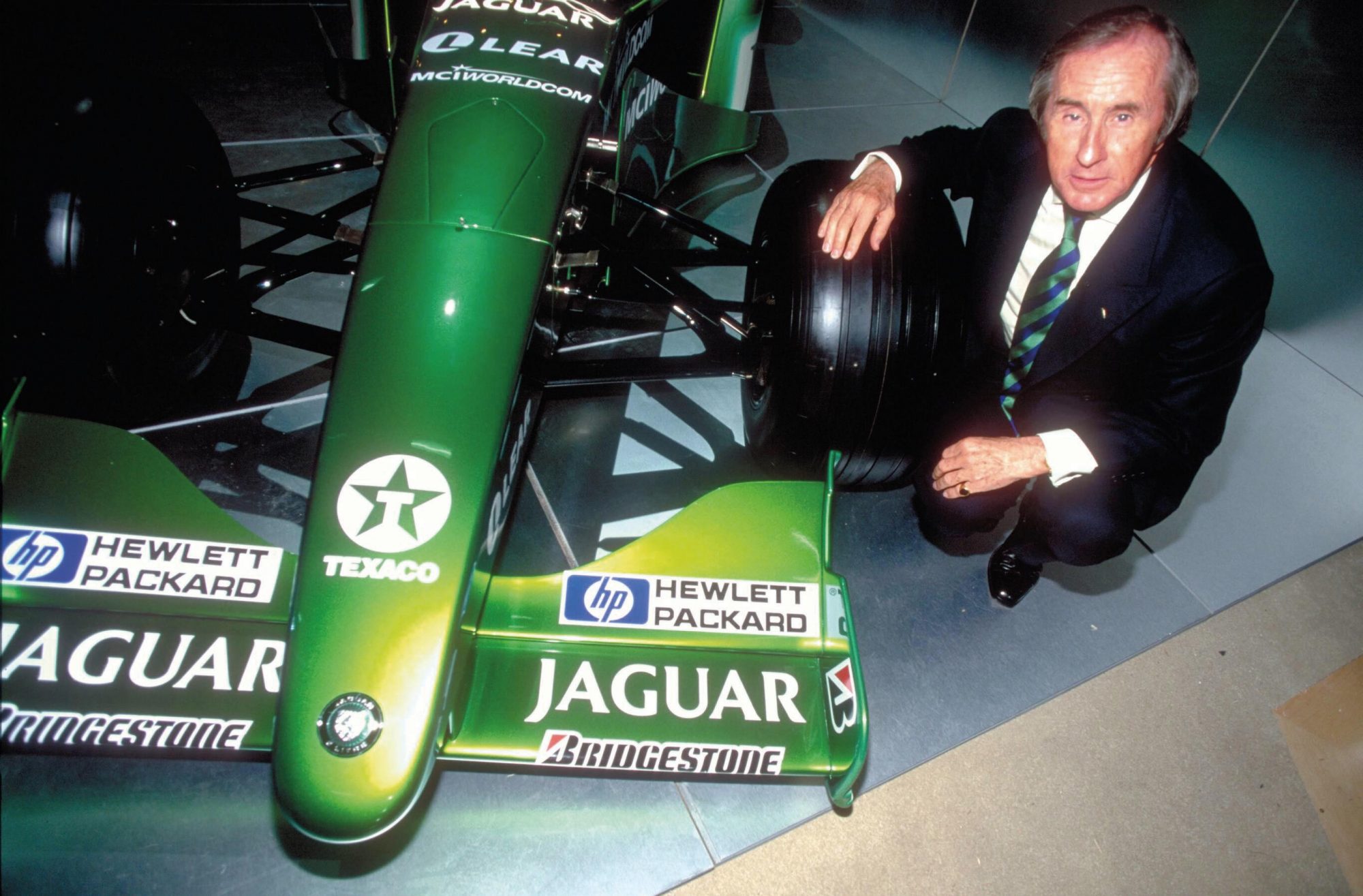
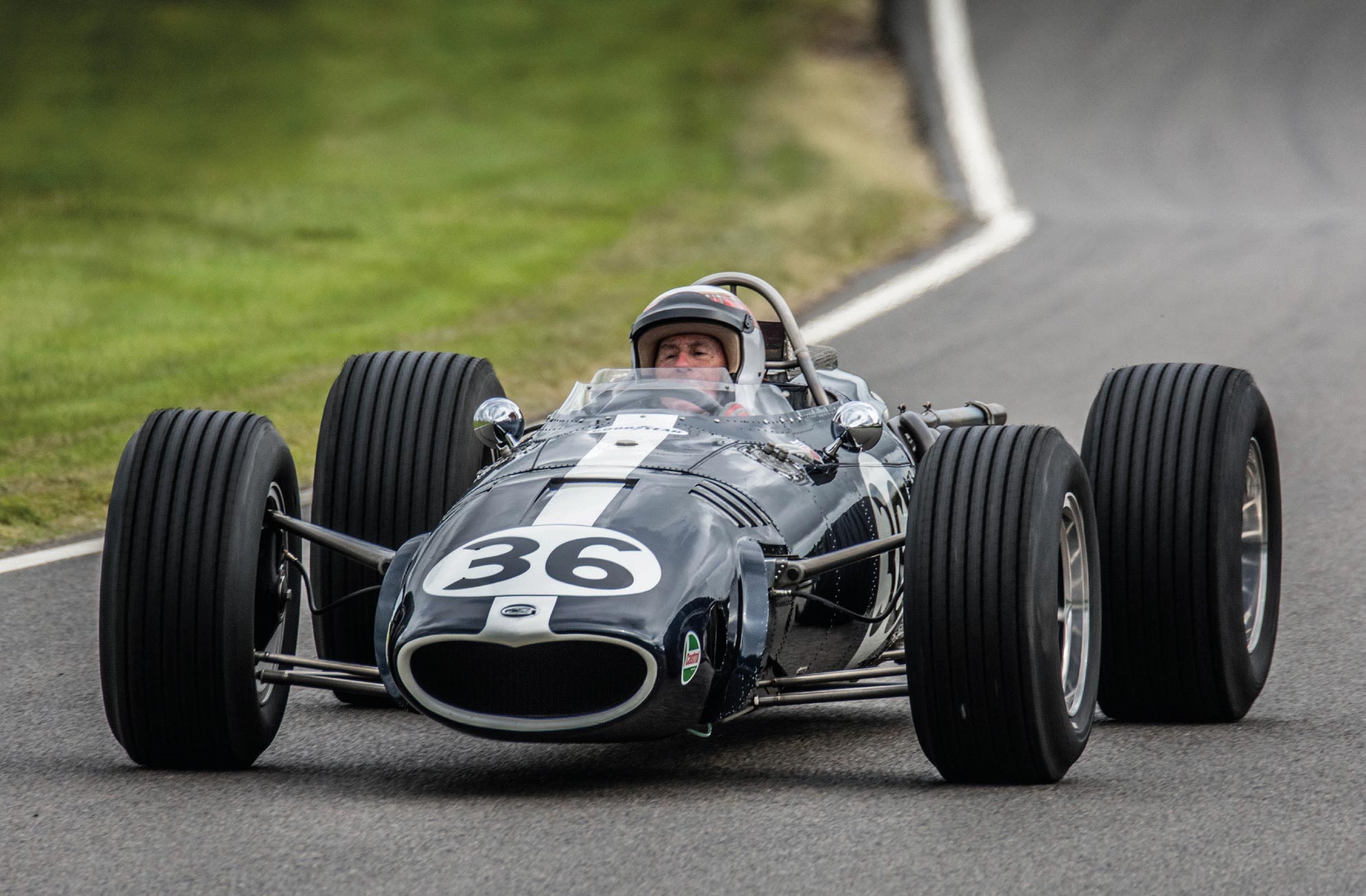
After his retirement, he worked for two decades as a TV commentator for the American broadcaster ABC and other stations, and for half a lifetime he was also a consultant for Ford, for whom he also spent a long time testing the final chassis weaknesses of new passenger car models. Since the early 1990s, he has supported his son Paul in building and managing his own racing team. After starting in Formula 3 and Formula 3000, the Stewart team finally achieved respectable results in Formula 1 starting in 1997. The first outstanding result was second place for Brazilian Rubens Barrichello at the 1997 Monaco GP; in 1999, Briton Johnny Herbert won the European Grand Prix at the Nürburgring with a Stewart-Ford. In 2000, the Jaguar Formula 1 team emerged from this racing team. Shortly after the end of his racing career, Jackie Stewart was appointed an Officer of the Order of the British Empire (OBE) by the Queen and was knighted in 2001. From 2000 to 2006, he was president of the British Racing Drivers Club (BRDC). To this day, he is always a very welcome guest of honor at historic motorsport events, where he occasionally still gets behind the wheel. „It's all easier than racing used to be, and my appearance has changed too,“ he once said, „but the sunglasses have stayed.“