
The Renaissance of Formula Vau
When he moved his company headquarters to Jacksonville, Florida, he made his previous telex address, BRUMOS, the company name. However, the implementation of his idea for a low-cost race car proved to be too rocky a path for him. He first commissioned the well-known racing car designer Enrico Nardi (better known to us for Nardi steering wheels) from Italy and provided him with a brand-new 1200 Beetle for his designs. The result of the Formula Junior with VW technology was sobering; the car was unwieldy and slow. Even the dedicated professional driver Bill Bencker Jr. could not change that through tuning work. To top it all off, the industrious amateur racer Brundage from Wolfsburg even received a warning letter with a clear demand to cease these activities involving Volkswagen parts.
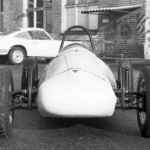
Exasperated, Hubert L. Brundage sold the two prototypes built to that point for a symbolic price of one dollar each to Air Force Colonel and SCCA official George Smith and to William „Bill“ Duckworth from Orlando, Florida. Duckworth was considered a gifted mechanic and owned his own workshop. Also driven by the idea of an affordable racing series, the two founded the company Formcar in July 1962 at 1229 West Robinson Avenue. Smith, president of the new company, used his involvement in the American motorsports association Sports Car Club of America, or SCCA for short, to generate interest. Duckworth, vice-president and product manager, designed a chassis and had the plastic bodywork manufactured by Don Stuart and Georg Taylor, also from Orlando. It was modeled after the Porsche Formula 2 racing car. The prototype was built in a small corner of Duckworth's vehicle repair shop. The subsequent three, and thus the first „production“ cars (62-2, 62-3, and 62-4), followed extensive testing of the prototype and were sold in November and December 1962 for $2,495 each – ready to race. These first vehicles were entirely handcrafted by Duckworth himself. The prototype numbered 62-1 was purchased by Robert C. Smith from Atlantic Beach, Florida. Number four still exists and was sold to Germany from Woodstock just under a year ago. To enable practically anyone to get started in motorsports, the young company eventually offered a kit without VW components (engine, transmission, axles) for only $945, while a complete kit cost just $1,995.
 The first three production vehicles had a successful race debut shortly after their completion at Effingham Raceway in Georgia. The Vaus started at the back of the field behind competitors like the Porsche 356, Triumph TR 3, Austin Healeys 100/4 and 3000, and Sunbeam Alpines, vehicles that mostly had over 100 horsepower. The spectators were quite astonished when all three Formula V cars, with their modest 34 horsepower, took the top three spots at the end of the race. From then on, Formula Vaus always started at the front in events with mixed fields.
The first racing success put the monopostos on the cover of the then-leading motorsport magazine SportsCar – with the result that Formcar Constructors Inc. was inundated with inquiries, causing Duckworth to close his thriving repair business and concentrate entirely on building race cars. A short time later, he had five employees and the company moved to larger premises on Central Avenue. Subsequently, twelve sales outlets were established, and an established company, Burgess Enterprises of Denver, Colorado, was brought in as a cooperation partner to manufacture and sell vehicles for the West Coast. Orders were also coming in from Germany, England, Holland, France, Sweden, Italy, Austria, and Switzerland.
Having their own racing series was therefore a logical next step. With the help of the SCCA, regulations were established, and eventually, the Formula Vee Racing Association was founded. From 1964 onwards, pure Formula Vee races were held in the USA. The most important key data had now been created, and the new scene gained momentum.
Porsche brought the first Formula cars to Europe.
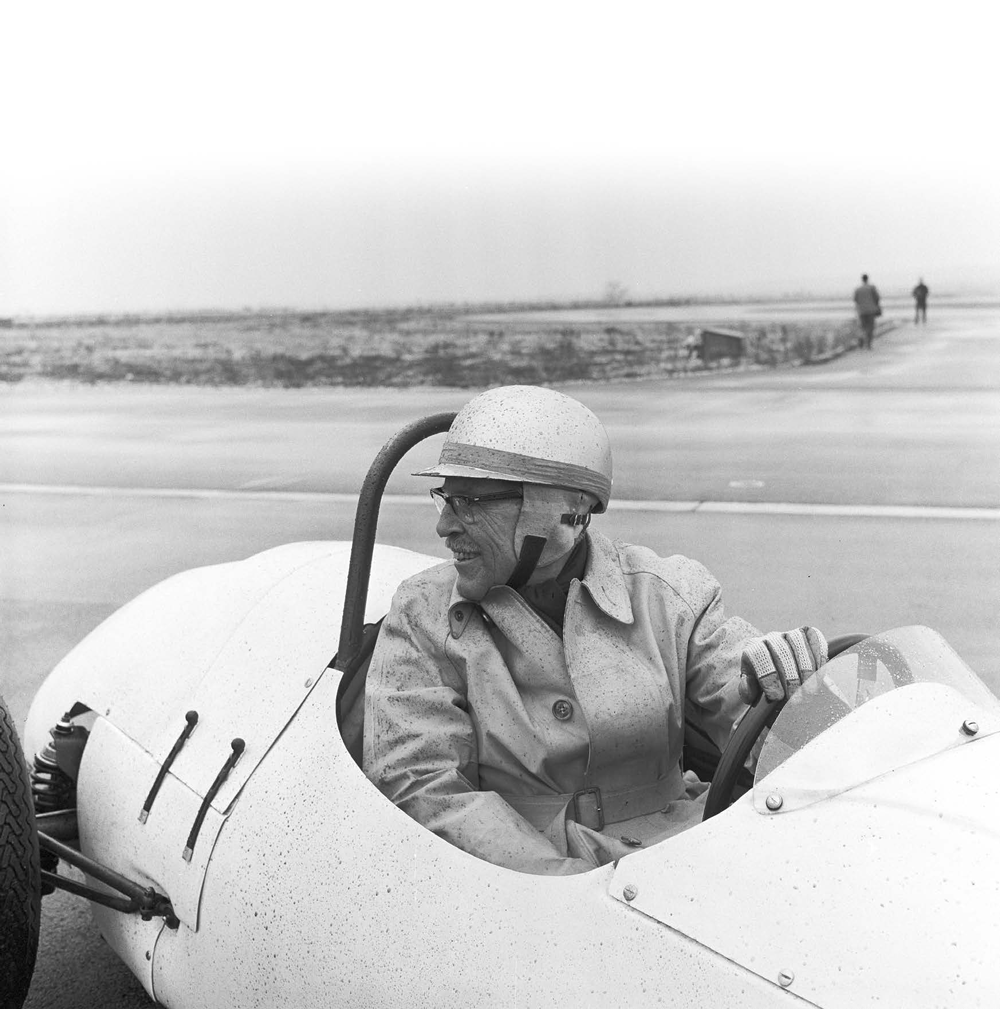
The enthusiasm for racing in the USA also caused a stir in Europe. The classic form of motorsport with open-wheel cars had become increasingly insignificant, especially in Germany, after Mercedes-Benz withdrew, and very little was being done for junior racing drivers in the 1960s, which greatly concerned Huschke von Hanstein – particularly in his role as President of the ONS. During a trip to America in 1964, company head Ferry Porsche, racing director Huschke von Hanstein, and works driver Edgar Barth saw firsthand the appeal of the Formula Vee cars. Porsche spontaneously ordered two complete racing cars from the two leading brands, a „Formcar“ and a „Beach Racing Car,“ to extensively test the vehicles and explore the possibilities of a junior racing series in Germany. Other manufacturers such as Ray Caldwell's Autodynamics and Gene Beach's Beach, Bob Riley and John Mills' Lynx Car Company, and Ed Zink's Zink also quickly produced open-wheel cars. Formula Vee became the most successful open-wheel racing series in the USA until 1966. These races were so popular that even Grand Prix drivers competed, most notably Dan Gurney, who even won a race in Florida in 1963. Actors like Steve McQueen also climbed into the cockpit of the "Vees." On March 3, 1963, he finished second at the SCCA Divisional Fernandina Beach for touring cars and GT vehicles, which also included open-wheel cars. The Formcar company closed in 1966 after producing around 250 vehicles or kits. The reason: regulation changes by the Drivers Association increased the costs of the open-wheel cars, which increasingly diverged from Bill Duckworth's vision of offering affordable open-wheel cars. Furthermore, the numerous suppliers increased cost pressure. This step is all the more astonishing given that Porsche was already at full capacity with the model change from the 356 to the 911.
Porsche wanted to import ten more race cars in kit form (five Formcars and five Beach Cars each) by the Eberbach Hill Climb on May 15, 1965, and complete them at Plant 1. Also back in Germany was von Hanstein's busiest collaborator, motor journalist Richard von Frankenberg, who was also committed to supporting young talent. The first Formcar in Germany, which has been in the possession of the author of this article for 15 years, initially even had Porsche wheels. The conversion took place before the first race at the Norisring, as the regulations stipulated original VW wheels and brakes.
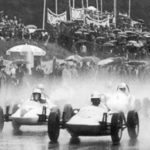
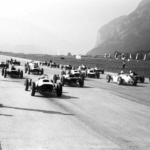
To give the junior class a professional appearance, Porsche bought a VW T1 pickup truck for each single-seater car. The trucks were painted in the then-current Porsche red and bore the Porsche lettering on the left and right doors. All T1s were supplemented with red-painted Westfalia trailers. The VW buses were already used in the 1950s to transport the 356, 550, and Formula 2 race cars.
But one thing after another. The first test drives with the first two V-racers took place in Weissach on the so-called ring track, conducted by Huschke von Hanstein, Richard von Frankenberg, and works manager Herbert Linge. The magazine hobby asked the race baron about the tests (for the 10/1965 issue, published on May 5, 1965) if the V-cars were attractive enough to truly entice youngsters and if enthusiastic sports drivers wouldn't prefer a fast touring car. Von Hanstein replied: „No, because there is a big difference between driving a touring car and a real monoposto. And the V-cars are real race cars. What they lack in top speed, they make up for with good road holding. In tests on the ring track, they were about as fast as a 904 Carrera race car!“
Even before the debut in Eberbach, Porsche presented the two first monoposti to selected magazines such as auto motor und sport, hobby, and Gute Fahrt.
The first year
In 1965, specifically on May 15, 1965, on the occasion of the Eberbach hill climb, the junior formula was presented to the public for the first time. For the press, there was a smaller presentation at the factory with Eva Maria Falk, Evy Rosqvist's rally co-driver. Formula V races made their European debut at the Nürburgring, Rossfeld, Norisring, Innsbruck, Vienna-Aspern, Zandvoort, and Solitude. The lap times made even the last doubters sit up and take notice, proving that genuine motorsport could be pursued with a relatively inexpensive vehicle.
The Model Chronicle
There were three model series of Formcars. In 1962, one prototype and three complete vehicles were built under the designation Mark I. The vehicles built in 1963 were also still delivered as Mark I. It wasn't until 1964 that the Mark II series arrived, with very few modifications such as a slightly altered rear section and different rearview mirrors. The switch to Mark III vehicles starting in 1965 also involved only minor modifications. These mainly included extended side windows and side air intakes for the engine. These differences can be clearly seen in the photos of the Porsche armada. The complete vehicle imported by Ferry Porsche in 1964 did not yet have side air intakes and only a small windshield. Furthermore, only on this vehicle was the roll bar painted black; the other five vehicles assembled in 1965 had gray rollover protection.
There is no record of Formcars having 356 engines. If such a vehicle existed, it would have been the result of a private initiative and not related to Porsche itself. However, the use of Porsche wheels and brakes was common in early vehicles. The conversion to VW components was only necessary when pure VW races began to be held according to regulations (in the USA from 1964 and in Germany from 1966). The first car imported by Ferry Porsche, which still exists in its original condition, initially had Porsche wheels fitted, as can be clearly seen in the photos from the first test drives.
For clarification: Porsche 356 Super 90 engines in VW were produced by the American brand Autodynamics. Presumably, nine vehicles were built for the so-called Formula B up to 1600 ccm, and Porsche itself is said to have purchased vehicles and used them in hill climbs.
Portrait William Duckworth
William „Bill“ Duckworth was one of those people who could turn their vision into reality during their lifetime. He dreamed of an affordable racing series with single-seater race cars. He is the father of the successful Formula Vau class. William was born in Orlando in 1912, the son of a judge. Even as a young boy, he was fascinated by technology. He built his first vehicle as a teenager and made the streets of Orlando unsafe. The vehicle was so fast that the local policeman, „Bulldog“ on his Harley-Davidson, had no chance of catching young Bill in the act. He finally ambushed him at home. Bill then shifted his motorsport ambitions to off-road tracks and opened an automotive repair shop on Edgewater Drive in Orlando while still a young man.
In 1936, he married farmer's daughter Barbara Cheney. For Bill, the time had come to pursue his motorsport activities more calmly and in an organized manner. Family came to the forefront, and they had two daughters and one son. In the mid-50s, Barbara and he participated in various rallies together. Gradually, various hill climbs were added, which could still be considered family-friendly due to the long waiting times. In 1961, his dream finally took shape when he first saw the Nardi Formula Junior. From then on, he was unstoppable. After William Duckworth realized his dream, the visionary retired from the racing circus at the age of 53. He died in August 1991 at the age of 79.
