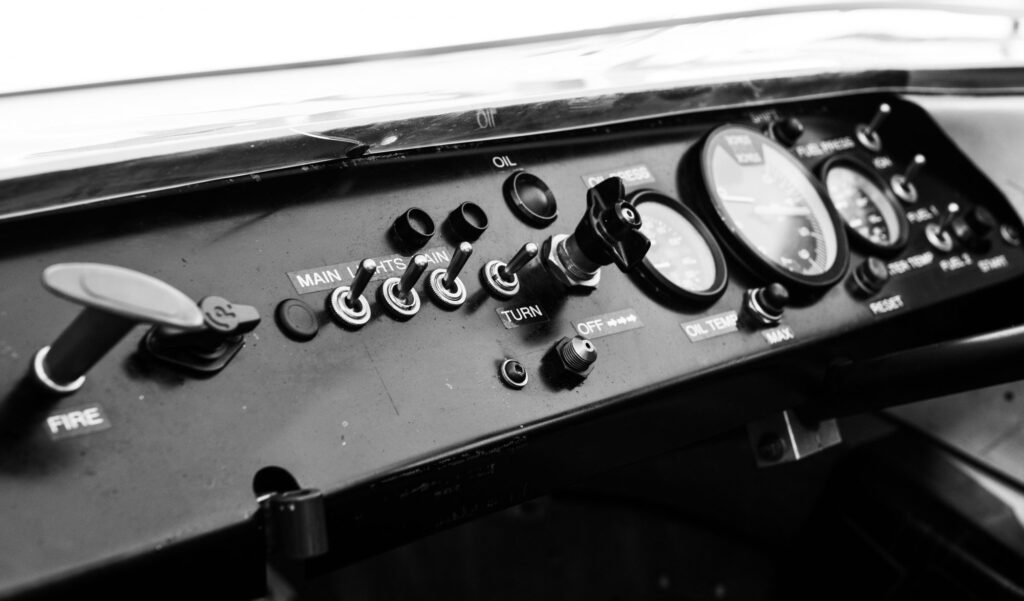
Chevron B 36, Chassis Number 76-04, 1976
The series of Chevron spyder-form racing cars, since the introduction of the B 16 Spyder in 1970, became one of the most successful in international motorsport during the 1970s in the engine displacement class up to two liters, thanks to evolutionary developments through the types B 19, 21, 23, 26, 31, and B 36. Again and again, Chevron drivers achieved sensational overall placements in these cars during endurance races for the World Championship of Makes within starting fields featuring larger-displacement and more powerful competition. The „screaming“ Chevrons of those years, predominantly powered by thoroughbred Formula 2 engines, were capable of almost any surprise in the hands of top drivers. In the World Championship of Makes rounds from 1972 to 1975, Chevron teams finished in the top five of the overall standings ten times and reached the podium in third place three times: at the 1972 1000 km of Spa by John Hine and John Bridges in the B 21-Ford of the „Red Rose Racing“ team, at the 1973 1000 km of the Nürburgring by John Burton and John Bridges in the B 23-Ford of „Red Rose Racing,“ and at the 1975 800 km of Dijon by John Hine and Ian Grob in the B 31-Ford Hart of the „KVG Racing“ team.
As early as 1970, Brian Redman had ultimately secured the European Make Championship for Chevron by winning in the brand-new B 16 Spyder at the 500 km of Spa, the final championship round of the first European Make Trophy for sports cars and racing prototypes up to two liters displacement. At the end of 1972, the Scot Gerry Birrell had won the South African Springbok Trophy Series, also for two-liter sports cars and prototypes, driving a Chevron B 23 for „Team Gunston.“ Following an already second place overall and class victory together with the German Jochen Mass at the series opener, the Kyalami 9 Hours, behind the three-liter factory Ferrari 312 PB driven by Clay Regazzoni and Arturo Merzario, Birrell/Mass won twice as well as Birrell/Peter Gethin and Gethin/Mass winning all remaining four rounds of the series overall—Mass finished second, and the Englishman Gethin third in the final standings.
It was a racing driver who, in 1970, had given the impetus for building the first version, the B 16 Spyder. The English Formula 1 driver Brian Redman, until then very successful in endurance racing—including as a Porsche factory driver in top-tier sports cars up to the Porsche 917—after a hard-fought season-opener victory in the European 2-Liter Make Trophy in 1970 at Le Castellet in the Chevron B 16 coupé against Joakim Bonnier's significantly lighter Lola T 210 spyder, had sounded the alarm to Chevron founder Derek Bennett: „Derek, we need a spyder…!“

The Manchester-born Bennett, who was 37 at the time, had completed an apprenticeship as a mechanical and electrical engineer, worked as a mechanic, and had enjoyed some success racing self-built small sports cars according to the so-called Clubman formula. When demand for his „Clubman“ racing cars, the „Bennett Specials,“ had increased, he founded Chevron Cars in the mid-1960s based in Bolton near Manchester and subsequently also designed Formula Junior and Formula 2 racing cars. However, he was initially particularly successful with small-batch production sports racing cars. As a high-spirited character, he also implemented Redman's suggestion within a very short time during the current season.
The B 16 Spyder, which was about 50 kilograms lighter than the B 16 Coupé and featured a „bull nose“ body similar to the Porsche 908/3 that also appeared in 1970, then debuted at the European Championship round of the 500 km Nürburgring in September in the hands of Brian Redman, immediately taking a dominant pole position. Redman's time of 8:12.4 minutes was around nine seconds faster than Arturo Merzario in the Abarth 2000 SP (8:23.0) and Chris Craft in the Lola T 210 (8:23.6). In the race, after leading dominantly, Redman retired due to a broken fuel line and a fire on board. Fourteen days later, as the winner in the B 16 Spyder at the 500 km Spa—also after taking pole position and a hard-fought battle with Joakim Bonnier in the Lola T 210—he secured the manufacturers' championship title for Chevron in that series.
While the B 16 Spyder was still powered by the 1.8-liter Ford-Cosworth FVC with an output of around 240 hp, the subsequent models differed over the next few years through detailed modifications and, as a rule, the use of more powerful engines up to the two-liter displacement limit in this class, ultimately achieving engine outputs of nearly 300 hp or more. On very rare occasions, even versions with the three-liter Ford-Cosworth Formula 1 engine were used by private teams, but without any notable success.
The Chevron B 36, which was then manufactured in 21 examples from 1976 to 1978, was the seventh and final design in this series for the then-so-called Group 6 sports racing cars. In 1978, Chevron founder Derek Bennett was killed in a hang-gliding accident, which caused the company—which survived with changing owners until 1983—to lose its momentum as well. With the B 36, which was intended exclusively for sale, the primary focus during conception was the possibility of using different engine types and the highest possible ease of maintenance. It was conventionally designed, deliberately forgoing revolutionary innovations.
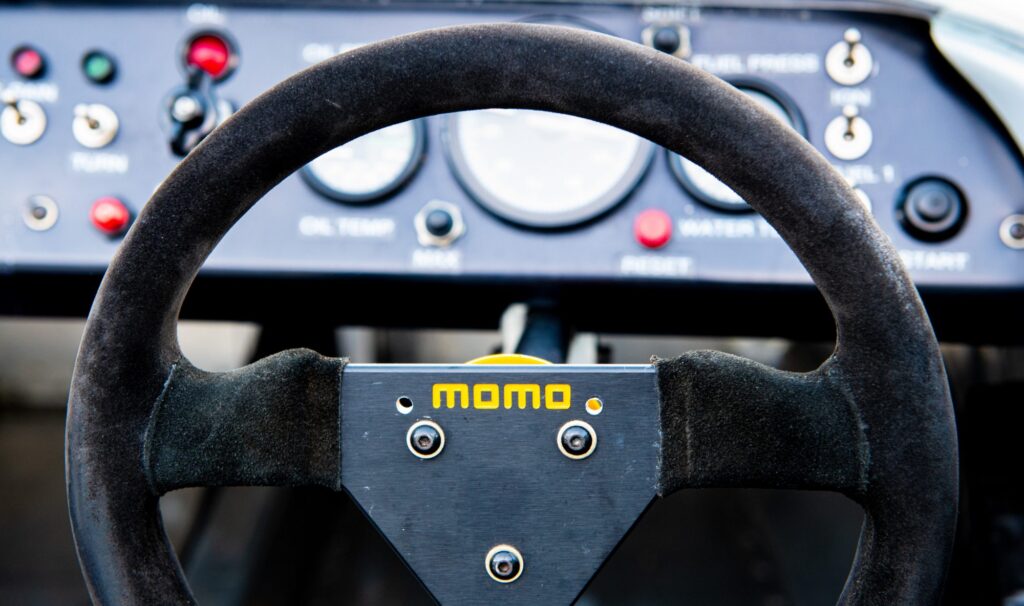
The first chassis were powered by a 2-liter 4-cylinder ROC-Chrysler-Simca unit. Subsequently, the 4-cylinder Cosworth BDA engine, a Mazda Wankel engine, the BMW M12 4-cylinder engine, a Ford 2-liter BDG engine, or a Hart 4-cylinder powerplant were also installed in the car. Engines with even larger displacements were used here as well. For example, the Frenchman José Thibault equipped his B36 with a 3-liter 6-cylinder PRV powerplant from Talbot at the 1987 24 Hours of Le Mans. Some examples of the Chevron B36 were also used in Japan and North America and, in individual cases, adapted to the regulations of the Canadian American Challenge Cup or the European Interserie. According to statistics, B36s were entered in over 160 races between 1976 and 1987, achieving eleven overall victories and eight class victories.
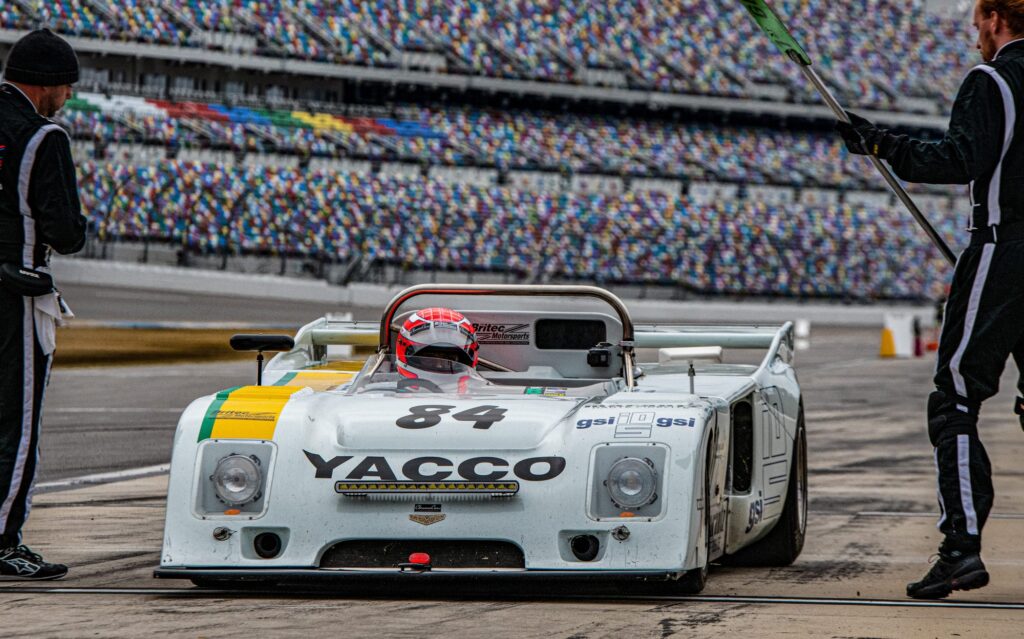
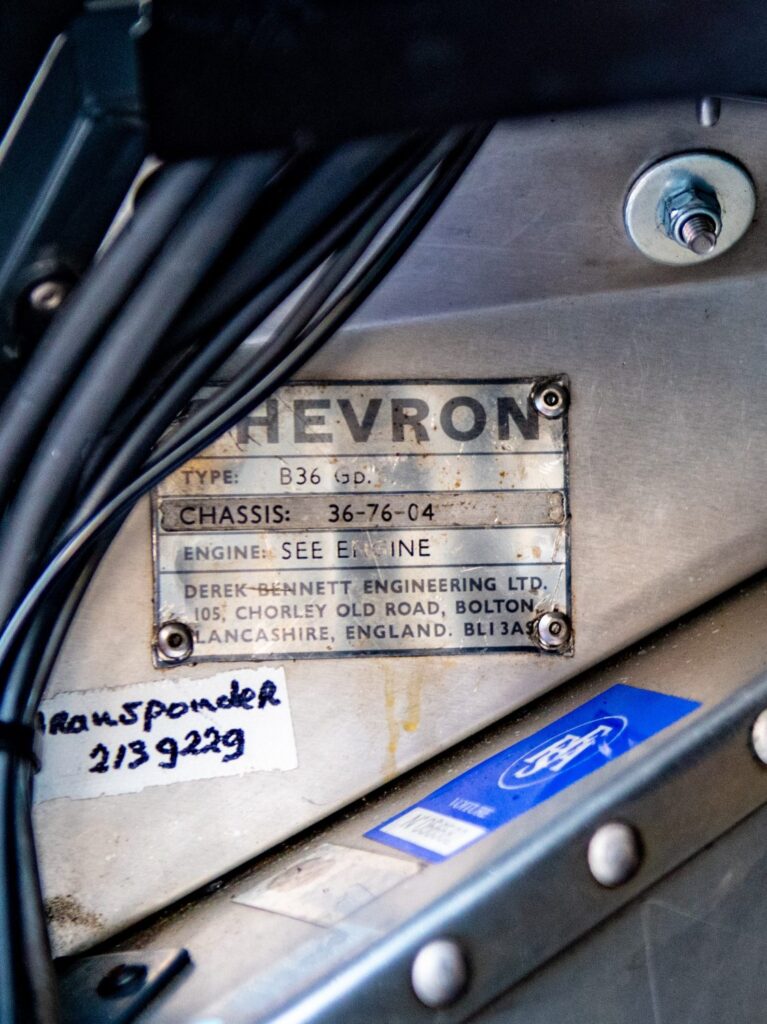
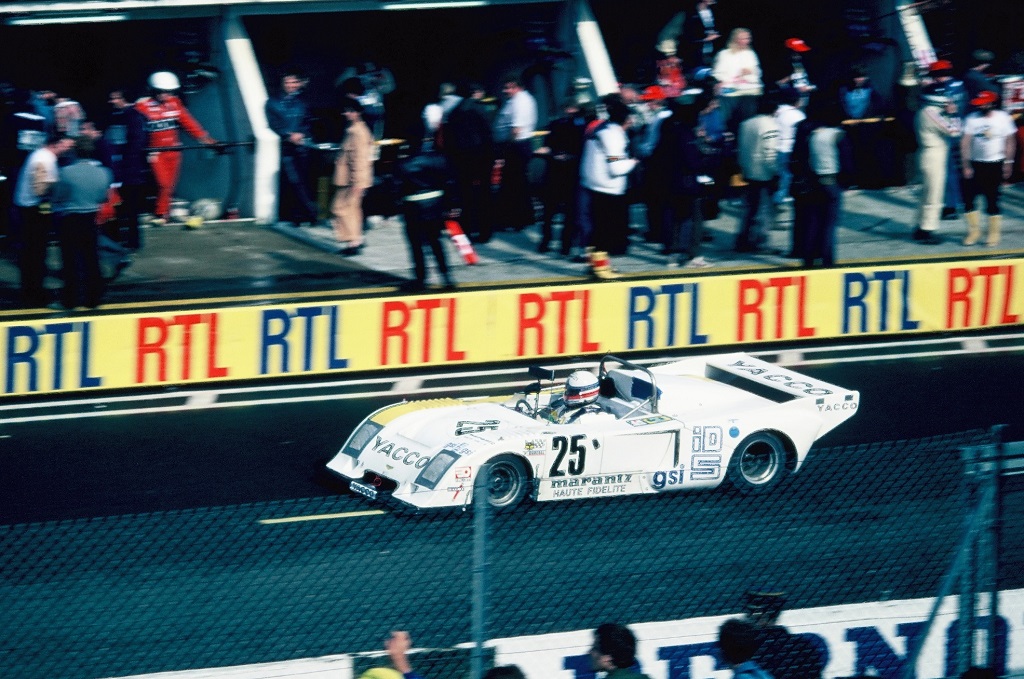
The chassis number „36-76-04“ presented on these pages was among the first to be delivered, in this case initially to Fred Stalder of Racing Organisation Course (ROC), where it was immediately equipped with a Chrysler-Simca 4-cylinder engine typical of the ROC team. The car subsequently participated in numerous sports car races and competed five times at Le Mans, among other events. During its final Le Mans appearance in 1980, this Chevron secured victory in its class. Two years later, the car won the French Group 6 Championship. The next owner of „76-04“ was Jean-Claude Ferrarin, who installed a BMW 4-cylinder engine. Newly engined, the Chevron B 36 won the French Group 6 Championship again in 1984. Before its racing career temporarily ended in 1986, it was fitted with a Cosworth DFV engine and its bodywork was modified to meet the criteria of a Sthemo Group C car.
In 2007, Jean-Marie Belleteste took charge of the vehicle, had it restored by Chevron expert Vin Malkie, and returned it to its original condition – including a new Ford Cosworth BDG engine. In 2009, the gem became part of the racing stable of Belgian Marc Devis, who sold it shortly thereafter to a collector in Scotland. The car subsequently competed in numerous races as part of the Classic Endurance Racing (CER) series and won the ‘CER P2„ championship in 2014 with Scotsman Martin O'Connell at the wheel.
__________________________________________________
Technical Data
Chevron B, 1976 Chassis number „76-04“
Engine (Values in brackets: Equipment upon delivery in 1976)
- Ford Cosworth BDG inline-four cylinder, aluminum block and cylinder head (ROC Chrysler-Simca 2.0/Peugeot block)
- Bore/Stroke: 90.4 mm x 77.6 mm (92.0 mm x 75.0 mm)
- Displacement: 1,990 cc (1,994 cc)
- Valves per cylinder: four (four)
- Valve control: camshaft, toothed belt drive
- Compression ratio: 12.0:1 (11.3:1)
- Mixture preparation: Gasoline injection (mechanical Kugelfischer gasoline injection)
- Power: 280 hp at 9,250 rpm (285 hp at 9,200 rpm)
Power transmission
- Hewland FT 200 five-speed gearbox
- Rear-wheel drive
Chassis
- Body: Fiberglass
- Chassis: Aluminum monocoque with rear subframe
- Front suspension: double wishbone, coil springs, shock absorbers, stabilizer bar
- Rear suspension: upper control arm, dual lower control arms, dual trailing arms, coil springs, shock absorbers, stabilizer bar
- Wheel dimensions front/rear:
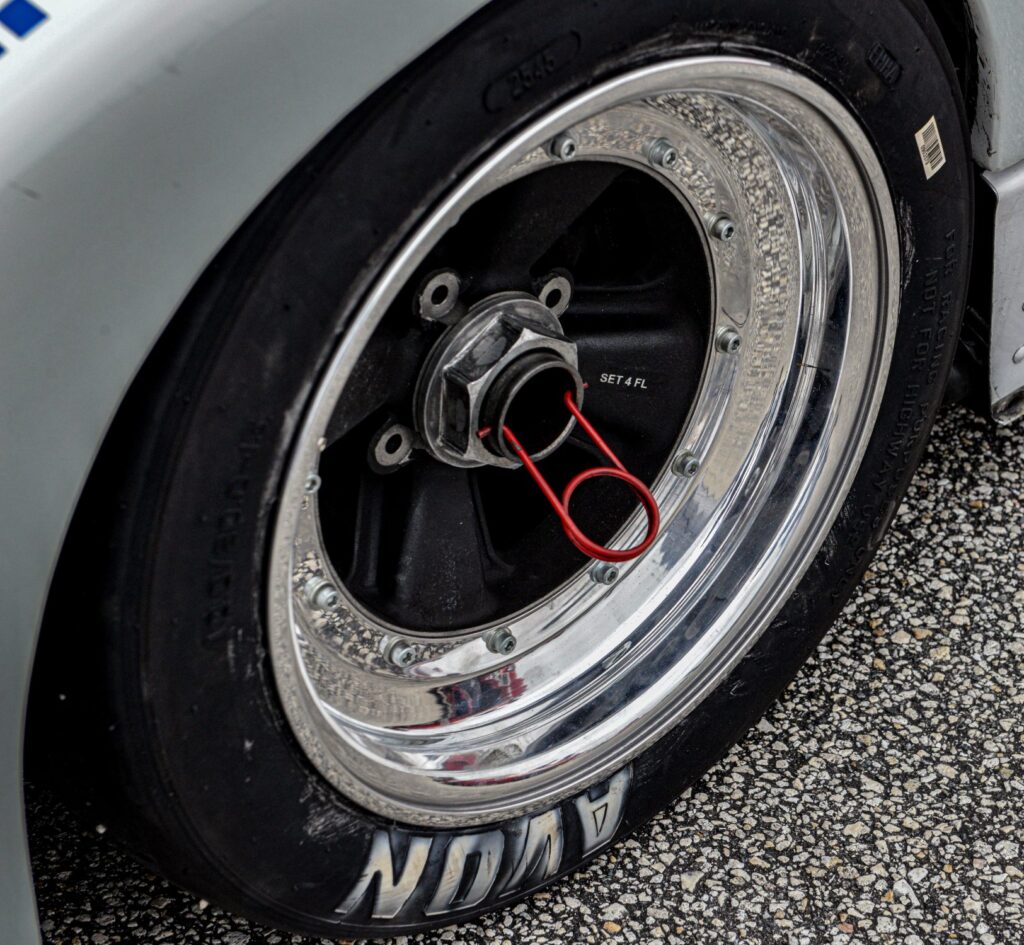
- 10 x 13/15 x 13
- Steering: Rack and pinion steering
- Brakes: ventilated disc brakes
Dimensions and Weights
- Wheelbase: 2,400 mm
- Track front/rear: 1,360 mm/1,440 mm
- Kerb weight: 605 kg