

The history of the Lotus 87B, built in 1981, chassis 87/4:
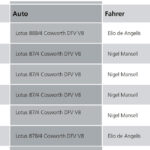
In 1981, Lotus started with Nigel Mansell back into the season with the Lotus 81. Elio de Angelis was supposed to compete with the new „wonder weapon,“ the Lotus 88, but it was immediately deemed illegal, so de Angelis also started the race in the Lotus 81. With the Lotus 88, the famous „double chassis,“ Colin Chapman wanted to bring another stroke of genius to Formula 1. (see Curbs #46) But on both occasions, the 88s were banned after practice. On the second attempt at Silverstone, they were again denied a start after practice. After the Lotus 88 was definitively banned, both 88s were converted into the Lotus 87 model in a cloak-and-dagger operation. The Lotus 87/4 we drove was originally Elio de Angelis’s Lotus 88B/4 at Silverstone. So it has two chassis numbers and two “lives”…


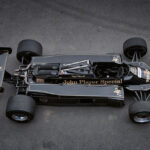
Nigel Mansell Drives the Lotus 87B Debut
The converted version, designated 87/4, made its debut at the German Grand Prix with Nigel Mansell. The „double chassis“ was thus eliminated and replaced by narrow sidepods with integrated skirts that maintained the minimum distance required by the regulations. And herein lay the crux of the Lotus 87. The sidepods were too narrow and did not generate enough downforce.
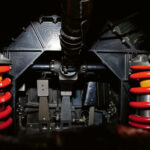
Too much time was spent building the wider sidepods, so Lotus made little progress with the car. Lotus was ahead of the pack at this time along with McLaren on the topic of monocoque construction. You were the first to bring a carbon fiber chassis to the race tracks, replacing the aluminum monocoque. Unlike McLaren, however, Lotus also incorporated Kevlar panels for better rigidity and increased safety in case of an accident, thus creating Lotus's first „Carbon Fiber Kevlar Composite“ chassis. The suspension technology was identical to the Lotus 88. Nigel Mansell contested the Grand Prix in Germany, Austria, Holland, and Italy with chassis 87/4 but didn't even see the checkered flag.
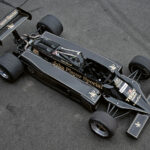
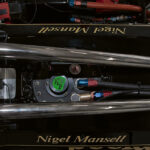
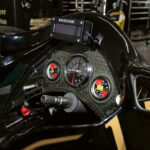
No podium for the Lotus 87B
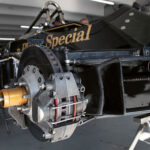
After the Italian GP, Mansell received chassis number 5, and 87/4 served from then on as the so-called „T-car“. The first appearance of a Lotus 87 in Monaco looked promising. Mansell in third place on the grid and de Angelis sixth! But neither saw the checkered flag. A podium finish for the 87 was difficult against the partly turbocharged competition. Ferrari and is denied by Renault. Fourth place was the maximum for the Lotus team, otherwise accustomed to success. For the 1982 season, the 87/4 became the 87B/4. This difference was mainly due to a longer wheelbase using a spacer adapter between the engine and gearbox, which was intended to significantly improve weight distribution, as well as wider side pods with integrated wing profiles. The 87B was 27 kilos lighter. Incidentally, Lotus experimented with „active suspension“ on the 87. However, this version also did not mature into a bestseller and was quickly shelved.
In the 1982 season, the 87Bs were only present at the season opener in Kyalami and were replaced by the new Lotus 91 starting from the second Grand Prix in Brazil. Its chassis was exactly the same as the Lotus 87 chassis and brought Elio de Angelis a Grand Prix victory in Austria. Now, the Lotus 87/4 is part of ChromeCars« »Black and Gold Collection« and has finally found late success in historic motorsport. At the 2022 Monaco Historique Grand Prix, the 87/4 won from pole position. This coincided with the »50 Years of John Player Special„ anniversary. Lotus first competed in 1972 with a new design and the “JPS logos.".
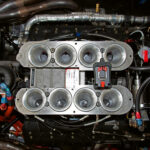

Lotos 87B – Technical Specifications
Motor
- Ford Cosworth DFV DOHC V8 90 Degree
- Valves per cylinder: 4
- Bore/Stroke: 90.0/58.8
- Engine displacement: 2992cc
- Mixture preparation: Lucas Fuel Injection
- Power: 490 hp at 10,000 rpm.
- Torque: 353 Nm
Get Curbs #49, featuring the 1981 Cars – Lotus 87B (Chassis 87/4 Special), delivered right to your door—directly through our Online store
Photos: Peter Heil