
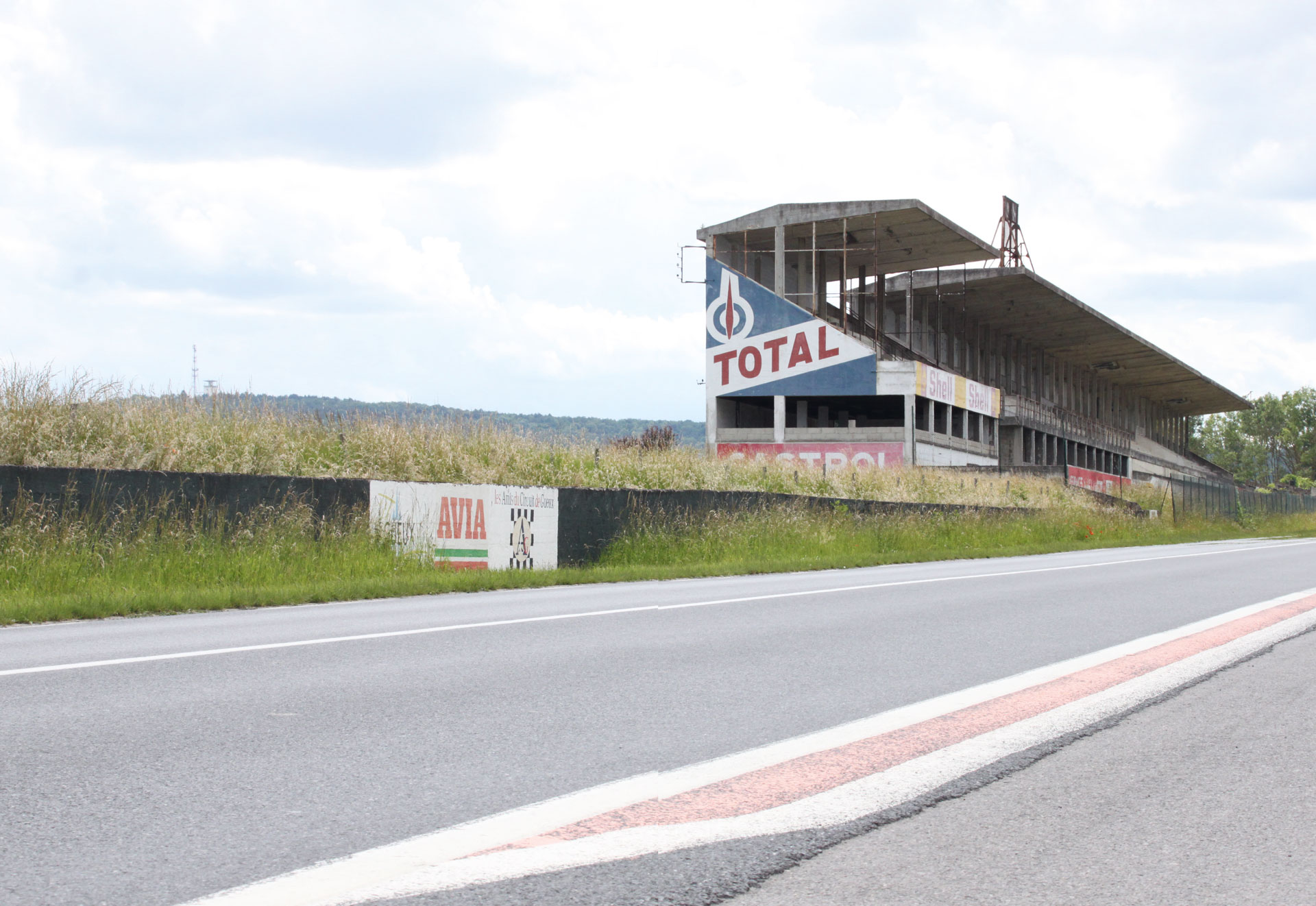
When the shrill roar of engines finally fell silent in the Champagne region in the early 1970s, the Reims Circuit was already a relic of a time when cars were often seen as monstrosities, and racing cars even more so. Kaiser Wilhelm II, who himself occasionally drove a car, commented at the beginning of the 20th century that he was betting on the horse in the long run. On the other hand, a highly contagious record-breaking fever of unparalleled proportions was already rampant, and for those affected, maximum speed was the ultimate thrill... At the beginning of the 1920s, the profession of race track architect did not yet exist in the modern sense, and the three famous, purpose-built „test tracks“ in Europe, as they were sometimes called back then, Brooklands, the Avus „and Monza were born out of the zeitgeist – as downright insane full-throttle tracks. “As early as the 1930s, we were already exceeding 190 mph on the straights at the Avus,„ Manfred von Brauchitsch described the feeling behind the wheel of a pre-war Grand Prix car in the mid-90s, “and we were so damn scared to take even one hand off the steering wheel to shift gears.'"
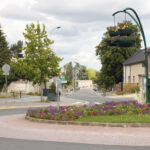
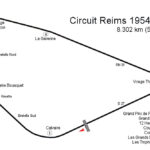
On July 25, 1926, the Automobile Club Ardenne Champagne Argonne opened a roughly 7.8-kilometer race track in the grain fields of Champagne, in the flatlands at the foot of the French Ardennes. It was created simply by closing off a „triangle“ of public country roads with a similarly relatively stupid track layout – apart from three hairpin turns, it was essentially straight. From today's perspective, highly questionable, the first track variant, driven until 1951, even included passing through the village of Gueux, where the tight corner was between a butcher shop and a grocery store... The opening race, the „Grand Prix de la Marne,“ which was held there annually in various racing car categories until 1937, was won by Francois Lescot on a Bugatti Type 35 as the day's victor. He completed 40 laps of the race distance with an average speed of 112.768 km/h and set the fastest race lap in 4 minutes and 3 seconds (118.518 km/h). This sounds harmless today, but at the time, for the unpaved country roads and the practically non-existent grip of the narrow tires at their limit, it was already an enormous speed.
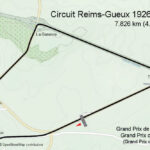
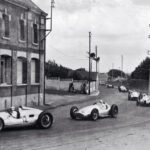
1932: 156.52 km/h on the Reims race track
Even between the World Wars, France, where motorsport was once born in 1894 with the Paris-Rouen long-distance race, was a promised land for racing, with more race tracks than anywhere else in Europe. Therefore, the French Grand Prix, officially called the „Grand Prix de l'Automobile Club de France,“ could always be held elsewhere. In 1932, the first one took place in Reims, and it became a triumphant procession for the Alfa Romeo works team. Tazio Nuvolari won ahead of his compatriot Baconin Borzacchini and Rudolf Caracciola. All three completed the full race distance of 92 laps, over 700 race kilometers, in the Alfa Romeo Tipo B! In the next three positions, the Bugatti T 51 drivers Louis Chiron, René Dreyfus, and William Grover-Williams finished, lapped. In his fastest race lap, Nuvolari completed the road course „triangle“ in a smooth three minutes with an average speed of 156.52 km/h (97.25 mph). Just six years after the circuit's opening, the average speed had thus increased by nearly 40 km/h (25 mph)!
1939: 190.75 km/h on the Reims racing circuit
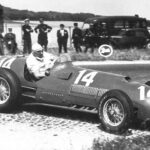
In the last two Grand Prix races in Reims before the war, Mercedes works driver Hermann Lang further pushed the records upwards, approaching the 200 km/h mark. He achieved this in 1938 during a triple Mercedes victory with Manfred von Brauchitsch, Rudolf Caracciola, and Hermann Lang finishing in that order, and again in 1939 during an Auto Union one-two finish with H.P. Müller ahead of „Schorsch“ Meier, setting the fastest practice time and the fastest race lap. For the pole position in 1939, he completed the 7.826-kilometer track in 2:27.7 minutes, with an average speed of over 190 km/h!
1966: 233,803 km/h on the Reims race track
After 1951, once the course had been modified so that no one had to drive through the village of Gueux anymore and brake from full speed for the „butcher shop and grocery store,“ the lap length increased to 8.3 kilometers, but the dangerous character of the track remained. Now there were even only two hairpin turns, „Virage de Muizon“ and „Virage de Thillois,“ left, with the rest consisting of lightning-fast curves and straights. Over the years, Reims engaged in an imaginary competition with Spa-Francorchamps and Monza to the dubious distinction of being the fastest still-operating Grand Prix circuit; Formula 1 did not race at Avus again after 1959. When Italian Ferrari works driver Lorenzo Bandini, in the first year of the three-liter Formula 1, completed a lap in 2 minutes and 7.8 seconds on July 2, 1966, during final practice for the French Grand Prix, pushing the average speed to a phenomenal 233.803 km/h, it was Reims again – for a few months. However, the problem was less the speed itself than the slipstreaming battles of the car packs. The more homogeneous and equal the chances of the material – this also applied above all to Formula 2 and Formula 3 races in Reims – the greater the risk. In the last Formula 2 race in Reims in 1969, which Francois Cevert won in a Tecno, the first seven cars crossed the finish line within just one second...! After chicanes were introduced in Monza in 1972, Jackie Stewart characterized the then, and still fundamental, slipstreaming problem in Formula 1 as follows: „If there had been a collision here at 300 km/h last year, the cars would probably only have stopped on the shores of Lake Como.“ It was ultimately also the strong growing safety awareness of prominent Grand Prix drivers such as Graham Hill, Jochen Rindt, or Jackie Stewart in the late 1960s that broke Reims as a race track after 1972.
Tribute
And that was no coincidence; Reims, too, had claimed lives. Annie Bousquet, then France’s most famous female race car driver, was thrown from the cockpit of her Porsche 550 Spyder in 1956 during the traditional 12-hour race at Reims, which started at night. Briton William „Bill“ Whitehouse in the Cooper and American Herbert MacKay-Fraser in the Lotus died during the 1957 Formula 2 race. „Reims was a very dangerous track,“ noted Roy Salvadori, who finished fourth in that race in a Cooper, in his autobiography *Roy Salvadori – Racing Driver*, „because the corners were so fast that if you went off the road, you’d end up in the field, and more often than not, the car would roll over.“ Luigi Musso, Italy’s great hope of the 1950s, also lost his life in 1958 during a high-speed duel with his Ferrari teammate and race winner Mike Hawthorn at the French Grand Prix in Reims. The well-known French Formula 2 champion and rally driver Claude Storez died in 1959 in a grain field during a special stage of the Rallye des Routes du Nord. And in 1962, American-Canadian race car driver Peter Ryan, who was in the lead, was killed in a collision during the „Coupé de Vitesse Junior.“.
Lucky breaks
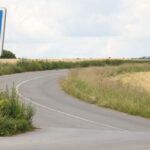
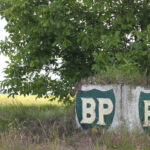
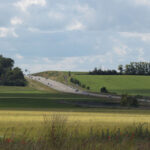
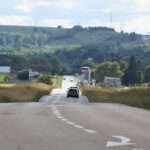
Nevertheless, Reims will also be remembered for great moments, even from a German perspective. The just 30-year-old young driver from Bielefeld, Hermann Paul Müller (H.P.), won his first and only Grand Prix here in 1939 in the Auto Union Type D. The memorable one-two victory by Juan Manuel Fangio and Karl Kling in their Mercedes W 196, marking the start of a glorious Mercedes comeback in Grand Prix racing right at the car's debut in 1954. In 1958, the Frenchman Jean Behra triumphed here in the „Coupé de Vitesse“ with the first Formula 2 construction from the Porsche house, still based on the RSK Spyder. In 1961, the Italian Giancarlo Baghetti, in a private Ferrari Tipo 156, achieved a surprise victory right in his Formula 1 debut after the entire Ferrari works team retired and a slipstream battle until the checkered flag. Today, Reims might be a perhaps forgotten racetrack. But it remains a symbol of a daring, breakneck, perhaps mad motor racing era, in which racing drivers were at least heroes. And unlike some other „forgotten racetracks,“ relics still stand here – „warning,“ if you will.
Never miss an exciting article about historic motorsport again! Get your Curbs subscription. ALL images conveniently home – directly via our Online store