
First published on curbs-magazin.com
Originally published on curbs-magazin.com – now part of slickpix.de.
Portrait of Willy Mairesse
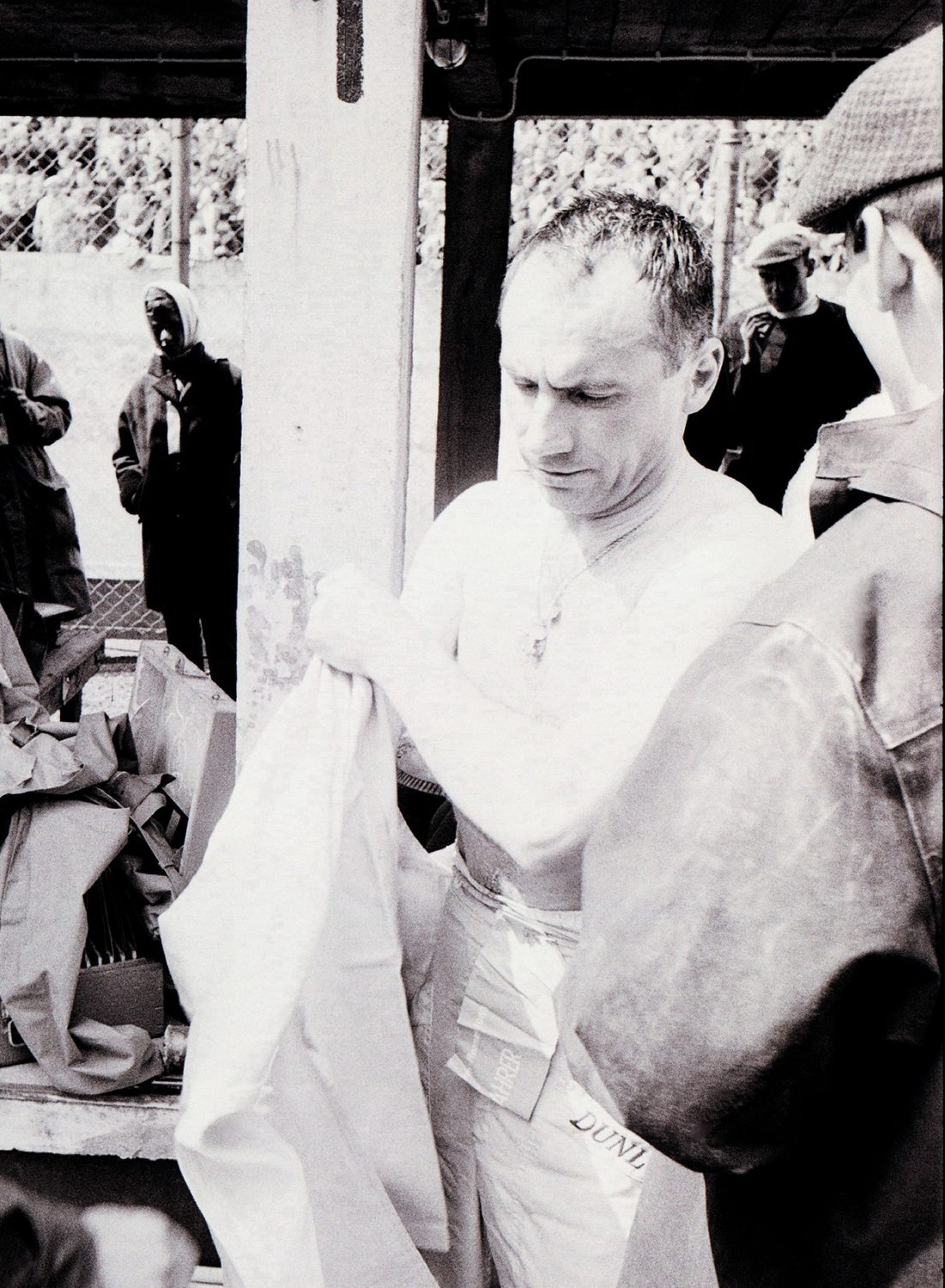
In hardly any other internationally significant racing driver career were triumph and downfall as close together as in the career of the Belgian Willy Mairesse. Despite victories in Formula 1 race cars and some major successes in endurance racing, Mairesse also gained the sadder notoriety of being a crash pilot. His devastating series of accidents over the years, often also due to driving errors, simply wouldn't end.
Willy Mairesse was born on October 1, 1928, in the small Belgian town of Momignies, near the French border. He was the son of lumber merchant Marcel and his wife Jeanne. Alongside his two sisters, Jacqueline and Christiane, he experienced a happy and carefree childhood. In a quiet area with few entertainment options, the Mairesse children invented their own special adventures. One winter day, Willy spontaneously decided to get behind the wheel of his father's Citroën and towed his sister on skis behind him. He attended the technical high school in Chimay, then began studying agriculture in Carlsbourg, but his restless spirit led him to drop out. From then on, he earned his first own money working in his parents' lumber business.
The parents realized that Willy was an athlete through and through by nature, and since his father was also the president of the local football club, Willy became a passionate football player. He also learned to ride his father's horse very well. However, his favorite pastime became cruising through the woods in the lumber company's jeep. „When I was a child, I often went with him,“ his cousin Philippe Macq once recounted. „He would strap me into the passenger seat so I wouldn't fall out. But I soon noticed that he had excellent spatial judgment and the ability to decide in fractions of a second whatever happened. He was already on his way to becoming an excellent driver.“

The local family doctor Henry Misonne, who was friends with Willy Mairesse, whom he often visited and whose wife was impressed by Willy's amiable nature and correctness, also noticed this. He registered his 1953 Porsche 356 A 1500 for the Liège-Rome-Liège endurance race with Willy Mairesse as the driver and himself as the co-driver. Mairesse went full throttle from the start until the two dropped out with engine failure near Canazei. A year later, in the „Criterium des Alpes,“ the same team in the same car also failed to see the checkered flag, but Willy Mairesse had now got the taste for it; this was what he really wanted. Through Misonne, he learned about the very well-known Peugeot dealer Marcel Quernette in Genappe, who had also welcomed other Belgian rally drivers like Paul Frère and Olivier Gendebien. Mairesse contributed every cent he had to him and invested it in a supercharged Peugeot 203 prepared by Quernette. With this car, he achieved his first motorsport successes with other co-drivers – Dr. Misonne no longer felt like having further adventures with a kamikaze driver – and won, among other races, the „12 Heures de Huy“ in 1956.
Over time, Willy Mairesse developed an almost familial relationship with the Quernettes, even cooking with them whenever he passed by. One day, Marcel Quernette showed him a used Mercedes 300 SL that had already been used in races by its previous owner. He knew Willy Mairesse didn't have the money to buy it, but he made the car available to him for rallies and races. With the 300 SL, Mairesse truly drew attention to his skills for the first time, winning the overall Liège-Rome-Liège in 1956 and the Grand Prix de Spa in 1957. When Jacques Swaters, then Belgian Ferrari importer, former Grand Prix driver, and co-founder of the racing team „Ecurie National Belge“ (ENB), took him under his wing, Willy Mairesse had made it.
He apparently felt quite comfortable behind the wheels of various Ferrari 250 GT cars for this racing team since 1958, even though their outings for ENB repeatedly involved sheet metal damage. However, with a second place at the 1958 12 Hours of Reims and a second place at the 1959 Tour de France, he also sparked Enzo Ferrari's interest in his services. The Commendatore initially elevated him to the rank of an occasional driver in the works team, and by 1960, Willy Mairesse's assignments already extended into Formula 1. The fact that the Belgian had hardly any problems with the solutions to these challenges right away – he finished fourth in the Targa Florio, third in the 1000 km Nürburgring, and third in the Italian Grand Prix in Monza – at least suggested driving maturity. However, his victory in the Tour de France of the same year was only confirmed after his compatriots and direct competitors, Olivier Gendebien and Lucien Bianchi, had helped him out of a ditch...


Although Mairesse was built up gradually by Ferrari in 1961 as a guest driver for another season, only at the beginning of 1962, after Count Trips's death and Richie Ginther's move to BRM, did he begin to feel a higher level of responsibility as a regular factory driver, the pendulum swung more violently between highs and lows. Mairesse also found himself in hair-raising situations that he survived more by luck than by wit. In the 1961 European Grand Prix at the Nürburgring, he spun the car and a sixth place away on the second-to-last lap at the „Schwalbenschwanz.“.
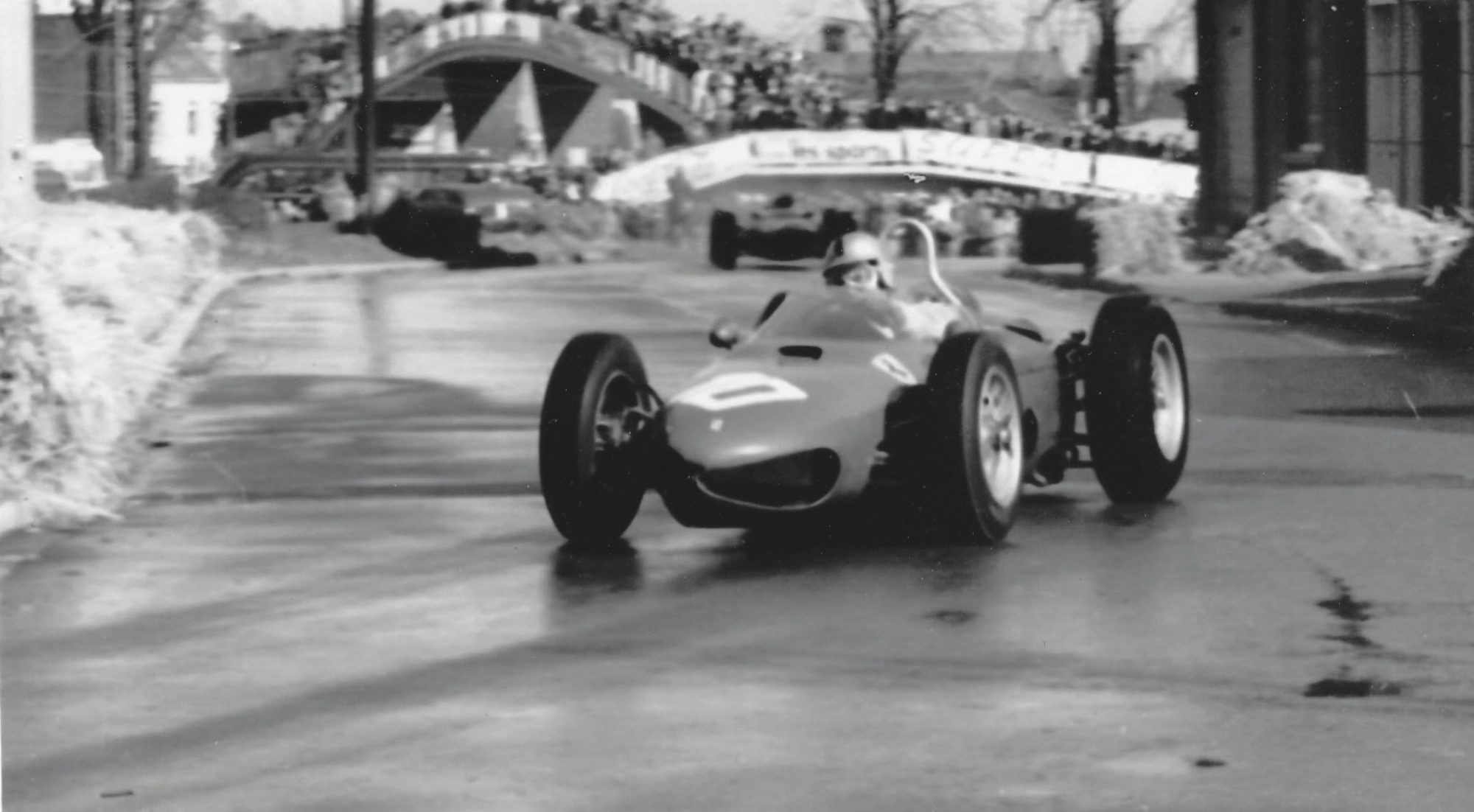
For this, the 33-year-old was in top form in the spring of 1962. Within a few weeks, he won the Grands Prix of Brussels and Naples with the Ferrari Tipo 156 in the so-called Formula 1 pre-season, and triumphed in the 246 SP at the Targa Florio with a start-to-finish victory for the car. The wave of success carried him into qualifying for the Monaco Grand Prix, where he was the fastest Ferrari driver in fourth place – 0.7 seconds ahead of the team's number one, reigning world champion Phil Hill. Shortly before the starting flag fell, he was overcome by exuberance. With a jump start, he squeezed himself out of the second row between the fastest qualifiers Jim Clark (Lotus) and Graham Hill (BRM), shoved them aside, and after only one hundred meters, already in the lead, spun out in the „Gasometer curve,“ which caused the entire starting field to have trouble at that tight corner. His recovery drive from last place did not get him back into the points.
14 days later, in Spa, the home crowd joined as an additional motivational boost. Mairesse drove a fast, aggressive race, involving him in a fierce battle for the lead with the Lotus works drivers Jim Clark and Trevor Taylor. After Clark pulled away at the front, a bitter duel for second place erupted between the up-and-coming Taylor and Mairesse. It was a close-quarters fight with nail-biting action, also featuring spectacular, emotional driving lines. Then, at over 125 mph, a breathtaking collision occurred.
„He was a bit faster going up the hills from ‚Stavelot‘ towards ‚La Source‘,“ Trevor Taylor described years later, „and on one lap, he came very close to me in the last left-hand turn before ‚La Source‘. The nose of his car tapped my gearbox, which shifted into neutral, my engine revs shot up sky-high, and the car spun sideways. Then the Ferrari saved my life by nudging me again on the inside, pushing my car straight again, otherwise I would have flown straight into an embankment. Instead, I spun into a ditch, while Willy hit a telegraph pole, the Ferrari flipped several times and caught fire.“ Trevor Taylor was able to limp away, but Mairesse, who was also rescued, spent several weeks in the hospital with severe burns on his face and feet until he recovered. It wasn't until September 1962 that he got back behind the wheel and finished fourth in the Italian Grand Prix at Monza in a Ferrari Tipo 156.
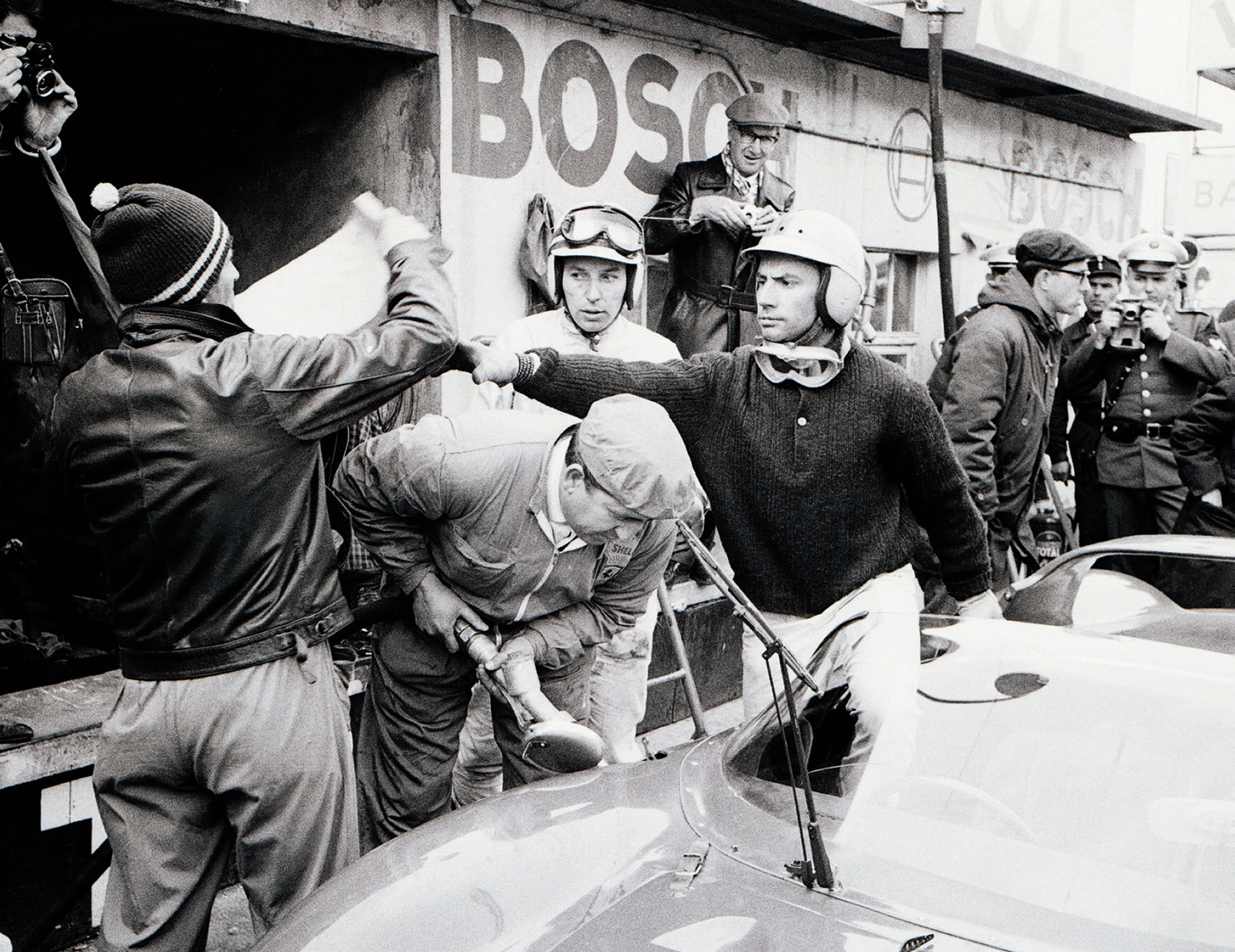

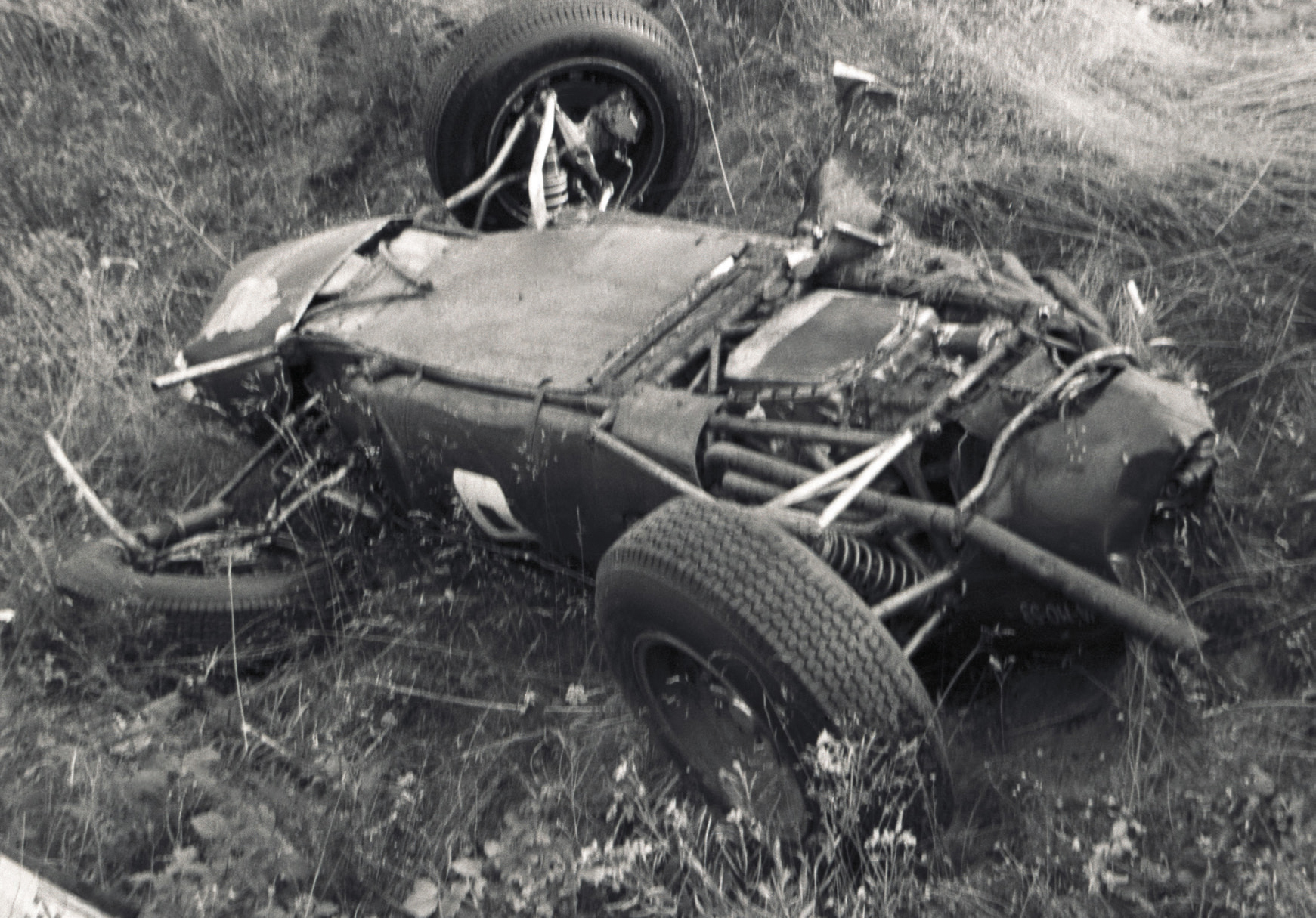
In May 1963, he flawlessly won the 1000 km Nürburgring alongside John Surtees in a Ferrari 250 P, and in Le Mans, where the two had been leading since early Saturday evening, they looked like sure winners. After leading for 16 hours, Willy Mairesse took over the car on Sunday morning and, past „Tertre Rouge,“ — through no fault of his own — came to a halt in a blaze once again; fuel that had spilled during a pit stop had ignited. This time, his enforced break was shorter, but at its end was another serious crash in the second lap of the German Grand Prix at the Nürburgring. Again at over 200 km/h, the Formula 1 Ferrari took to the air at „Flugplatz“ for reasons that could not be definitively clarified, skidded into the embankment, killed a young paramedic — deployed there after a collision between Innes Ireland and Lorenzo Bandini on the starting lap — and rolled over, ejecting Mairesse. However, he had already complained of an unstable chassis during practice, and his wife Dorine had even advised him against starting. But Willy feared being fired by Ferrari if he didn't compete... He suffered several fractures — and still recovered in 1964! His career as a works driver for Ferrari, however, ended with this accident.
Despite the Belgian's many crashes, Enzo Ferrari had held onto him for a long time because he valued him as an excellent test driver for his exploration of the limits, and who, among other things, also had a large share in the success story of the Ferrari GTO as such. However, after the 1963 Nürburgring accident, he took the opportunity to part ways with Willy Mairesse. Franco Lini, a Milanese automotive journalist, a close confidant of Ferrari, and also team manager in Maranello in the second half of the 1960s, later suggested that Enzo Ferrari had given himself a fatalistic justification in this case, as the Belgian's string of bad luck had also become uncanny for him in the long run.
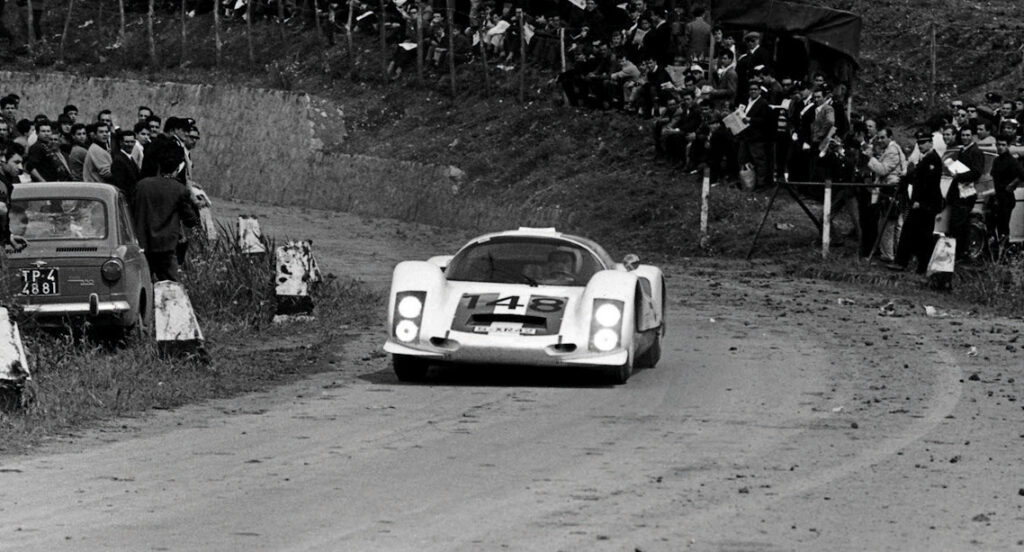
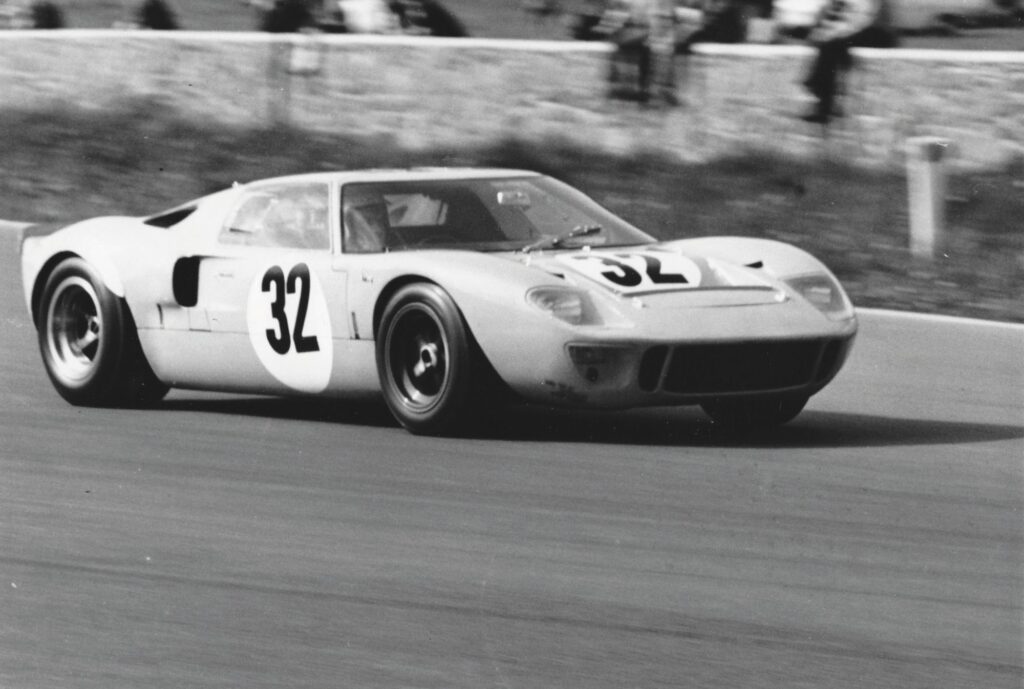
When hardly anyone believed in Willy Mairesse anymore, his Belgian friends from the circles of „Ecurie Francorchamps,“ as the former ENB was now called, took him in. They entrusted him with the Ferrari 250 LM racing prototype and then also with the 275 GTB grand tourer, and had nothing to regret: overall victories with the 250 LM in 1964/65 in Angola and at Spa, and a third place overall, along with a GT win, at the 24 Hours of Le Mans in 1965. For 1966, he moved to the Swiss Scuderia Filipinetti, which entered major endurance races with a Ford GT 40 and a Porsche Carrera 6. And it was with this Porsche that the Belgian had his last glorious moment when he won the Targa Florio overall classification in Sicily for the second time after 1962.
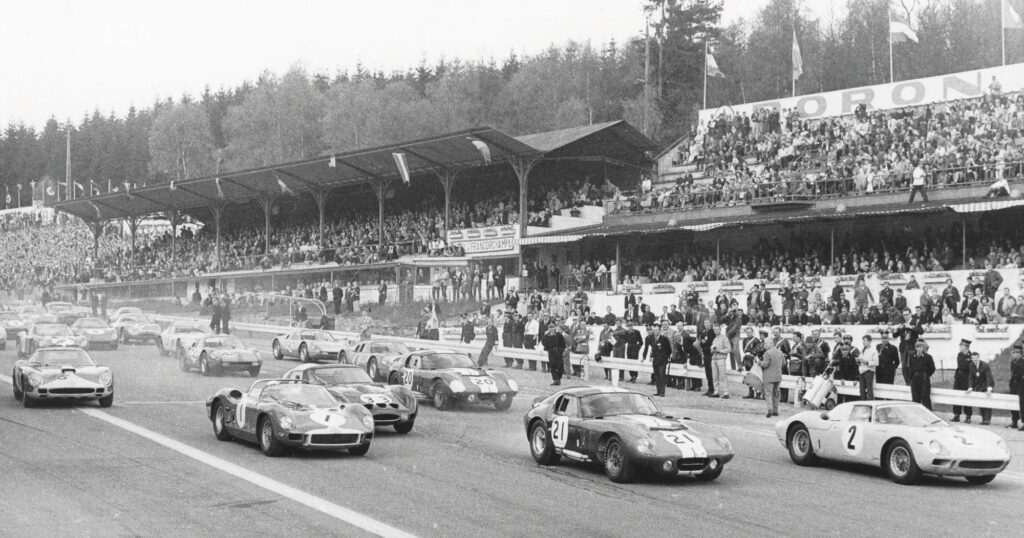
In the meantime, his ambition seemed to have somewhat subsided. He couldn't quite bring himself to accept a new Filipinetti offer at the end of 1966, instead pursuing plans for opening a boat dealership on the Côte d'Azur. However, when „Ecurie Francorchamps“ acquired a very fast car, the Ferrari 412 P, for the 1967 International Championship for Makes, good enough for publicity-generating overall victories, he didn't need to be asked twice. He drove the car together with his compatriot „Beurlys,“ Jean Blaton, who raced under a pseudonym and was later Jacky Ickx's father-in-law. At the 1967 Spa 1000 km, in pouring rain, there was a very exciting duel for the lead between Mairesse and the 17-year-younger Jacky Ickx in a Mirage-Ford. Mairesse also drove with passion, looking masterful for long stretches – then he slid off the track and was lucky to escape unharmed. Shortly afterward, in the 24-hour battle between Ford and Ferrari at Le Mans, he delivered a flawless performance again, fully concentrated, and finished third overall with „Beurlys“ in a Ferrari P 4.
His last start, at Le Mans in 1968, was almost like his entire career in fast-forward. Everything was over within two minutes. After the still-classic Le Mans start, the sprint by the drivers across the finish straight, he was the first in the car. The Ford GT 40, entered by Claude Dubois, which he would share again with „Beurlys,“ started willingly. Mairesse was able to slot in fifth, behind the four factory Porsches. He had apparently already forgotten that the driver's door was not properly closed. In the right-hand turn of the Hunaudières straight, it opened, the Ford quickly went out of control on the wet track, and crashed into trees.
Among other injuries, Willy Mairesse suffered severe head trauma and was in a coma for a long time, but he survived. However, he apparently could no longer cope emotionally with the fact that his racing career was irrevocably over, partly due to subsequent temporary balance disorders. He committed suicide by overdosing on sleeping pills in a hotel in Ostend, where his mother found him dead on September 3, 1969. At that time, his wife Dorine and his two sons were already living separately from him. Some who knew Willy Mairesse well during his lifetime said he lacked a sense of limits, both the physical limits and the limits of his actions. They certified him as insensitive to the dangers of this sport. It remains striking that even after serious crashes, in which he was sometimes severely injured, he showed a lack of learning in this regard until the end of his career. Those who were well-disposed towards him were always ready to explain his behavior as unbridled enthusiasm. „He lived in his own world, do it or die,“ Trevor Taylor called out to the Belgian.
„He was a good driver, but he wanted to become champion too quickly.“
The American Peter Revson, who was also repeatedly a competitor of Mairesse's at Spa, described him thus: „He sat in the car at Spa with a furrowed brow, prominent eyebrows, and eyes that changed color – a bit like the devil himself.“ Willy Mairesse's open, direct manner, however, was popular in many places; he displayed a nearly Italian temperament in his demeanor. As a driver, he derived satisfaction from the moment, not from tactical calculation or the sum of his successes. He was always ready to take on anyone and never concerned himself with whether he would be capable of it.
Willy Mairesse/B
born: October 1, 1928, Momignies/B
died early September 1969, Ostend/B
Significant Motorsport Successes
- 1995
TW: 8th Class Winner Liège-Rome-Liège Rally Peugeot 203
- 1956
Winner's Rally 12 Hours of Huy Peugeot 203
GT: Liège-Rome-Liège Rally Winner Mercedes 300 SL
- 1957
GT: Sieger Grand Prix of Spa Mercedes 300 SL
3. German Grand Prix, Nürburgring, Mercedes 300 SL
- 1958
Winner Rally 12 Hours of Huy Mercedes 300 SL
12 Hours of Reims Ferrari 250 GT LWB
3. „Trophy of Auvergne,“ Clermont-Ferrand
Ferrari 250 GT LWB
- 1959
GT: 2. Tour de France Ferrari 250 GT LWB
TW: 3. Liège-Rome-Liège Rally Renault Dauphine
- 1960
F1WM: 3rd Italian Grand Prix, Monza Ferrari Dino 246
RS: 4. Targa Florio (SWM) Ferrari Testa Rossa TR 60
GT: Tour de France winner Ferrari 250 GT SWB
Winner Grand Prix of Spa Ferrari 250 GT SWB
1000 km Paris, Montlhéry Ferrari 250 GT SWB
- 1961
RS: 2. 24 Hours of Le Mans (SWM) Ferrari 246 SP
1000 km Nürburgring Ferrari TR 61
GT: Tour de France winner Ferrari 250 GT SWB
Winner „Trophée d’Auvergne“, Clermont-Ferrand
Ferrari 250 GT SWB
Sieger Grand Prix de Spa
Ferrari 250 GT SWB
- 1962
F1WM: 4th Italian Grand Prix, Monza Ferrari Type 156
F1: Naples Grand Prix Winner, Ferrari Type 156
Winner Grand Prix Brussels Ferrari Type 156
RS: Winner Targa Florio (GTWM) Ferrari 246 SP
- 1963
Winner 1000 km Nürburgring (GTWM) Ferrari 250 P
2. Targa Florio (GTWM) Ferrari 250 P
GT: Winner Grand Prix of Spa Ferrari 250 GTO 62
- 1964
RS: Winner Grand Prix Angola Ferrari 275 LM
- 1965
Winner Grand Prix of Spa (GTWM) Ferrari 250 LM
12 hours of Reims (GTWM) Ferrari 250 LM
GT: 3. Overall & GT Class Winner 24 Hours of Le Mans (GTWM) Ferrari 275 GTB
8. Mont Ventoux (EBM) Ferrari 250 GTO
TW: 7. Tour de Corse Rally Alfa Romeo GT
- 1966
RS: Winner Targa Florio (MWM) Porsche Carrera 6
1000 km Monza (MWM) Ford GT 40
9. 1000 km Nürburgring (MWM) Ferrari 275 LM
- 1967
RS: 3. 24h Le Mans (MWM) Ferrari 330 P4
- 1968
RS: 7. 1000 km Monza (MWM) Ford GT 40