
First published on curbs-magazin.com
Originally published on curbs-magazin.com – now part of slickpix.de.
Opel Rekord C: Top Secret Mission
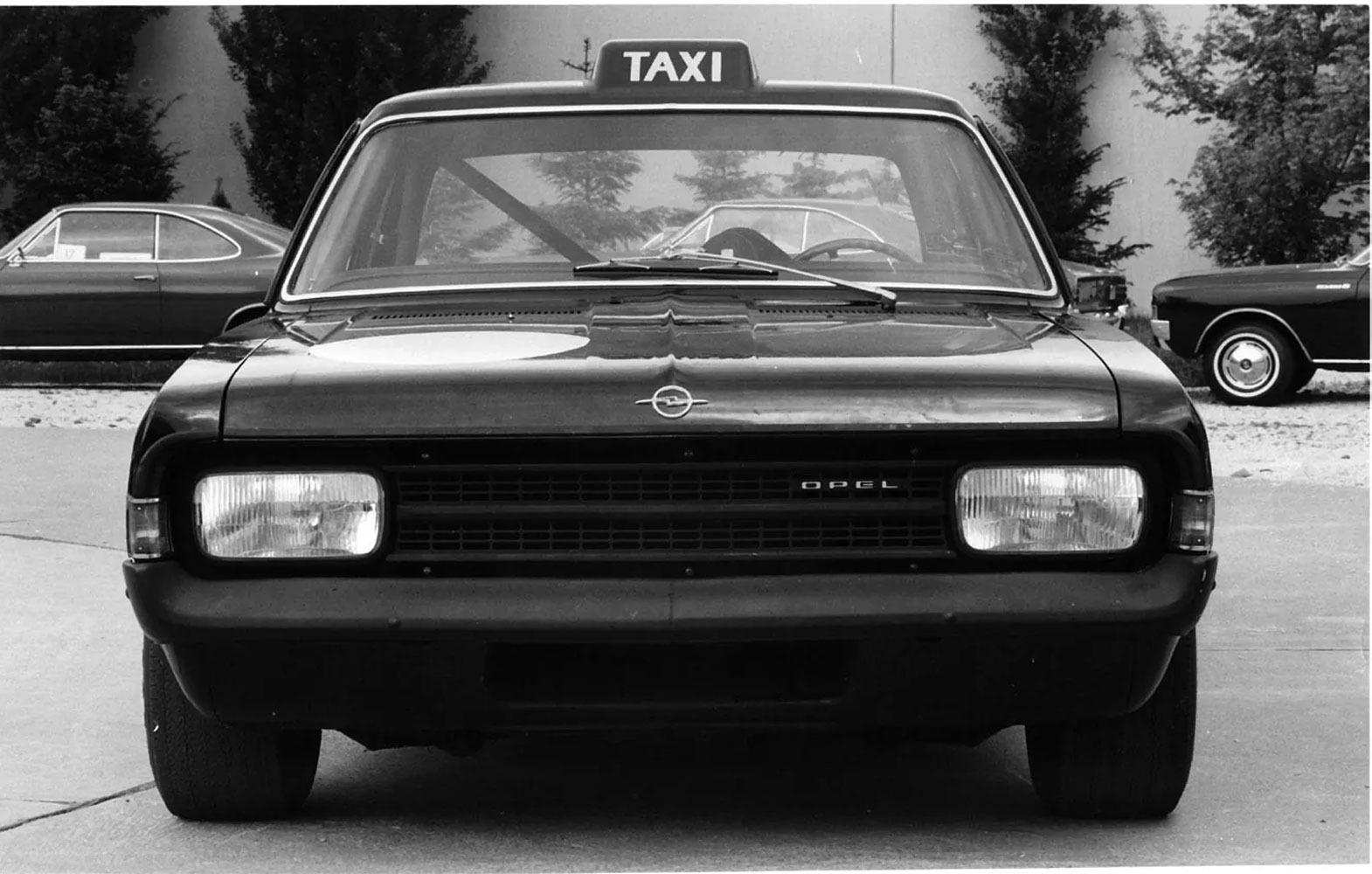
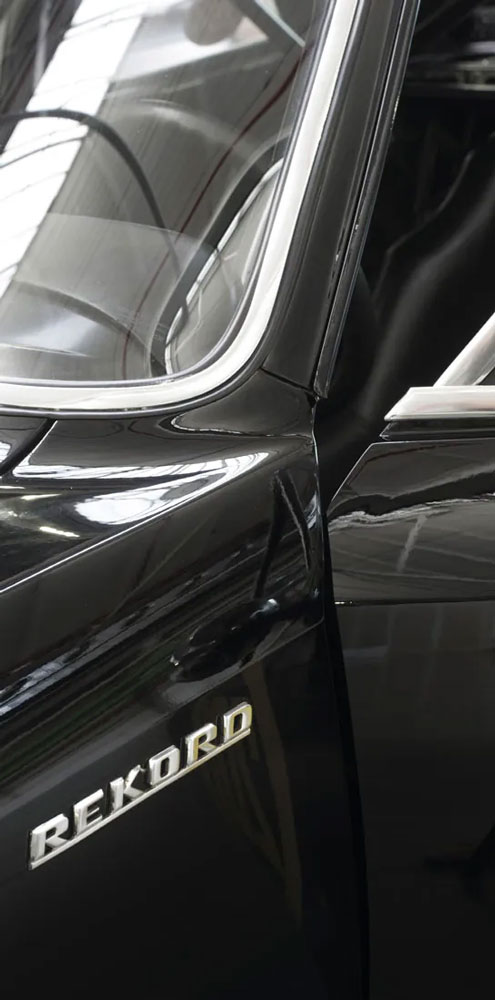
The Opel Rekord C, introduced in August 1966, replaced the Type B. Development of its concept began in 1963. Hans Mersheimer, chief engineer and technical director at Adam Opel AG in Rüsselsheim until 1967, set the guidelines. Due to its characteristic lines with the curves of a lying Coca-Cola bottle at the rear, the Opel Rekord C was also nicknamed the „Coke Bottle.“ This body style followed a new design trend for „muscle cars“ that emerged in the USA in the mid-1960s, known as the „Coke Bottle Shape.“ The Opel GT was also designed according to this principle. General Motors (GM), the parent company, provided the Chevrolet Chevelle as a reference point for the design of the Opel Rekord C. The chassis also featured significant technical changes compared to its predecessor: a longer wheelbase, an improved double wishbone independent front suspension with coil springs and a stabilizer bar. The relatively simple, leaf-sprung rear axle of the Type B was replaced by a „five-link axle.“ This rigid axle, with coil springs, four trailing arms, and the Panhard rod—often referred to as a transverse control arm by Opel—provided significantly more stable handling. This rear axle design was maintained almost unchanged until the end of production of the Opel Rekord E in mid-1986. The „Safety Car“: All models featured a dual-circuit braking system with a brake booster and front disc brakes. Passive safety was significantly improved with a foam-padded dashboard, a telescoping steering column, and effective crumple zones. Three-point seat belts and headrests for the front seats were available at an additional cost. A glare-free round instrument replaced Opel's typical ribbon speedometer („guide color speedometer“). The specialist press praised the stability of the passenger cell in extensive crash tests.
Opel Rekord C – Million Seller, Most Successful Opel Rekord Model in Sales
The Rekord C was available as a two- or four-door sedan, a three- or five-door Caravan station wagon, a three-door delivery van (Caravan without rear side windows), and, starting in January 1967, as a coupé. The coupé has no B-pillar and is therefore considered by many fans to be the most elegant Rekord model. In addition, starting in 1967, for an extra 4,000 marks, the very rare convertible conversion by the bodywork company Karl Deutsch in Cologne was available, based on the two-door Rekord or Commodore sedan, the six-cylinder sibling model. The engine lineup, with displacements ranging from 1.5 liters to 2.2 liters and power outputs between 58 and 106 hp, corresponded in part to that of its predecessor; these were so-called CIH engines with a camshaft in the cylinder head and valve actuation via rocker arms. The 1.5-liter engine initially featured the carburetor from the Rekord A, produced by Opel under license from Carter; starting in 1969, it used a Solex carburetor, as did the new 1.7-liter regular-gasoline engine. The 2.6-liter six-cylinder engine of the old Rekord B L-6, whose basic design dated back to the 1937 Opel Admiral, was no longer part of the lineup; replaced by a newly developed 2.2-liter inline six-cylinder (95 hp), which was no longer offered in the Rekord starting in 1967 with the introduction of the Commodore A. In the Rekord „Sprint,“ available starting in the fall of 1967, the output of the 1.9S engine was increased to 106 hp using two Type 40 DFO downdraft carburetors from the Italian manufacturer Weber and a modified HL (high-performance) cylinder head. The production models were equipped with three-speed (until 1970) or four-speed manual transmissions with steering wheel shifters, as well as center-mounted shifters available as an option; the latter was standard on the coupe. A two-speed Powerglide automatic transmission from General Motors or, optionally, the Olymat semi-automatic (automatic clutch) from Fichtel & Sachs could be ordered upon request. At the end of 1968, a three-speed TH180 automatic from GM’s plant in Strasbourg replaced the technically outdated Powerglide transmission. The Rekord C became the most successful Rekord model; with it, Opel surpassed the one-million sales mark for the first time: 1,274,362 vehicles were built by January 1972. Production of its successor, the Rekord D, began in December 1971. In September 1971, a Rekord C Caravan rolled off the assembly line in Rüsselsheim as the ten-millionth Opel automobile since the start of car production in 1899.
„WE ALSO WANT TO DRIVE ON THE LEFT ON THE HIGHWAY“ - this statement helped the development of the Opel Rekord C
At the time the Opel Rekord C was introduced, General Motors, the parent company, still had a strict ban on factory-sponsored motorsports. Thus, at the end of 1967, the appointment of the then 34-year-old Teufried-Peter Preikschat—until then personal assistant to Opel CEO Ralph Mason—as Opel’s motorsports director, with the mandate to establish an in-house motorsports department, came as a surprise. He started from scratch, but had the support within the company of the motorsports-friendly board member Bob Lutz and the newly staffed press department. Preikschat immediately launched an „Opel Sports Cup,“ explored the feasibility of an „Opel brand race“ with the AvD, and promoted and pushed for the Kadett’s participation in rally competitions. This, too, reflected a growing shift in thinking at Opel. „We want to drive on the left side of the highway, too,“ said Hans Mersheimer, the executive in charge of technology—a proponent and one of the pioneers of sportier models—summing up a new corporate philosophy. At that time, however, a completely different project had been launched elsewhere in the company under the strictest secrecy. And it is largely thanks to Jens Cooper—who began his apprenticeship at Opel in 1983 and is now the „heart and soul“ of the Opel Classic Team’s workshop—that the history of this once-secret car can now be described in greater detail. „It all started with a collection of photos,“ Cooper explains. „And then I spoke with people who were involved at the time; it must have started in 1967, when the then-GM designer Anatole Lapine—who later also worked for Porsche—was sent to Rüsselsheim as part of a four-year “Overseas Division„ assignment.“ Lapine had previously worked with Larry Shinoda, the designer of „the most beautiful Corvette Stingray.“ Zora Arkus-Duntov, who had significantly influenced the development of several Corvette generations since 1953, served as Lapine’s mentor during this time. Arkus-Duntov and Shinoda were also passionate motorsports fans; for instance, Arkus-Duntov had competed in the famous Pikes Peak Hill Climb in the mid-1950s in a Chevrolet Bel Air, while Shinoda had also enjoyed success in the hot rod scene. „There were three gentlemen who came together,“ says Jens Cooper, “who were not only highly skilled designers but also understood a great deal about a car’s performance. They also knew exactly how to build an excellent chassis and what else was needed to make production vehicles competitively faster. At the time, they worked together in the so-called, particularly well-hidden Studio X in a basement in Warren, Michigan, near Detroit—a place not everyone was allowed to enter and where, for example, the Monza GT was developed.”
„Opel didn't want to engage in motorsport from the factory, but they didn't hold back the dedicated crew.“
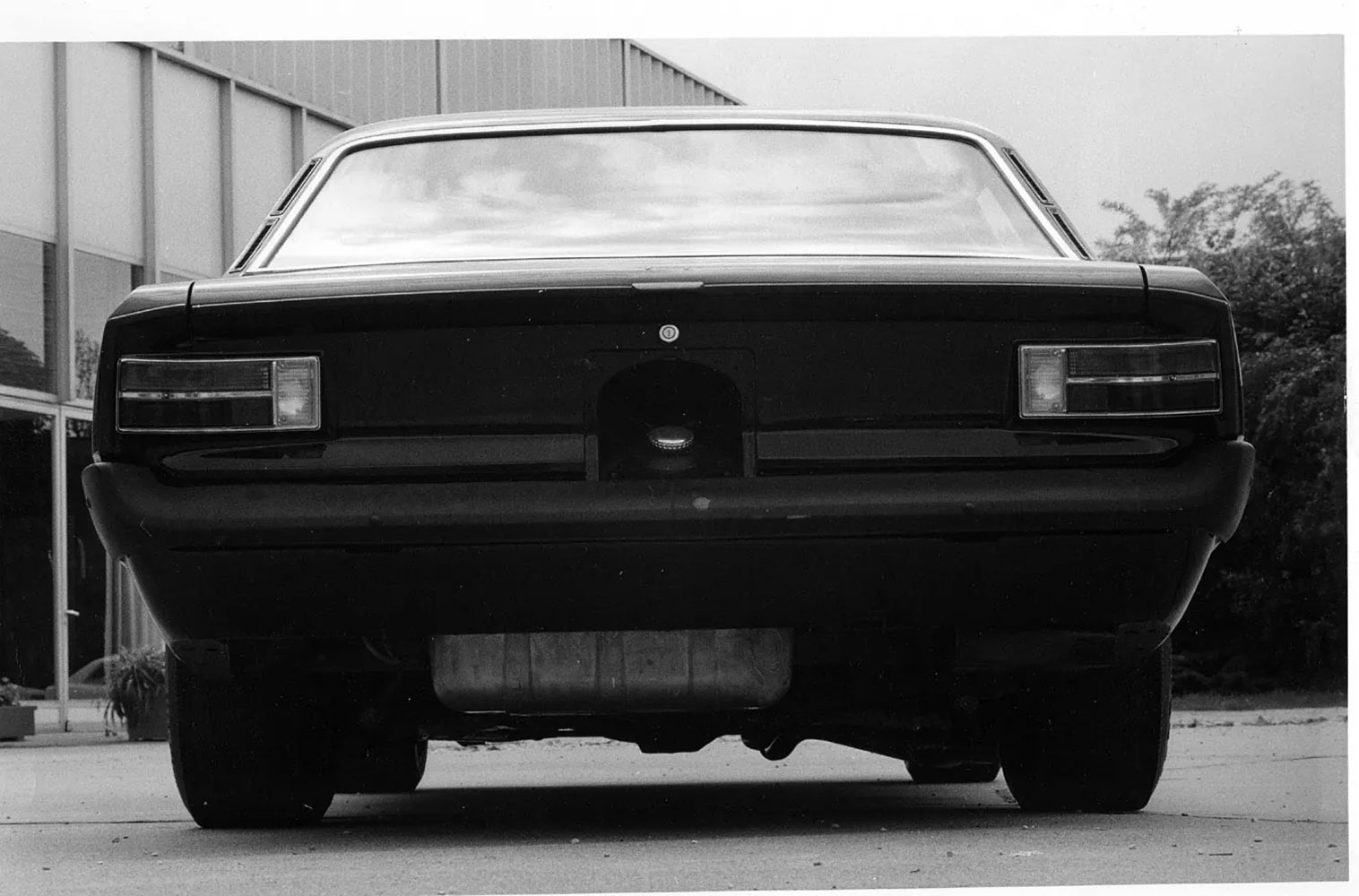
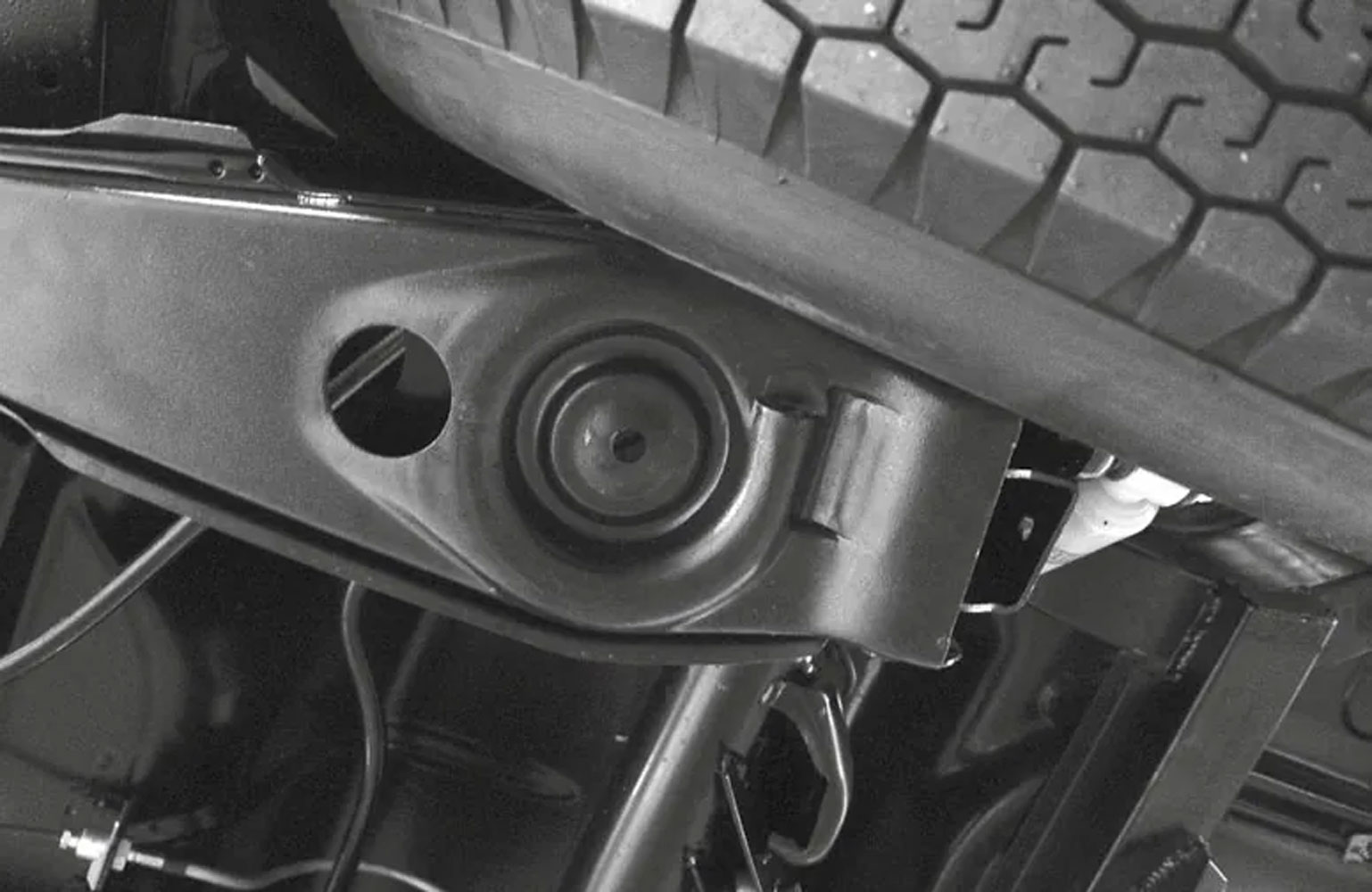
Anatol Lapine was brimming with ideas and knew exactly how to assemble the right team at the Research Studio in Rüsselsheim when the task at hand was, among other things, to put a particularly hot Opel Rekord C on the road. The team included Manfred Rumpel and Klaus Weichsler in leadership roles, as well as Richard Söderberg and Hans-Peter Plottnikov for design and engineering. „And what is hardly known,“ Jens Cooper explains, „is that Opel engineer Dieter Herr built the engine, contrary to official Opel press releases of the time, which attributed this to the Swede Ragnar Eklund, since Opel did not want to engage in motorsports at the factory level. However, the decision-makers at Opel at the time did not stand in the way of this dedicated crew either. At the Research Studio, they were constantly working on aerodynamics, chassis, and everything related to sportiness. It was a very special test department where research was also conducted.“ The very special Opel Rekord C was then built according to the Group 5 regulations for touring cars in effect at the time. Dieter Herr took on the 1.9-liter HL engine from the Rekord Sprint, part of the new CIH (camshaft-in-head) engine generation, and boosted the four-cylinder’s output from the standard 106 hp to approximately 170 hp. „One mustn’t forget,“ adds Jens Cooper, „at that time, there were no aftermarket tuning parts available for this engine on the market. All components, such as the intake manifold, exhaust manifold, or air intake to the carburetor, had to be custom-made from scratch. That marked the birth of an extremely successful Opel engine that went on to achieve countless victories, culminating in the 2.4-liter engine in the Opel Frontera. This CIH engine was also installed in the Rallye Kadett, Opel GT, Rekord D, Ascona A, Manta A, and Kadett C. It became the basis for many later Opel sports engines and their successes.“ „This engine, combined with the heavily revised rear-axle suspension, is what defined this car,“ Jens Cooper continues. „They also did an excellent job of giving the car a play-free rear axle. A subframe was welded in there with considerable effort; from this, a triangular structure meets another triangular structure installed from the rear axle in the middle. Thanks to a fixed suspension travel, this car produces hardly any body roll in the corners. To position the subframe in that spot, the fuel tank had to be rotated 180 degrees and cut out in the subframe area. It still fascinates me today when I drive this car; the difference in handling compared to the production vehicle is quite striking. The rear axle linkage was later replaced by the somewhat simpler Watt’s linkage.“ Up front, the car stood—or rather, stands—on eight-inch-wide steel rims, and in the rear on nine-inch-wide ones. „To make it possible for the wide wheels to fit at all—in the production model they were only half as wide—the lower control arms also had to be modified.“ In addition, the four-speed transmission and clutch were reinforced.
The team around Anatole Lapine had also dealt with aerodynamics and „pressure points on the car“ early on. „They noticed that a kind of back pressure formed below the windshield and, through a modified air collector, managed to draw the air for the carburetor from below the windshield through the air vents.“
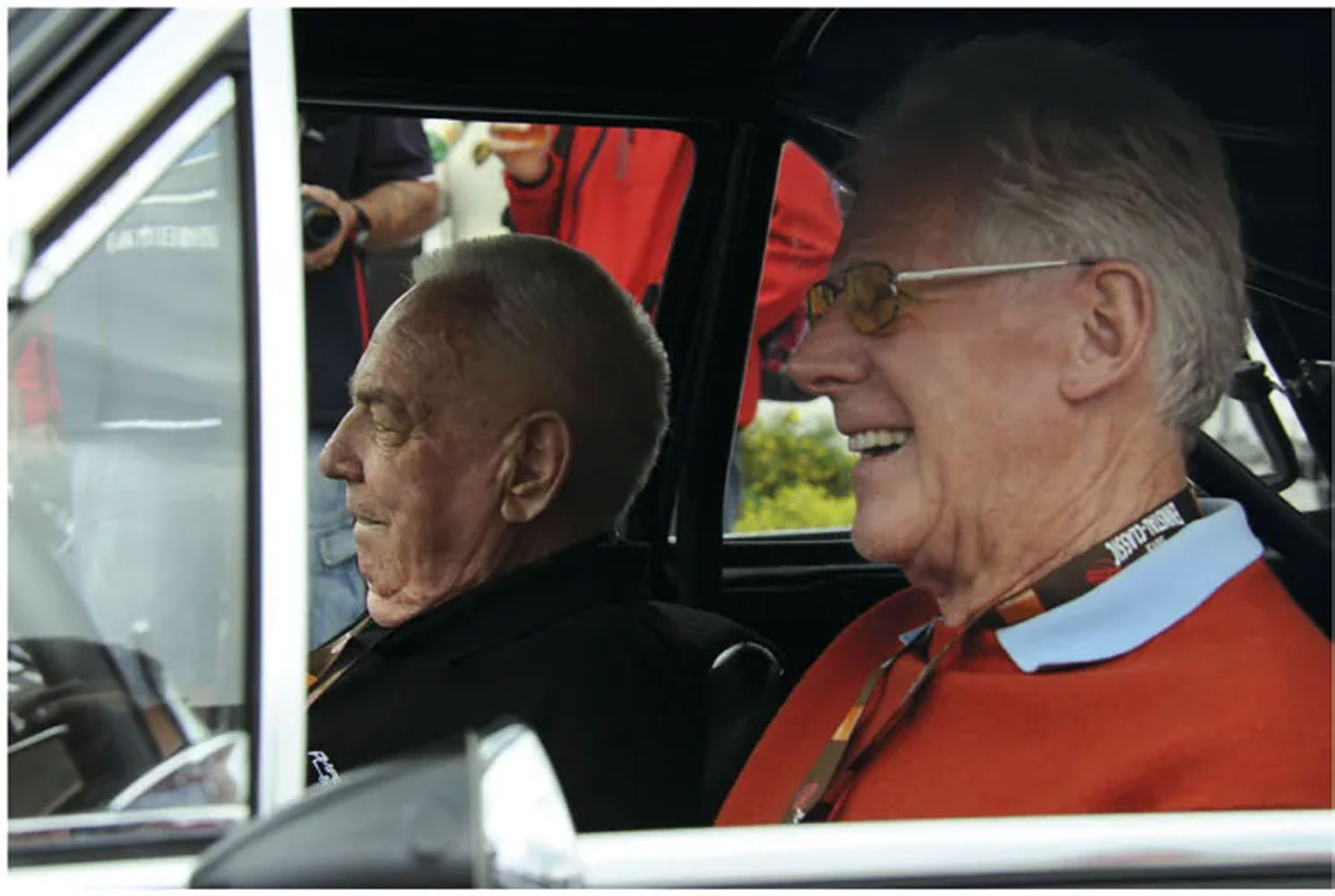
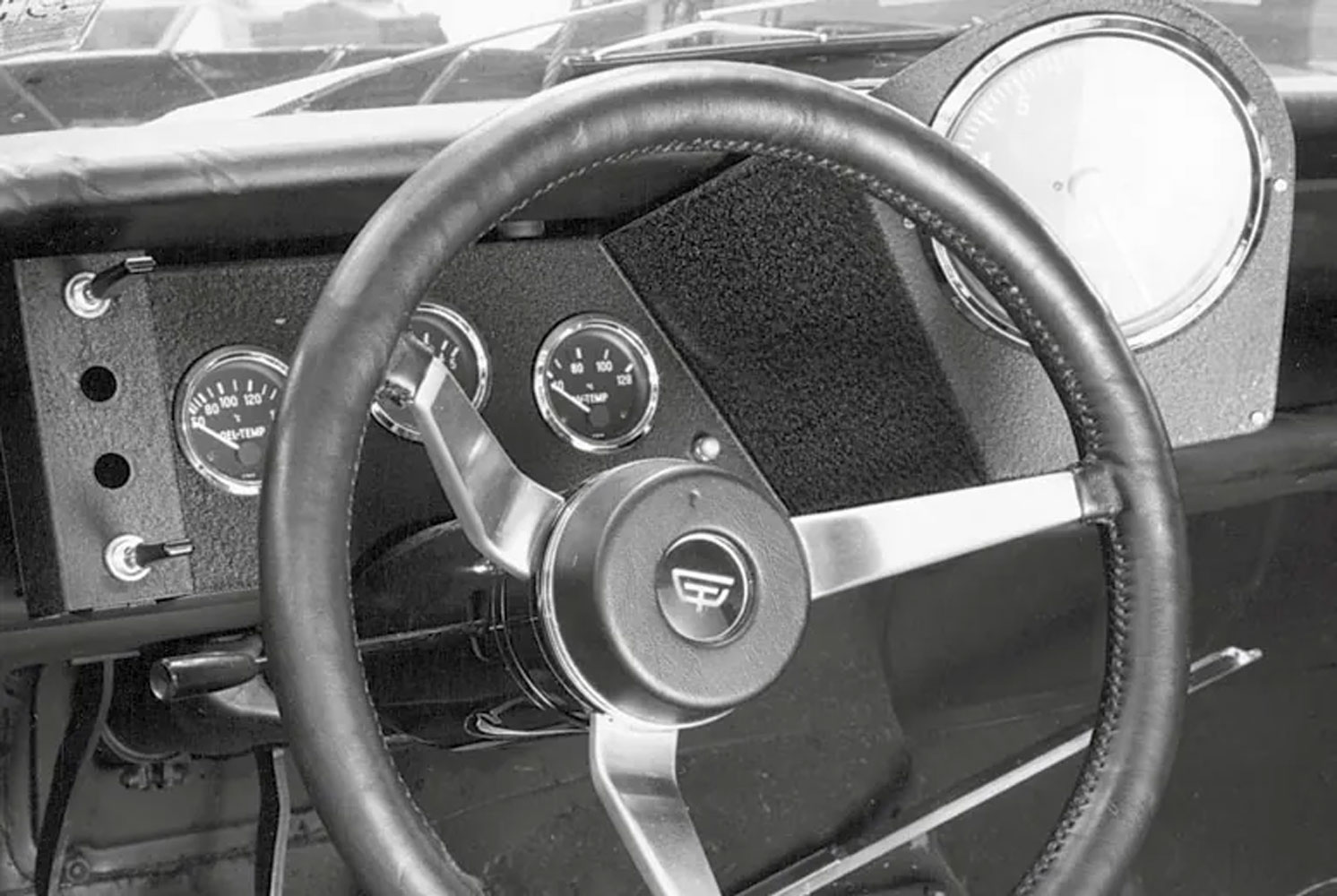
Suddenly, racing sounds accompanied the dealer presentation of the Opel GT – the Opel Rekord C made a surprise appearance!
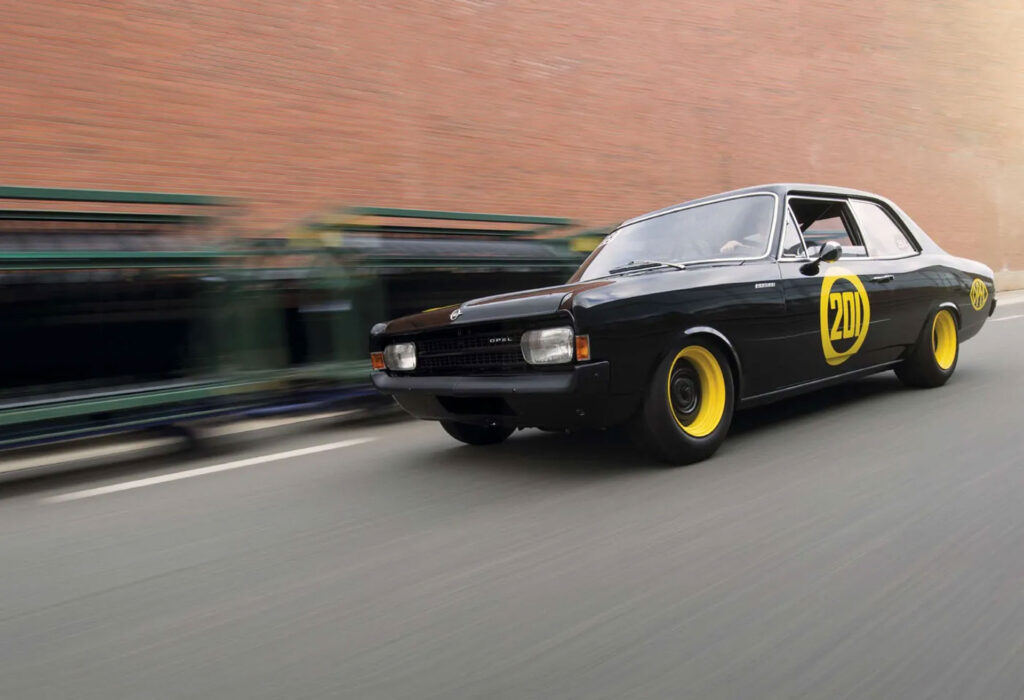
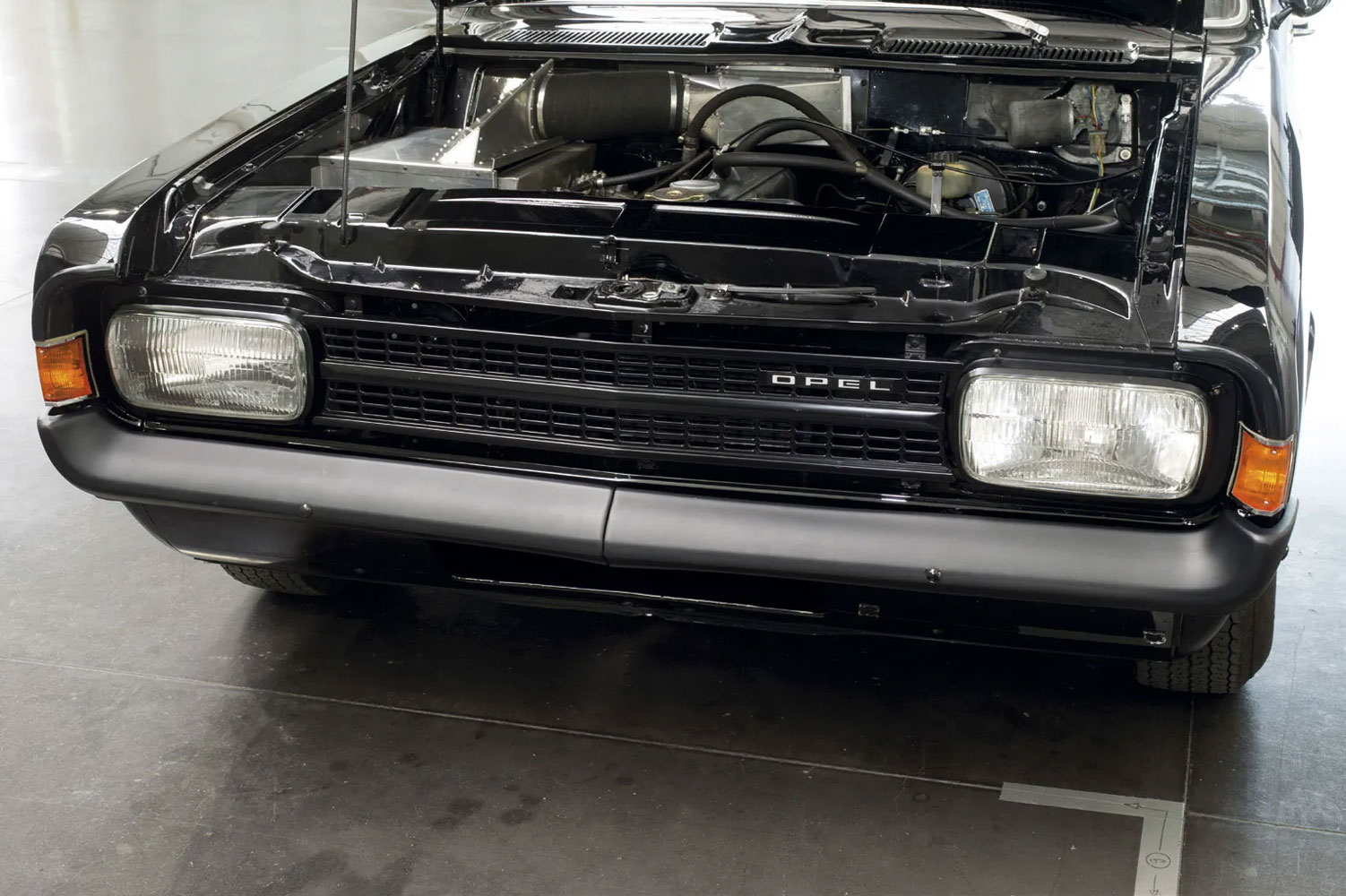
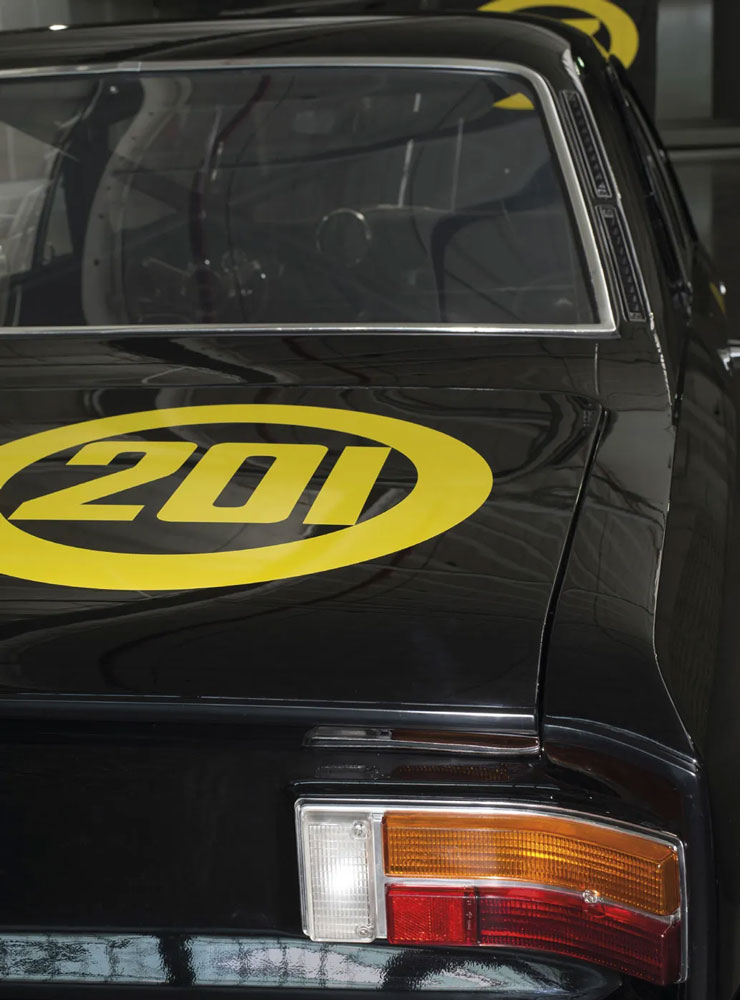
Although Opel had announced just a short time earlier that the company would not be involved in motorsports at the factory level, the presentation of the new Opel GT at what was then Germany’s largest dealer event in Hockenheim in the fall of 1968 was suddenly accompanied by the roar of this black-painted Opel Rekord C, dubbed the „Black Widow“ by Lapine, which was completing its first laps there for carburetor tuning—to the incredulous amazement of the journalists and dealers in attendance. Signor Barbandi from the carburetor manufacturer Weber had also traveled from Italy specifically for the occasion. In its public image, however, Opel remained true to its strategy; during its first race appearances in 1968, the car was entered by a „Wiesbaden-based building contractor.“ „Anatole Lapine even feared losing his job at the time,“ Jens Cooper also notes. At Zolder in September and at the season finale in Hockenheim in December 1968, during the car’s first race appearances, Erich Bitter—then the Abarth importer and a successful race driver in various categories—sat behind the wheel. He attested that the car offered good handling, minimal body roll, and that the engine had „real power.“ He put on a particularly good show at the Hockenheim season finale, initially leading the field after the start, ending up off the track after an overtaking maneuver, and fighting his way back to a mid-pack finish despite the setback. But then it apparently became too much for the Opel board, which feared—not least vis-à-vis Detroit—that it could no longer keep the cover-up going—the „Black Widow“ had to go. Sports director Teufried-Peter Preikschat gave it away, without an engine, to the Viennese Formula V constructor Kurt Bergmann, who also owned an Opel repair shop. He installed his own twin-carburetor engine in the car and entered it once more in 1969, with the young Niki Lauda behind the wheel, at the airfield race in Tulln-Langenlebarn. Lauda started from the fourth row, but botched the start and later retired from the race. After that, the „Black Widow“ disappeared one day without a trace from Kurt Bergmann’s premises, never to be seen again.
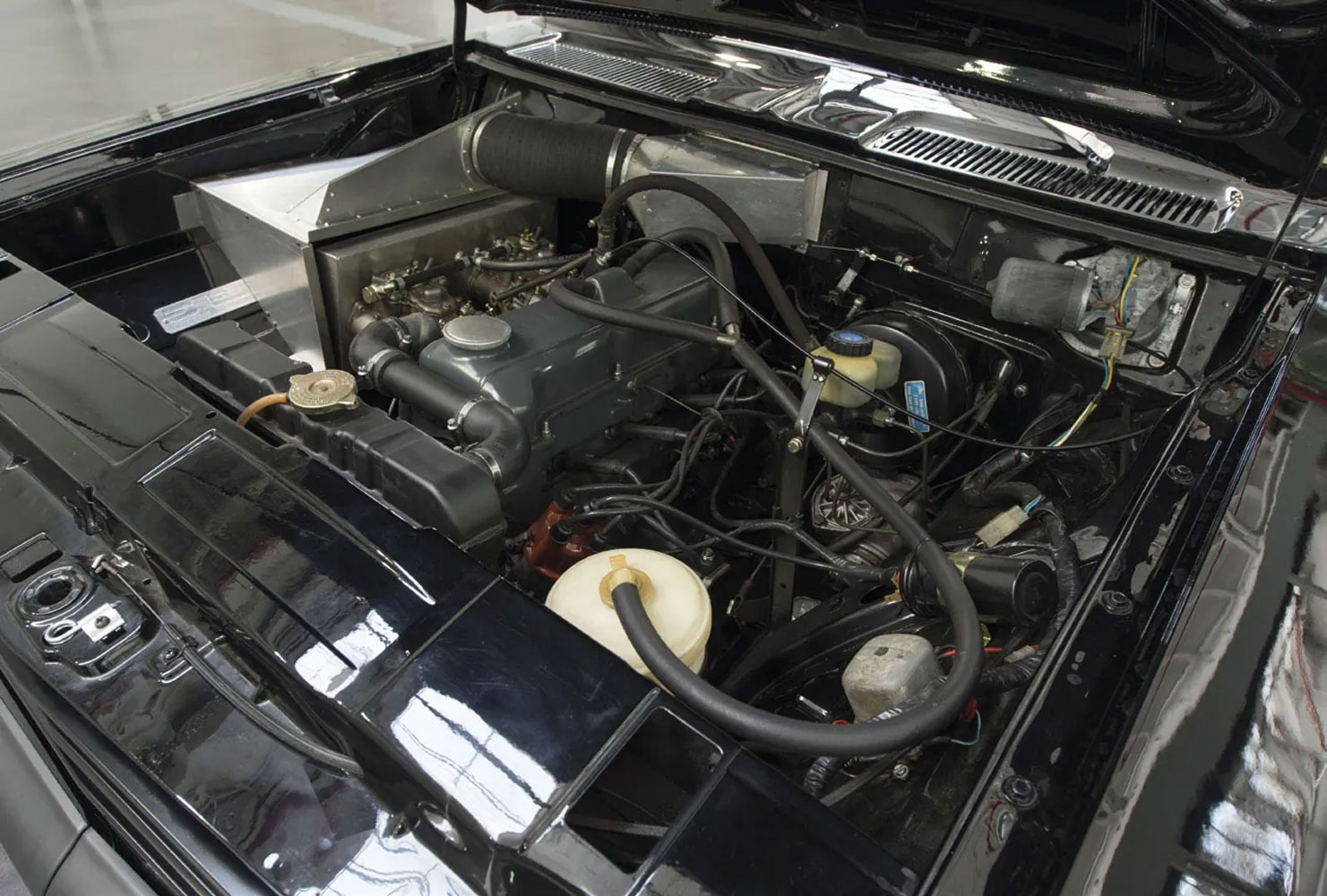
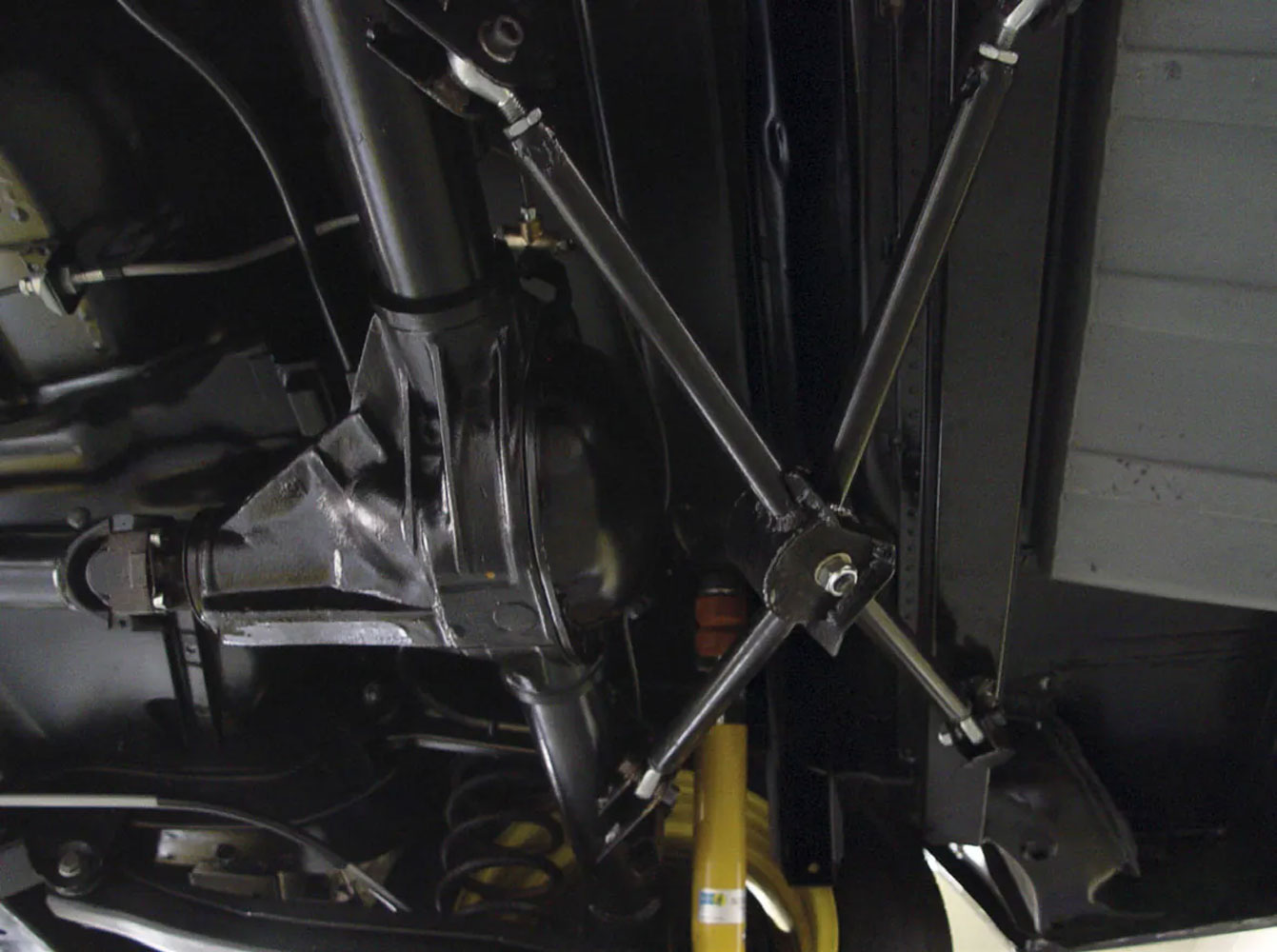
„The rear axle design was once again recorded on a „Meals on Wheels“ menu.“
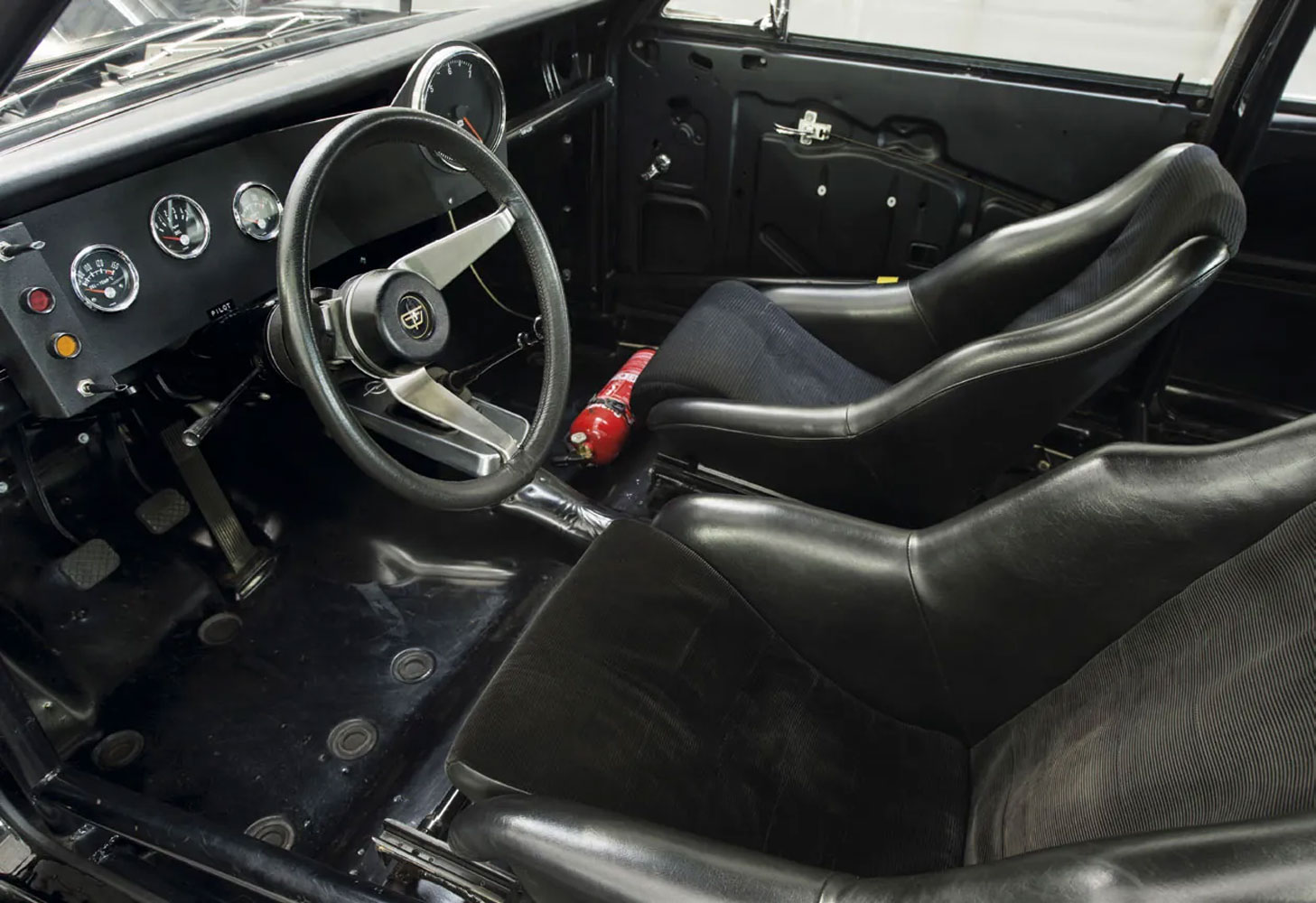
Jens Cooper always dreamed of restoring this special Opel Rekord C one day. In 2011, he and his Opel Classic Team colleague Michael Splieth started the work after they were able to buy an almost rust-free Rekord C from the „Black Widow“ model year near the Spanish border. „However, since the ‚Black Widow‘ was developed alongside other projects at the time, there were pictures but hardly any documents or records of its interior, especially the construction of the special rear axle remained unclear at first,“ says Jens Cooper. „That's why I also visited Anatole Lapine, who was living in Baden-Baden at the time. The conversations with him closed quite a few knowledge gaps, and he even sketched the rear axle construction on the back of a ‚Meals on Wheels‘ menu.“ Cooper and Splieth were then able to rebuild the car exactly in all its details. However, Anatole Lapine did not live to see the completion again; he passed away in 2012 at the age of 81. Today, the „Black Widow“ officially belongs to Opel's history and is no longer hidden. On the contrary, even Opel CEO Dr. Karl-Thomas Neumann himself occasionally enjoys driving the rebuilt car at classic car events.