
First published on curbs-magazin.com
Originally published on curbs-magazin.com – now part of slickpix.de.
Lola, not everyone associates that name with feminine beauty. For motorsport connoisseurs, it immediately brings to mind the traditional British brand that caused a sensation on the racetrack in almost all classes, including with the Lola LMP2. Eric Broadley, born on September 22, 1928, discovered his passion for racing in the 1950s. As a member of the «750 Motor Club,» he met like-minded individuals such as Colin Chapman and Brian Hart. Like Colin Chapman, the trained architect built successful race cars on a small budget in the post-war era. As with Chapman, Broadley's first construction was more of a conversion than a completely new design. The first Lola, or perhaps «the first Lola,» was built in 1957 based on a Ford C. Whether it was masculine or feminine, scholars still debate today. In any case, Eric Broadley liked the song «Whatever Lola wants, Lola gets...» from the musical "Damn Yankees," and the company name was found. Broadley immediately won several national races with his design, which inspired Eric Broadley to build the first purebred sports car, the Lola MK1. Climax engine, aluminum body, about 400 kilograms weight – these were the key specifications that led to success. In total, Lola Cars built 26 Lola MK1s for customers who achieved success in motorsport with them. After that, Broadley ventured directly into building his first formula car. A front-engined Formula Junior was created, but it was replaced by a mid-engined concept the following year.
The Rapid Rise of Lola: How the LOLA LMP2 Was Born
The rapid rise of the Lola brand brought Eric Broadley into Formula 1 as early as 1962 with the Lola Mk4, John Surtees, and Roy Salvadori. However, the customer team «Yeoman-Credit-Team,» which deployed the Lola vehicles, was not financially sound, and Lola disappeared from Formula 1 for the time being at the end of the year. Yet, at the debut of the Lola Mk4, John Surtees was directly on pole position at Zandvoort. After that, the name «Lola» was an indispensable part of motorsport. From sports cars, one immediately thinks of the classics Lola T70 with its powerful Chevrolet engine or the small 2-liter Lola T210, to IndyCars, Formula 3, Formula 2, Formula 3000, Group C and later Formula 1 as well, the «Lola» brand was present everywhere. For example, in 1974, Eric Broadley built the Formula 1 car for World Champion Graham Hill's «Embassy Hill Team,» the Lola T370. In the 80s and 90s, Lola was represented in Formula 1 with the «Larrousse» and «BMS Scuderia Italia» teams. Unfortunately, there wasn't much success, and Broadley ventured into Formula 1 again in the late 90s with his own team. However, unfortunately, this underfunded adventure failed definitively after just one race, marking the end of Lola Cars for the time being.
The New Beginning with the Lola LMP2 I
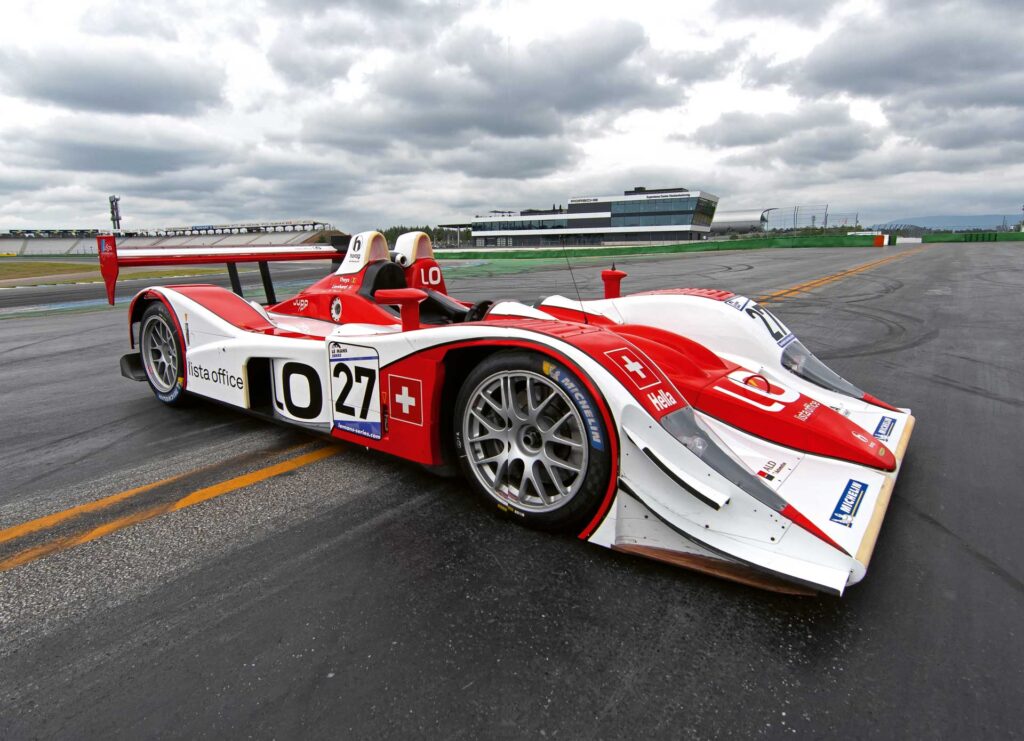
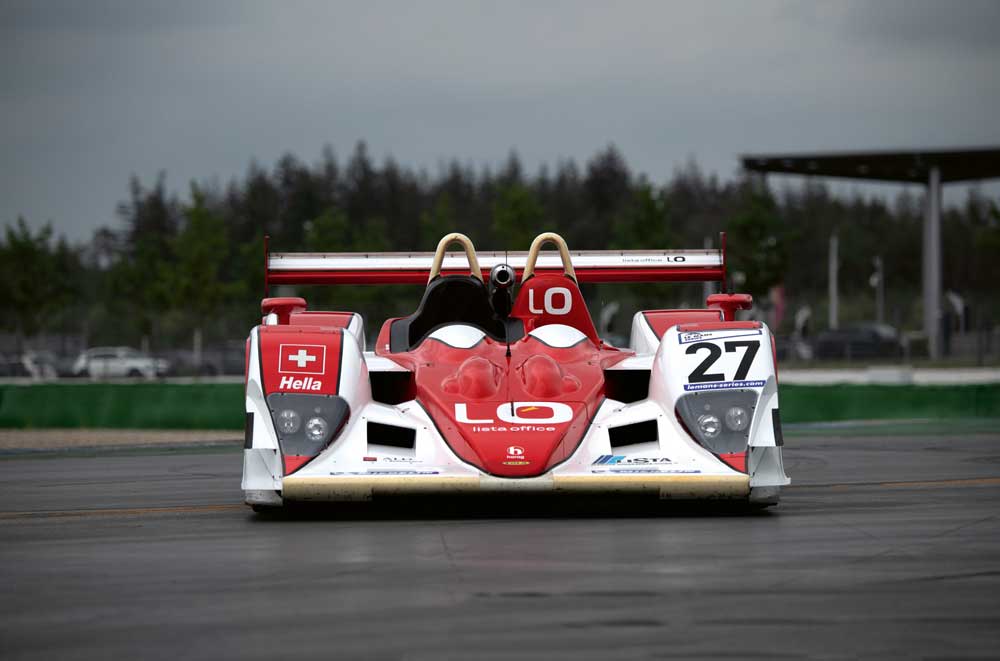
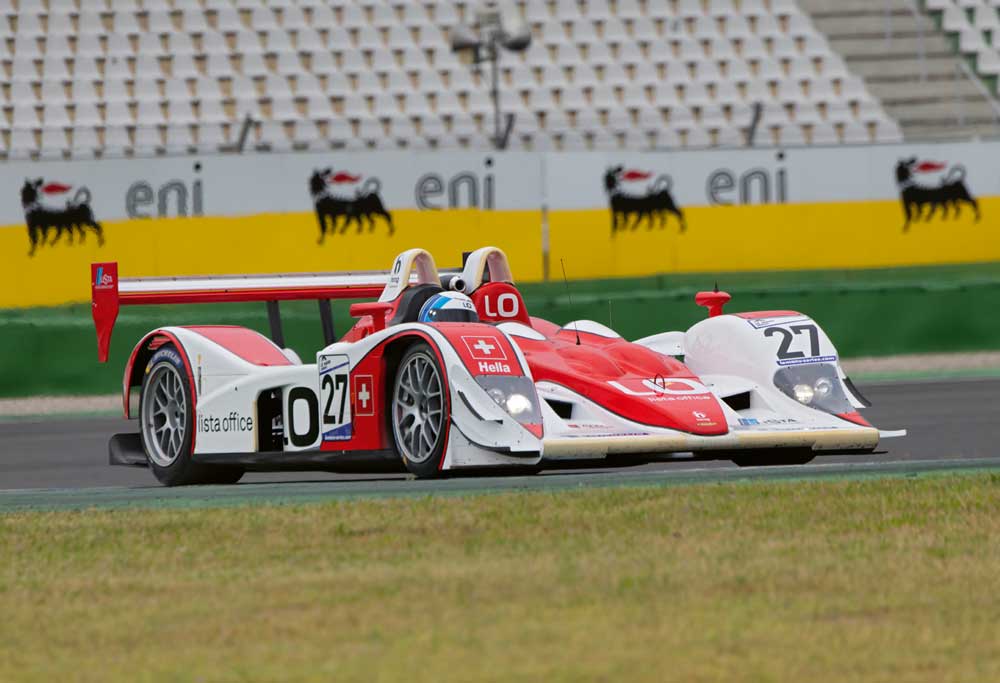
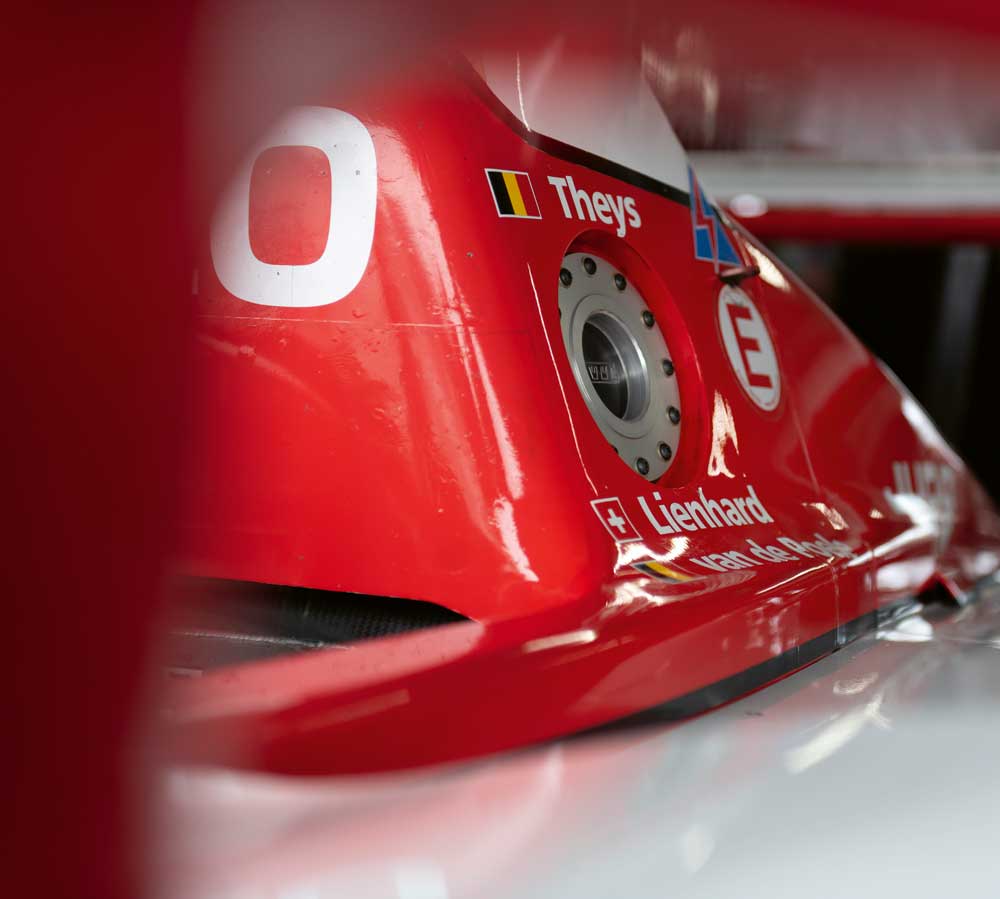
However, Irish racing driver and businessman Martin Birrane bought Lola out of bankruptcy and revived the success story. From then on, Lola focused on affordable but fast sports cars for Le Mans and the American market. Customer teams quickly reappeared, trusting the Lola brand. In the «675» and later «LMP2» classes, Lola was a competitive car and could even hold its own against stronger «LMP1» cars, such as the Audi R8 LMP1, on one track or another. Rob Dyson's team, for example, achieved great success in the «American Le Mans Series.» In Europe, Fredy Lienhard acquired a Lola B40/5 with a Judd V8 engine and first competed in July 2005 in Monza in the «European Le Mans Series.» Four weeks later, they finished fourth in the LMP2 class in Silverstone. At the US classic, the «Petit Le Mans» in 2006 in Atlanta, Fredy Lienhard/Didier Theys/Eric van de Poele stood on the podium in third place, behind the two Penske-Porsche Spyders. Back in Europe, Fredy Lienhard, with the Swiss «Horag Team,» immediately won the 2007 season opener in Monza, Italy, in the European Le Mans Series in the LMP2 class. In Spa-Francorchamps, they were on the podium again with a third-place finish. Unfortunately, there were also some technical failures.
Expect the unexpected.
The purchase of the Lola was Fredy Lienhard totally unplanned. On a trip to England with Horag team boss Markus Hotz, everything happened quite unexpectedly. Markus Hotz suggested driving past Lola Cars and dropping in for a look. Since Lola Cars were also known to Fredy in Europe and the USA, and Lola built the car to be customer-friendly with the option to install various powertrains, Lienhard decided on the Judd V8 engine with 3.4 liters displacement, which produced approximately 540 hp and transmitted power via a sequential 6-speed gearbox. Shifting was done via a «pedal system» on the steering wheel. The entire system was braked by carbon fiber brake discs from «AP» at the front and rear. The front and rear axles consist of double wishbones, top and bottom. The Öhlins shock absorbers, mounted on the monocoque and gearbox, are operated by a «push-rod» system. Due to regulations, the «B05/40» weighed 750 kg, making it a favorite spoiler here and there. At Le Mans, the «little one» achieved a top speed of approximately 320 km/h. With its aerodynamics, the Lola offers its driver balanced handling. The front has a longer overhang to generate sufficient «grip» at the front axle. In contrast, the rear is quite short, generating sufficient downforce on the rear axle through its rear wing and underbody. Some of these cars can nowadays be found competing in historical events at «Peter« or in the »Masters Series.« Fredy Lienhard still owns the "B05/40" today and occasionally takes it out for a proper run on race tracks.Incidentally, Lola went into insolvency again in 2012 and was acquired by Till Bechtolsheimer in 2022; a new start in Formula E is planned for 2025. Hopefully, successful again, because tradition demands it...