
First published on curbs-magazin.com
Originally published on curbs-magazin.com – now part of slickpix.de.
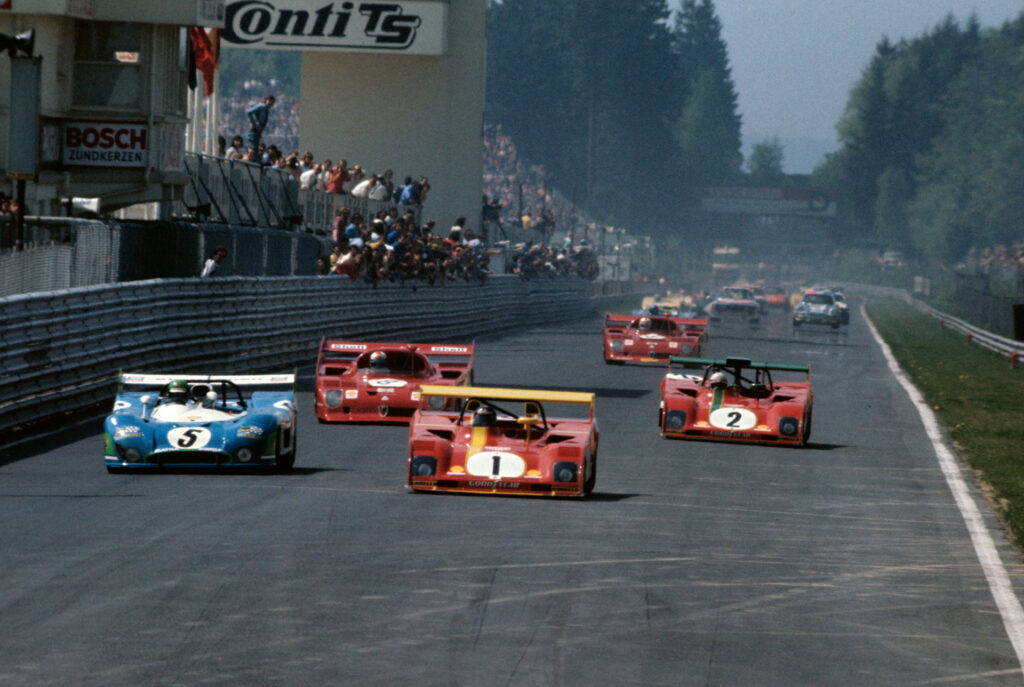
„Ferrari races in Formula 1“ - that's as certain as death and taxes. Since its inception, the Formula 1 World Championship has been Ferrari's most important playground. Until 50 years ago, that wasn't its only playground: participation in the Sports Car World Championship and at Le Mans held almost the same significance for Enzo Ferrari. After that, apart from tolerated appearances with the Ferrari 512 BB and the 333 SP sports prototype, Maranello strictly stayed away from Le Mans. On the occasion of Ferrari's return and victory at Le Mans in 2023, we take a look back at their last successful streak: with the Ferrari 312PB, the Scuderia dominated the Sports Car World Championship from 1971 to 1973.
Future 3-liter in the Ferrari 312PB
The world of endurance racing was on the brink of a major upheaval. In 1970, the sporting commission of the world motorsport governing body, FISA (Fédération Internationale du Sport Automobile), announced new regulations effective from the 1972 season. The change was drastic and marked the end of the era for cars like the Porsche 917, Ferrari 512S, or Lola T70 after the 1971 season. Group 5 sports cars previously had to be built in a minimum quantity of 25 units. Their engines were limited to a maximum displacement of 5 liters. Group 6 sports prototypes were restricted to 3 liters, mandated a minimum weight of 650 kg, and had no minimum production requirement for manufacturers. With the regulatory change, Group 5 sports cars with their large-displacement engines were eliminated. The regulations for Group 6 prototypes remained largely the same. The former Group 6 was now renamed Group 5.
This change in regulations played into the hands of manufacturers whose sports prototypes were already running with 3-liter engines, or who had a mature power unit on the shelf. In 1970, it became clear that Matra, Alfa Romeo, and Ferrari would be the major rivals in the future. Porsche was in a poor position because they had put all their eggs in the Porsche 917 in Group 5. Ferrari then dropped their Group 5 car, the 512S, like a hot potato. In Maranello, they were far-sighted enough to consistently prepare for 1972.
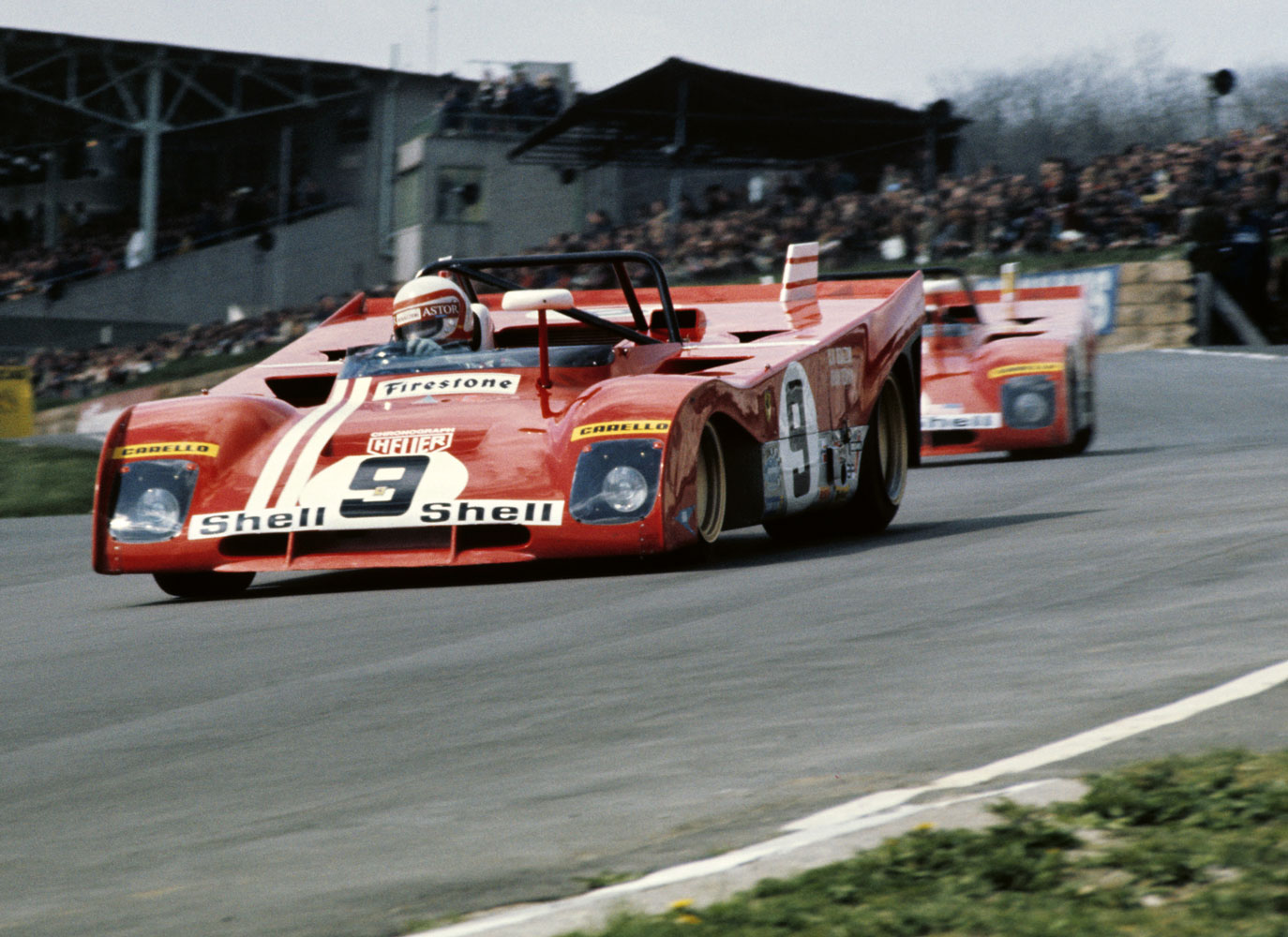
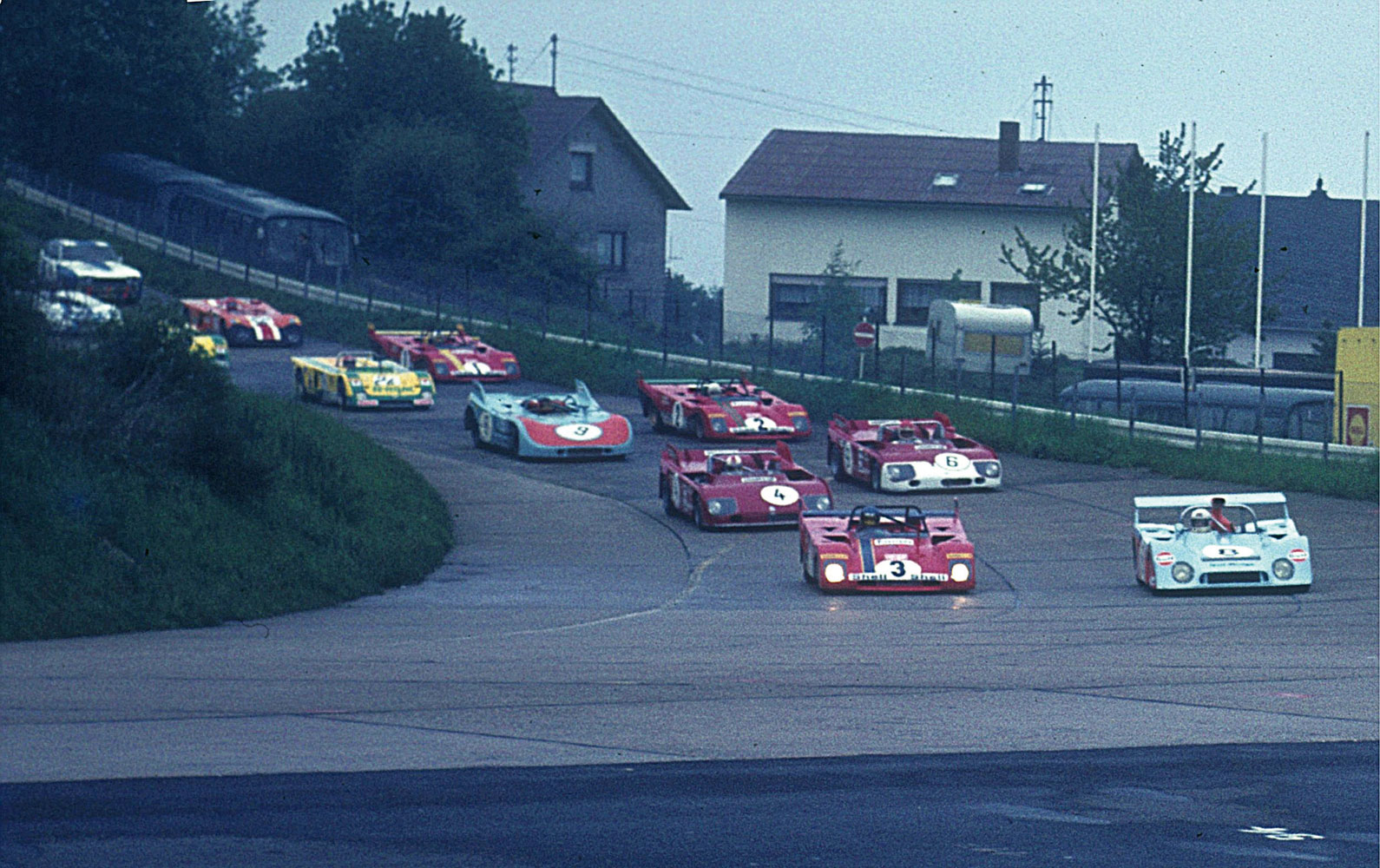
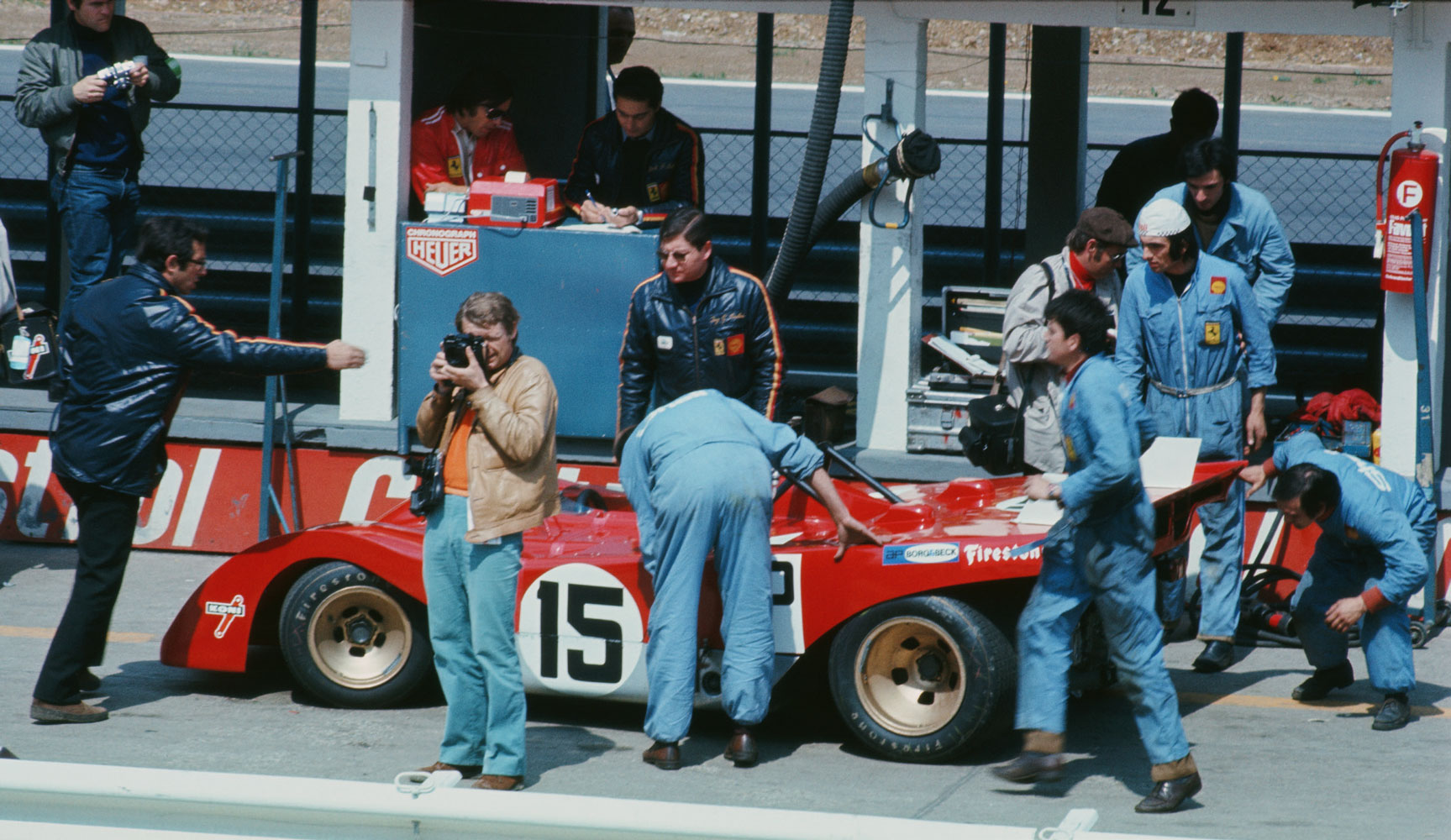
Ferrari 312PB – Formula 1 in a long coat
They fell back on the chassis of the 1969 Ferrari 312 P. Visually a feast for the eyes, but rather half-heartedly developed for the 1969 season. The outings were just as half-hearted, because at the end of the 1960s, budgets at Ferrari were very tight, and the focus suddenly shifted to the 512S in order to offer a match for the Porsche 917. Over the course of 1970, the aluminum chassis was developed by Giacomo Caliri for the new Ferrari 312PB. The wheelbase was only 2220 cm compared to the original 312 P. The two-part fiberglass body. Opinions are divided on its shape. Some find it unadornedly beautiful, while others consider it uninspired. Many parts of the suspension were taken from the Formula 1 racing car of the time. The total weight was 650 kg, meeting the minimum weight requirement.
However, the biggest difference lies in the engine. The 1969 Ferrari 312 P used the well-known V-12 engine. Mauro Forghieri, who became Technical Director of Scuderia Ferrari in 1970, proposed using the Formula 1 engine from the Ferrari 312 B. The angle of the cylinder banks was now 180°, making it resemble a boxer engine. This engine allowed the center of gravity of the 312 P to be significantly lowered, which had a considerable impact on cornering stability. To ensure the necessary durability, the maximum engine speed was reduced from 12,500 rpm to 10,500 rpm. Dry-sump lubrication, Lucas fuel injection, and dual overhead camshafts were largely adopted. The engine produced 450 hp, slightly less than the Formula 1 version.
Ferrari 312 P or Ferrari 312PB?
Several designations and interpretations are circulating for the small sports prototype with which Ferrari competed in the World Championship. A distinction must be made between the official nomenclature from Ferrari, that of the contemporary press, and current usage. The number 312 is derived as follows: 3 stands for 3 liters of displacement and 12 stands for 12 cylinders. The letter P stood for Prototype, in contrast to S for the Ferrari 512S sports car, which was built in 25 examples. The letter B was often used at Ferrari for a second version, similar to the designation Mk. II. Even at that time, the designation Ferrari 312PB was used and has persisted to this day. It should be noted that PB was never an official designation. Ferrari indicates on its website today as follows: „The new 1971 version of the sports prototype came with a flat 12-cylinder boxer engine. Often, a B was added after the model designation 312 P to indicate the engine type. However, this version of the model designation was never officially confirmed by Ferrari.“
The designation PB can rather serve as a mnemonic for when the 12-cylinder boxer engine was used. And that was from 1971. Using the B to refer to a further development between 1969 and 1971 is not appropriate because they are two different cars. In this article, we will also use the unofficial designation Ferrari 312PB for the years 1971 to 1973.
1971 – A Year to Forget for Ferrari?
It was the final year for the spectacular Group 5 sports cars. The Porsche 917s continued to set the pace. The only car that could somewhat match the Porsche the previous year was the Ferrari 512S. Ferrari had sold these to private teams over the winter. Alfa Romeo continued on its chosen path with the T33/3. The ongoing duel of this season was: Group 5 versus Group 6, sports cars versus sports prototypes, 5-liter engines versus 3-liter engines. Scuderia Ferrari entered the 1971 season well-prepared. The switch to a „small“ 3-liter sports prototype caused a great sensation, and all eyes were on the new Ferrari 312PB. Matra was also in the spotlight. After their engines had failed one after another at Le Mans the previous year, they had withdrawn for the rest of the season. The French also wanted to show in 1971 with their MS660 that they were to be reckoned with in the future. Arturo Merzario and Ignazio Giunti were named as drivers for the 312PB's first race and surprised the competition with second place on the grid, behind the Gulf-Porsche 917K driven by Pedro Rodriguez and Jackie Oliver. However, the race was overshadowed by the fatal accident of Ignazio Giunti.
Jean-Pierre Beltoise had started in the sole Matra MS660, until he ran out of fuel on lap 36, just before the pit lane. He decided to push the Matra the last few meters to the pits. However, since Beltoise had come to a stop on the left side of the track, he had to cross the entire track with his car. Parts of the field had already passed the Matra. Mike Parkes noticed the stranded Matra very late and swerved to the left onto the grass verge, even though there would have been more room on the right. Immediately behind him, Ignazio Giunti was driving the Ferrari 312PB. Parkes' evasive maneuver blocked his view. Since Jean-Pierre Beltoise was standing on the track in front of the Matra, he also tried to swerve to the left to avoid running over the Frenchman. In doing so, he clipped the rear of the Matra. The Ferrari tore apart and immediately burst into flames because it had refueled shortly before. Giunti suffered severe burns and died from them a short time later.
The Scuderia Ferrari still stayed away from the two endurance races at Daytona and Le Mans in 1971. They didn't trust the engine to handle such sustained stress yet. The purely statistical balance of the first season gives the impression of a mixed season. Six retirements are offset by four finishes. It should not be overlooked that, for example, at the 12 Hours of Sebring, Mario Andretti and Jacky Ickx lang had driven comfortably and were able to keep the Porsche 917 K at bay. On lap 117, the gearbox failed, and they dropped out after an impressive demonstration. Vic Elford and Gérard Larrousse won ahead of the two Alfa Romeo Tipo 33/3, which were entered in Group 6. In the subsequent 1000 km race at Brands Hatch, Jacky Ickx set the fastest time in practice and was able to start from pole position. After an accident, Ickx had to pit to have the heavily damaged 312PB repaired, which cost eight laps. An impressive comeback, now by his new partner Clay Regazzoni, went unrewarded. Ickx/Regazzoni finished behind the Alfa Romeo Tipo 33/3 of Andrea Adamich and Henri Pescarolo. Ickx was also able to set the fastest lap in practice at the Nürburgring and start from pole position. Twisty tracks like the Nürburgring-Nordschleife were perfectly suited for the little Ferrari. A victory in the World Sportscar Championship was denied to them.
The 9-hour race at Kyalami in South Africa was not part of the World Sports Car Championship, but it was an important indicator for the upcoming season of 3-liter sports prototypes. Based on the findings from the first season, construction of the new chassis for the 1972 season began in October. The first completed car was already sent to South Africa. For the first time, the Scuderia was deploying two cars. Clay Regazzoni and Brian Redman won the race ahead of their teammates Jacky Icky and Mario Andretti in the new 312PB. They provided a conciliatory end to the season. Although they had retired in six races, with technical defects and unfortunate race incidents repeatedly setting back the Ferrari drivers, the 1971 season clearly showed that Ferrari had chosen the right path in Maranello.
1972 – The Year of Ferrari
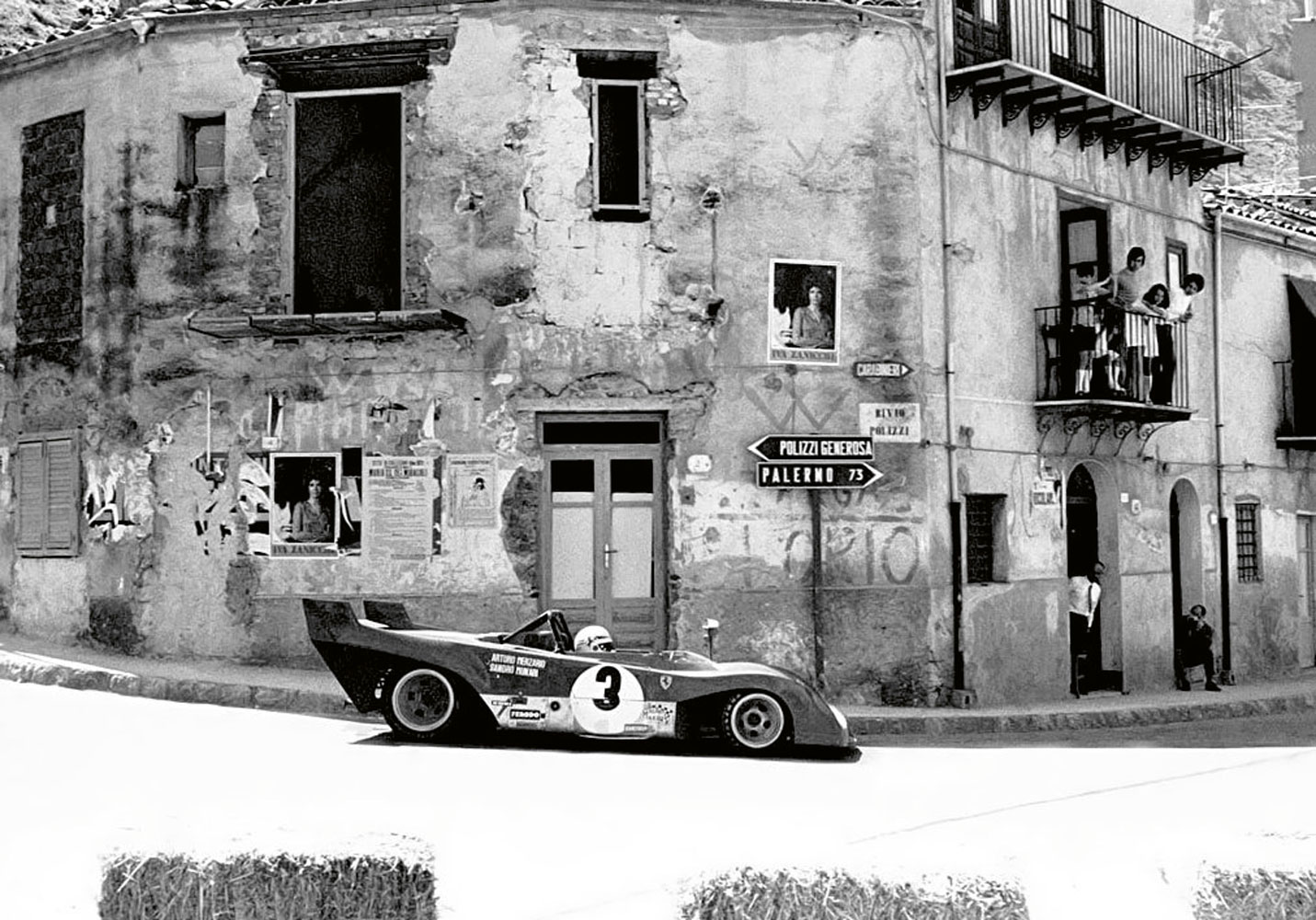
The financial situation had eased for Ferrari by then, and so considerable sums were invested in the sports car project in 1972. The newly built Ferrari 312PB were entered in every race with first-class drivers. Jacky Ickx and Brian Redmann usually alternated with Mario Andretti and Clay Regazzoni. The signing of Ronnie Peterson and Tim Schenken was a surprise. Sandro Munari and Arturo Merzario competed together in the Targa Florio. The criteria for forming the driver pairings were driving style, height, and language skills.
And no expense was spared when building the team either: Peter Schetty was brought in as team manager. The Swiss had dominated the European Hill Climb Championship in a Ferrari 212E Montagna Bergspyder. Enzo Ferrari had taken notice of this, as well as his strict team leadership. Giacomo Caliri continued to look after the Ferrari 312PB. The experienced Ermanno Cuoghi was poached from John Wyer's Gulf team as chief mechanic. Peter Schetty restructured the team and introduced new workflows. Swiss precision, Italian enthusiasm, and international vehicle expertise came together this year, promising success.
After the elimination of the 5-liter sports car class, Porsche retired from double victories. Ferrari overwhelmingly won the Manufacturers' World Championship with 160 points, ahead of Alfa Romeo with 85 points. With six overall victories, Jacky Ickx was the most successful driver of the 1972 season.
1973 – From Hunter to Hunted
After six years, the constructors„ championship title returned to Maranello. During Ferrari's financial difficulties, they also suffered heavy defeats in motorsport at the end of the 1960s. In the Formula 1 World Championship, they had lost touch with the British teams, and in Le Mans, they were twice outmaneuvered by Ford and Porsche. Now the “Commendatore" Enzo Ferrari could be satisfied.
With the World Championship victory and the continuation of the program, the next task was also clear: defending the title. This would prove to be immensely more difficult than winning the previous year. Matra, after withdrawing from Formula 1, could now concentrate on the Sports Car World Championship and upgraded their equipment. Alfa Romeo and Gulf Racing also upgraded their equipment. Lola upgraded. It became dangerous for Scuderia Ferrari. Ed McDonough and Peter Collins described the 1973 season as the „Ides of March“ for the Scuderia in their book „Ferrari 312 & Ferrari 312 PB.“ The metaphor signifies the arrival of doom and refers to the assassination of Gaius Julius Caesar on March 15, 44 BC. During the winter, the Ferrari 312 PB underwent extensive revisions in many aspects and was increased in size. The wheelbase was extended, and the track on the front and rear axles was widened. Wind tunnel tests at the University of Stuttgart led Giacomo Carliri to conclude that an extended rear and a raised rear spoiler would significantly improve top speed and cornering performance. Arturo Merzario confirmed the theory from the wind tunnel tests. At speeds over 300 km/h, which he was capable of achieving, the Ferrari 312 PB was now significantly more stable. However, disappointment quickly followed. Goodyear organized a test day at Paul Ricard for its teams. At the first meeting between Ferrari and Matra, it became apparent that they were, on average, 0.5 seconds slower. Furthermore, significant problems with the tires and chassis hampered preparations for the season.
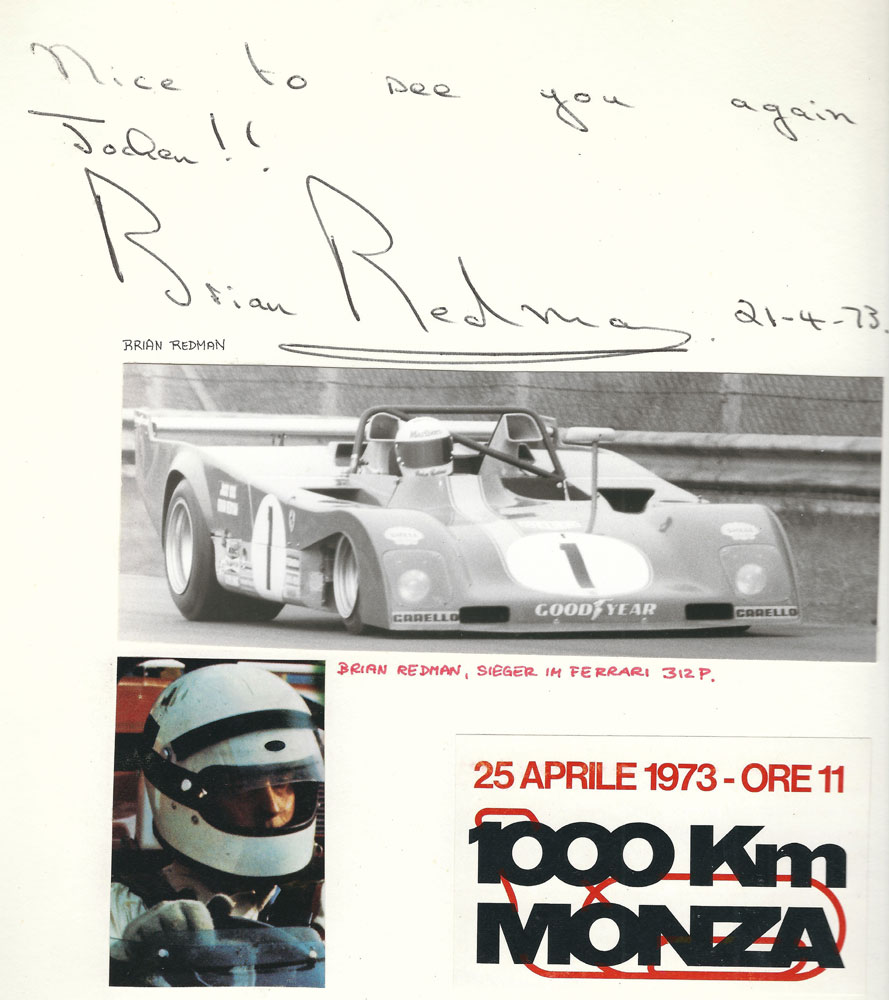
In 1973, the tide turned in the Sports Car World Championship in favor of the Matra MS670B. Ferrari skipped the 24 Hours of Daytona due to ongoing technical issues. The European season began in Vallelunga on March 25, 1973. Victory wasn't achieved here or in Dijon. Tim Schenken and Carlos Reuteman, in Dijon, as well as Jacky Ickx and Brian Redman, were narrowly beaten. The only bright spots were the 1000 km races in Monza and at the Nürburgring, where Jacky Ickx and Brian Redman won both times.
Ferrari 312PB, the phoenix from the ashes?
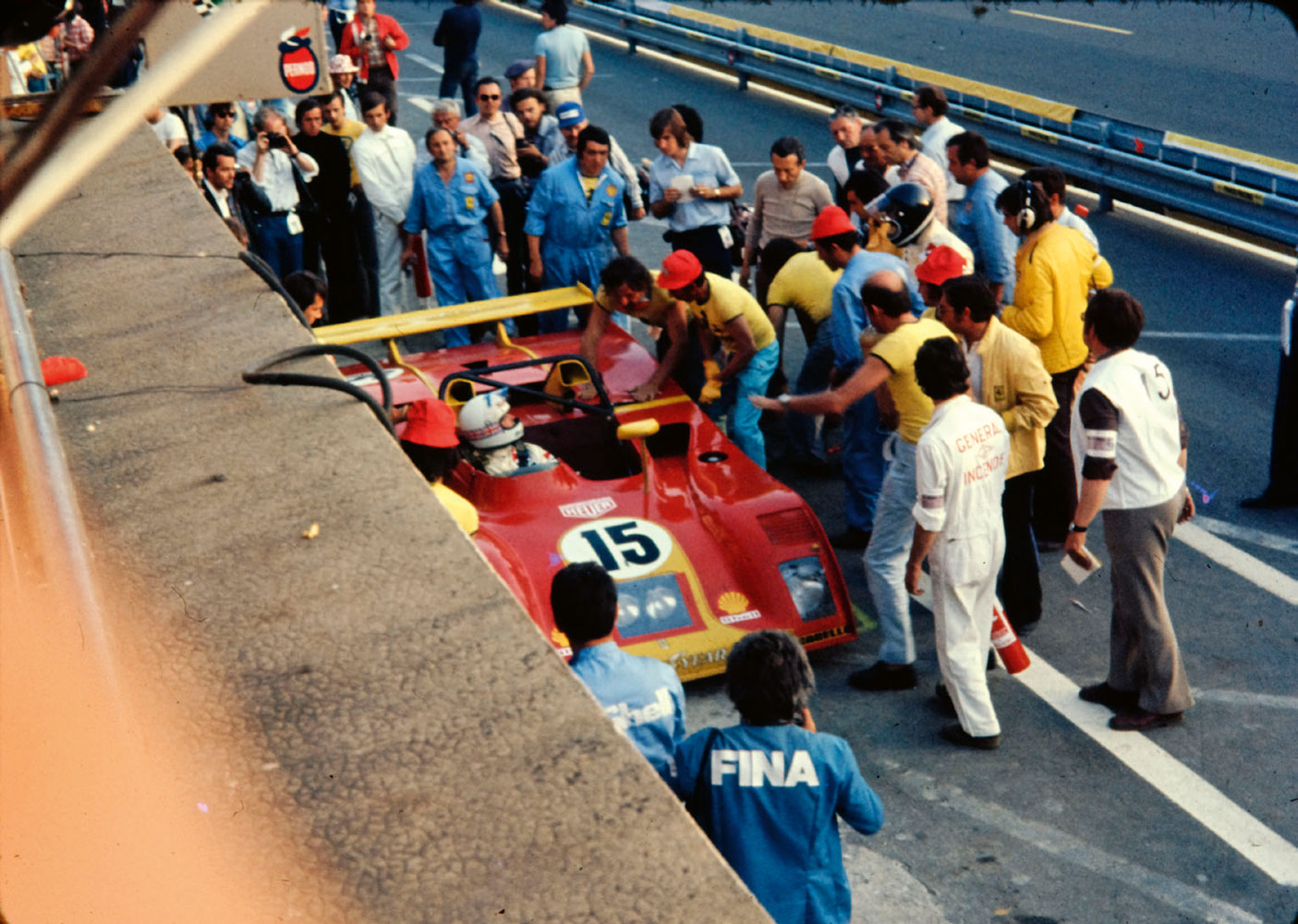
Satisfaction seemed to be the order of the day for the 24 Hours of Le Mans for a long time. This year, they rose to the challenge because they didn't want to concede victory in the prestigious race to Matra without a fight, and Ferrari's last win was almost ten years ago. The three Ferrari 312 PBs were each driven by Brian Redmann/Jacky Ickx (No. 15), Arturo Merzario/Carlos Pace (No. 16), and Tim Schenken/Carlos Reutemann (No. 17).
In qualifying, Arturo Merzario secured pole position for his Ferrari, hitting 330 km/h on the Mulsanne Straight and scorching a lap time of 3:37.5. The new Matra MS670Bs were similarly fast in top speed but lost a lot of time during braking. From the start, the Ferrari 312PB drivers took the lead. Merzario and Pace had been tasked with setting the pace in the opening hours and putting pressure on the competition. The plan worked. Before midnight, two of the four Matra MS670Bs had retired with engine failures. However, the same happened to Ferrari. Around 2:30 AM, Carlos Reutemann and Tim Schenken were stranded after an engine failure. Subsequently, Jacky Ickx and Brian Redmann took the lead, but they were repeatedly fended off by attacks from Henri Pescarolo and Gérard Larrousse in the Matra car number 11, and then retired due to complete oil loss. Merzario and Pace remained within striking distance but had to settle for second place due to a gearbox change. Victory had been within reach. In Le Mans, the „Ides of March“ can strike relentlessly.
After the defeat in Le Mans and the loss of the World Sportscar Championship title to Matra, Ferrari withdrew from endurance racing. And it seemed like this was set in stone. The new Hypercar regulations lured Ferrari back into endurance racing. To everyone's surprise, Alessandro Pier Guidi, James Calado, and Antonio Giovinazzi won the 24 Hours of Le Mans in 2023, as dominantly as the Ferrari 312 PB drivers did to win the World Sportscar Championship in 1972. To use metaphors from mythology once again: Ferrari had risen „like a phoenix from the ashes.“.
Author: Christian Reinsch
Photos: Archive Nils Ruwisch, Archive Christian Reinsch, McKlein, Lothar Spurzem, Jochen von Osterroth